Summary:
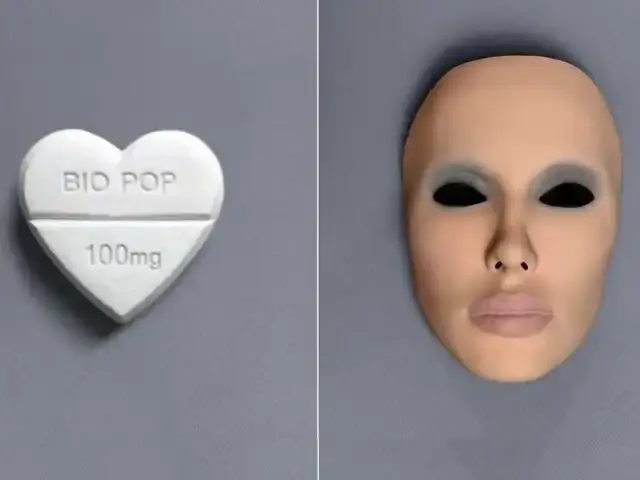
- Bianca Censori debuts BIO POP, a performance piece in Seoul on December 11-12, 2025, marking her formal entry into contemporary art
- The work explores domesticity as a site of control, examining how household spaces shape identity and enforce social structures
- BIO POP is the first in a planned seven-part series spanning seven years, with subsequent installations scheduled through 2032
Bianca Censori, an Australian architect and designer, enters the international art scene this week with BIO POP, a performance and exhibition presented in Seoul on December 11 and 12. The work marks her first formal art presentation and serves as the opening chapter of a seven-part series planned to unfold over seven years.
Those unable to attend in person will have access to a live broadcast on December 11 through biancacensori.com. The multi-year commitment represents an approach to debut work rarely seen from emerging artists.
BIO POP positions the domestic sphere as the central subject. The official statement describes domesticity as "the mother of all revolutions," framing household spaces as sites where violence, ritual, and identity first take form. Censori uses the kitchen as her primary setting, placing her own body at the center of the performance.
The performance begins with Censori baking a cake. The act appears straightforward but functions as the starting point for a broader examination of domestic labor and physical discipline. The kitchen becomes both origin point and site of tension, where service transforms into ritual practice.
After preparing the cake, Censori carries it to a dining room where several women wait. These figures resemble Censori herself: dark-haired, masked, serving as physical extensions of the artist. They remain stationary, held in place by sculptural furniture pieces designed by Censori. The furniture references medical equipment with padded crutches, brushed metal frames, and upholstery in bone tones.
These pieces do not support the body in traditional ways. They restrict and shape it instead. The furniture converts domestic comfort into a form of surveillance, turning architecture into a mechanism of control. The masked figures function simultaneously as objects, bodies, and icons, merging material and presence into a single symbolic system.
The cake in BIO POP operates as an offering rather than food. It activates relationships between nourishment, labor, and ceremony. The dining table becomes an altar. The kitchen transforms into a foundational space. The furniture creates a sanctuary that establishes the first station in a longer journey.
Censori describes this performance as the inaugural point of a cycle that will develop through themes of confession, idolatry, sacrifice, and rebirth. The titles of subsequent installments provide a narrative arc: Confessional, Bianca Is My Doll Baby, Starbaby, Bone of My Bone, Genesis, and Bubble. The series moves from intimate spaces toward ideas of ascension, from physical matter toward mythological territory.
The complete series follows this timeline:
- SERIES 01: BIO POP (The Origin, 2025)
- SERIES 02: CONFESSIONAL (The Witness, 2026)
- SERIES 03: BIANCA IS MY DOLL BABY (The Idol, 2026)
- SERIES 04: STARBABY (Worship, 2027)
- SERIES 05: BONE OF MY BONE (The Sacrifice, 2029)
- SERIES 06: GENESIS (The Rebirth, 2031)
- SERIES 07: BUBBLE (The Ascension, 2032)
In this first presentation, Censori treats domesticity as a tool for examining larger structures. She uses her body as architectural material and multiplies her image to explore themes of replication and control. The work offers a reading of her practice as conceptual investigation rather than spectacle.
Censori's presence in popular culture has generated both analysis and speculation. BIO POP provides another framework for understanding her work: an artist who converts household spaces into theoretical apparatus and treats personal image as subject matter for multiplication and examination.
The scope of the project suggests a long-term investigation of performance art traditions and contemporary identity formation. The seven-year timeline and thematic progression indicate sustained conceptual development rather than isolated interventions.
The debut in Seoul positions Censori within international contemporary art discourse. The choice of location, the structured series format, and the emphasis on domestic space as revolutionary site all place the work in dialogue with feminist art history and performance traditions from the 1970s forward.
BIO POP establishes visual and conceptual language that will presumably evolve through subsequent installments. The masked doubles, sculptural furniture, and ritual objects create a vocabulary for exploring how domestic environments shape bodies and enforce social roles.
The performance raises questions about authorship, celebrity, and artistic identity that will likely follow the series through its completion. Censori positions herself as both subject and creator, using her recognizable image as raw material while directing the conceptual framework.
The seven-year commitment to a single narrative arc distinguishes this project from typical contemporary art practices. Few artists announce multi-year series at the outset of their careers. The approach suggests confidence in the conceptual foundation and awareness of how serial work builds meaning over time.
Censori claims space within contemporary art discourse through formal debut rather than gradual emergence. The structured series, theoretical framing, and performance-based approach establish her position as an artist working with established traditions while bringing specific concerns about domesticity, replication, and control to the conversation.
Andrea Darren
Born in Manchester, from a young age, she was passionate about art and design. She studied at the University of the Arts in London, where she developed her skills in these fields. Today, Andrea works as an editor for a renowned publishing house, combining her love for art and design with her editorial expertise.
Share this article
RELATED

6:AM LAUNCHES BATCH GLASS MODULES


MOTO GUZZI OPENS GREG LYNN MUSEUM IN MANDELLO

