Summary:
- Collection presented in intimate Paris apartment setting, drawing from household objects and textiles
- Garments constructed from domestic materials including curtain pleats, sofa leather, and cushion fabrics
- Earthy color palette of brown, grey, and green with focus on layered, versatile pieces
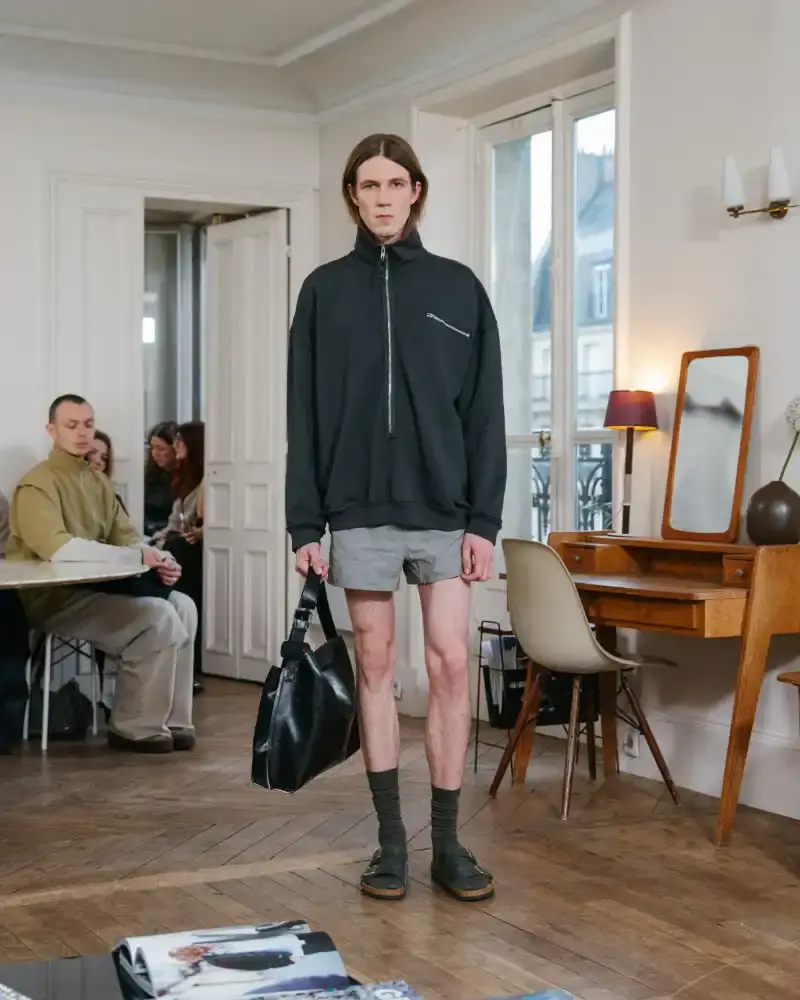
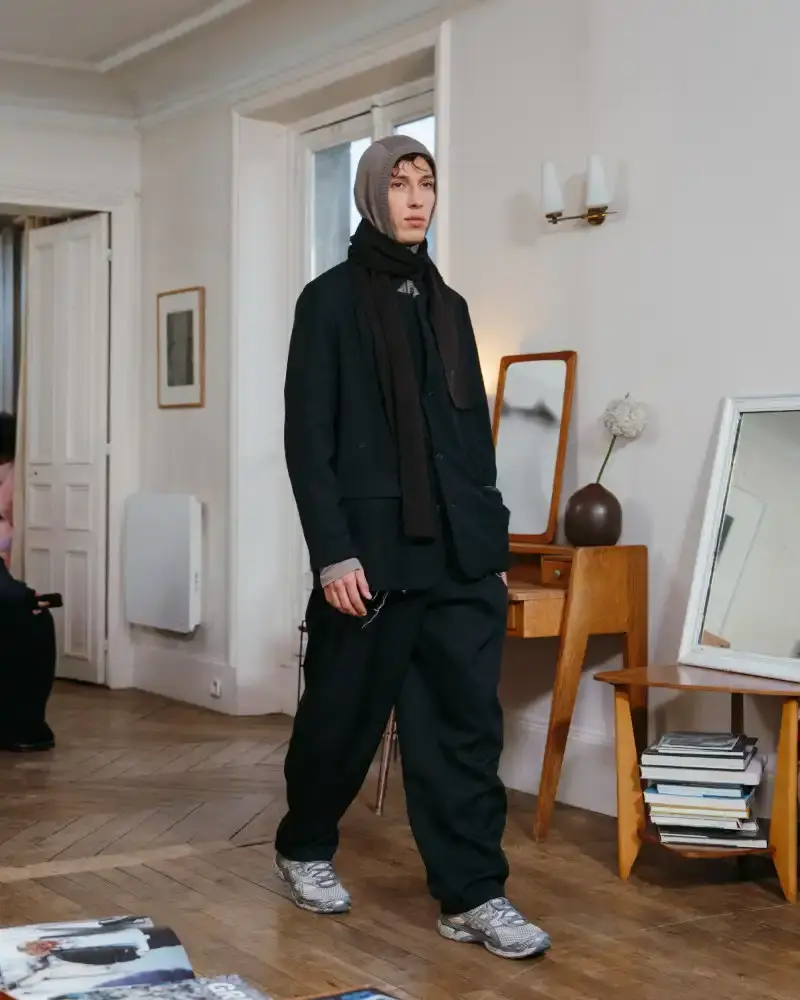
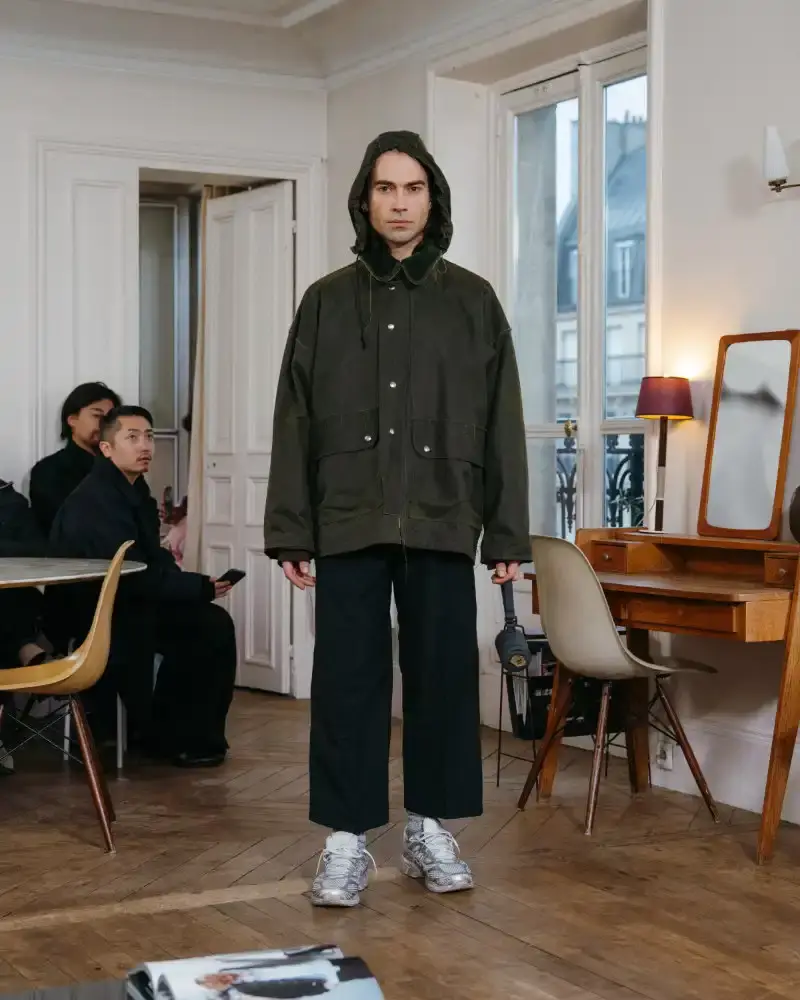
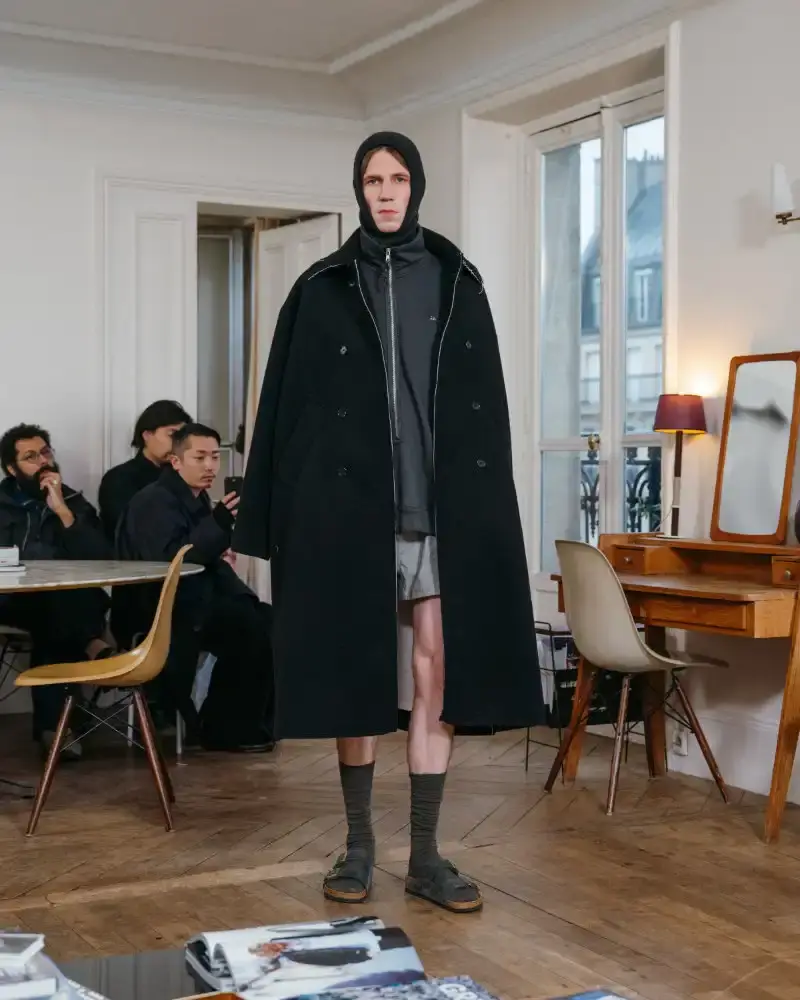
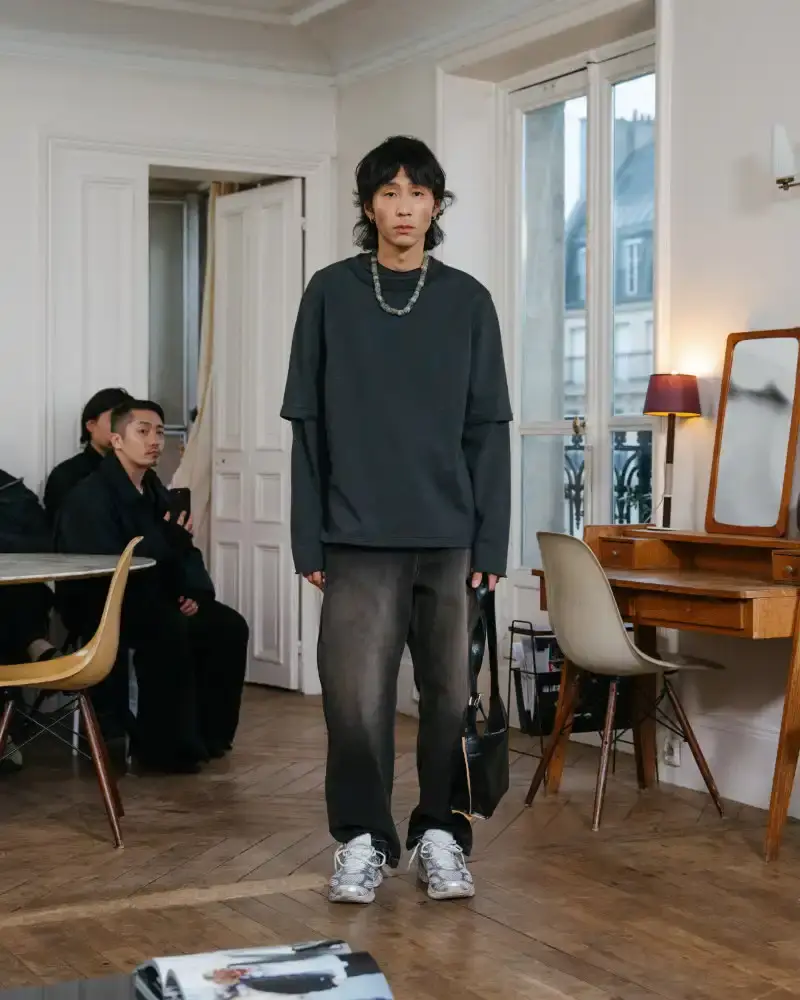
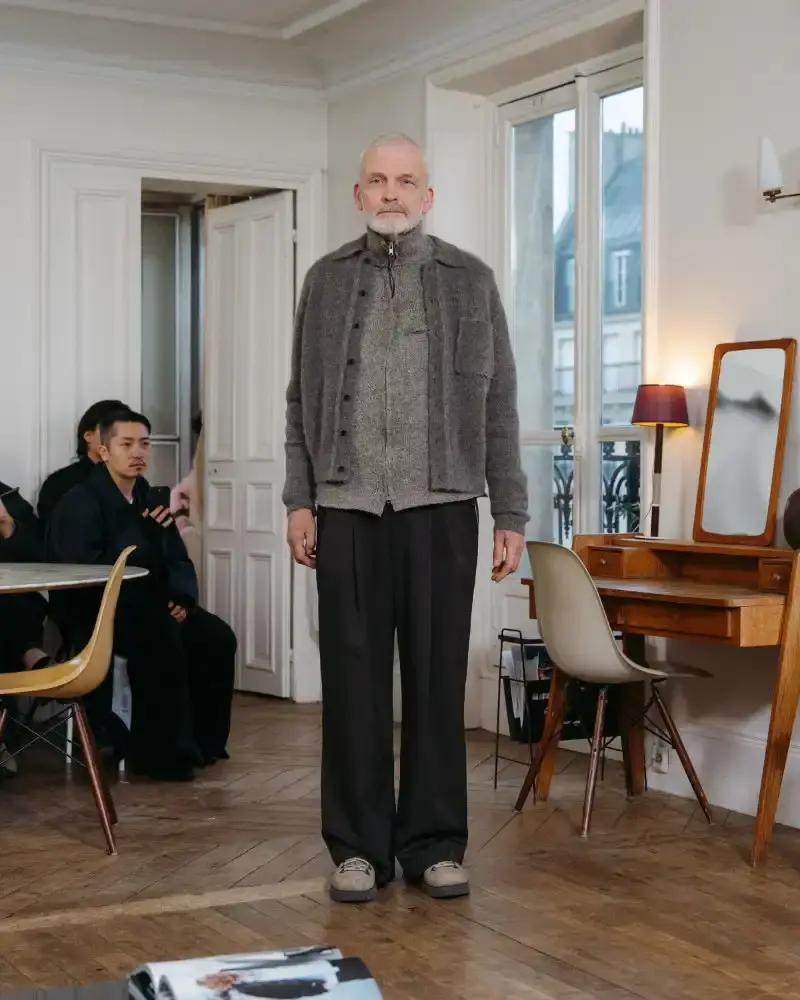
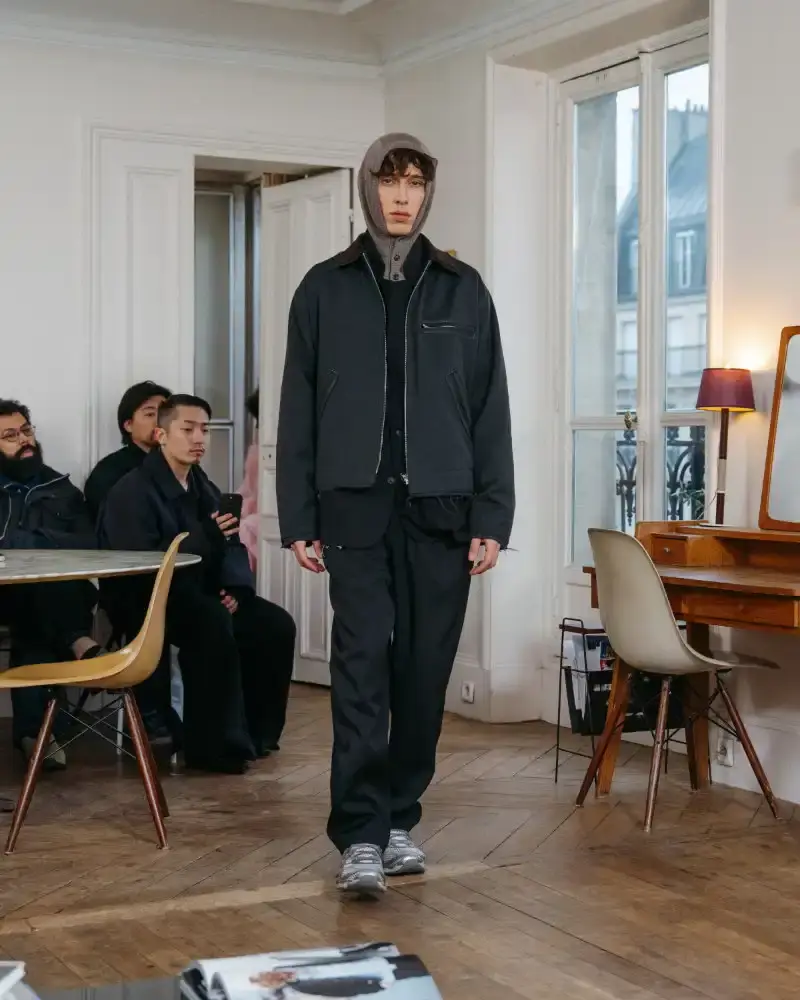
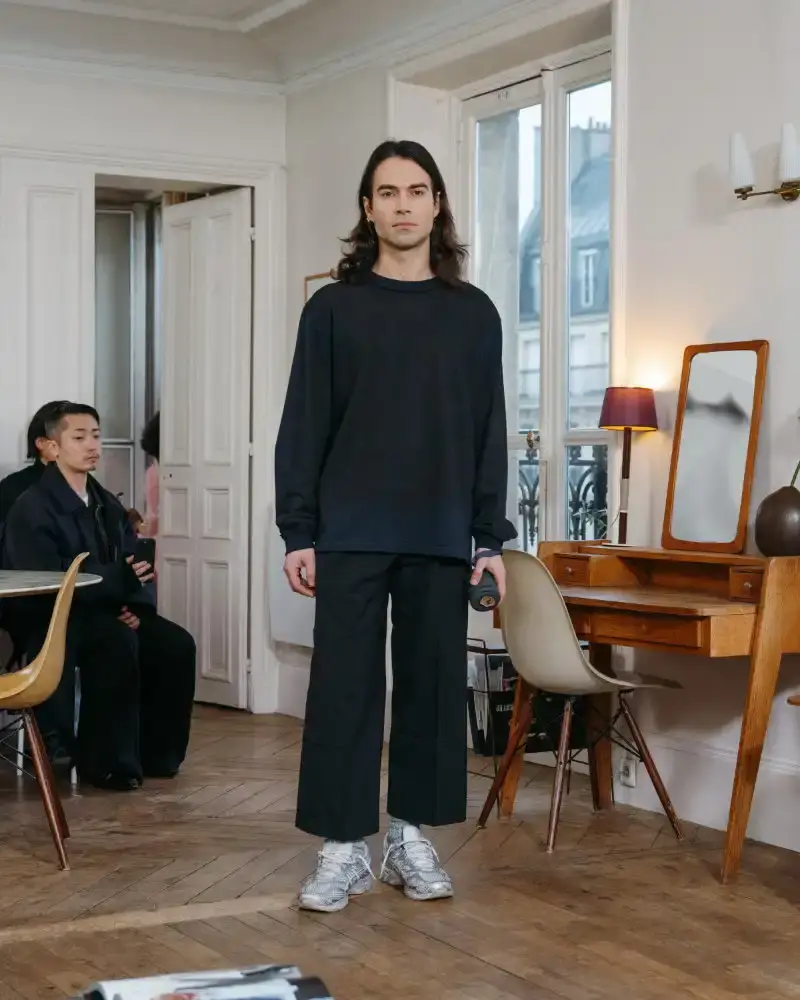
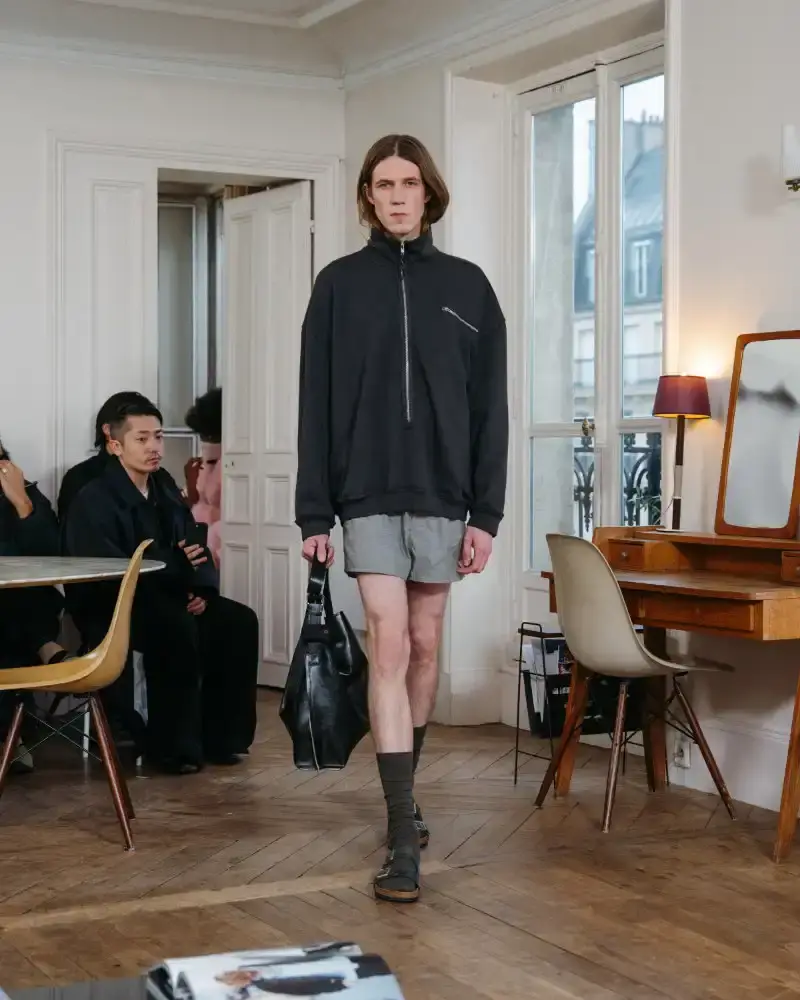
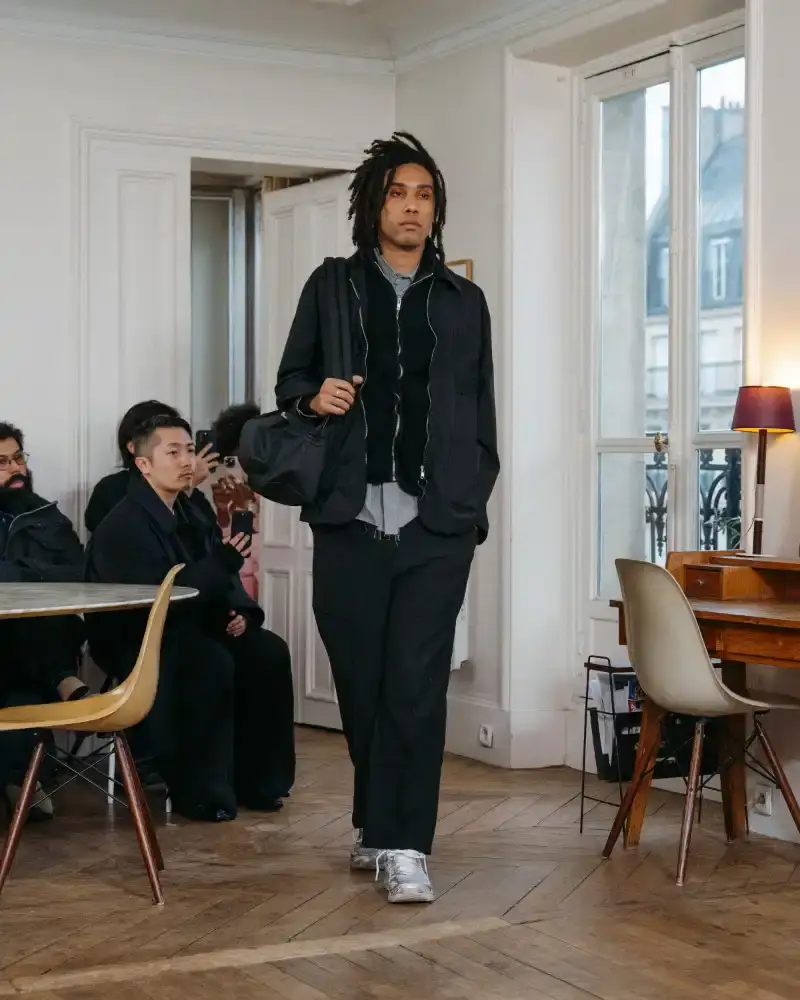
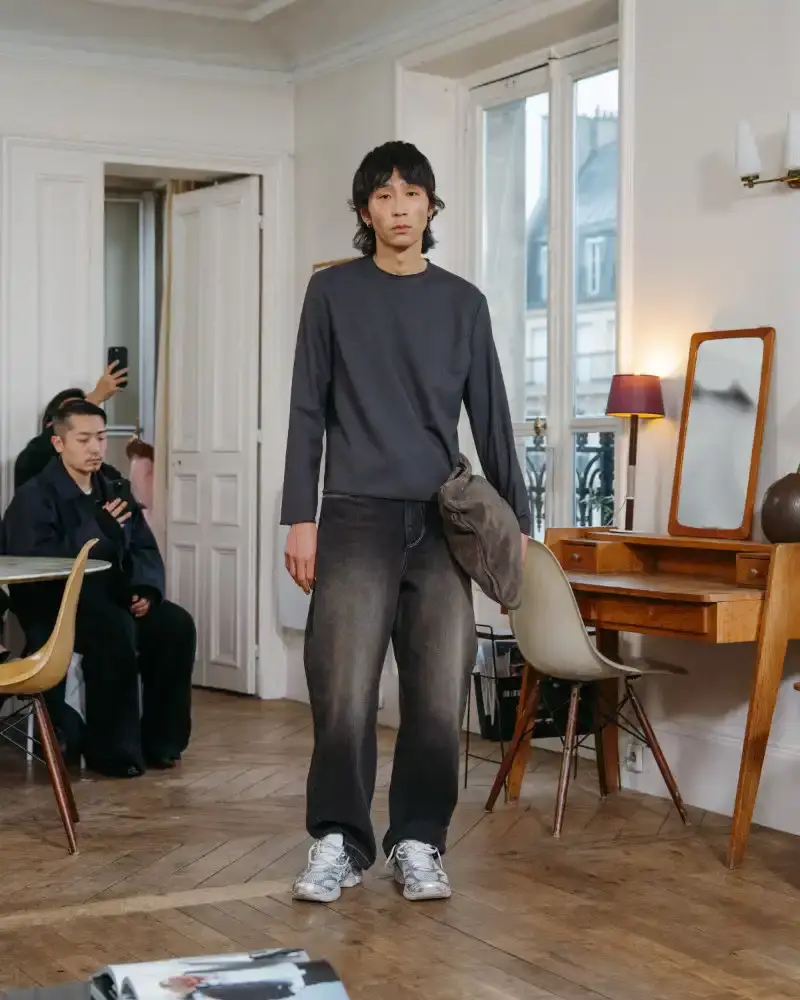
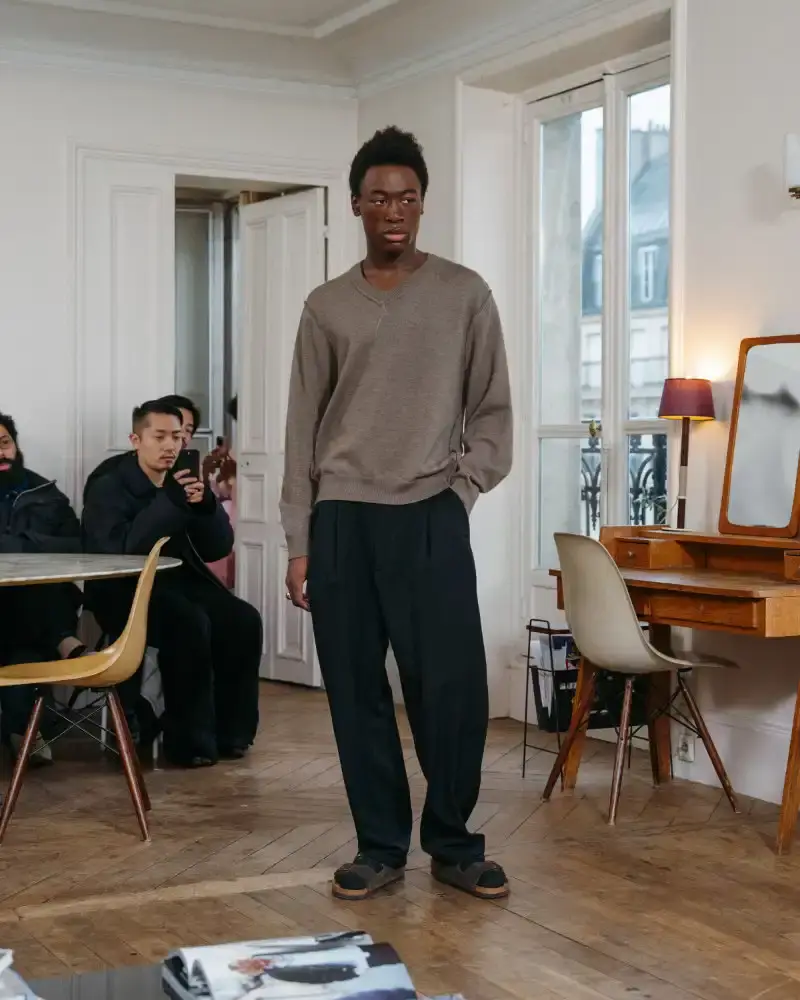
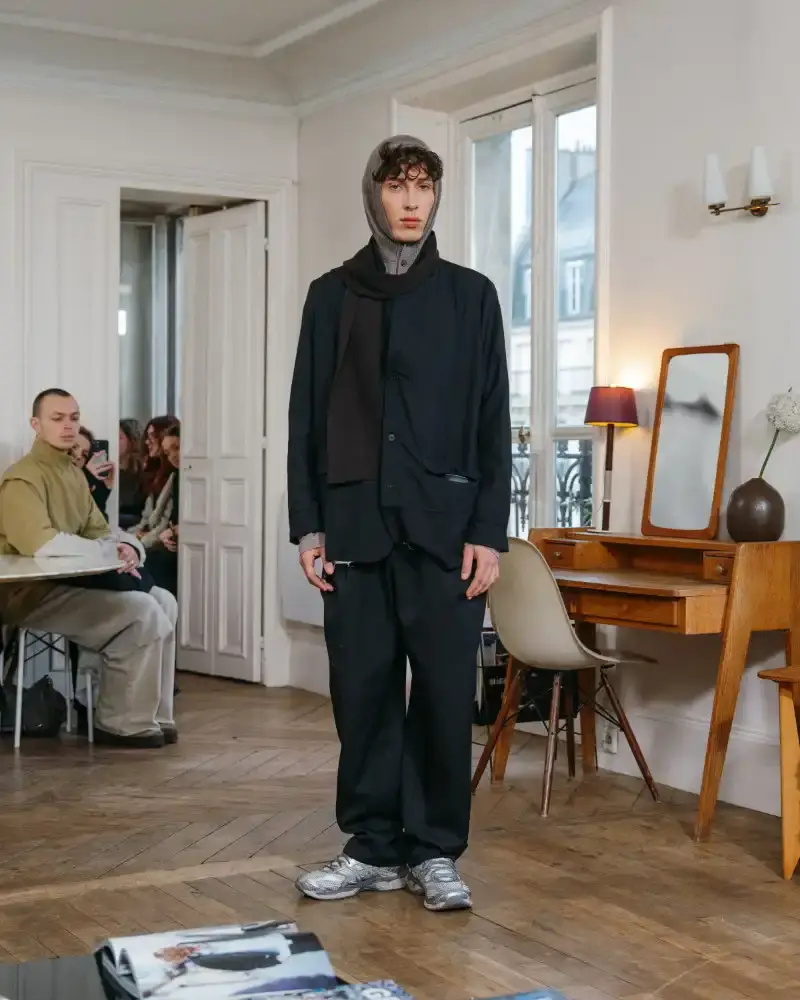
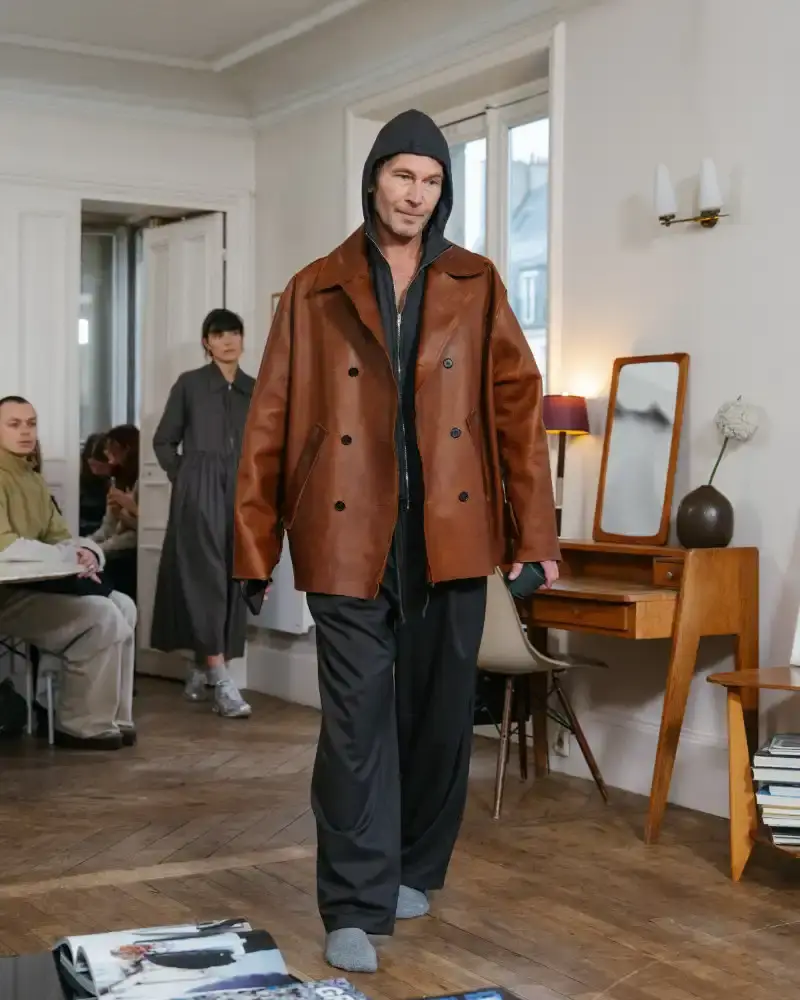
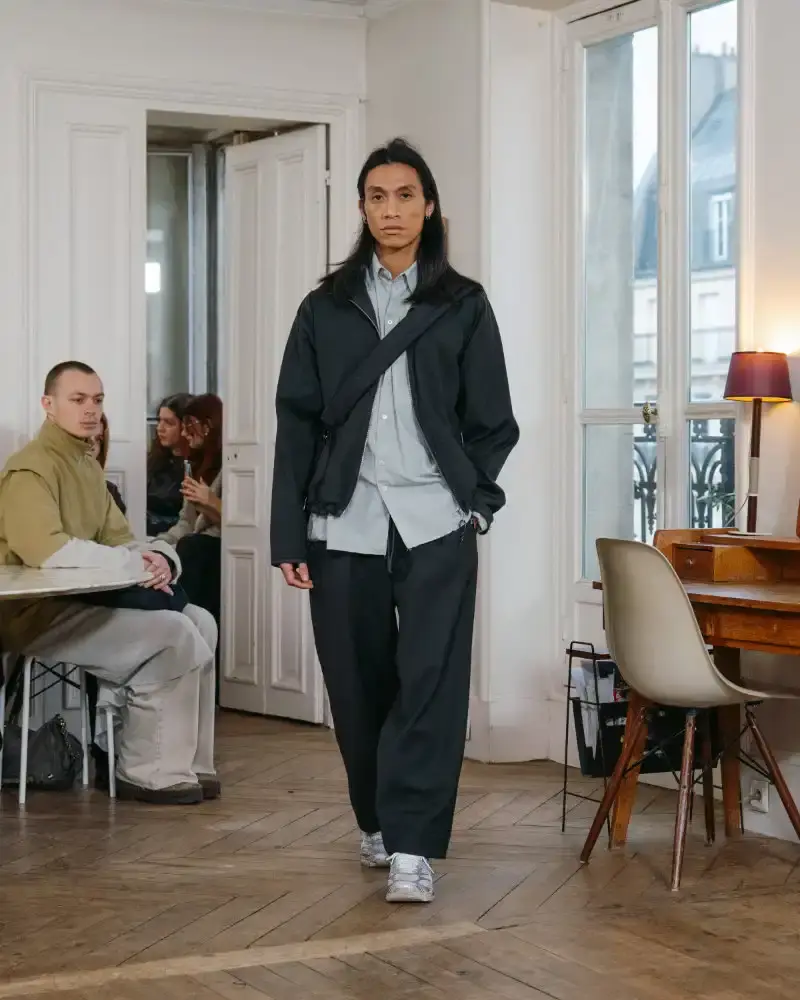
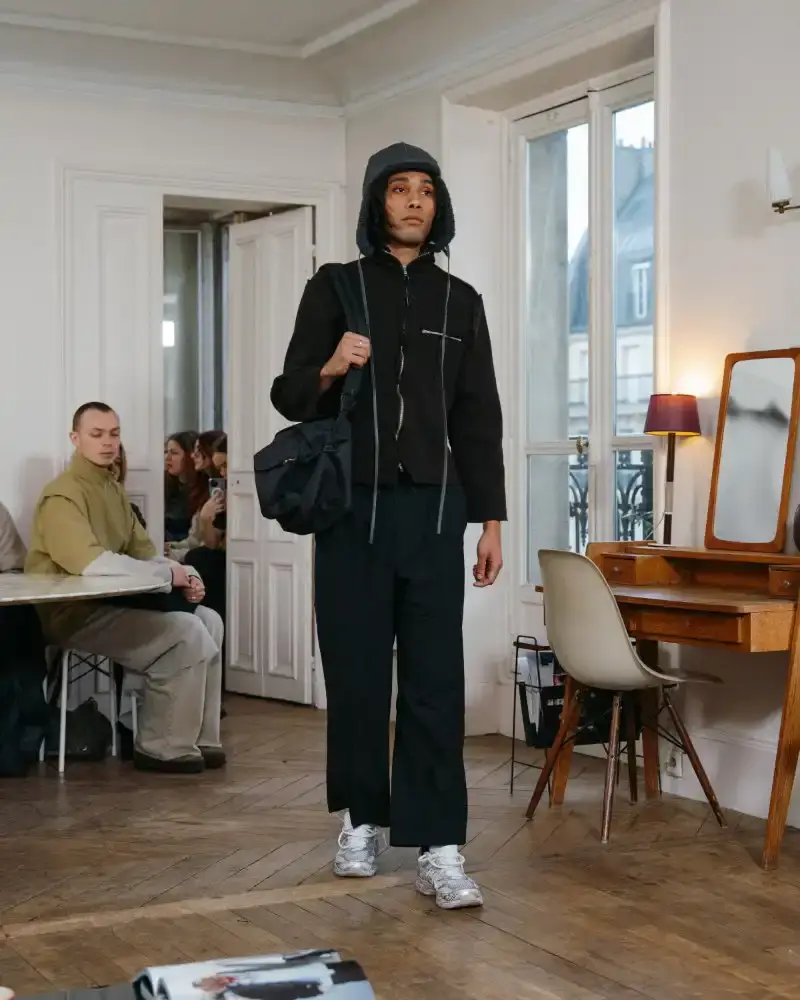
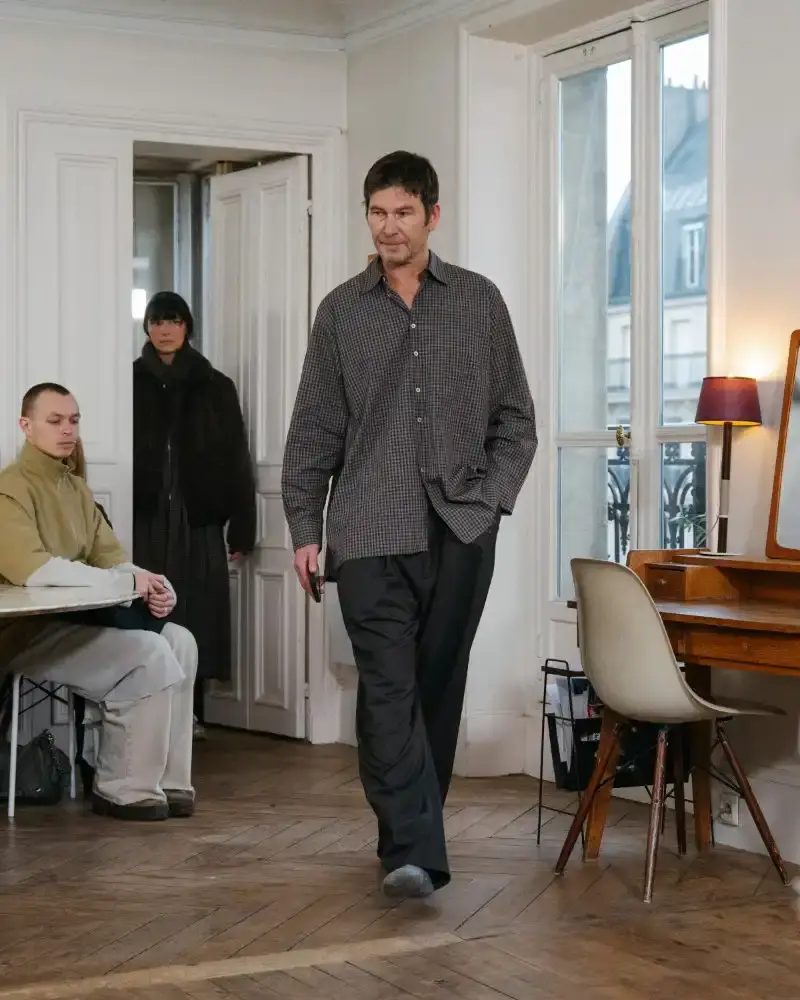
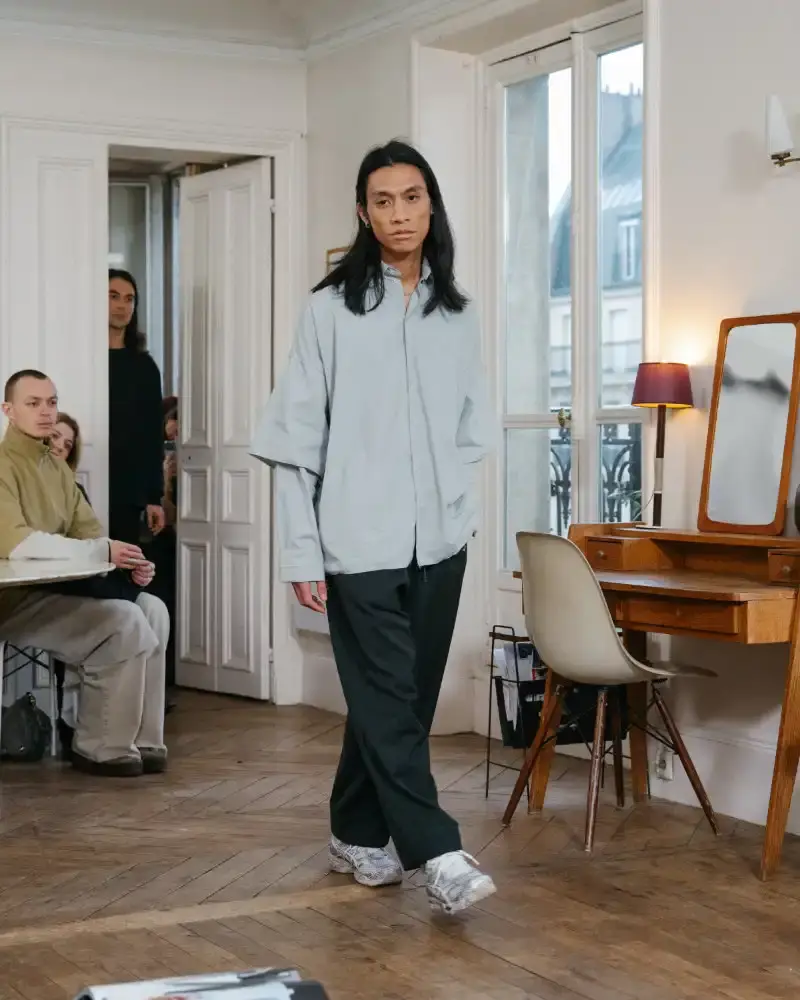
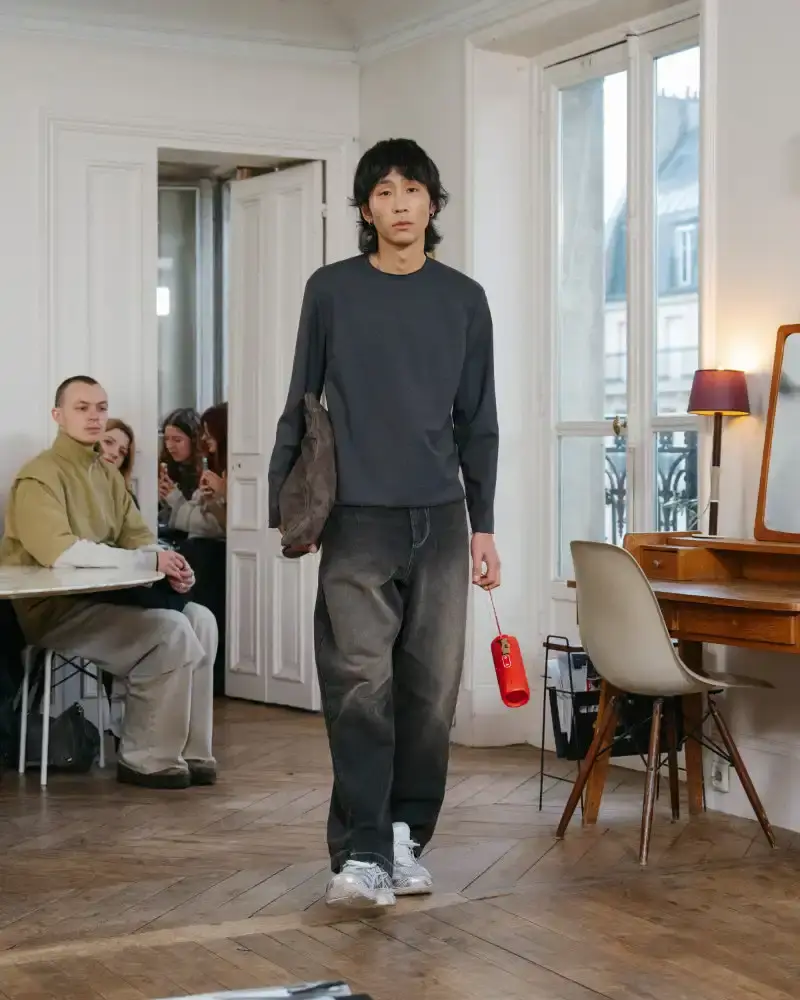
The Fall/Winter 2026 collection from Camiel Fortgens appeared in a Paris apartment during the recent fashion week. The brand chose an intimate residential space instead of a traditional runway or gallery. This decision matched the collection's concept of blurring lines between domestic and public life.
The designer transformed household materials into clothing. Curtain pleats became structured skirts. Leather pulled from old sofas formed jacket silhouettes. Worn cushions provided fabric for bags and smaller accessories. These weren't literal copies. The pieces carried traces of their origins without direct translation.
Heavy wool and patterned jacquards appeared throughout the collection. Soft leathers were worked into multiple garments. The textiles came from interior spaces but were adapted for bodies moving through cities and varied terrain. Each piece referenced furniture construction and upholstery techniques.
The color range stayed within earthy territory. Browns ranged from deep chocolate to lighter tan. Greys appeared muted and soft. Greens leaned toward olive and moss tones. These shades reflected the aged quality of domestic textiles rather than bright commercial dyes.
Key pieces included the pleated skirts and leather outerwear. The skirts held their structure through pleating methods borrowed from window treatments. Jackets showed seaming and topstitching similar to furniture assembly. Proportions allowed for layering. Individual items worked alone or combined with other pieces from the line.
The brand has maintained focus on functional design since its start. This collection extends that approach by examining objects people interact with daily. The work asks what happens when interior materials move to exterior use. It questions the boundaries between private and public presentation.
Styling emphasized versatility. Models wore single statement pieces or multiple layers depending on the look. The presentation format let viewers see details up close. Fabric textures and construction methods were visible in ways a traditional runway would obscure.
The apartment setting reinforced the collection's themes. Viewers moved through rooms where the clothes appeared alongside the furniture that inspired them. This created direct connections between source material and finished garments.
Fortgens pulled from urban movement and rougher outdoor environments for inspiration. The clothes need to function in both contexts. Durability comes through fabric choice and construction. The domestic materials proved suitable for this purpose after adaptation.
The collection sits between familiar and unfamiliar territory. Viewers recognize curtain pleats or sofa leather, but see them in new contexts. This shift changes how people read the materials. What belongs inside now appears outside. What stays still now moves.
The brand continues to examine how people dress for practical needs while considering aesthetic choices. This collection adds another layer by sourcing from spaces where function already exists. The transformation from furniture to fashion keeps some original purpose while creating new use.
Production methods honored the source materials. Seams and finishes reflected upholstery techniques. Some pieces showed deliberate wear or fading, preserving the history of the original textiles. Others appeared fresh but referenced aged materials through color and texture.
The Fall/Winter 2026 collection from Camiel Fortgens offers clothing that moves between contexts. It takes from interior spaces and applies those materials to bodies navigating exterior worlds. The result feels both specific to its sources and open to interpretation in how pieces get worn.
Eric Grischott
Born in Groningen in 1991, Eric Grischott is a linguist with a deep-rooted passion for art, music, and fashion. His academic journey led him to graduate in languages, further enriching his linguistic prowess. His thirst for knowledge and cultural immersion took him abroad, where he gained invaluable experience and insights. Eric’s linguistic expertise is not confined to just theory. He has honed his skills in French and German through specialized DELF and DELE courses, demonstrating his commitment to mastering these languages. His passions extend beyond languages, encompassing the creative realms of art, the rhythmic world of music, and the dynamic sphere of fashion.
Share this article
RELATED

ARC'TERYX AND BEAMS RELEASE KOYO LINE


