
Summary:
- Caterina Filograno presents "Anche in casa si possono provare emozioni forti" at Triennale Milano on December 12 and 13, examining matriarchal family structures and their emotional layers.
- The performance uses personal family history to explore how inherited patterns shape individual choices, blending autobiography with archetypal figures.
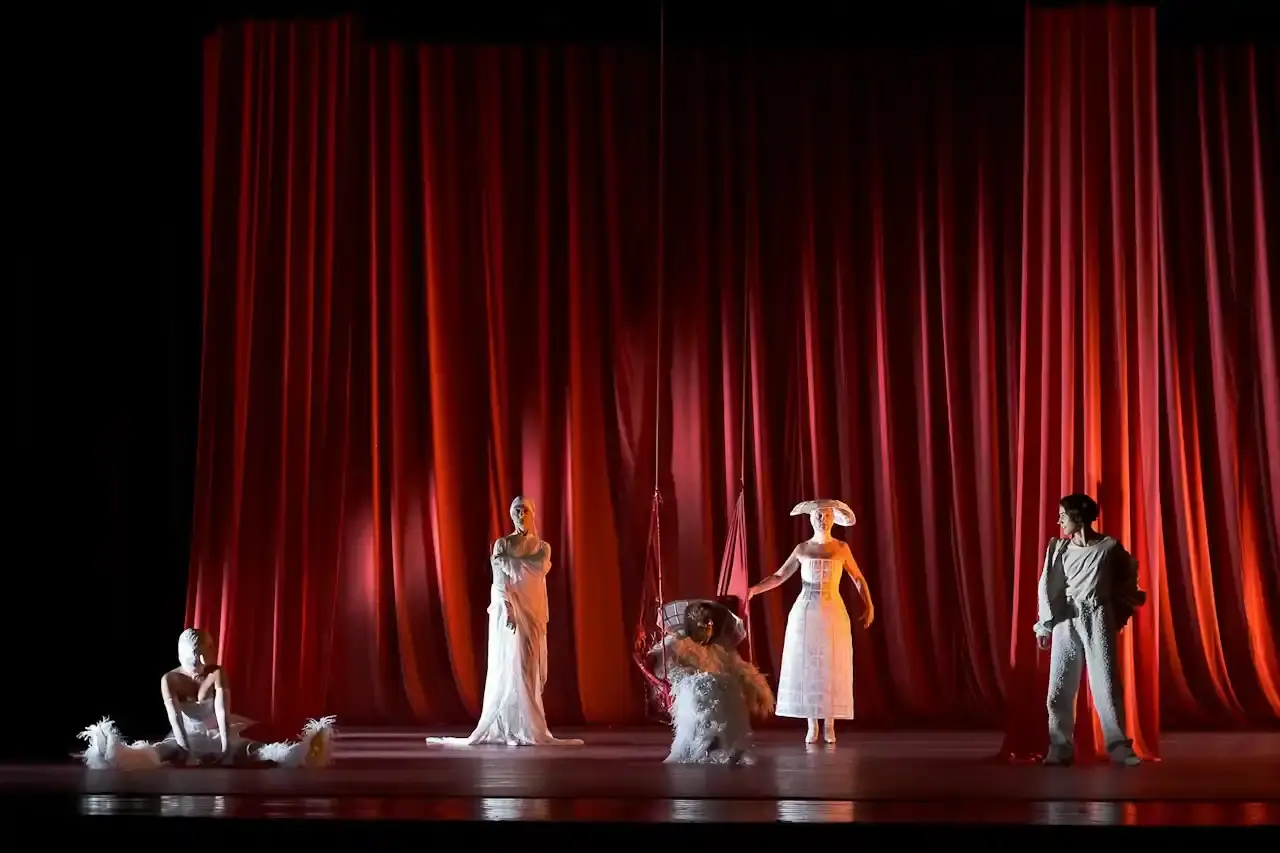
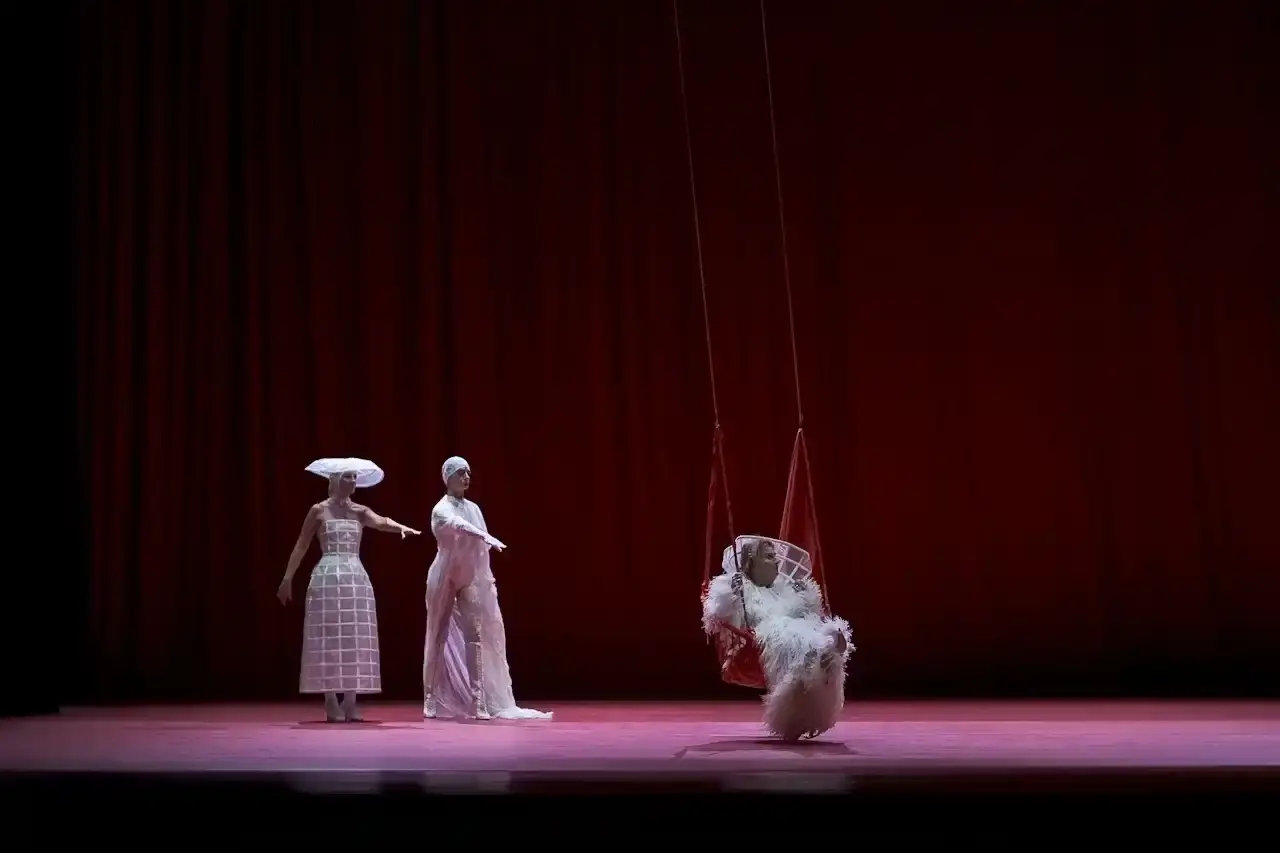
- Designer Giuseppe Di Morabito creates costumes and scenography that function as moving sculptures, merging fashion with theatrical space.
Caterina Filograno brings her matriarchal family history to the stage at Triennale Milano. The performance runs December 12 and 13. The work examines how family origins influence personal decisions.
The piece centers on multiple generations of women. They occupy a house that functions as a psychological maze. Three figures appear: the Great Mother, the Sister, the Daughter. These characters draw from Jungian archetypes and personal memories. Real and imagined figures emerge from Filograno's autobiographical narrative, then break away to form new story paths.
Filograno trained as a lawyer in Rome before studying acting in Milan at Scuola Luca Ronconi, part of Piccolo Teatro di Milano. She worked with Martin Crimp and Romeo Castellucci. She was a finalist at Biennale College Autori with "L'ultimo animale" and won the SIAE Prize with "OLEANDRA".
Her theatrical approach seeks connections between language, body, and image. Fashion becomes a dramaturgical tool in her work. Clothing functions as text. The stage becomes a space where form attempts to generate thought.
For this production, Filograno expands her partnership with designer Giuseppe Di Morabito. He designs both costumes and scenography for the first time. Together they build a dialogue between theater, fashion, and visual space. The costumes become moving sculptures. These garments function as landscapes that breathe with the performer's body. They amplify expression and merge gesture with architectural structure.
The work questions the boundary between intimacy and performance, between confession and fiction. Filograno asks how much power the family of origin holds over personal action. The answer unfolds through layers of female experience, both sweet and cruel.
Di Morabito was born in Molochio, Calabria. He studied at Istituto Marangoni in Milan. He was a finalist for Who is on Next? and represented Italy at the Woolmark Prize. His designs combine southern Italian tailoring tradition with classical and baroque imagery. Ancient art meets contemporary sensuality in his work.
His creations balance boldness with precision. International stars wear his designs. He has become one of the most distinctive voices in Italian fashion. His collaboration with Filograno brings his aesthetic vocabulary into theatrical space.

The performance explores female genealogies and their emotional stratifications. Personal experience expands into collective dimension. The house setting contains multiple timelines and emotional inheritances. Each generation of women carries patterns forward while attempting to reshape them.
Filograno's theatrical practice investigates new forms. She looks for friction points where different artistic languages meet. The costume designs by Di Morabito serve this investigation. They are not separate from the performance but embedded in its structure.
The production presents complexity in female experience. It acknowledges tenderness and violence, care and cruelty. These contradictions exist within family systems and within individual women. The work does not resolve these tensions but displays them.
The matriarchal framework offers a lens for understanding inheritance. Patterns pass through female lines. Emotional knowledge transfers across generations. The performance maps this transmission while questioning its inevitability.
Filograno constructs a theatrical language where clothing, movement, and narrative operate as equals. Di Morabito's scenographic vision supports this equality. The result is a performance where meaning emerges from multiple sources simultaneously.
The December performances at Triennale Milano mark a development in both artists' practices. Filograno continues her investigation of theatrical form. Di Morabito extends his design work into spatial creation. Their combined effort produces a work that crosses disciplinary boundaries while maintaining focus on the central question: how do we inherit ourselves?
If you are curious to see this exciting show, you can purchase tickets on the Triennale Milano website.
Staff
Casawi Magazine: based in Milan, we celebrate youth culture, creativity, and community across fashion, sports, music, art, design & more.
@casawi.magazineShare this article


