Summary:
- Fujifilm launches instax mini Evo Cinema on January 30 in Japan, adding 15-second video recording to instant photo printing
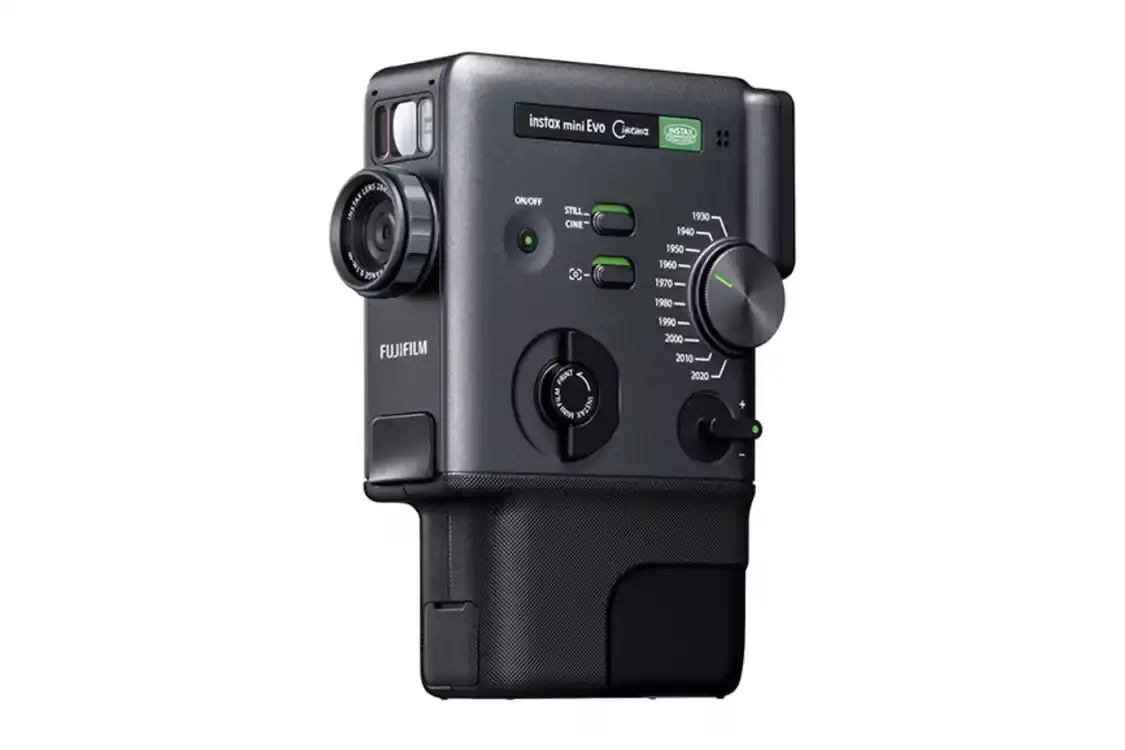
- The Eras Dial provides 10 vintage visual and audio effects from different decades with 10 intensity levels each
- Design draws from 1965 FUJICA Single-8 with vertical grip and Print Lever, includes smartphone printer function
Fujifilm releases the instax mini Evo Cinema in Japan on January 30. This addition to the Evo series combines instant photography with video recording. Users capture 15-second video clips alongside still photos. The camera then embeds a QR code on the printed photo. Scanning the code plays the video.
The device features an Eras Dial with 10 preset effects. Each preset mimics a specific time period's visual style. The 1960s setting applies grainy 8mm film texture. The 1970s option adds saturated CRT monitor colors. The 1980s preset introduces VHS tape distortion. Each effect includes matching audio processing. Some presets add film reel sounds or tape hiss.
You control effect intensity across 10 levels. This creates 100 total combinations. Physical dials provide tactile feedback when adjusting settings. The mechanical click mimics analog camera controls.
The camera body uses black and gray tones. The vertical grip design references the 1965 FUJICA Single-8. Fujifilm produced this 8mm film camera during the mid-1960s. The Print Lever replicates the motion of advancing film manually. You press the lever to start the printing process.
The mini Evo Cinema works as three separate tools. First, it operates as a standalone instant camera with video. Second, it connects to smartphones for wireless printing. Third, it functions as a video editor through the companion app.
The mobile app adds production features. Users insert title cards before videos. Ending credits appear after clips finish. Templates follow cinematic formatting styles. The app organizes saved videos by date and effect type.
The camera prints on instax mini film. Each print measures 62mm by 46mm for the image area. The total film size is 86mm by 54mm. The QR code prints in the border area surrounding the photo.
Battery life supports extended shooting sessions. The device charges via USB-C connection. Internal memory stores videos before printing. You transfer files to smartphones or computers through wireless connection.
Physical dimensions suit portable use. The camera fits in large pockets or small bags. Weight distribution favors the vertical grip. This placement suits one-handed operation for both photo and video modes.
The Eras Dial sits on the camera's top plate. A separate lens dial controls 10 optical effects. Combining both dials produces varied results. The lens effects include soft focus, fisheye distortion, and vignette borders.
Audio recording uses an internal microphone. The processed sound matches the selected era effect. Original audio remains accessible through the app. Users choose between filtered and clean audio tracks.
Print quality maintains instax mini standards. Color reproduction suits the instant film format. Video resolution balances file size with visual clarity. The QR code remains scannable after standard wear.
The device targets users who blend physical and digital media. Collectors gain physical prints with extended content. Event photographers create interactive keepsakes. Social media users generate unique shareables.
Fujifilm has not announced international release dates. Pricing for the Japanese market remains undisclosed. The camera joins other Evo series models in the instax lineup. Previous Evo releases included the original instax mini Evo from 2022.
Thomas Gabe
is a seasoned technology editor based in Berlin, Italy. With over 5 years of experience, Thomas excels at making complex tech topics. He holds a Computer Science degree and in his free time, he enjoys experimenting with gadgets and mentoring budding tech journalists.
Share this article
RELATED

NOTHING RELEASES HEADPHONE (1) PRO

META DEBUTS NEW SMART GLASSES LINEUP

PPLE DROPS IPHONE 18 PRO AND FOLDABLE DUO

JJJJOUND AND AIAIAI RELEASE AUDIO COLLECTION

INSTAGRAM UPDATES WORDMARK TEXT LOGO AFTER DECADE
