Summary:
- Leo Dell'Orco debuts as designer after 40 years with Giorgio Armani
- Collection centers on "cangiante" concept using iridescent colors and contrasting textures
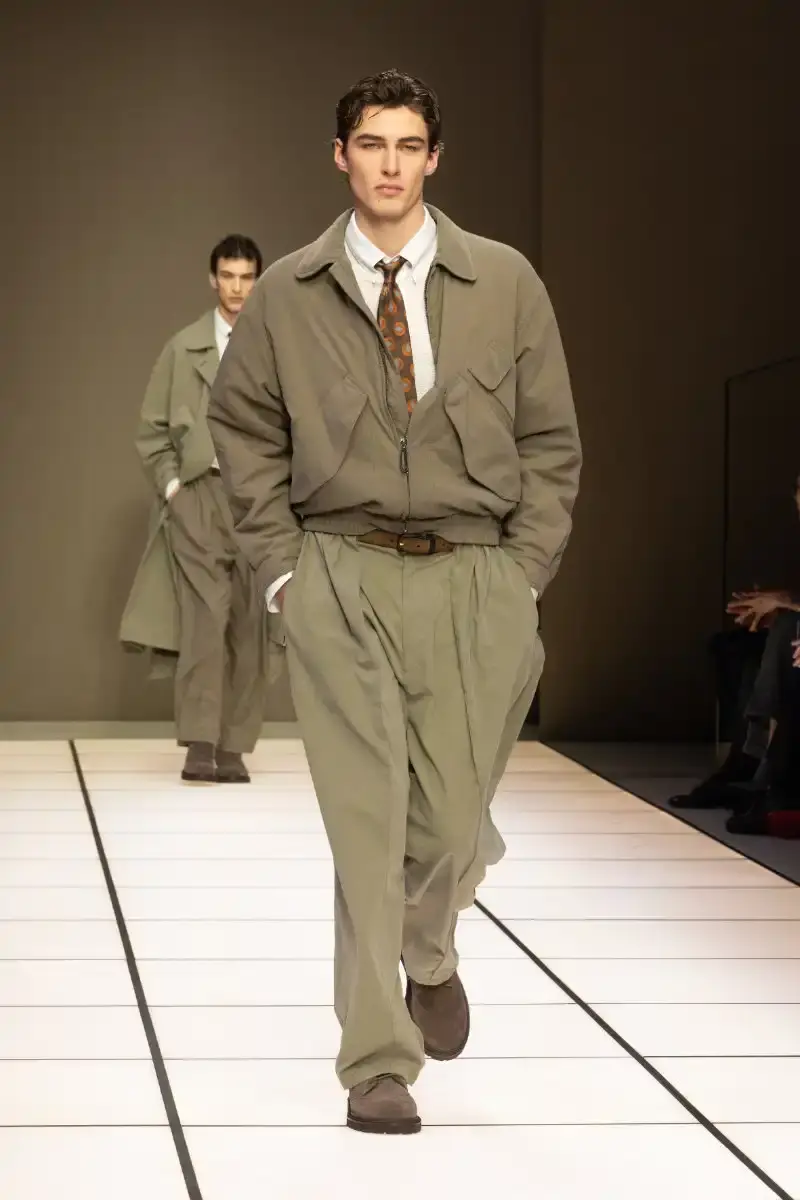
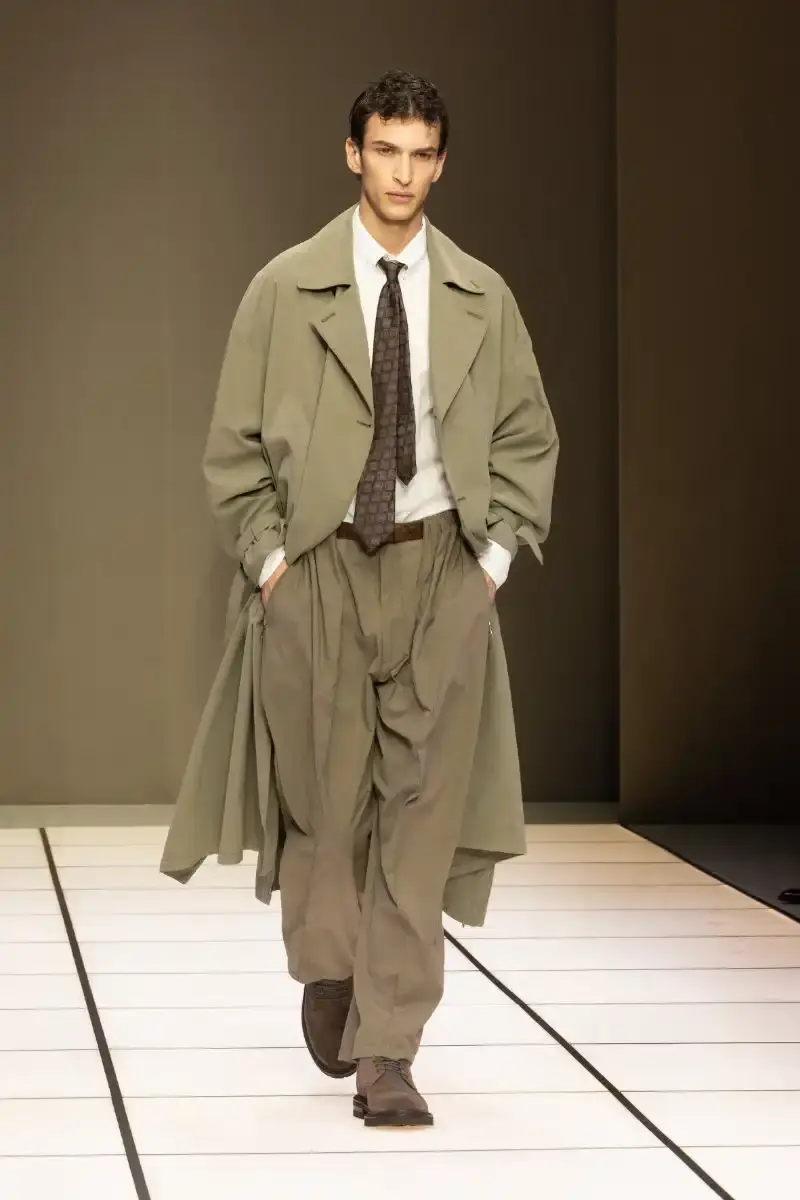
- Fluid silhouettes include bomber jackets, wrap coats, and wide-legged trousers
Giorgio Armani showed its Fall/Winter 2026 collection at Milan Fashion Week. The presentation marked a shift in the house's design approach. Leo Dell'Orco, who spent 40 years working with Mr. Armani, designed his first collection for the brand.
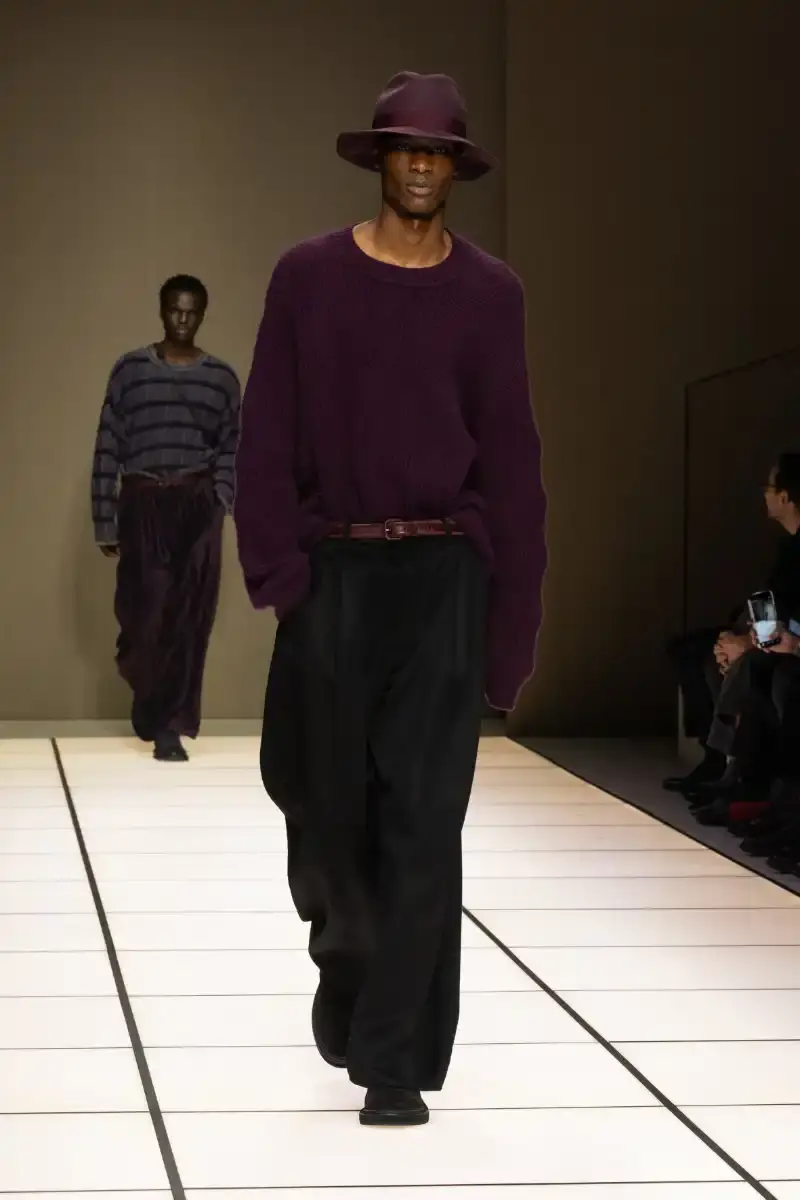
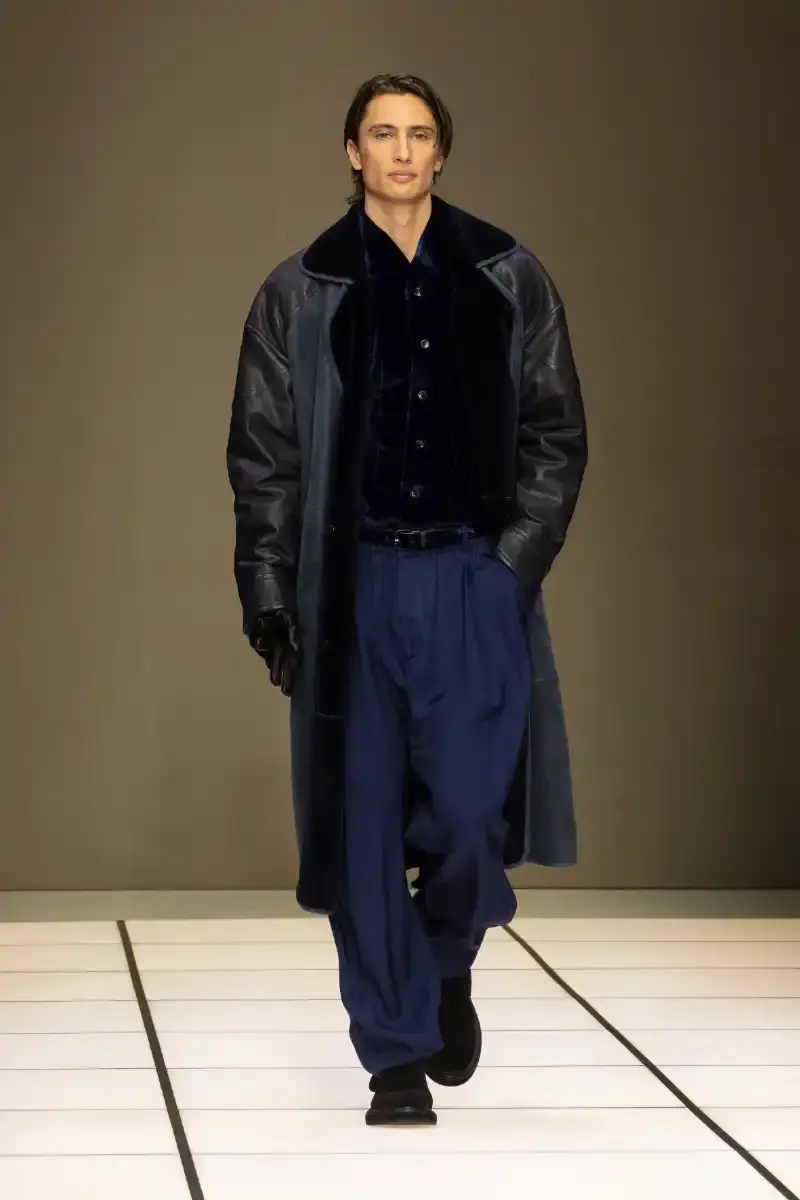
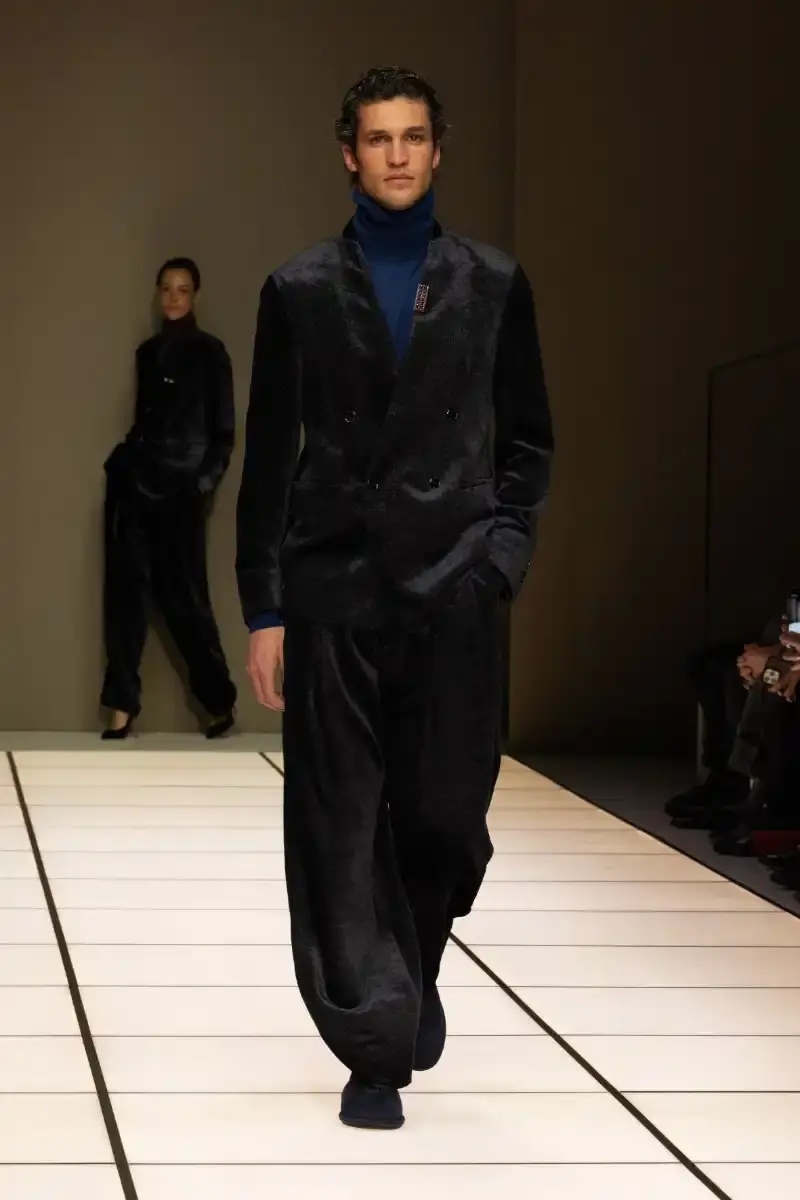
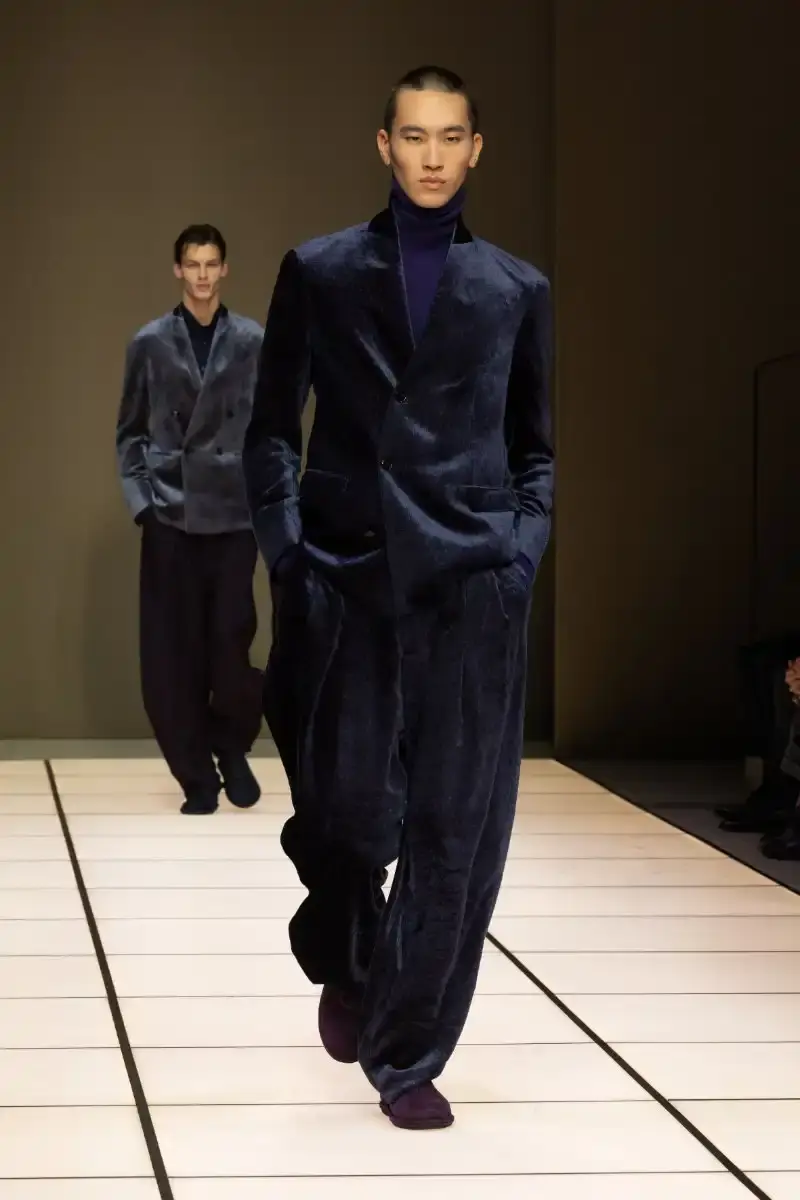
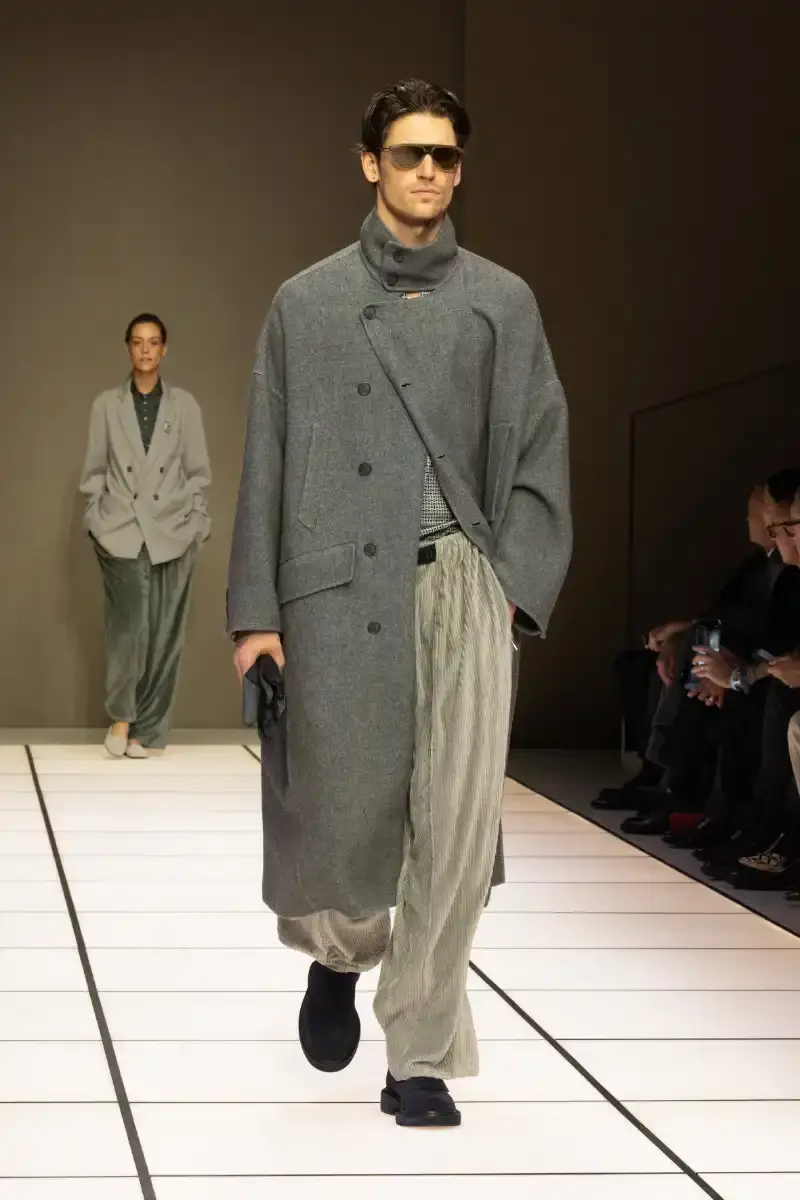
Dell'Orco built the collection around "cangiante," an Italian term. The word describes materials that shift in appearance when viewed from different perspectives. The concept extends beyond fabric to influence how garments interact with light and movement.
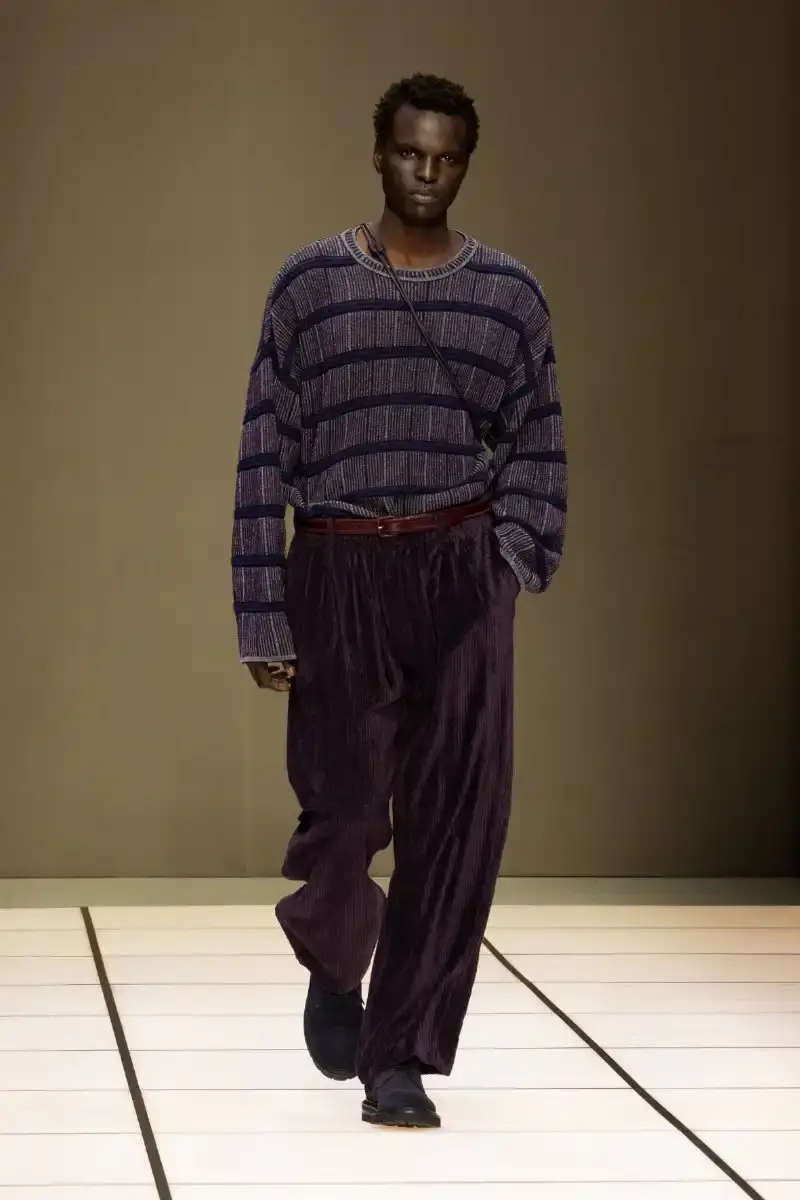
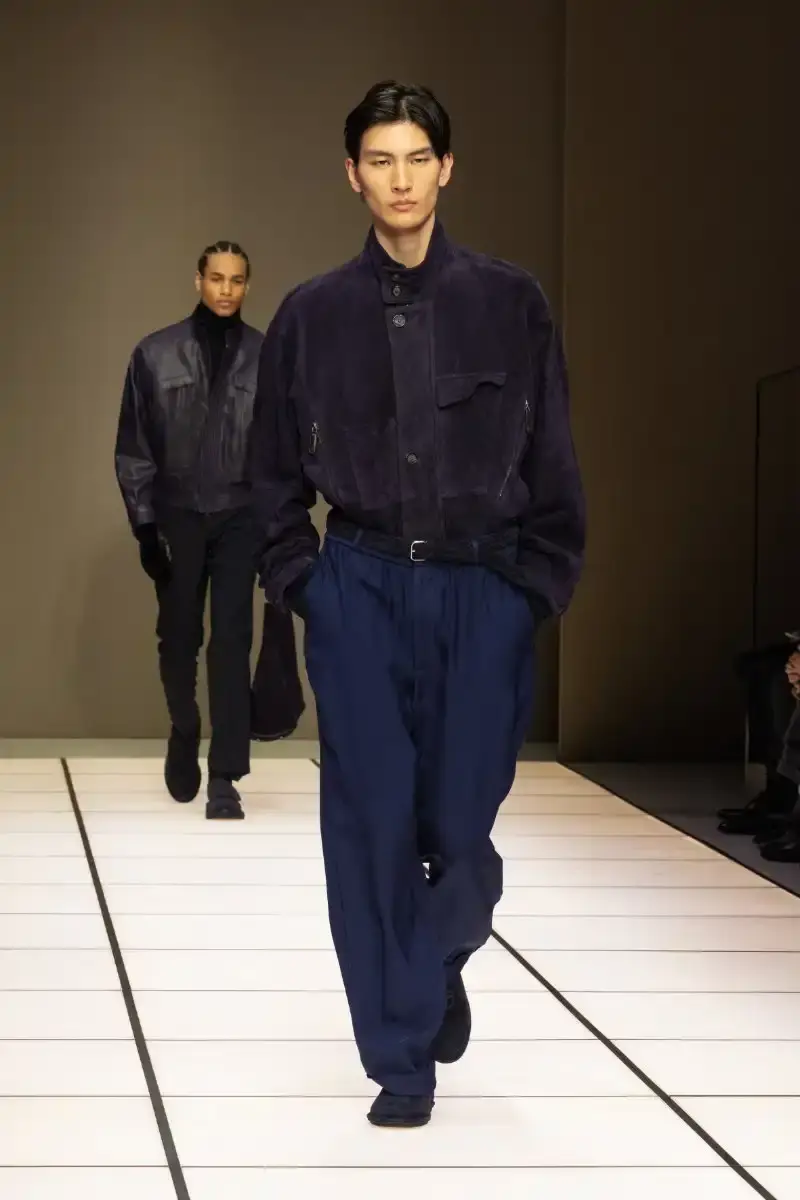
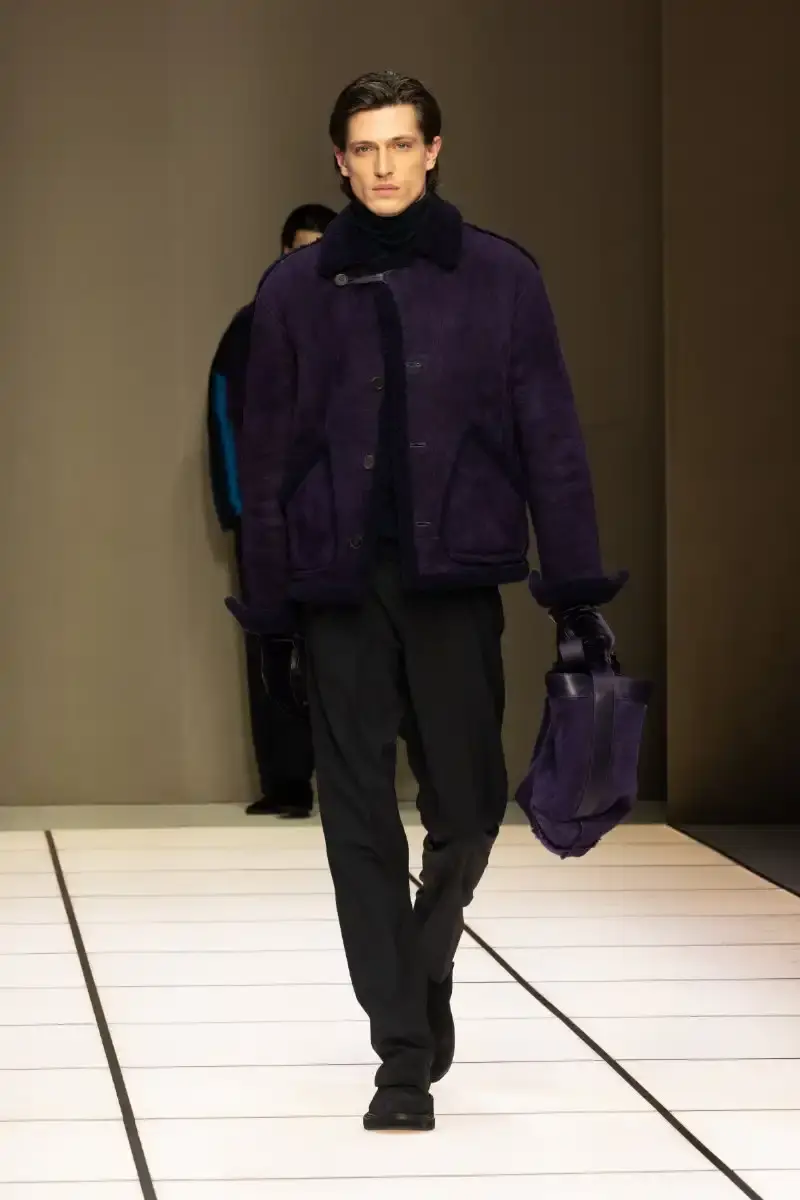
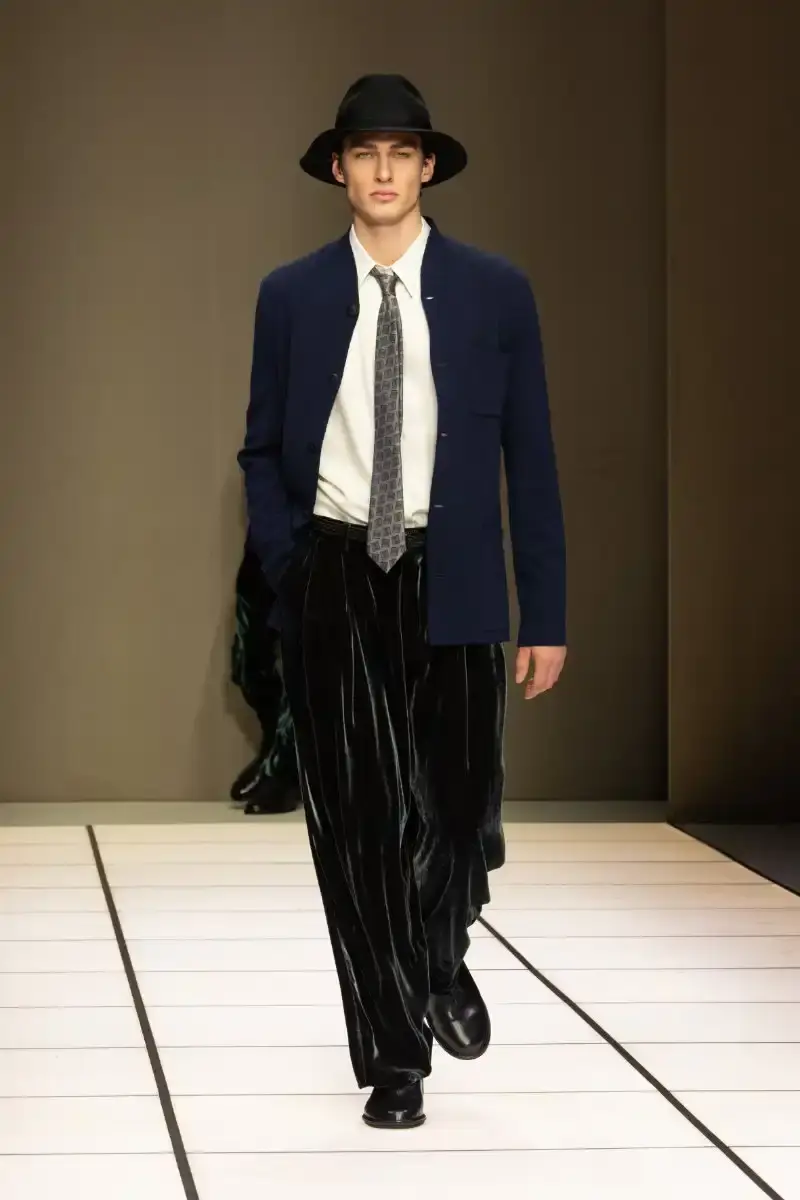
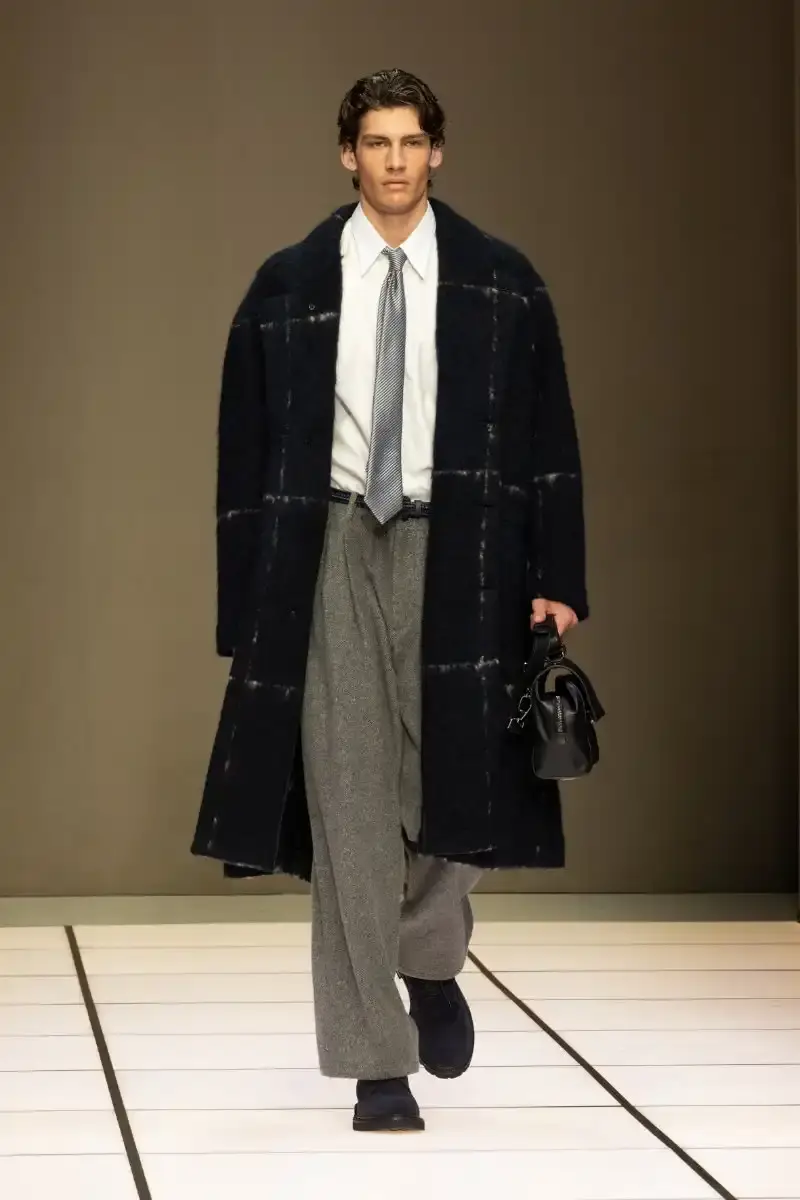
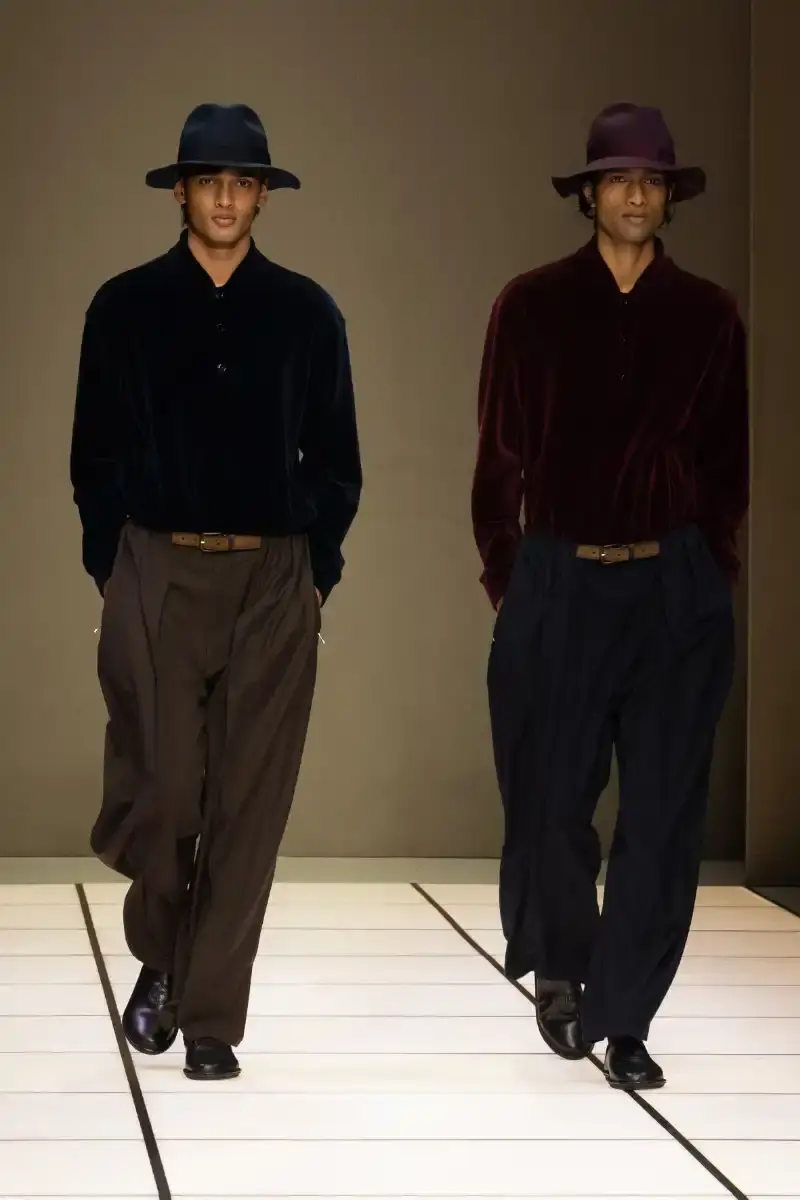
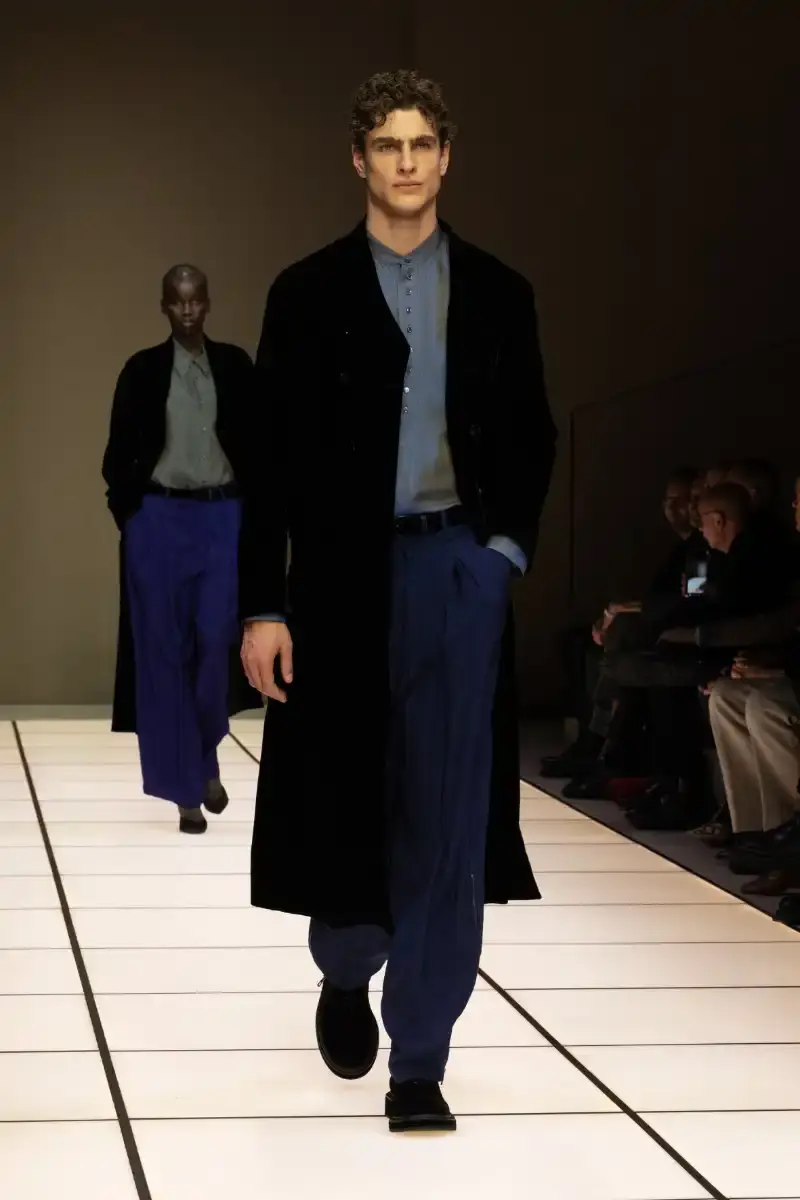
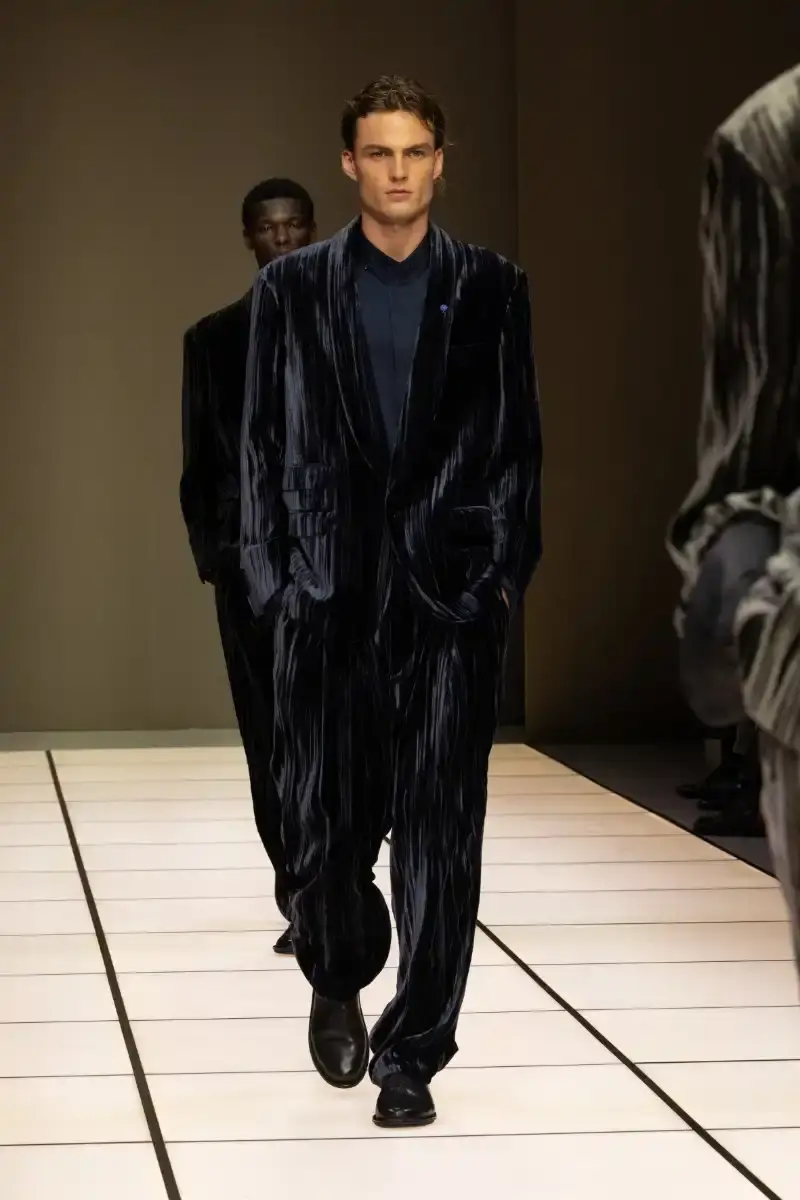
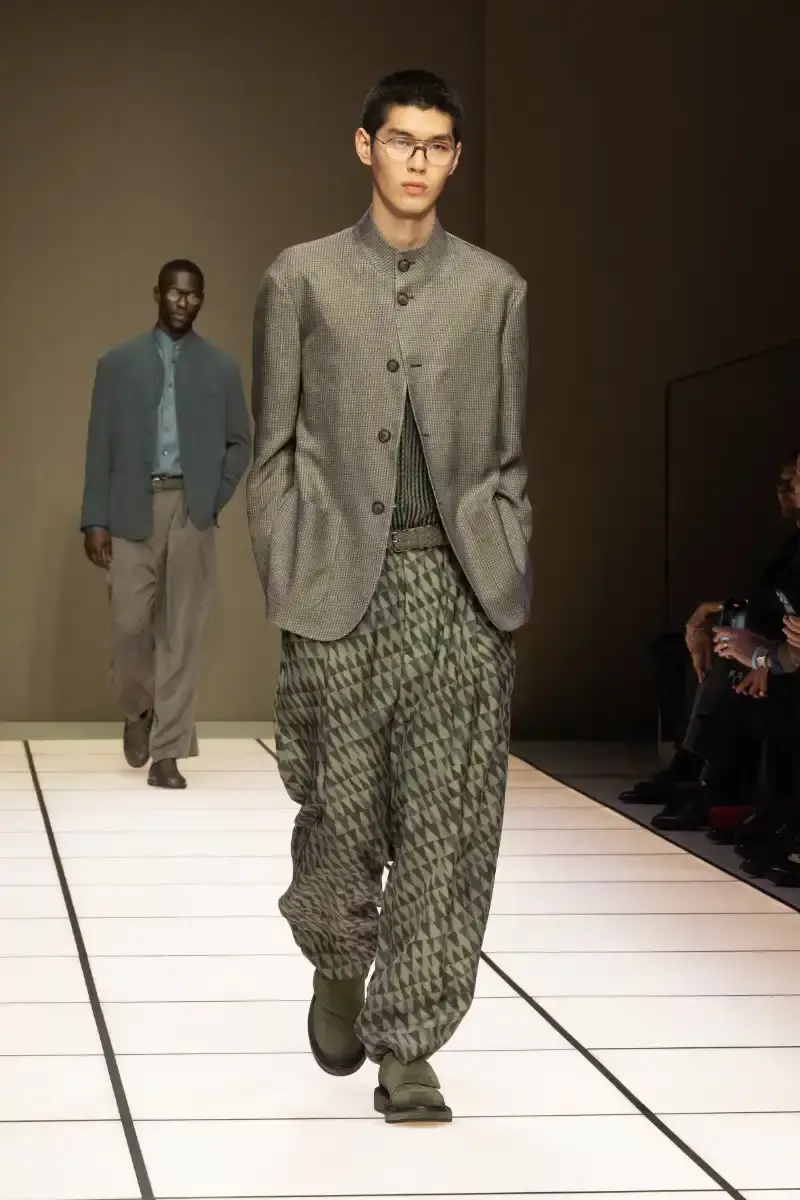
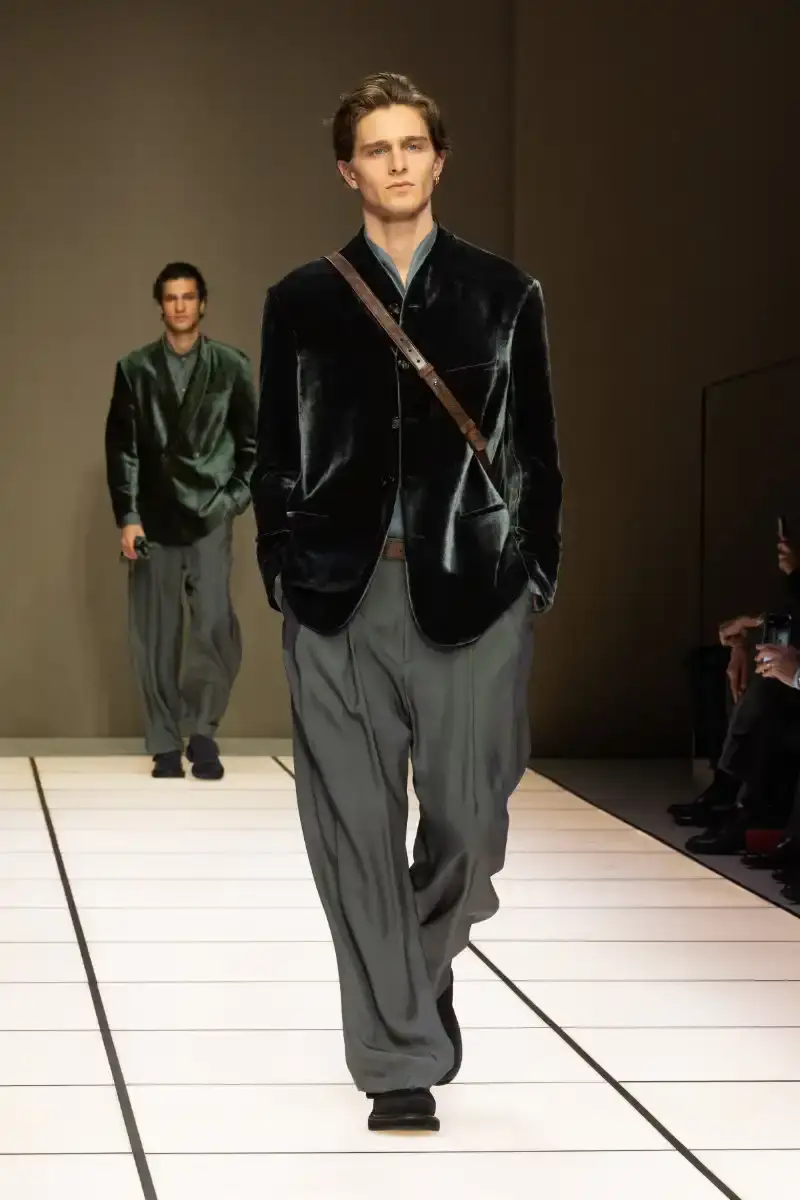
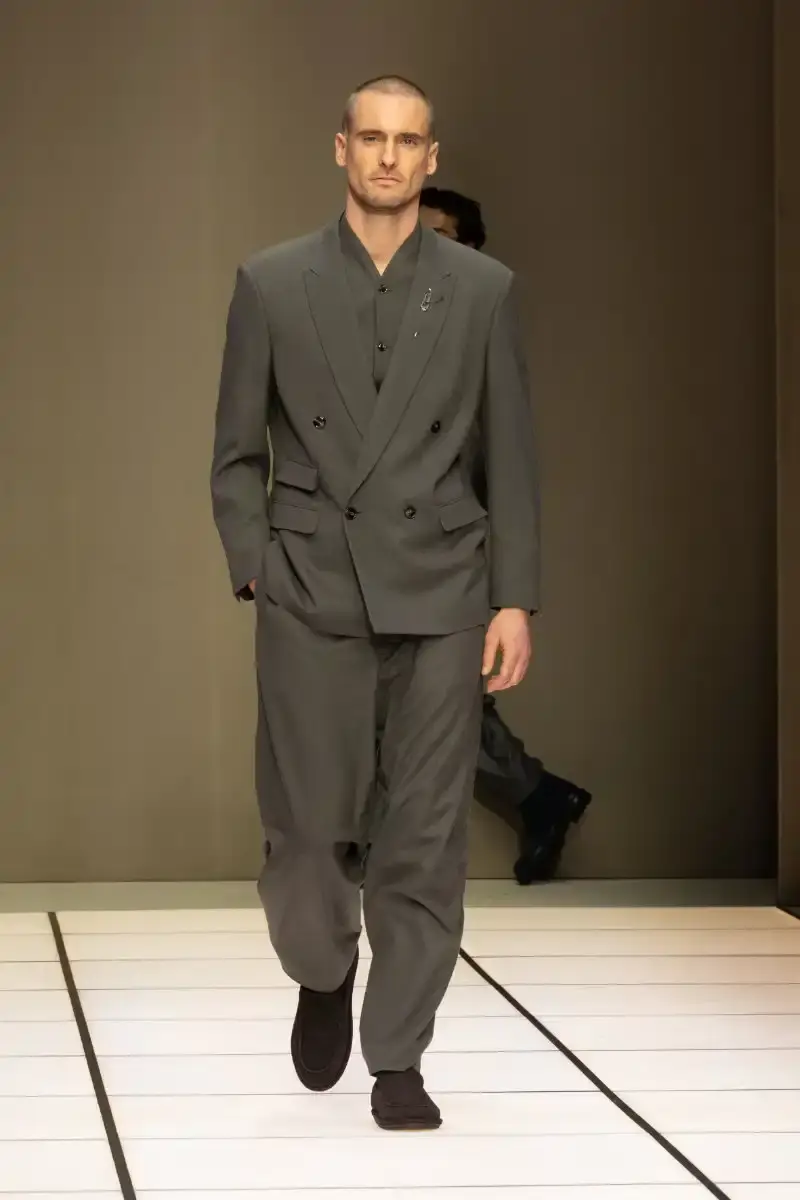
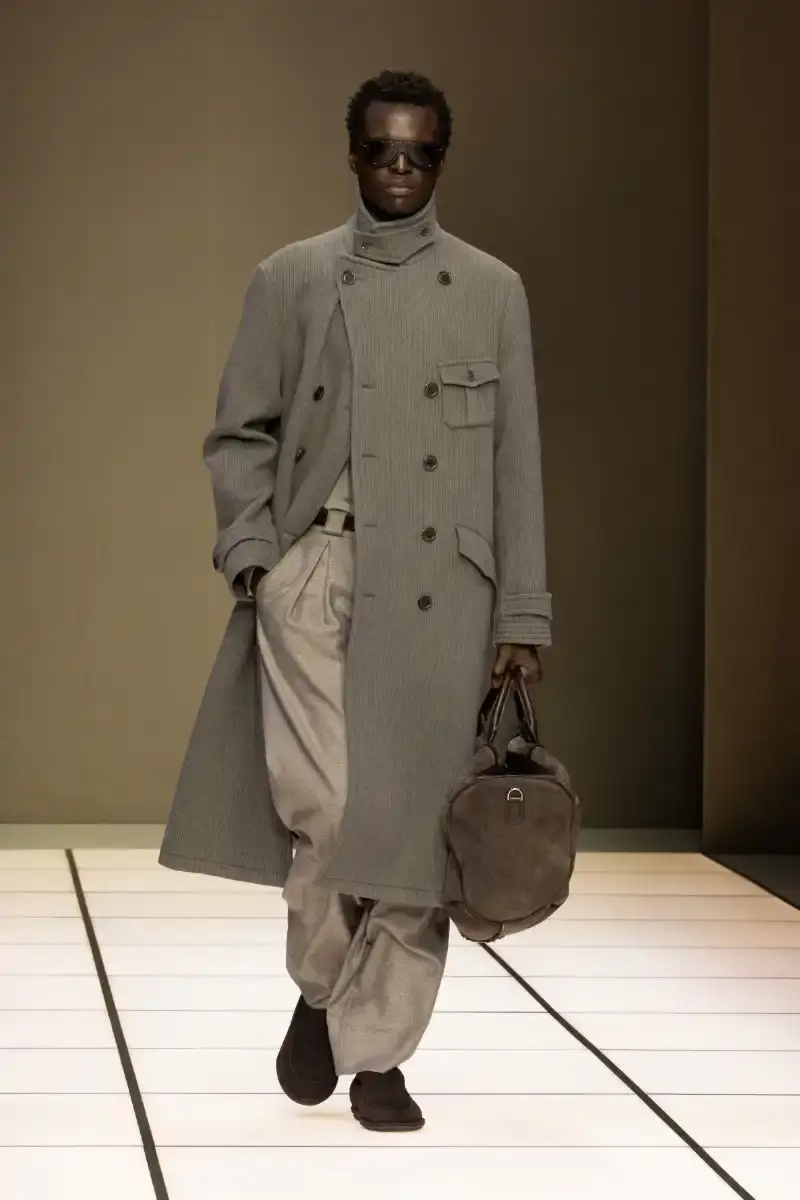
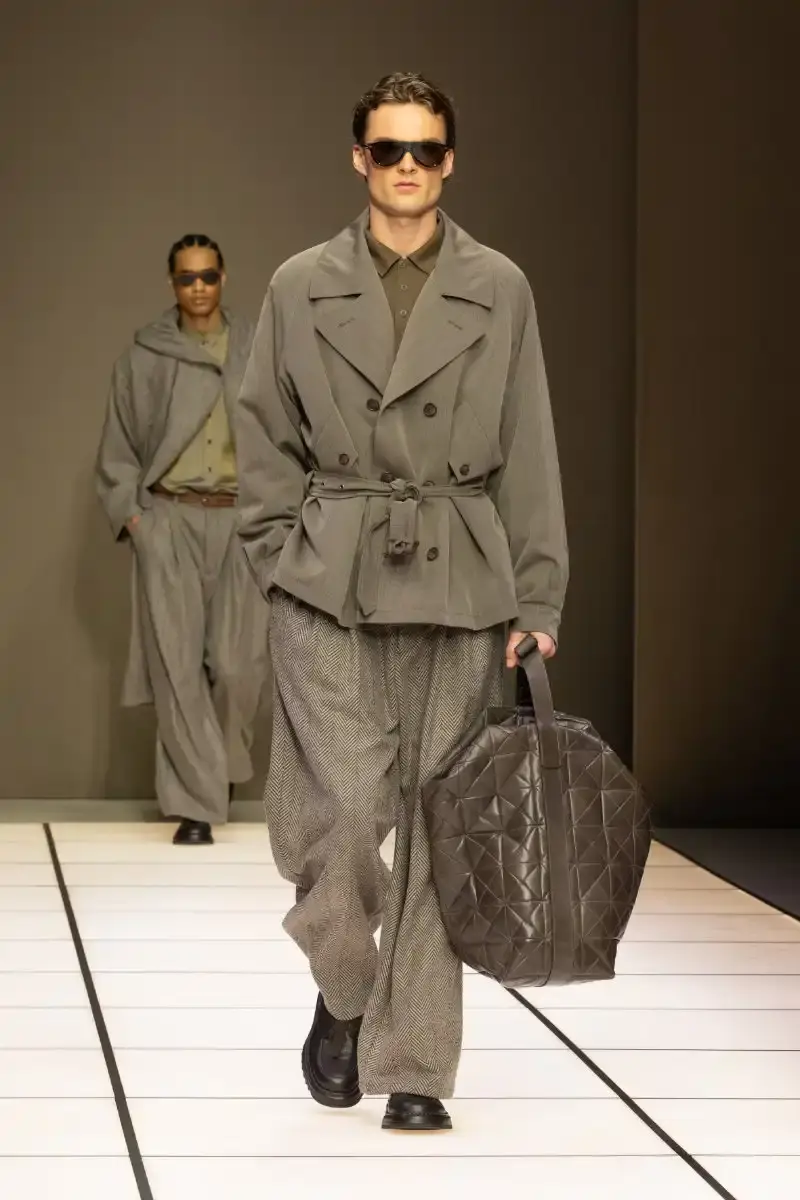
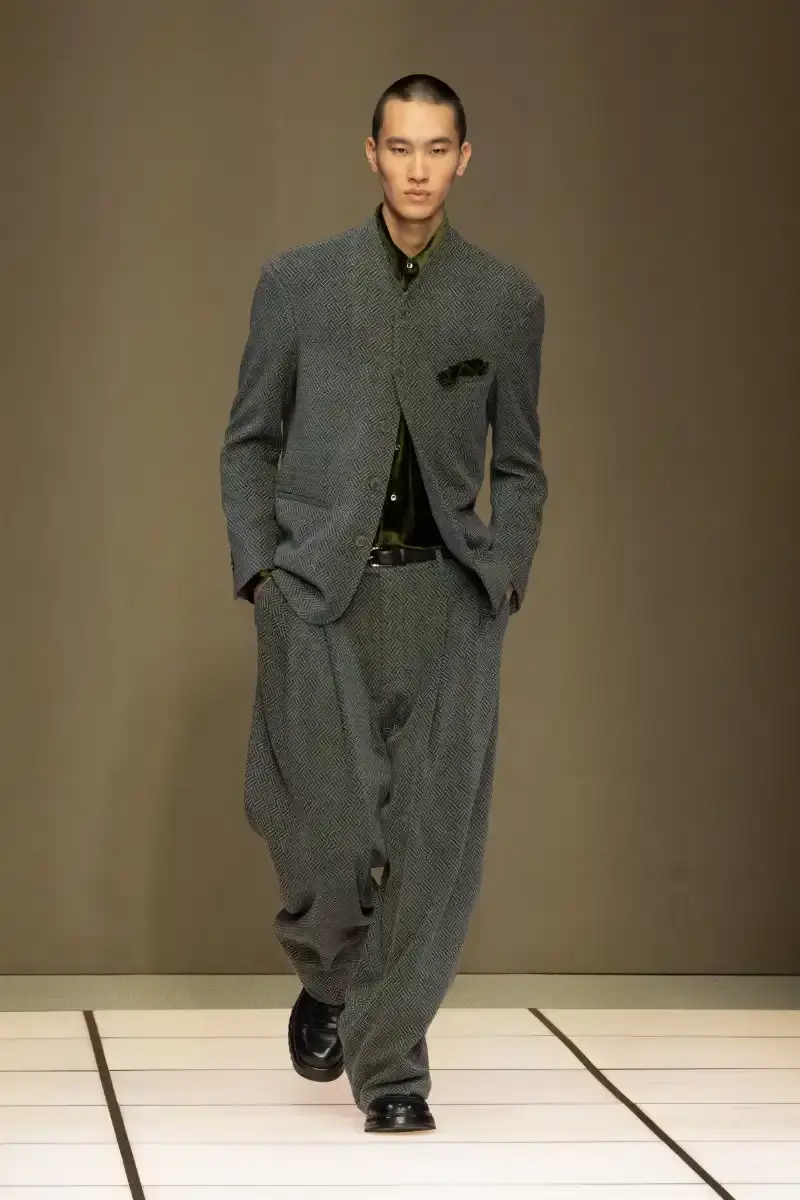
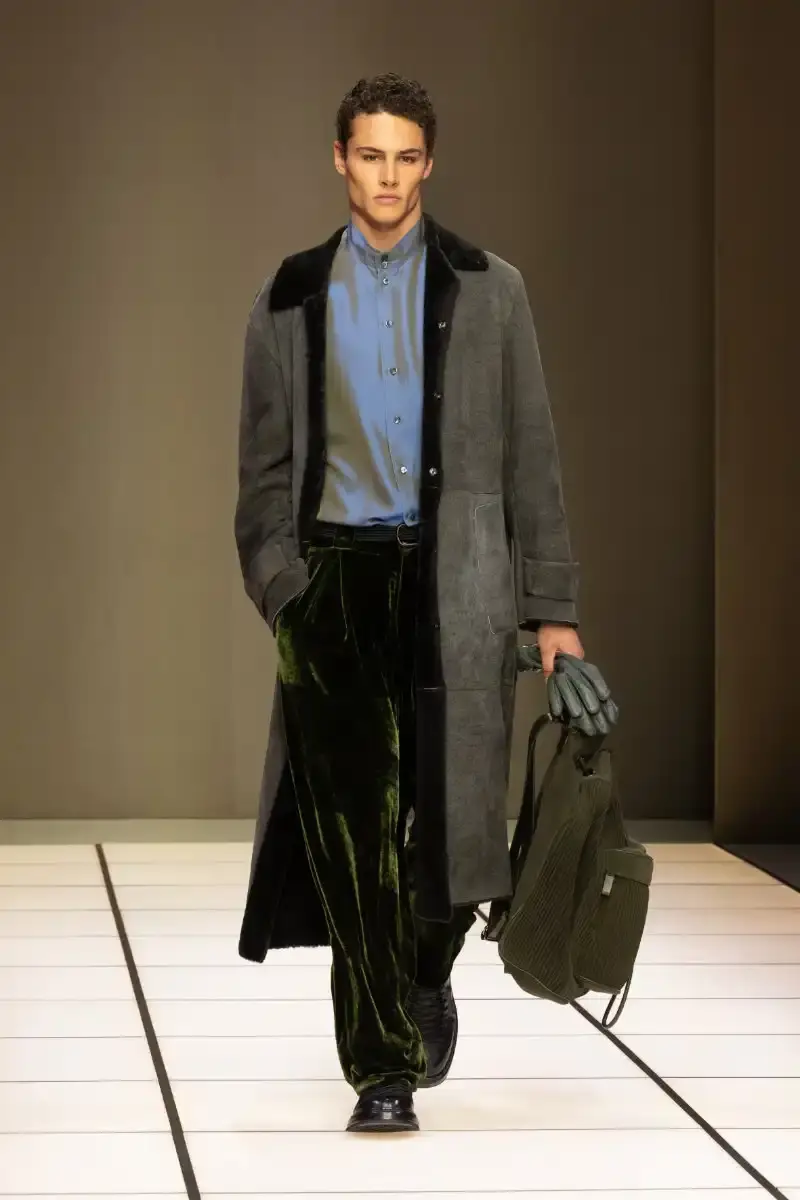
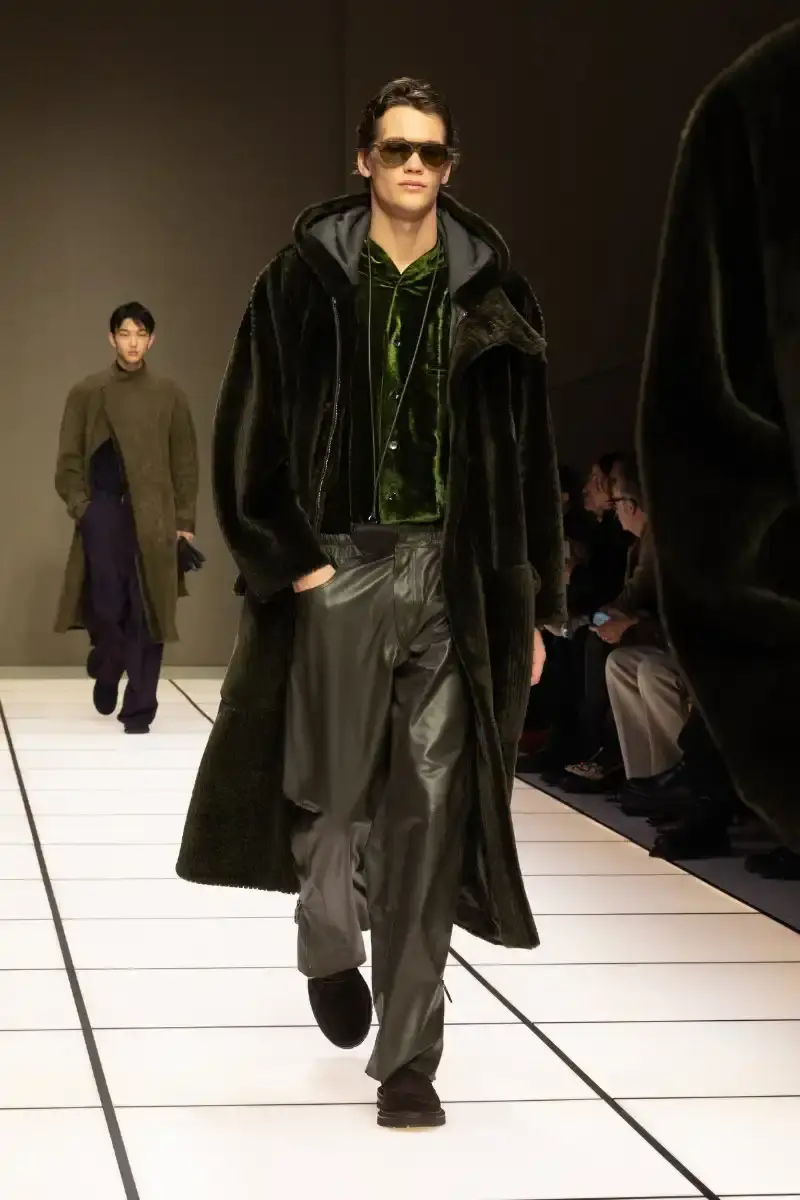
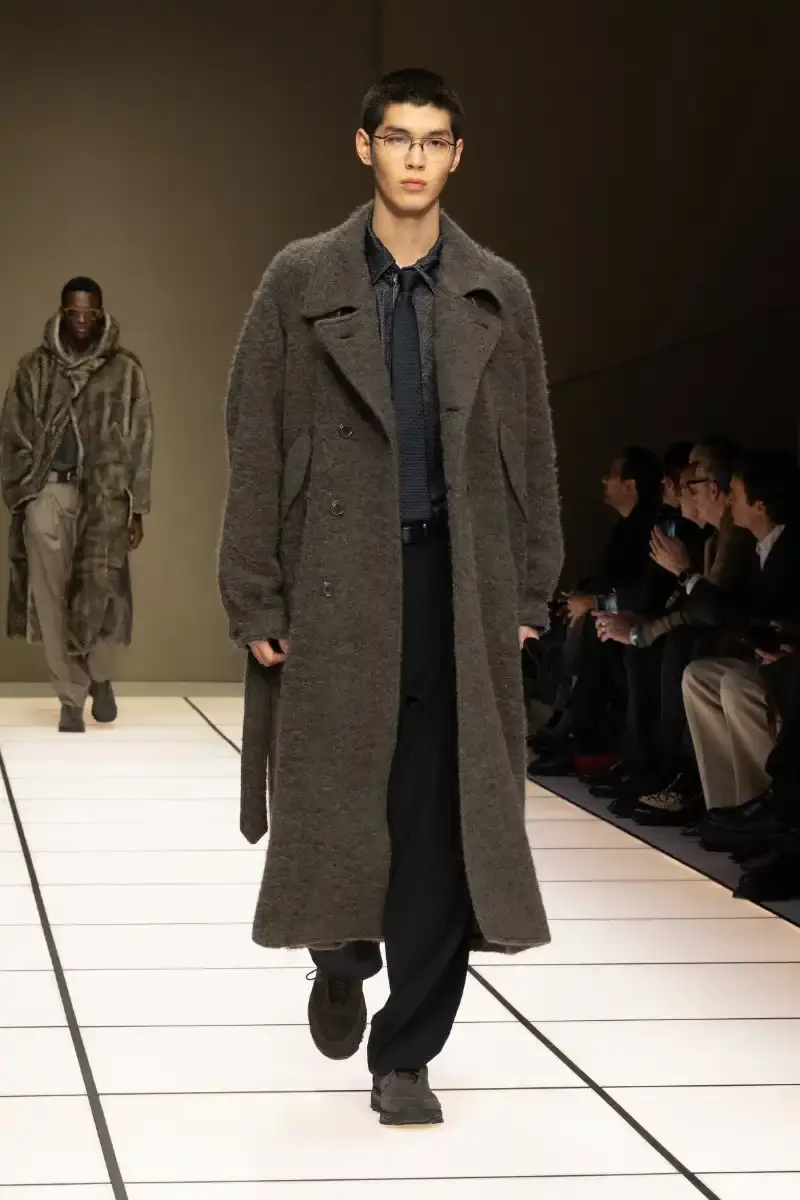
The color palette divides into two groups. Neutral tones form the base: grays, beiges, and deep blues create a foundation. Accent colors appear in olive green, amethyst purple, and lapis lazuli blue. These shades stay subtle but define key pieces throughout the collection.
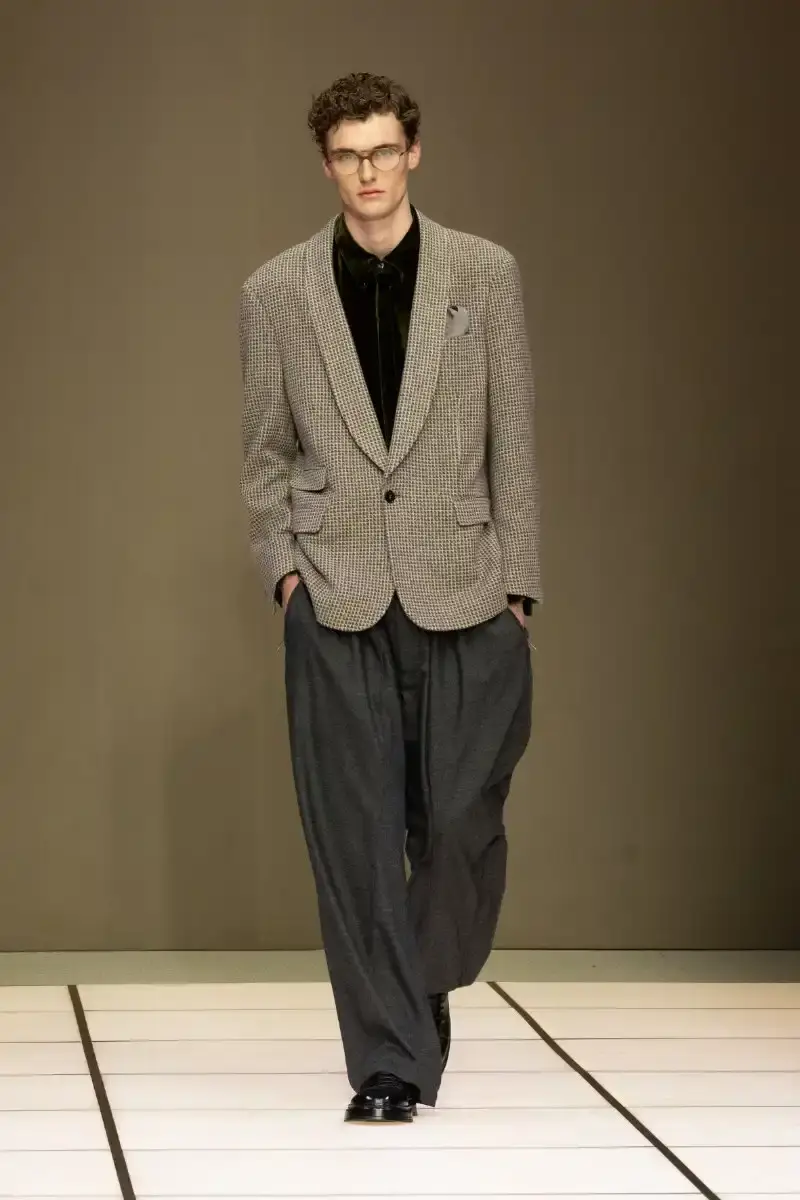
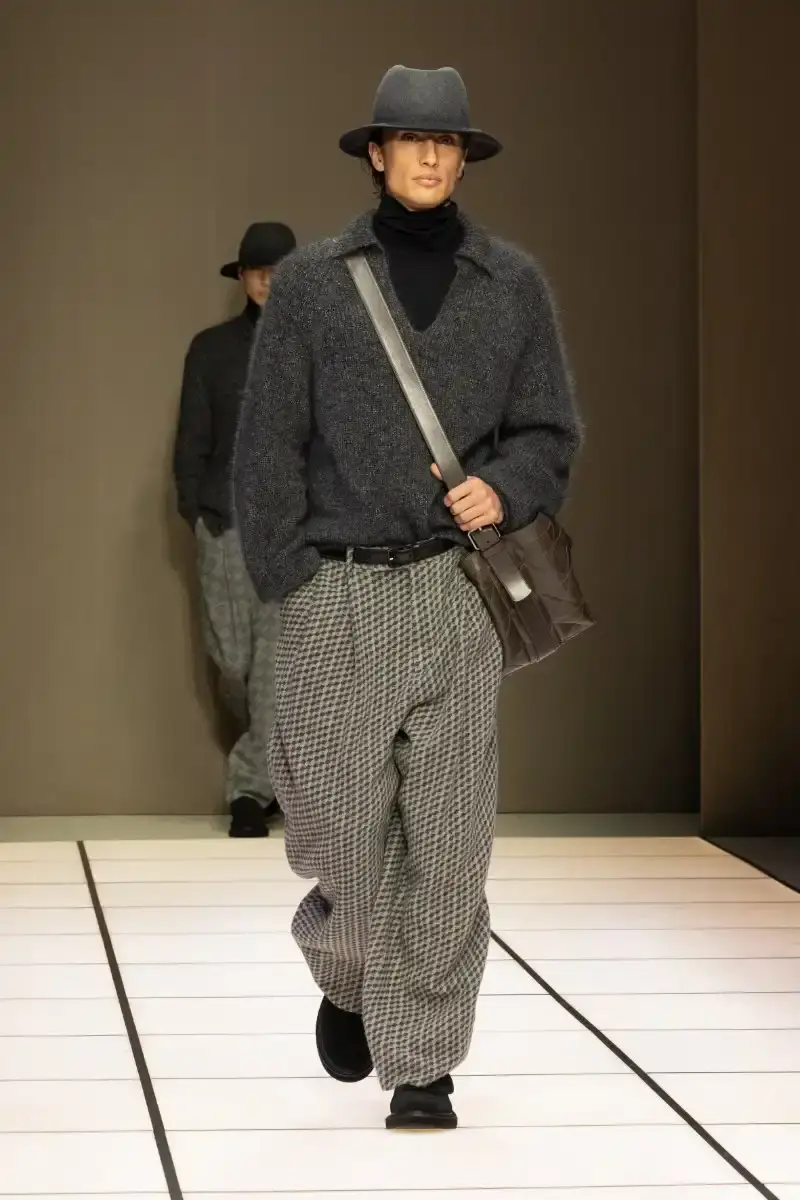
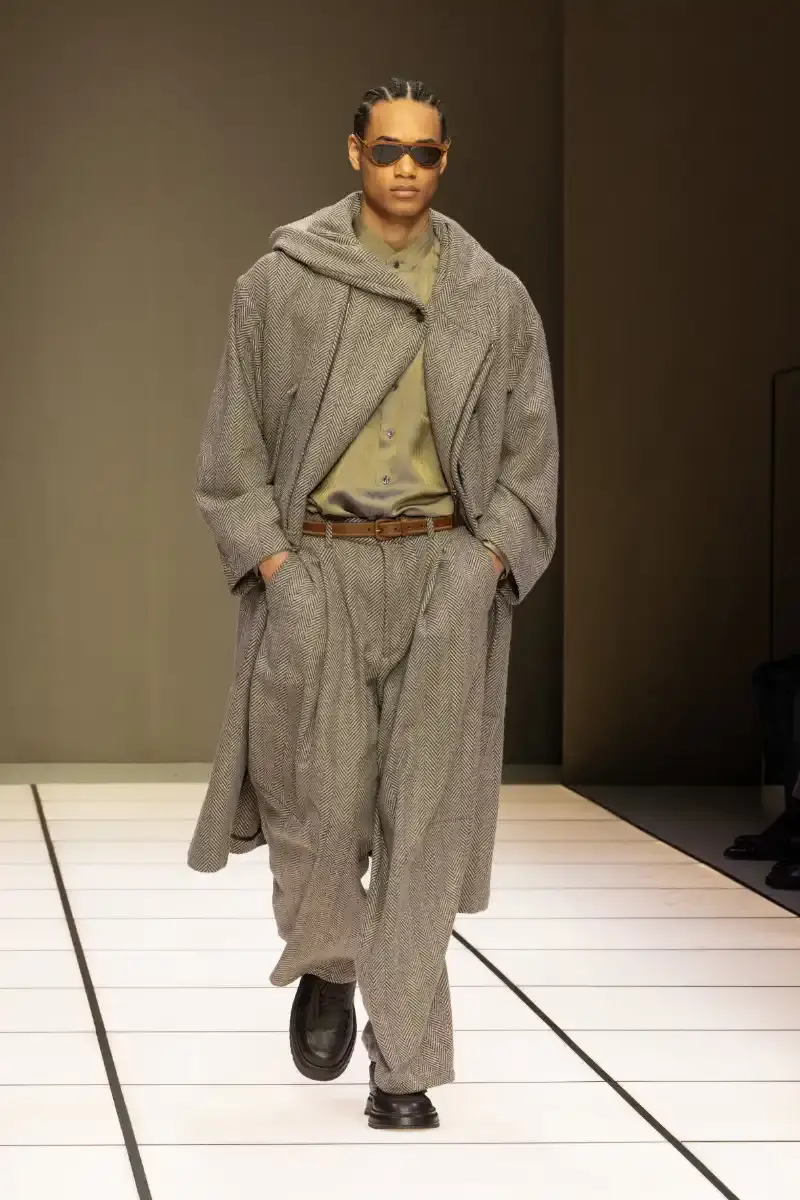
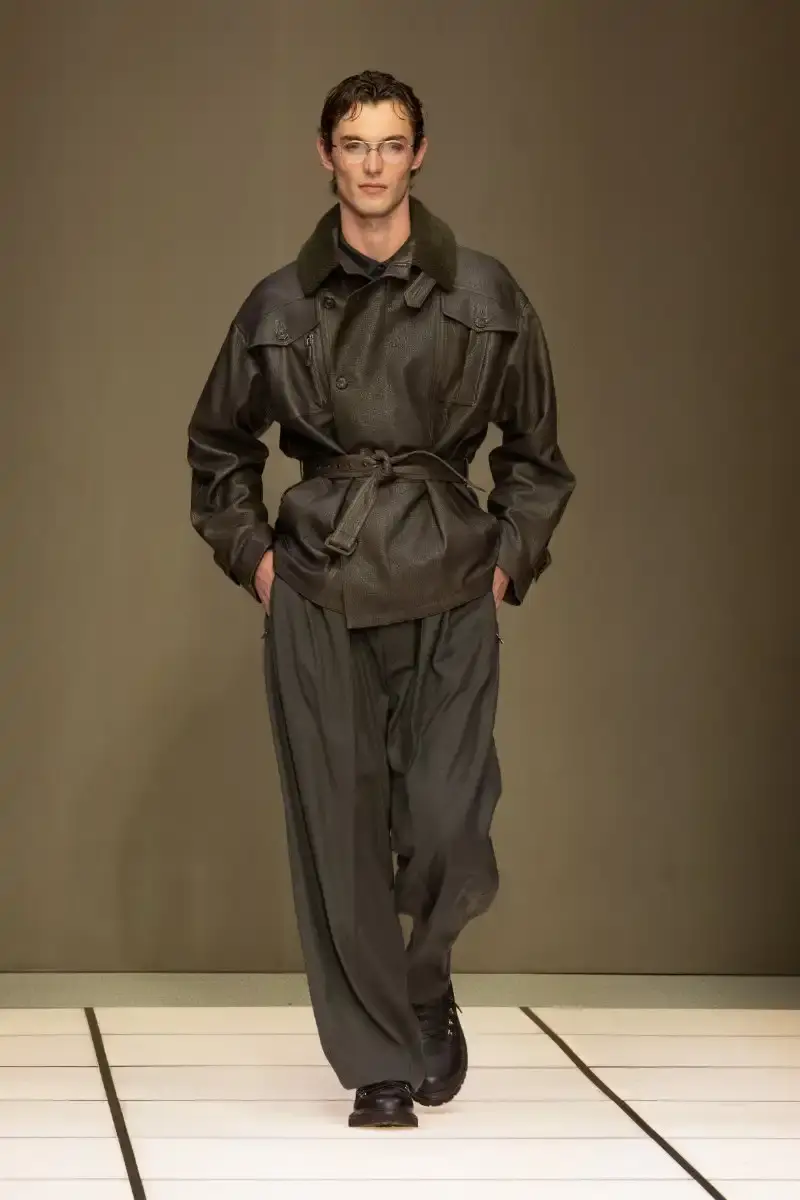
Fabric selection drives the visual effect. Iridescent velvet catches light at different angles. Crepe and chenille add texture variation. Dell'Orco paired these with brushed cashmere, felted wool, and matte leather. The mix creates surfaces that respond differently to movement and illumination.
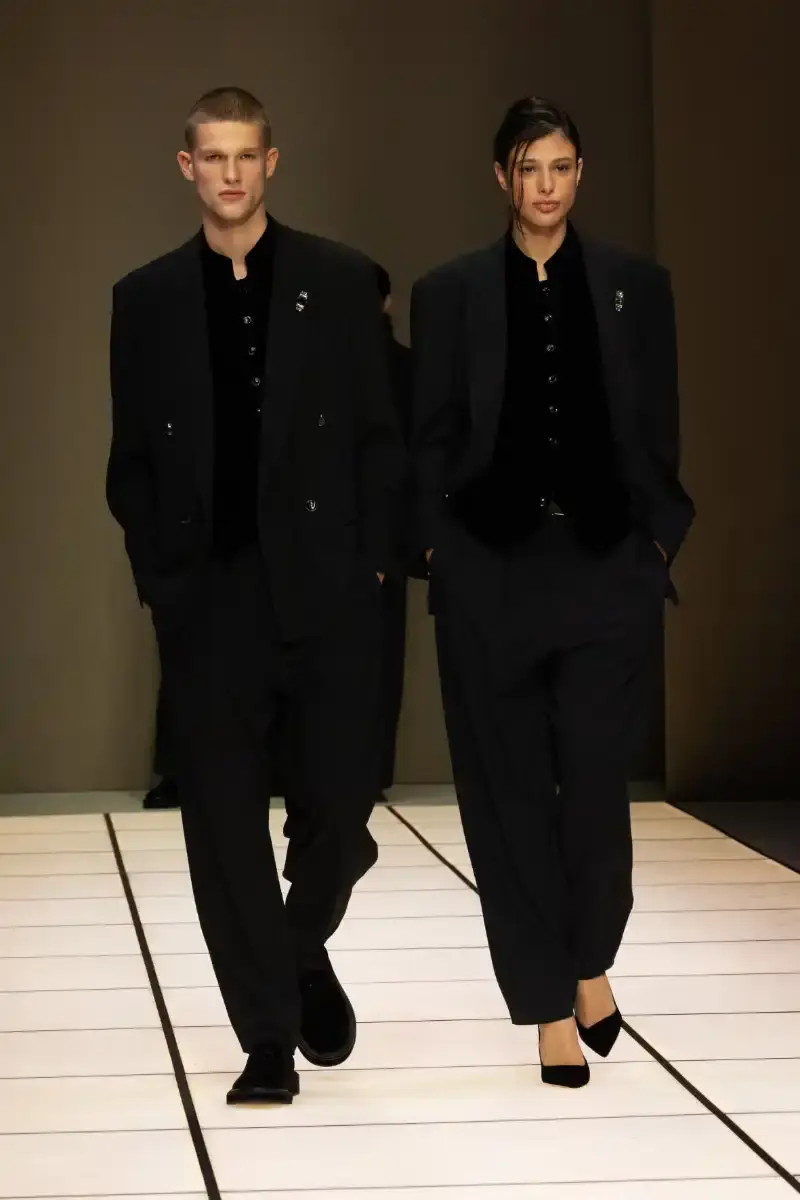
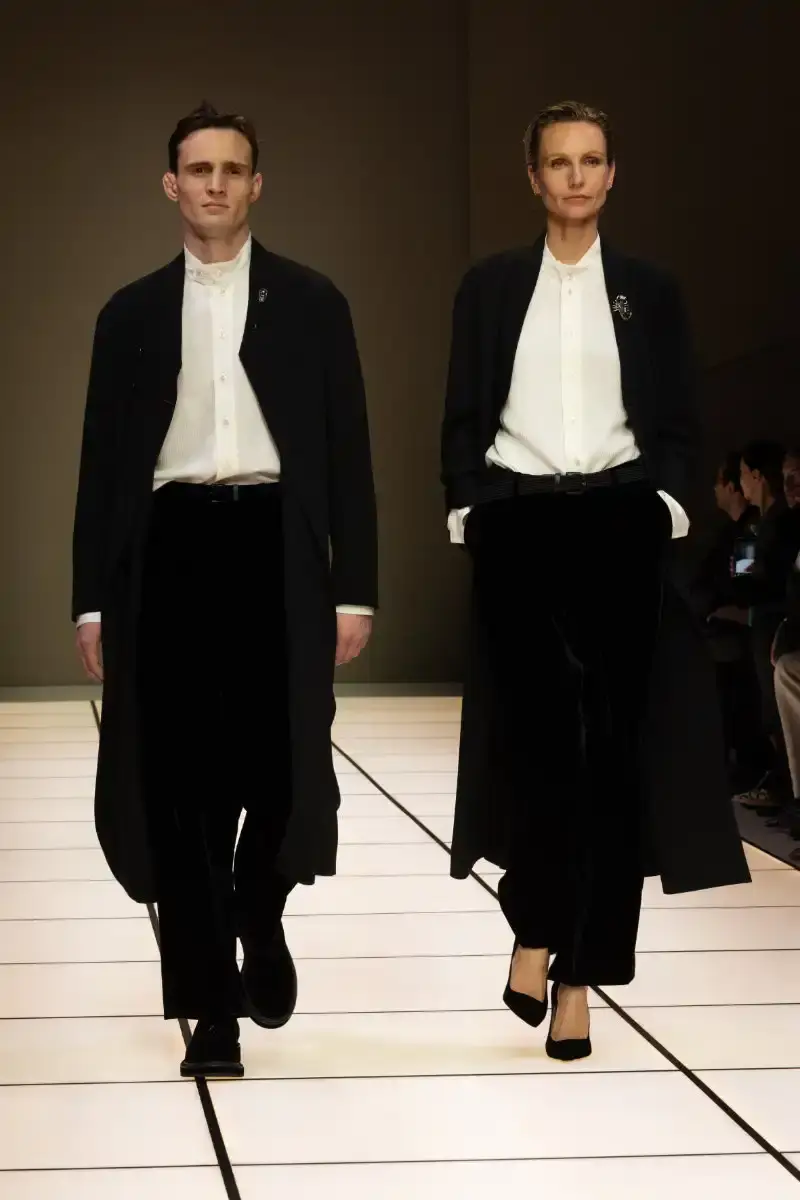
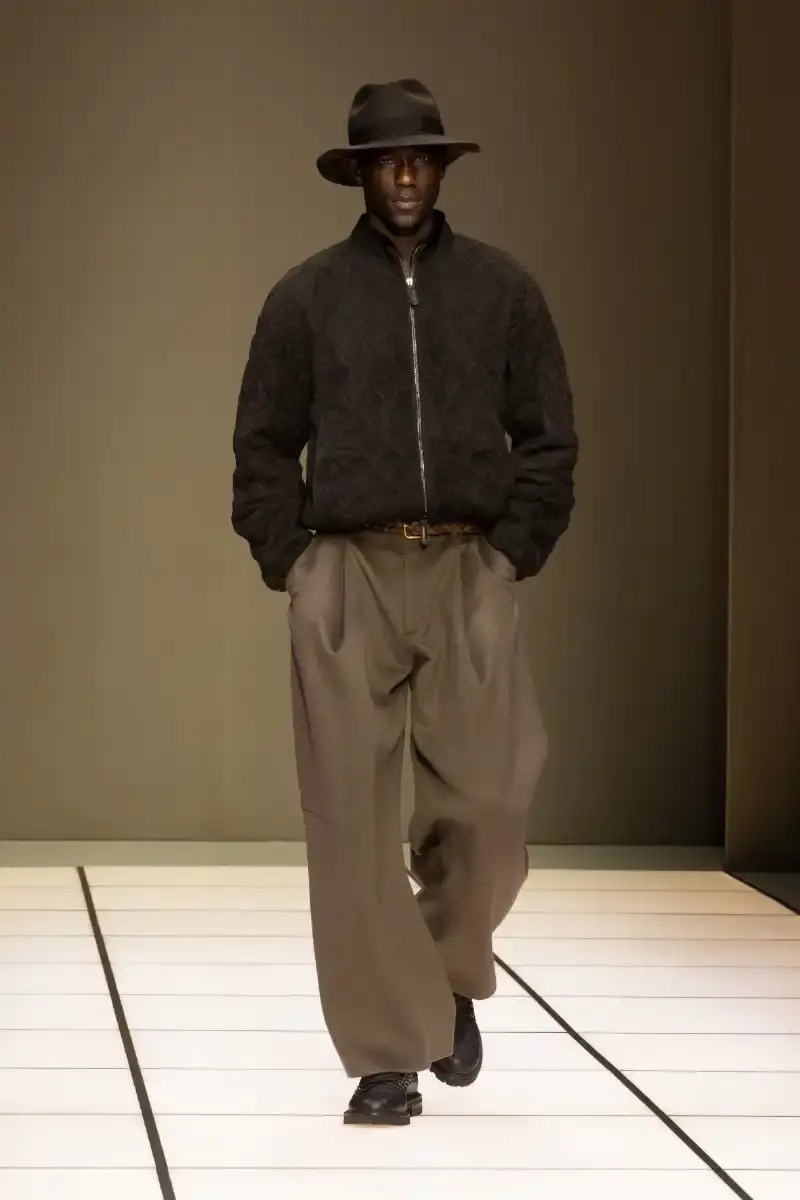
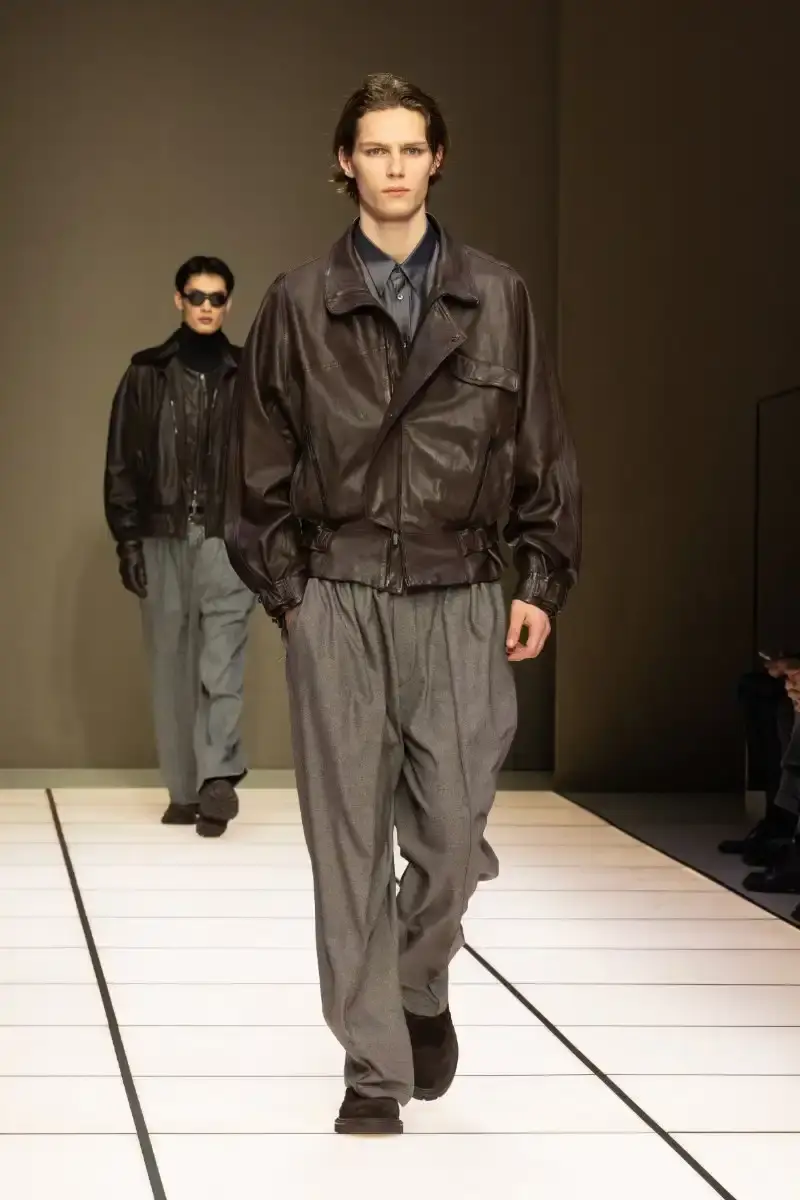
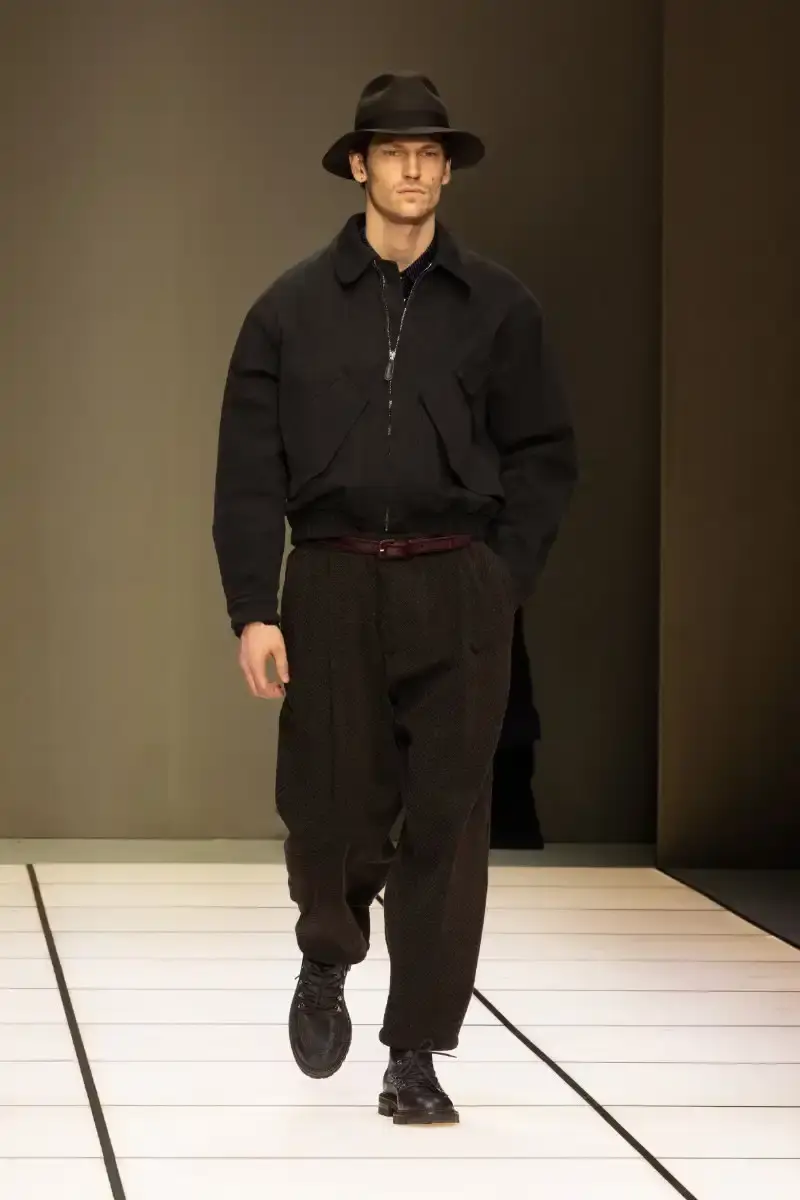
Silhouettes favor ease over structure. Bomber jackets appear in multiple variations. Low-button coats extend past the hip. Wrap coats close without hardware. Collarless shirts eliminate traditional neck construction. Wide-legged trousers fall straight from the waist. Suede shoes and boots complete the looks.
The garments follow body movement. Construction methods allow fabric to shift with the wearer. Rigid elements stay minimal. This approach contrasts with tailoring that holds a fixed shape.
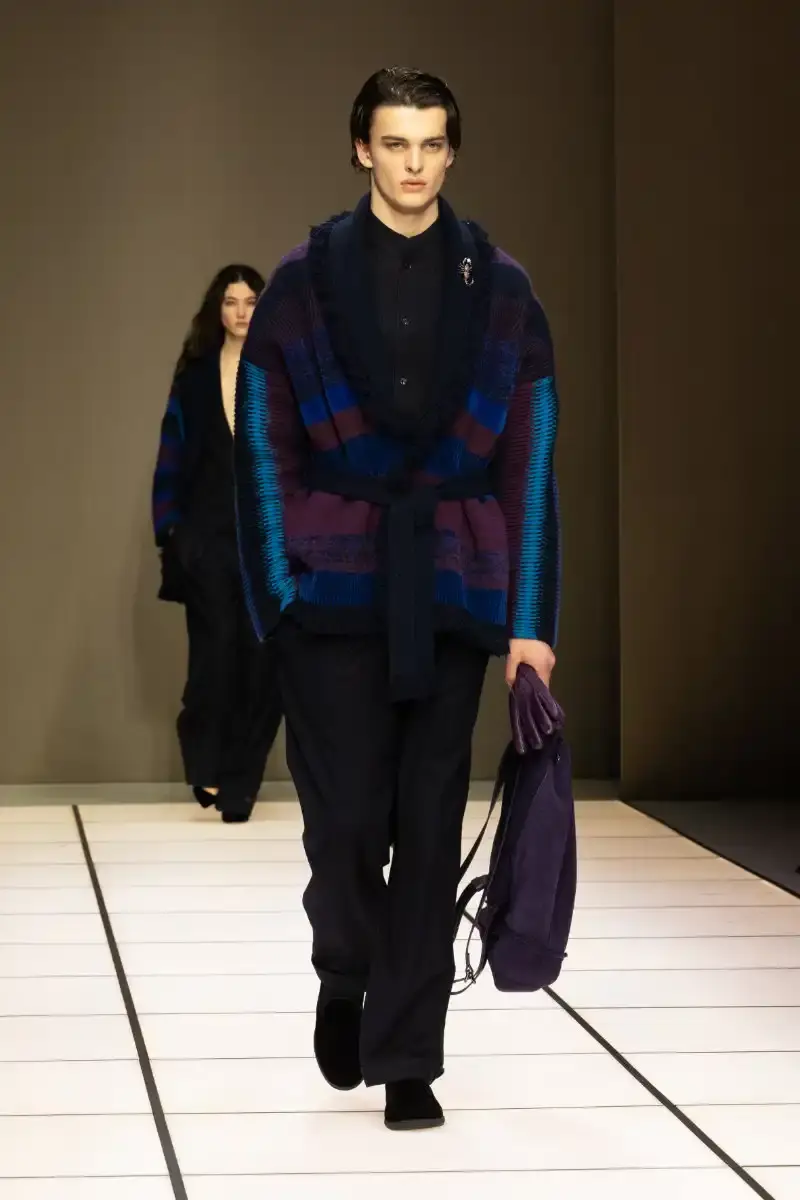
Knitwear fills several roles in the collection. A geometric jacquard cardigan stands out as a collaboration piece. Armani worked with Alanui, a knitwear brand, on the design. The piece works across body types and gender presentations.
Other knit pieces use different techniques. Some feature tight, dense stitches. Others use open, loose patterns. The variety shows how knitwear functions as both structure and drape.
The collection explores dualities. Shine meets matte in single garments. Soft textures pair with firm ones. What looks heavy moves light. What appears structured drapes freely.
Dell'Orco's approach shows his time with Armani. The collection maintains codes the house established: neutral palettes, relaxed fits, and attention to how clothes perform in daily wear. The iridescent elements and color choices add his perspective.
This transition happens as fashion houses face questions about succession and identity. Armani, now in his 90s, built a brand recognized worldwide. Dell'Orco's long tenure inside the company gives him insight into its methods. His first collection demonstrates continuity with room for evolution.
The Fall/Winter 2026 line will arrive in stores later this year. Prices and specific retail dates have not been announced. The collection will sell through Armani boutiques and select department stores worldwide.
Milan Fashion Week continues with presentations from other Italian houses. The season features both established brands and emerging designers. Armani's show drew industry professionals, buyers, and press from multiple countries.
Dell'Orco's debut collection presents a direction for Armani going forward. The clothes maintain the brand's focus on wearability while introducing new material treatments and color approaches. How this balance develops will shape the house's identity in coming seasons.
Eric Grischott
Born in Groningen in 1991, Eric Grischott is a linguist with a deep-rooted passion for art, music, and fashion. His academic journey led him to graduate in languages, further enriching his linguistic prowess. His thirst for knowledge and cultural immersion took him abroad, where he gained invaluable experience and insights. Eric’s linguistic expertise is not confined to just theory. He has honed his skills in French and German through specialized DELF and DELE courses, demonstrating his commitment to mastering these languages. His passions extend beyond languages, encompassing the creative realms of art, the rhythmic world of music, and the dynamic sphere of fashion.
Share this article
RELATED

ARC'TERYX AND BEAMS RELEASE KOYO LINE


