Summary:
- Cybersecurity researchers confirmed 17.5 million Instagram user records leaked on dark web forums in early January 2026
- The breach exposes full names, email addresses, phone numbers, user IDs, and partial location data
- Users face increased risks of identity theft, phishing attacks, and SIM swapping schemes
A data breach has exposed personal information from 17.5 million Instagram accounts. The compromised records now circulate on dark web forums, putting users at risk for identity theft and targeted fraud.
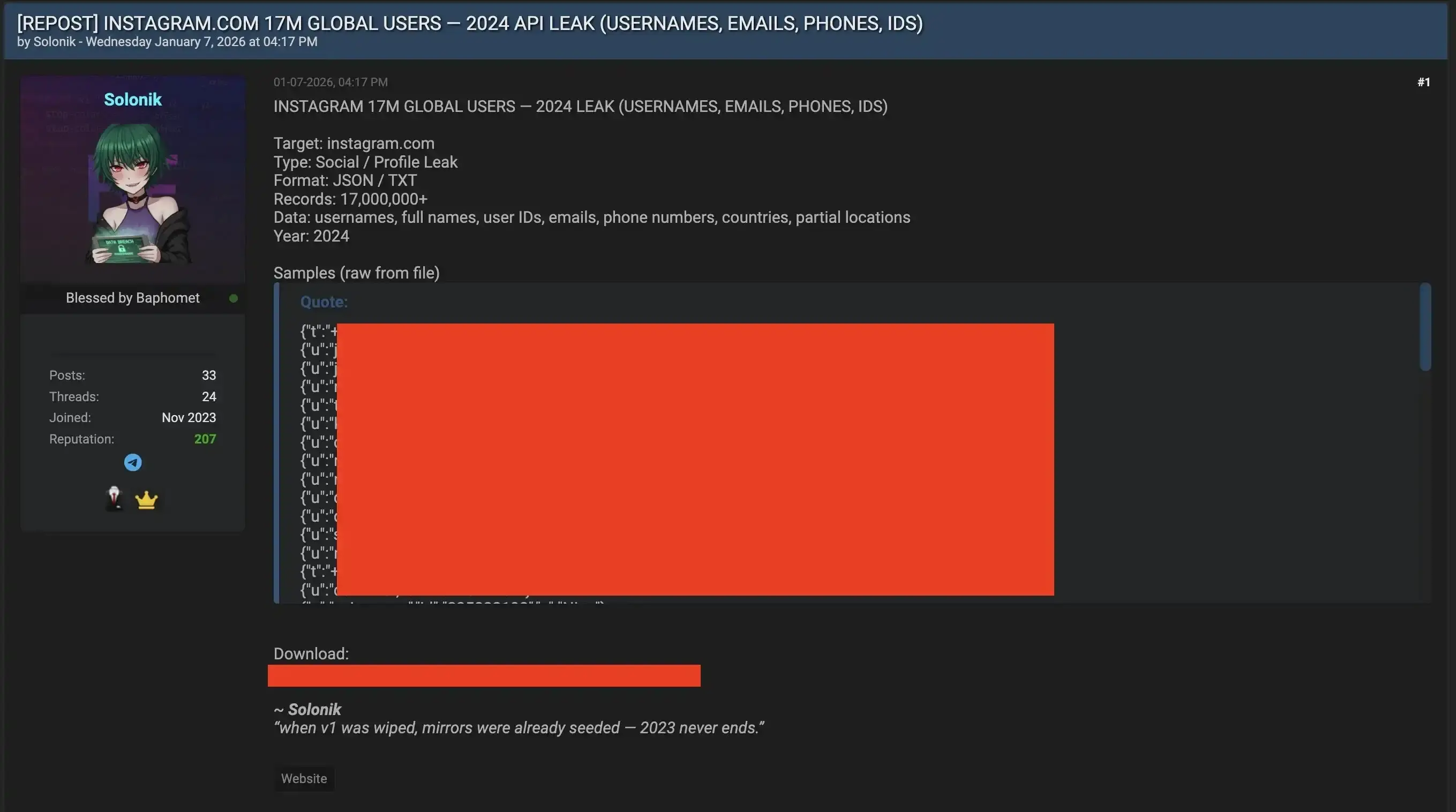
Cybersecurity researchers at Malwarebytes first identified the leak through monitoring dark web activity. As wrote Cyber Press, the dataset appeared on a hacking forum in early January 2026, posted by a user named "Solonik." The listing describes the breach as a 2024 API leak affecting global users.
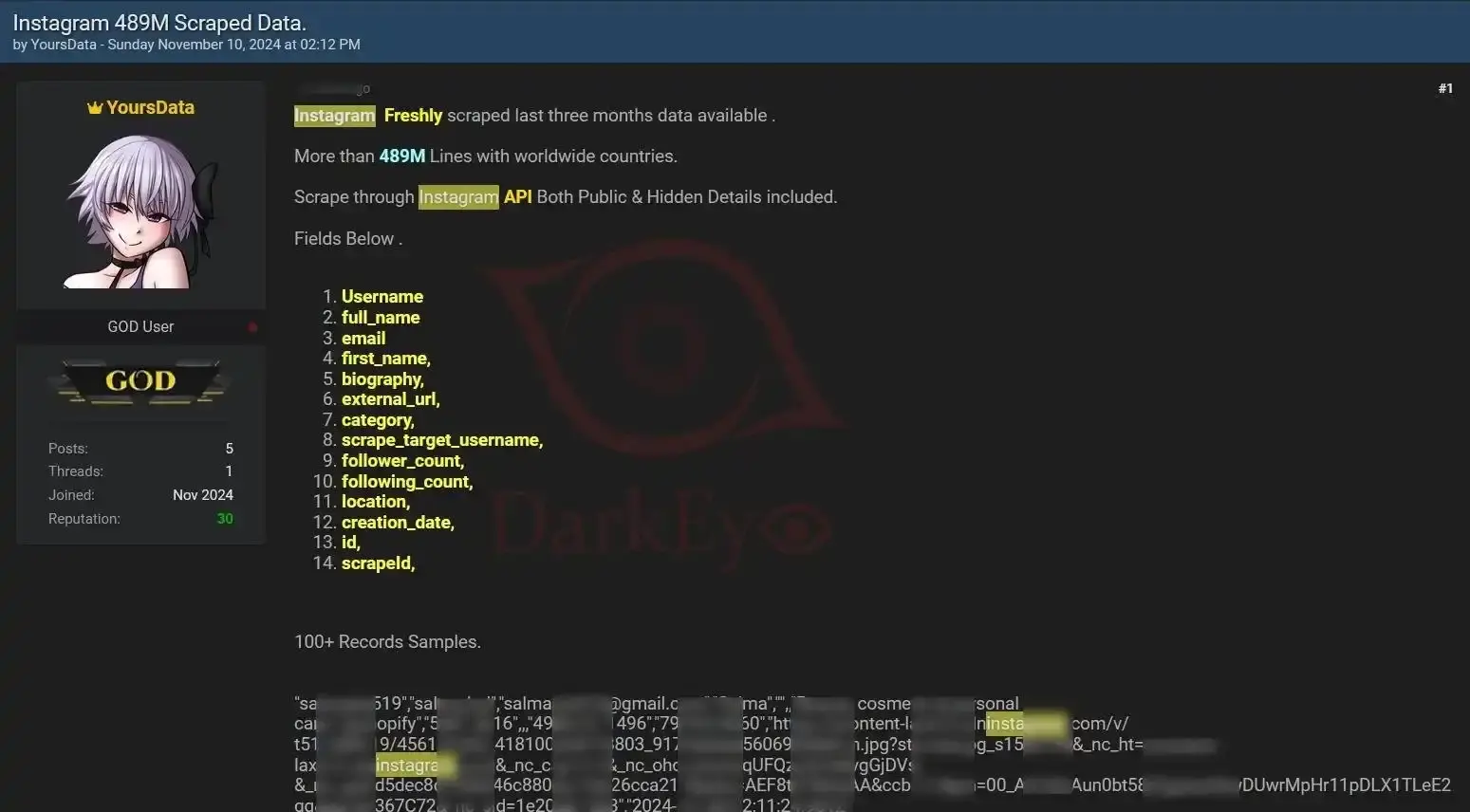
The exposed information includes full names, usernames, verified email addresses, phone numbers, unique user IDs, and partial location data showing country information. Researchers confirmed the authenticity of the data through sample screenshots showing structured JSON and TXT file formats.
The breach differs from simple username lists. Each record contains multiple data points, allowing criminals to build detailed profiles of targeted users. This depth of information makes the leak particularly dangerous for those affected.
Security experts classify this incident as data scraping rather than a direct server intrusion. Attackers used automated tools to harvest information through public interfaces and API endpoints. The scale of the operation suggests Instagram's rate-limiting controls failed to detect or stop millions of automated queries.
The breach resulted from vulnerabilities in how Instagram's systems handle data requests. While scraping typically targets publicly visible information, the combination of data fields exposed here indicates deeper access than standard profile viewing would allow. The API leak designation suggests weaknesses in how Instagram's programming interfaces handle bulk requests.
Users began reporting suspicious activity within days of the leak appearing online. Many received unexpected password reset notifications despite not requesting them. While the leaked data does not include passwords, the exposed email addresses and phone numbers provide sufficient information for follow-up attacks.
Criminals use this type of data for SIM swapping attacks. In these schemes, fraudsters convince mobile carriers to transfer a victim's phone number to a new SIM card under their control. Once they control the phone number, they intercept two-factor authentication codes sent via SMS. The leaked email addresses also enable targeted phishing campaigns where attackers impersonate Instagram support staff.
The personal details in the leak help scammers establish credibility with victims. By referencing accurate information like full names and location details, fraudsters make their impersonation attempts more convincing. This social engineering tactic increases the success rate of credential theft and account takeover attempts.
Security researchers note the timing concerns surrounding this breach. The data was collected in late 2024 but only appeared publicly in January 2026. This delay means criminals may have already exploited the information privately before wider distribution began.
Meta, Instagram's parent company, has not released a formal statement about this specific breach as of January 10, 2026. The company faces questions about how its API security measures failed to prevent such large-scale data harvesting.
Affected users face multiple immediate risks. Beyond account compromise, the exposed data enables stalking, harassment, and real-world security threats. Users who share their location publicly through posts face particular vulnerability when that information combines with their contact details.
Cybersecurity experts recommend specific protective measures. Users should enable multi-factor authentication using authenticator apps rather than SMS codes. Apps like Google Authenticator or Authy provide better security than phone-based verification. Users should also review their privacy settings to limit publicly visible information on their profiles.
Anyone receiving unexpected password reset requests should ignore them and report the attempts to Instagram. Users should verify the authenticity of any Instagram communications by logging into their accounts directly through the official app or website rather than clicking email links.
The breach highlights ongoing challenges in protecting user data on social platforms. As attackers develop more sophisticated scraping techniques, platforms must strengthen their detection systems and API security controls. Users bear responsibility for implementing available security features, but platform providers must ensure their systems prevent bulk data collection attempts.
Thomas Gabe
is a seasoned technology editor based in Berlin, Italy. With over 5 years of experience, Thomas excels at making complex tech topics. He holds a Computer Science degree and in his free time, he enjoys experimenting with gadgets and mentoring budding tech journalists.
Share this article
RELATED

NOTHING RELEASES HEADPHONE (1) PRO

META DEBUTS NEW SMART GLASSES LINEUP

PPLE DROPS IPHONE 18 PRO AND FOLDABLE DUO

JJJJOUND AND AIAIAI RELEASE AUDIO COLLECTION

INSTAGRAM UPDATES WORDMARK TEXT LOGO AFTER DECADE
