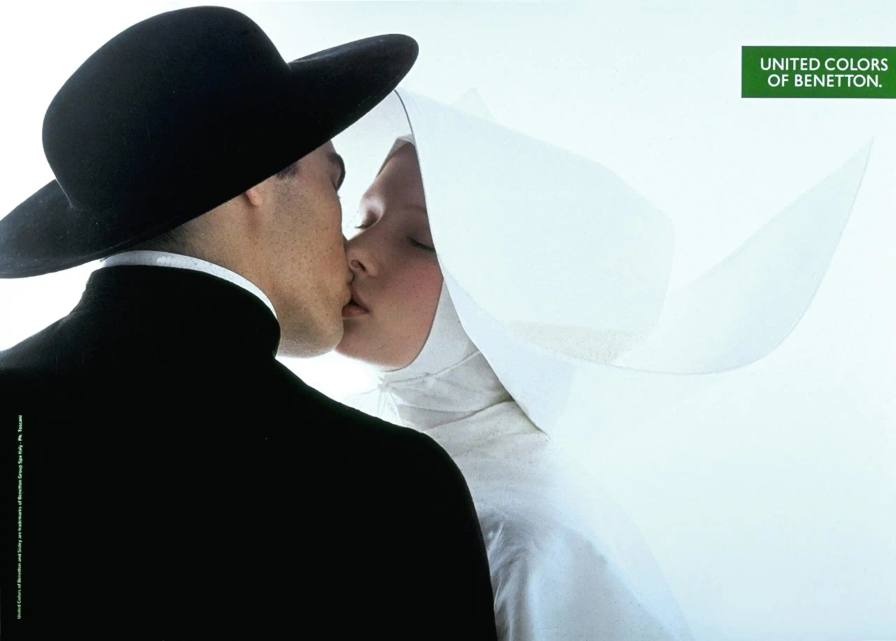


Oliviero Toscani, the Milan-born photographer who shaped modern advertising through his controversial campaigns, died at Cecina Hospital after a long battle with amyloidosis. His career spanned over six decades, leaving an indelible mark on both commercial and artistic photography.
Toscani's journey in photography began unexpectedly at age 14, when he accompanied his father, a photojournalist for Corriere della Sera, to document Benito Mussolini's reburial in Predappio. This early exposure to photojournalism would influence his later work's unflinching approach to difficult subjects.
After studying photography at Zurich's Kunstgewerbeschule, Toscani quickly established himself in fashion photography. His work appeared in Harper's Bazaar and Vogue, leading to collaborations with fashion houses including Valentino, Chanel, and Fiorucci throughout the 1960s and 70s.


The turning point in his career came in 1982 when he began working with Benetton. Over the next two decades, Toscani created advertising campaigns that deliberately stepped away from traditional fashion photography. His images addressed AIDS, capital punishment, sexuality, racial equality, and religious tensions. These campaigns, later termed "shockvertising", redefined the boundaries between commercial advertising and social commentary.
Toscani's work often sparked public outcry and debate. One campaign featured a dying AIDS patient, another showed a newborn baby still attached to its umbilical cord, and perhaps most controversially, he used images of death row inmates. These choices reflected his belief that advertising could serve as a platform for social discourse rather than mere product promotion.
His influence extended beyond advertising. Toscani co-founded Fabrica in 1994, a communication research center that provided opportunities for young photographers and artists to develop their creative vision while engaging with social issues.
The photographer remained active until his final years, continuing to produce work that challenged conventional perspectives. He is survived by his wife and three children.
Kristin Kaye
Insatiably curious about human expression, she immerses herself in literature, theater, art, and dance. Her academic journey led to degrees in Modern Literature, where she delved into The Furioso, and Historical Sciences with a focus on Contemporary History. Her studies took her to the prestigious Erasmus University Rotterdam, broadening her international perspective.
Her passion for culture isn't confined to personal enjoyment—it spills onto the pages of various publications. There, she explores not only artistic endeavors but also civil rights issues and the myriad ways human culture manifests itself. For her, writing about these topics isn't just a profession; it's an irresistible calling that stems from her deep-seated fascination with the human experience.
Share this article
RELATED


THERE'S A WOMAN IN YOUR RADIATOR


WHAT DOES PROSECCO HAVE TO DO WITH THE ODYSSEY?

