Summary:
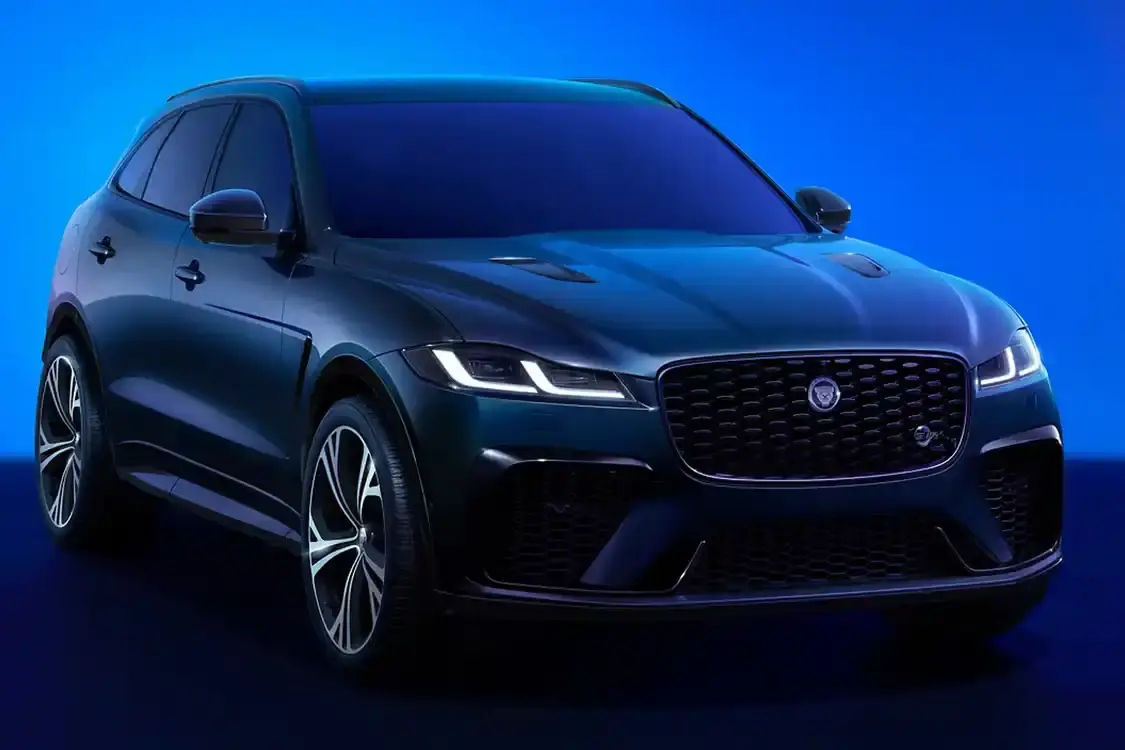
- Jaguar completed production of its last gas-powered vehicle, a black F-Pace SVR, at the Solihull factory without a major public announcement
- The F-Pace became Jaguar's best-selling model during its ten-year production run and now resides in the Jaguar Daimler Heritage Trust collection
- The automaker plans to launch an Electric GT in 2026 with approximately 1,000 horsepower and a 430-mile range
Jaguar completed production of its last internal combustion engine vehicle this month. The final F-Pace SVR, finished in black, left the assembly line at the Solihull factory. Workers who had built the model since its introduction ten years ago attended the completion. The company did not release a global statement about the milestone.
The black finish was selected to match the color of the last E-Type produced decades earlier. The vehicle will not be sold. Instead, the Jaguar Daimler Heritage Trust accepted the F-Pace for its collection at Gaydon. The car joins other significant vehicles, including the final XE and the first SS Jaguar saloon. The collection now documents 90 years of the British manufacturer's history.
The F-Pace holds the record as the best-selling model in Jaguar's history. During its decade of production, the SUV demonstrated the brand's ability to compete in a segment dominated by German and Japanese competitors. The model combined performance characteristics with the practicality buyers wanted from an SUV. Sales figures validated the decision to enter the segment, with the F-Pace outselling all previous Jaguar models.
The SVR variant represented the performance peak of the F-Pace lineup. Engineers equipped the model with a supercharged V8 engine that produced significant power. The variant attracted buyers who wanted SUV versatility without sacrificing driving dynamics. Track tests showed the SVR competed with dedicated sports sedans in acceleration and handling metrics.
Production of all gas-powered Jaguar vehicles has now stopped. The Solihull factory, which built the F-Pace and other models, will undergo reconfiguration for electric vehicle production. The transition period leaves Jaguar without new vehicles in showrooms as the company prepares for its relaunch.
The brand's next product will be an Electric GT scheduled for 2026. The Type 00 concept previewed the design direction for this vehicle. Early specifications indicate the GT will use a dedicated electric vehicle platform. Three electric motors will generate close to 1,000 horsepower. The battery pack should provide a 430-mile range between charges.
Jaguar positions the Electric GT as a luxury grand tourer with a six-figure price. The vehicle targets buyers who previously considered high-end German and Italian alternatives. The company believes this positioning will establish the electric vehicle lineup before expanding into other segments.
The shift to electric power represents a complete transformation for Jaguar. The brand spent nine decades refining internal combustion engines. Engineers developed expertise in supercharged V6 and V8 powertrains that defined the driving character of recent models. That expertise now shifts to electric motor development and battery management systems.
The automotive industry is watching Jaguar's transition closely. Other luxury brands have introduced electric vehicles alongside their gas-powered lineups. Jaguar chose a different path by stopping all combustion engine production before launching its electric models. The strategy creates risk because buyers who want a new Jaguar have no options until 2026.
The F-Pace's success provides some confidence for the transition. The model proved Jaguar could identify market opportunities and execute on them. The SUV attracted buyers who had not considered the brand previously. The Electric GT needs to accomplish the same goal with a different type of buyer.
Historic vehicle collections will preserve the memory of Jaguar's combustion engine era. The black F-Pace SVR now sits alongside vehicles that marked previous transitions in the company's history. Future generations will view these vehicles as artifacts from a period when automakers burned fossil fuels for propulsion. The collection documents how technology and regulations reshaped the industry.
Alessio Forghieri
Editor with a degree in Mechanical Engineering from the "Enzo Ferrari" University of Modena. Writing about cars allows me to combine my technical knowledge with my lifelong passion for automobiles. I love exploring and sharing stories about design, performance, and innovation that make every car unique.
Share this article
RELATED


LEWIS HAMILTON DRIVES FERRARI F40 TO MONZA

ASTON MARTIN VALEN 838 HP V12 DEBUTS

GORDON MURRAY S1 REVIVES PURE V12 MANUAL DRIVING

KOENIGSEGG CCGT1 DEBUTS WITH 1,600 HP V8 ENGINE
