Summary:
- Levi's Vintage Clothing reproduces Albert Einstein's Menlo Cossack Leather Jacket from 1935 in a run of 800 numbered pieces
- The company acquired the original at a 2016 Christie's auction and preserved all design elements
- Each reproduction retails for $1,060 and includes replica auction memorabilia
Levi's Vintage Clothing has produced a reproduction of the Menlo Cossack Leather Jacket worn by Albert Einstein. The collection honors the physicist's connection to American culture during his immigration period.
Einstein obtained the original jacket around 1935. This timing aligned with his move to the United States and his pursuit of citizenship. The theoretical physicist had fled Nazi Germany and settled in Princeton, New Jersey, where he joined the Institute for Advanced Study.
Levi Strauss & Co. purchased the original garment at a Christie's auction in 2016. Auction records note the jacket retained the scent of sweet pipe tobacco. The item had belonged to Einstein's personal wardrobe for years before entering private collections.
The reproduction maintains the original 1935 specifications. The design features a cropped, boxy silhouette with a rounded collar and cuffs. Brass buckles secure the side fastening straps. Levi's pattern makers studied the original garment to ensure accurate dimensions and construction methods.
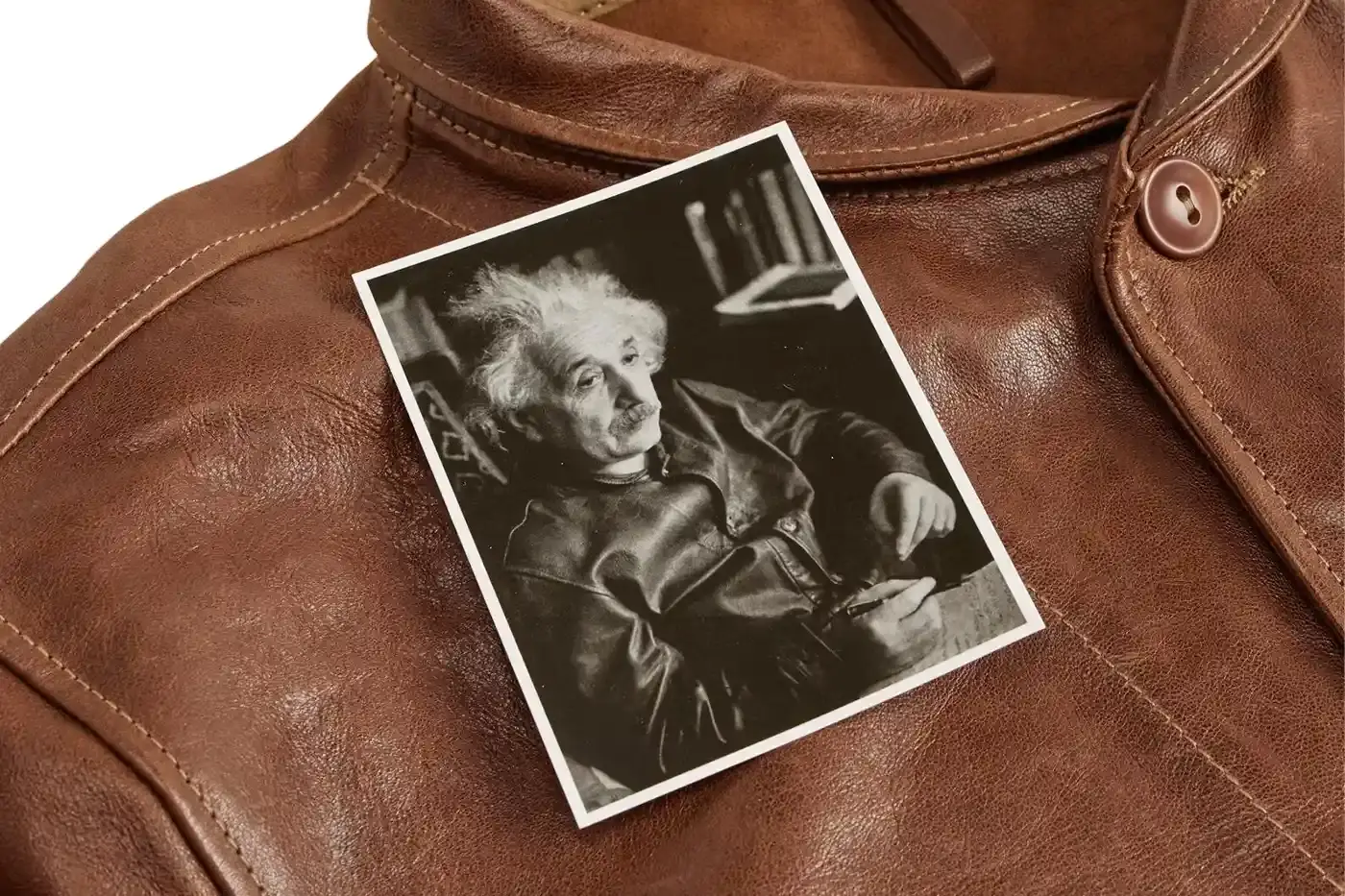
The company limited production to 800 numbered pieces worldwide. This number corresponds to the historical significance of the acquisition. Each jacket ships with special packaging. Buyers receive a replica of auction paddle Number 97, which Levi Strauss & Co. used during the bidding process. The package also includes a photograph of Einstein wearing the jacket.
The Menlo Cossack style originated in Levi's 1930s catalog. The design served workers and outdoor enthusiasts who needed durable outerwear. Einstein's choice of this style reflected his practical approach to clothing. The physicist famously avoided formal attire and preferred comfortable, functional garments.
The reproduction process required specialized techniques. Levi's sourced leather to match the original texture and weight. Craftsmen replicated the vintage brass hardware. The construction follows period-accurate methods, including hand-finished details.
Select Levi's stores now stock the jacket. The retail price stands at ¥165,000 JPY, approximately $1,060 USD. The numbered edition creates a collector's item for Einstein enthusiasts and vintage clothing specialists.
Einstein wore the jacket during his Princeton years. Photographs from this period show him in casual leather outerwear at his home and office. The style suited his personality. He rejected social conventions about dress codes and focused on intellectual pursuits.
The Menlo Cossack jacket represents a specific era in American manufacturing. Levi's produced workwear for diverse customers during the 1930s. The company's archives contain numerous examples of leather jackets from this period. Einstein's ownership elevated this particular style to historical importance.
Levi's Vintage Clothing specializes in reproducing archival pieces. The division studies original garments in the company's collection. Each reproduction receives extensive research and testing. The Einstein jacket joins other historically significant reproductions in the line.
The limited production run ensures exclusivity. Collectors who acquire numbered pieces own a fragment of Einstein's material legacy. The jacket connects wearers to a specific moment in scientific and cultural history. Check out the product images above.
Kristin Kaye
Insatiably curious about human expression, she immerses herself in literature, theater, art, and dance. Her academic journey led to degrees in Modern Literature, where she delved into The Furioso, and Historical Sciences with a focus on Contemporary History. Her studies took her to the prestigious Erasmus University Rotterdam, broadening her international perspective.
Her passion for culture isn't confined to personal enjoyment—it spills onto the pages of various publications. There, she explores not only artistic endeavors but also civil rights issues and the myriad ways human culture manifests itself. For her, writing about these topics isn't just a profession; it's an irresistible calling that stems from her deep-seated fascination with the human experience.
Share this article
RELATED

JD SPORTS AND SAUCONY HOST EVENT IN MARSEILLE: LA GUINGUETTE

PALACE SKATEBOARDS WINTER 2026 COLLECTION


