Summary:
- The exhibition displays 40 photographs from The Last Resort series, shot at New Brighton between 1983 and 1985
- Visitors view Parr's original Plaubel Makina 67 camera, contact sheets and previously unpublished photographs
- The show runs from February 20 through May 24, 2026 at the foundation's Bristol location
The Martin Parr Foundation in Bristol presents a retrospective of The Last Resort, the series that established the British photographer's international reputation. The exhibition opens February 20, 2026, marking 40 years since the work first appeared at London's Serpentine Gallery and in self-published form in 1986.
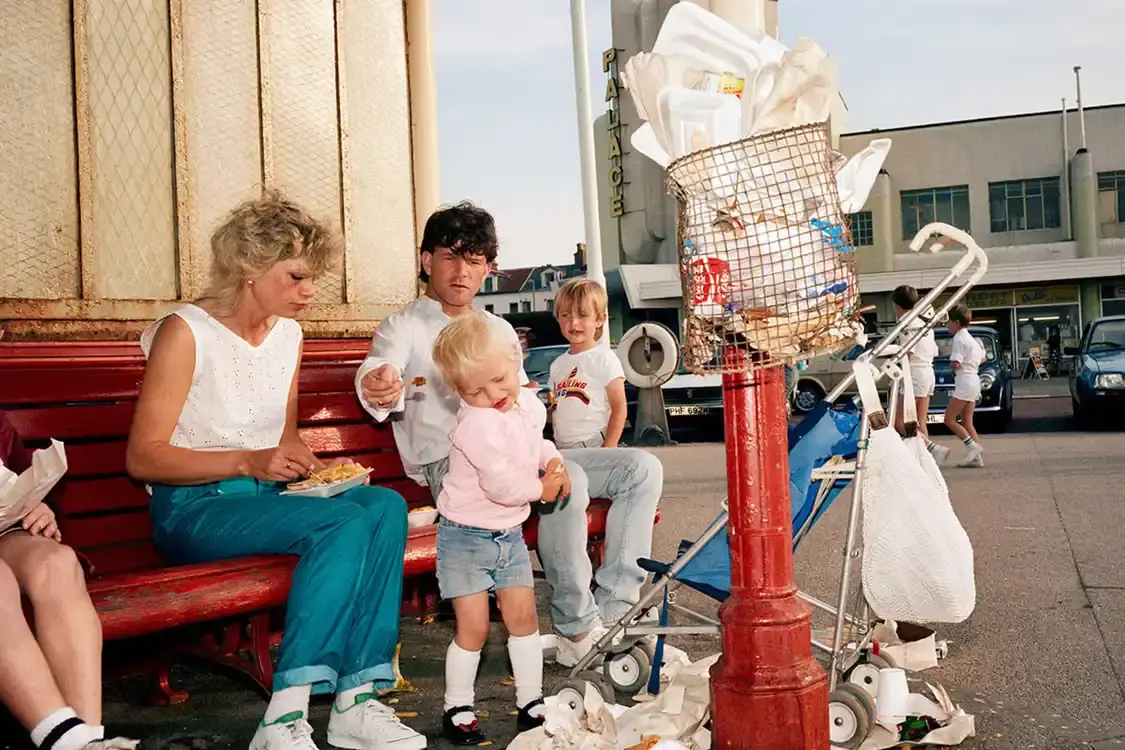
Parr documented New Brighton, a Merseyside seaside resort, from 1983 to 1985. The photographs captured working-class leisure during the Thatcher years. The series broke from conventional documentary photography through its use of saturated colors and daylight flash. This technical approach created a hyperreal aesthetic that contrasted sharply with the black-and-white tradition that dominated British documentary work at the time.
The complete set of 40 photographs will appear in the exhibition. Among them stands the widely recognized image of a baby near arcade machines. Another key photograph shows a couple in a restaurant with pastel pink and teal walls. The images record a declining seaside town where concrete walkways and scattered refuse frame moments of daily life and recreation.
The foundation expands beyond the final prints to reveal Parr's working methods. The display includes contact sheets, press materials and reviews from the 1980s. Visitors will see the Plaubel Makina 67 camera Parr used to shoot the series. The medium-format camera produced the sharp detail that defines the work's visual character.
New Brighton served as an ideal subject for Parr's approach. The resort had fallen into disrepair by the early 1980s. The infrastructure showed signs of neglect. Yet people continued to visit the beach and amusement facilities. This tension between deterioration and persistence appears throughout the photographs.
The series sparked debate when it first appeared. Critics questioned whether Parr's approach showed respect for his subjects or exploited them. The saturated colors and unflinching compositions presented working-class life without the sympathetic softness common in earlier documentary photography. Some viewers found the work cruel. Others saw honesty in the refusal to romanticize economic hardship.
The debate helped establish Parr's position in contemporary photography. The series demonstrated how color photography could function as social documentation. The work influenced a generation of photographers who followed. The visual language Parr developed at New Brighton appears throughout his later projects examining consumer culture and class in Britain and abroad.
The Martin Parr Foundation opened after the photographer's death. The organization preserves his archive and promotes photographic education. The Bristol gallery occupies space in the Paintworks complex at 316 Paintworks, BS4 3AR. The foundation holds regular exhibitions and educational programs.
The Last Resort exhibition will remain on view through May 24, 2026. The show provides an opportunity to examine how Parr's early work shaped contemporary documentary practice. The inclusion of working materials alongside finished prints offers insight into the decisions behind the photographs.
The timing of the exhibition acknowledges both the original 1986 publication and the Serpentine presentation. These two events introduced The Last Resort to different audiences and helped establish its place in photographic history. Four decades later, the work remains a reference point for discussions about class, representation and the role of color in documentary photography.
Andrea Darren
Born in Manchester, from a young age, she was passionate about art and design. She studied at the University of the Arts in London, where she developed her skills in these fields. Today, Andrea works as an editor for a renowned publishing house, combining her love for art and design with her editorial expertise.
Share this article
RELATED

6:AM LAUNCHES BATCH GLASS MODULES


MOTO GUZZI OPENS GREG LYNN MUSEUM IN MANDELLO

