Summary:
- David Chipperfield Architects and Arup designed a 16,000-seat arena in Milan's Santa Giulia district for the 2026 Winter Olympics
- Three floating aluminum rings and a 10,000-square-meter raised plaza define the structure
- The building generates energy through rooftop solar panels and functions as a year-round public venue
The Milano Santa Giulia Arena sits in southeast Milan's redeveloped Santa Giulia district. David Chipperfield Architects worked with engineering firm Arup to design the 16,000-capacity venue for the 2026 Winter Olympics.
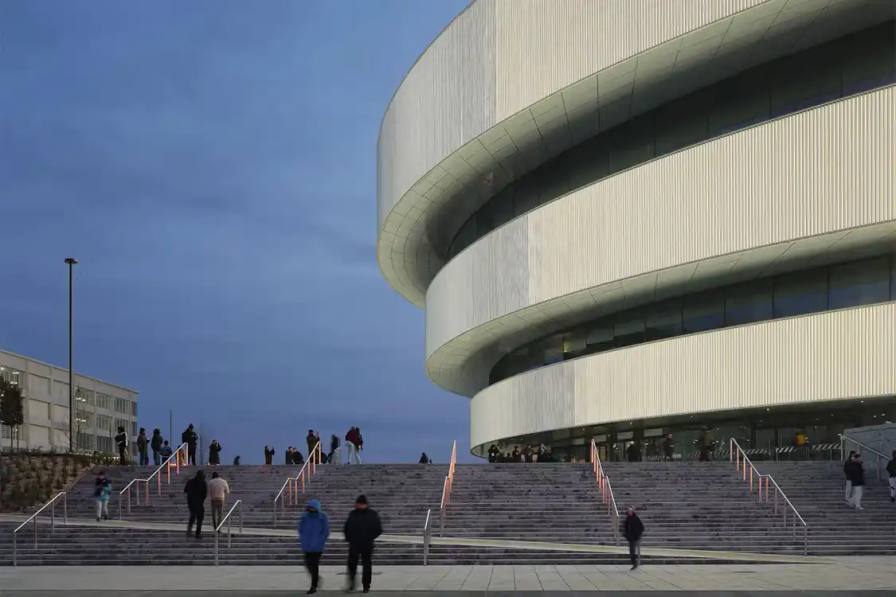
The structure takes the form of a contemporary amphitheater. An elliptical footprint supports a raised podium measuring 10,000 square meters. This elevated plaza functions as the main entrance and public gathering space. The design allows the venue to host ice hockey and figure skating during the Olympics, then transition to concerts, festivals, and community events afterward.
Three aluminum tube rings stack above the podium. The metallic bands reflect light during the day. At night, LED strips embedded in the tubes display digital content across the facade. The rings appear to float separately from the base structure.
A planted landscape runs down the main staircase. Trees and greenery surround the entrance, connecting the building to ground level. The architects placed this vegetation to balance the metal and concrete elements.
Inside, seating arranges in multiple tiers. Premium lounges and skyboxes occupy the upper levels. Sightlines were calculated to give clear views from all sections. The interior layout accommodates both sporting events and performances.
Solar panels cover sections of the roof. These photovoltaic systems generate electricity for the building's operations. The design team focused on reducing carbon emissions and improving resource efficiency. The arena was planned to function as a long-term venue rather than a temporary Olympic facility.
The Santa Giulia district underwent development to prepare for the 2026 Winter Games. This southeastern area of Milan received new infrastructure and public spaces. The arena serves as a central point in this urban renewal project.

Chipperfield's firm has designed cultural buildings and public venues in multiple cities. Arup provided structural engineering and sustainability consulting for the project. Both teams worked to create a venue that extends beyond the two-week Olympic period.
The building's dual function as sports venue and public plaza addresses Milan's need for multipurpose spaces. The elevated platform gives pedestrians a place to gather outside of scheduled events. The combination of open access and enclosed facilities allows for flexible programming throughout the year.
The 2026 Winter Olympics will bring international attention to the venue. After the games finish, the arena enters a second phase as a civic amenity. The design anticipates decades of use for sports, entertainment, and public assembly.
Construction timelines and final completion dates were set to meet the Olympic schedule. The venue will host ice hockey matches and figure skating competitions during the games. Post-Olympic use includes concerts, exhibitions, and community programs.
The metallic rings give the structure a distinct profile in the Milan skyline. During daylight, the aluminum surfaces shift with sun angles. At night, the LED displays transform the exterior into an active media surface. This visual flexibility allows the building to adapt its appearance for different events and seasons.
Andrea Darren
Born in Manchester, from a young age, she was passionate about art and design. She studied at the University of the Arts in London, where she developed her skills in these fields. Today, Andrea works as an editor for a renowned publishing house, combining her love for art and design with her editorial expertise.
Share this article
RELATED


JIL SANDER AND THONET FURNITURE COLLECTION

MR STAR CITY ON TURNING PERSONAL EXPERIENCE INTO POWERFUL ART

WILDSIDE YOHJI YAMAMOTO BLACK BAMBOO CHAIR
