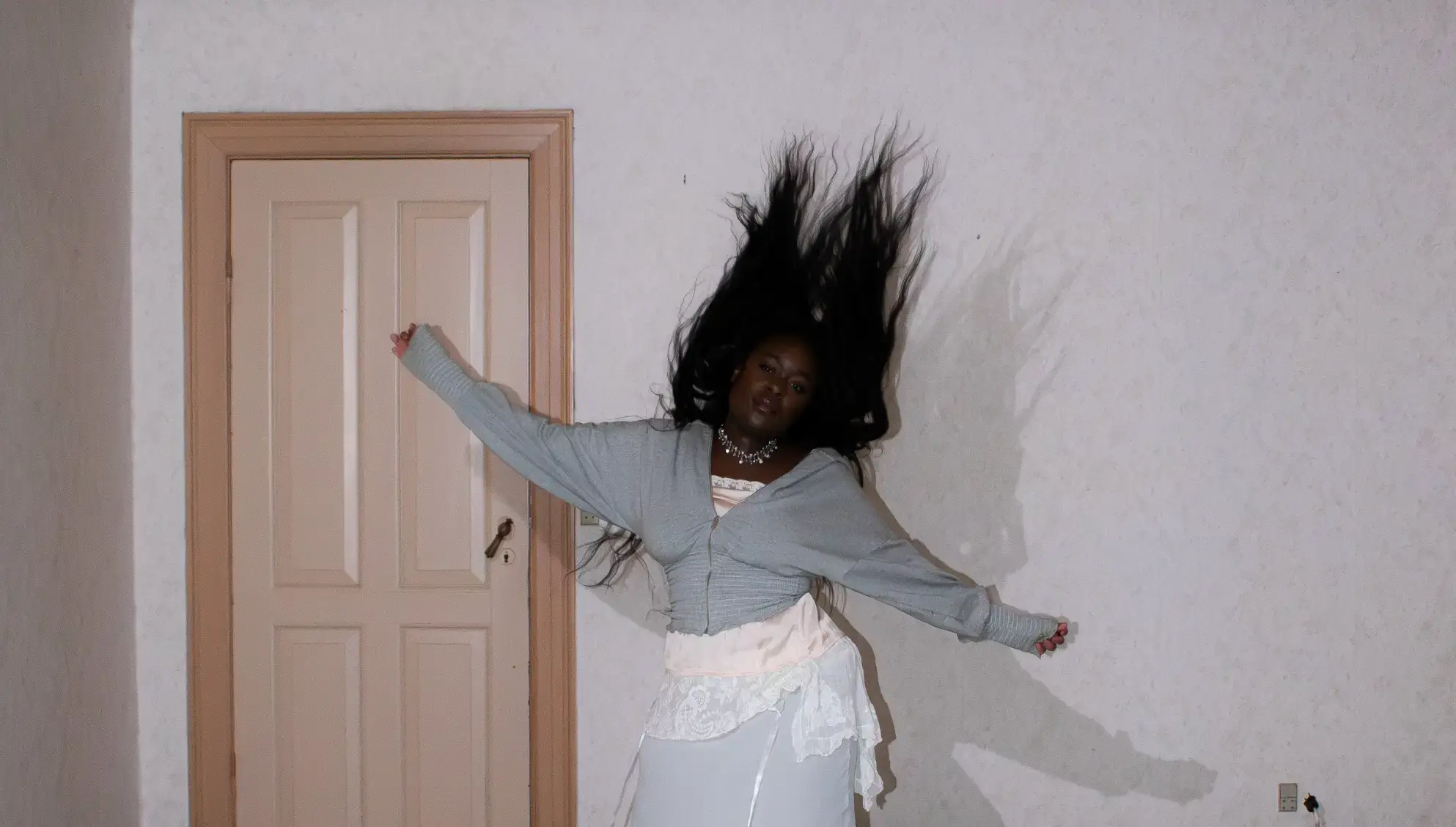
Namasenda burns bright in the in-between and her new album ‘Limbo' is the sound of that
Namasenda has always known exactly what she's doing, even when the people around her were still catching up. From the fizzing provocation of her 2017 EP hot_babe_93 to the collaborative fever dream of Unlimited Ammo with PC Music, she has operated with a steady, almost stubborn clarity about what pop music can hold.
Limbo, her new album out May 8th on YEAR0001, is where that clarity becomes undeniable. Written across two years of unease and recorded largely on instinct, it's a disarmingly smooth record on the surface, but like quicksand it pulls you under before you notice. Gauzy, close-cut vocals intertwine with productions that lurch and shimmer in equal measure. It's pop music that knows where your pressure points are.
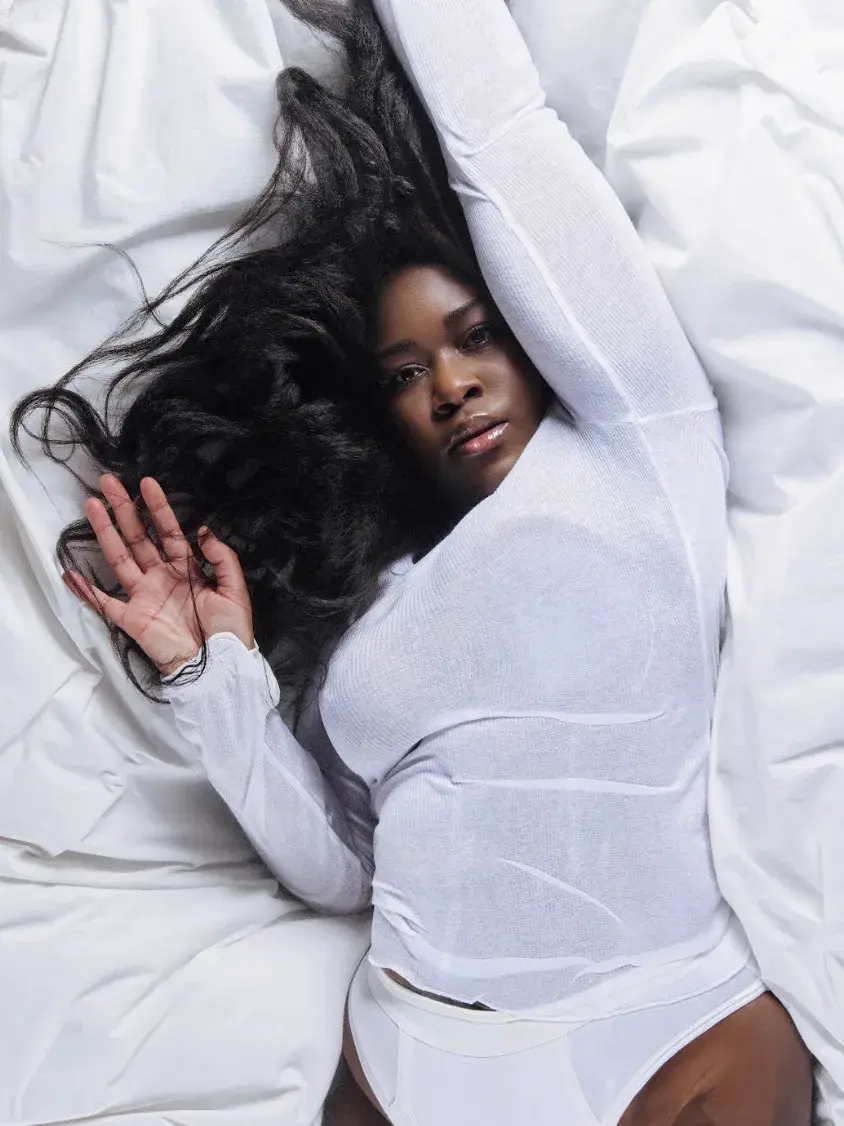
Confessional but never self-pitying, direct without being blunt, Limbo operates in that emotional frequency where a song about loving the wrong person, or wanting to be seen, lands like it was pulled straight from your chest. We sat down with Namasenda to talk about letting go of control, the anatomy of a song, and why making something entirely your own can feel like the most exposed you've ever been.



-
Marco Galvan: You've said you're not interested in nostalgia, that you want to live in the present. So right now, today, how are you?
Namasenda: I’m feeling great. I just came home from dance practice. My choreographer, she is kicking my ass. She is so kind, but when we go into the studio, she turns into the big boss. So I'm feeling great. It was a good start of my day.
MG: Walk me through what actually happens when you start a song. Do you arrive with a feeling, a sound, a word or is it more chaotic than that?
N: I’d like to say it’s chaotic, but honestly, it feels very calm. If you’re not someone who makes music or haven’t really been in a studio, you might imagine it as busy or intense… and for some people maybe it is. But for us, it’s actually very calm, almost kind of boring. My process has changed a lot over the years, but for this album it felt like the music just happened to me rather than me actively creating it. Every day, I’d go into the studio with Medium, the two guys I’m working with, and everything just came together naturally. Isac would start playing something on the piano, and suddenly the lyrics and melodies would come to me, and then there was the song. I was in such a good creative space, and everything just flowed. We could tell right away if something felt right or not. It was all very intuitive.
MG: I heard you wrote “Limbo” almost in real time. I was thinking about the word “limbo” itself, how it means being suspended between two states. How did you come up with that title, and how did you know it was the right one for the album?
N: Honestly, I’m still not completely sure. I had a few different titles in mind, but “Limbo” was one of the first ones I wrote down, and it just felt right. I’ve felt like I’ve been in limbo for a long time, maybe ten years. Like, “Okay, this is it, my dreams are about to come true”… and then they don’t. It’s like I’ve been sitting in a waiting room my whole life, just waiting for something to happen. And I’ve felt ashamed of that, ashamed of how others might see me, especially when it comes to my career. So I wanted to be honest about that feeling. Even though I know I’m doing well now, I still have this overwhelming sense of being stuck in limbo, just waiting for something bigger to happen in my life and career.
MG: I think it’s a feeling many people can relate to. And with music being such a powerful and far-reaching medium, it’s a great way to create intimacy with listeners.
N: Yeah.
MG: In “Cola,” the first single you released, I find the central image really interesting. Cola is something mass-produced, instantly recognisable, designed to be consumed and replaced. In the song it almost feels like a metaphor for identity, something manufactured and disposable. Was that something you were thinking about? How did that idea come to you?
N: That’s interesting you say that, because I was wondering if people would even understand what I meant. But yeah, definitely. I think people often see me as someone who knows exactly what they want, like I’m very sure of myself. And to some extent, that’s true, but I also have a lot of self-doubt. I’m always questioning myself, especially in relationships, I think I’ve been guilty of trying to change myself to make the other person like me more… and then they don’t anyway. It’s funny, but also kind of sad. And I compare myself to others a lot. My mom always says, “Don’t compare your insides to someone else’s outside,” but it’s really hard not to. You see someone who seems so put together, like everyone loves them, and you forget that they probably have their own doubts and struggles too.
MG: That makes me think about another track in the album “Bad Love.” It’s sonically intense, kind of spiralling, constantly building. But then there’s that moment in the bridge where everything slows down and opens up into something quieter and more exposed. It lands on this idea of being fundamentally alone. How does that idea connect to the rest of the song?
N: It is about romantic love, but it’s also about self-love. And about being okay with being alone. Because in a way, we’re all kind of alone, but we’re also together in that feeling of aloneness. And there’s something beautiful in that too. It’s about finding beauty in the ugly, or trying to see something positive in something that hurts. That’s really where that line comes from.
MG: I’m really interested in the video. It feels very physically contorted and syncopated, like your body is responding to something it can’t fully contain. So how did that visual concept emerge from the music?
N: It came from wanting something that felt small, but still explosive. I didn’t want a big, polished production with expensive gear. We had a very small crew, and we found this sort of abandoned house in the countryside. I really wanted sharp choreography with very precise, controlled movements because I feel like that matches the song. And then, toward the end, it breaks into these more explosive moments. The video itself is quite lo-fi, which is kind of the opposite of how the song feels. I liked that contrast, and I wanted to explore how those two things could come together. Also, I didn’t want the video to be entirely about me. There are these two other people. Are they in love or not? What happened between them? Why are they just there in the house with me, but we’re not really together? I’m present, but separate and existing in another room, almost like a ghost.
MG: I heard in a previous interview that you watch a lot of movies, like one or even two a day. How does cinema influence your visuals and your overall artistry?
N: The visual side of my music and artistry is really important to me. Watching movies definitely inspires me a lot but it can also be a bit of a double-edged sword. Sometimes I feel like I’m never fully satisfied with what I create as I set the bar really high for myself. I just really love cinema. It feeds into everything I do, not just the visuals, but also the songwriting. A lot of my inspiration comes from my own life, but also from films, sometimes even specific lines from scripts or little moments that stick with me.
MG: “Miami Crest” opens with an Italian street vendor call “cocco bello” that instantly transports you somewhere unexpected, sun-drenched, almost surreal, before the track bursts into something much heavier and more physical. How did that come about?
N: I was in Sicily while I was making the album, and that sound is actually taken from a video my friend filmed of me on the beach. I just really loved that clip, and I remember thinking, “I want to put this in a song. I want it to live somewhere.” Because it came from that same period when I was working on the album, I wanted to capture that moment and keep it there forever. It makes me happy every time I hear it. When I hear it, I’m instantly taken back to Sicily and to that small, happy moment I had during a time when I wasn’t feeling great.
MG: How did you become interested in this kind of sound, like the Eurodance and Eurotrance influences?
N: To me, it’s just pop music. I’ve always been drawn to that kind of bounce, the synths, the kicks, those textures. When I make music, I don’t really think about genre or who it’s for. It’s more like: “Do I think this is cool? Is it fun? Is it interesting?” We’ve made songs that are good, but they didn’t feel exciting enough. They didn’t push me anywhere. I need that feeling of excitement, like something is actually happening. And I guess those kinds of sounds give me that.
MG: It’s really interesting how you balance those intense, driving sounds with your softer, almost buttery voice, they complement each other so well. And you’ve always treated your voice as part of the production, rather than something that sits on top of it. Did this album push that idea further, or did it make you explore your voice in a more exposed way?
N: Yeah, we experimented a lot. I was thinking about my voice quite a bit during this process. Because my voice is naturally more mellow than the production, I kept wondering, “Should I push it more? Should it be louder, more upfront?” But every time I tried that, I didn’t like how it sounded. I need everything to feel like one cohesive piece. So instead of the voice sitting on top, it has its own space, its own pocket, just like the drums do. And then everything comes together. We tried a lot of different things, but I think the most different thing I did was the spoken part in “Miami Crest.” I wouldn’t call it rap, but that style, it actually took me a few weeks to get comfortable with it.
MG: Listening across your projects, from Hot Babe 93 to Ambrosia, does anything feel particularly different about your work now compared to a few years ago?
N: I think it feels more honest, and more intuitive. The reason it feels more honest is that I didn’t overthink the process this time. I just let things happen and trusted my instincts. The people I work with trust me a lot too, and there’s no ego in the studio at all. That made me feel really calm and open, which allowed me to be more honest in my songwriting. I’ve also become more confident in expressing what I want, whether it’s in the production or the overall sound. I can say things like, “No, the drums should come in here,” or “I think it should sound like this,” and really stand by it. So yeah, I’ve learned to trust myself a lot more during this process.
MG: You also mentioned that Limbo doesn’t really belong to you anymore. Is that a feeling specific to this album, or have you felt that with previous projects too?
N: I’ve felt that with other projects as well, but even more so with Limbo. I’ve already moved on, I’m already working on the next album. To me, it’s like, “Okay, that’s done, what’s next?” I know that sounds a bit extreme, but if it were entirely up to me, I’d probably release the next album immediately, even if it wasn’t fully ready, which obviously isn’t ideal. I’m just always thinking about the next thing.
So now it feels like it’s time for other people to sit with Limbo. Of course, I still feel anxious about whether people will like it or not. But at the same time, there’s a sense of calm. I love the album, and I know how much work went into it. So I’ll be okay regardless. That said, I obviously do hope people connect with it and listen to it.
MG: What are you working on now?
N: I’m working on something quite different. It’s still pop, but it feels very different, more organic. At least for now. I don’t know how it’ll evolve, but that’s where it’s at.
MG: And are you still working in Stockholm? I read that spending a few years on Limbo made you realise you don’t really need to go elsewhere, that Sweden already has everything you need as a pop artist. Does that still feel true?
N: Yeah, I think so. It’s nice to travel and work in different places, but ideally, I’d like to stay here most of the time or at least bring the people I usually work with if I go somewhere else.
MG: That’s interesting, especially since you’ve talked about not always feeling like you belong anywhere. Did making Limbo change that at all? In a way, did it give you somewhere to stand, even if just temporarily?
N: Yeah, in a way it did. But I also feel this constant pressure to move on and to get to the next thing. I’m always a bit stressed about time, like everything is slipping through my fingers. I think I’ve felt that way since I was a kid. I try to stay present, but it’s difficult. I think that’s also why I don’t really like nostalgia, I’m always thinking about the future, or just the present moment.

Marco Galvan
Curator
Marco Galvan is a curator and writer based in London. He has curated exhibition projects with international artists at institutions and galleries across Europe, and his writing has been published in established art and cultural publications including The Travel Almanac, MUSE, FigureFigure, and EPOCH Review.
@garcomalvanMore from Marco Galvan
Share this article
RELATED


AUDIO OBSCURA ADE 2026 AT G-STAR RAWFACTORY


OASIS ANNOUNCE TWO ROME CONCERTS FOR 2027
