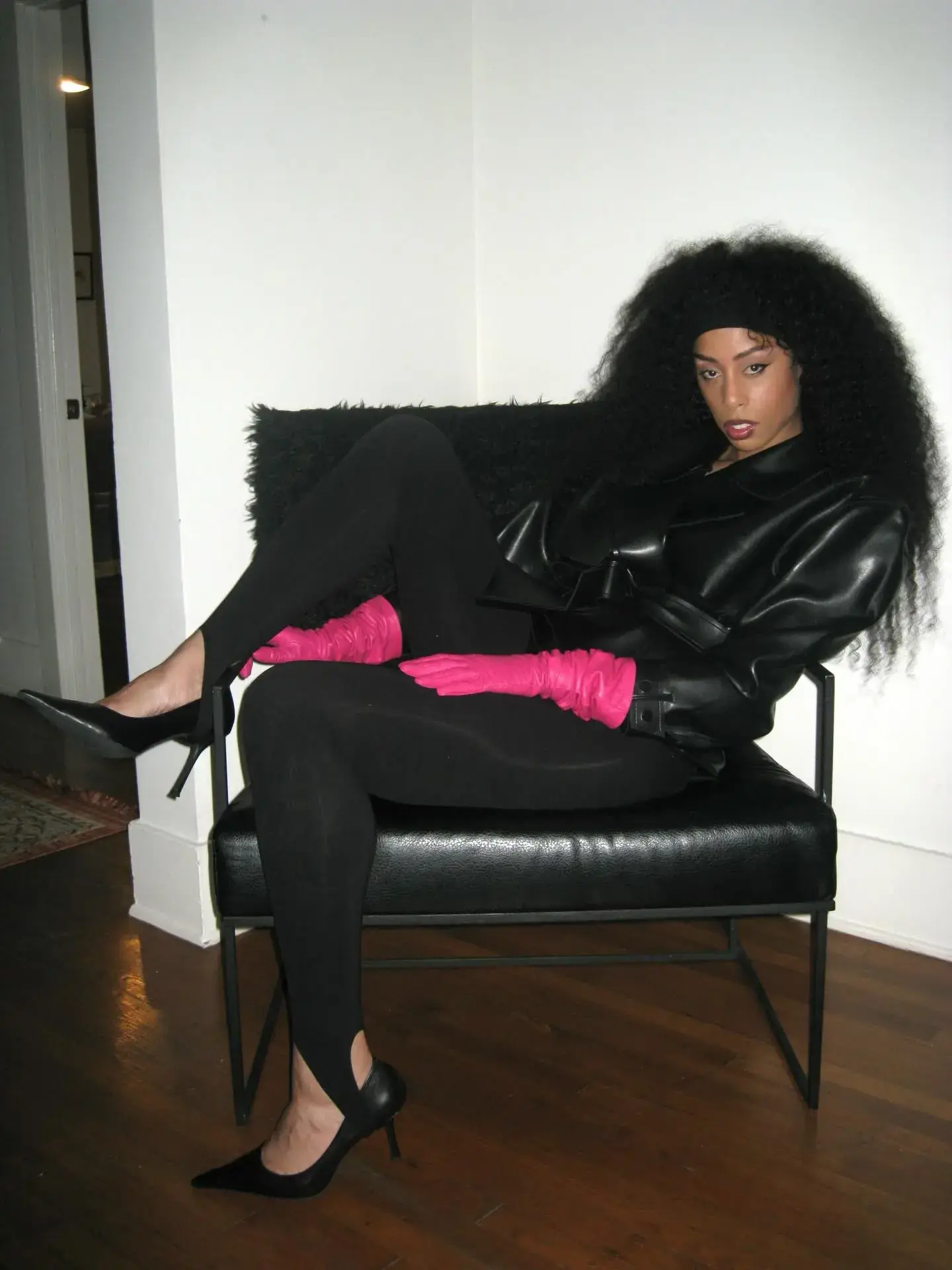
We talked with Rochelle Jordan, days before her performance at Santeria Toscana 31 on February 22nd. The Toronto singer talks with us, relaxed but focused. Her European tour marks another step in a career built on independence and sonic experimentation. Jordan has spent over a decade crafting a sound that bridges 90s R&B with electronic production, creating what she calls "fearless music". She speaks candidly about instinct, influence, and the value of connection in an industry obsessed with algorithms.
-
Your new European tour comes at a particular moment in your career: what does performing live mean to you today compared to your beginnings?
It truly means the same as it’s always meant to me. Connecting with my fans, singing and dancing together, it’s the reason why I make music.. to live inside of it.
Back in the beginnings things were a little more freeform, now I have a fully structured show to execute but my feelings are still the same performing live as they’ve always been.
Your sound blends R&B, electronic music, and experimentation: how is a Rochelle Jordan song born, and how much space do you leave for instinct?
It’s all instinct. My entire discography is born from natural melodies that swirl around in my mind. These vocal melodies and choices of instrumentations are all birthed from what I listened to growing up. I don’t question where I’m going when I’m approaching a song. Even if I’ve written the same song concept a million times, I’m still going with it because that’s just how I feel. The rnb to electronic dance beats I choose, it’s because at first listen it made my body move with joy sincerely or gave me a feeling of excitement and curiosity! Everything about how I create is instinct.
You started by releasing music online independently: what is your relationship with the music industry today compared to your early days?
It’s so different. I’ve changed so much but so has the music industry. I’ve done the dance with the music industry for so long as far as thoughts of “do I want to be signed? Should I sign? It’s hard being indie. I’m happy I'm indie.”
I’ve watched dsps go from being the hero for independent artists in the beginning to being just as capitalistic as the major labels are known to be. I’ve seen a lot and will continue to learn and grow. But all in all, music is my purpose and it’s what I continue to follow no matter where it leads. I just need to do my job which is sing people through their days and nights so they can escape into new worlds or deal with the world they are in.
Live performance is a fundamental dimension of your music. How do you work on the emotional delivery of your songs on stage?
It’s really about believing in what it is that I’m saying, you know? Like remembering to pay attention to my words so I’m able to display the vulnerability of these feelings to my people who are listening.
Many artists cite you as an influence in the new R&B scene. How do you experience this role, and is there someone who has deeply influenced you instead?
I hold a lot of gratitude for being able to showcase my originality throughout the years. KLSH and I spent over a decade putting out fearless music and bodies of work based in the landscapes of 90s R&B meets electronic dance / house meets trap soul/hiphop. We played so confidently with sound that is so specific to us whether it’s the chord progression choices or how I put my harmonies together. It’s a very particular vibe. And for the longest time I didn’t know we were creating sonic blueprints we’d hear some years down the line. We didn’t know because I wasn’t quite popular enough, but I guess my story is an example of popularity vs influence. You can be very much heard and not seen for a long time in the music industry.
I’ve had many influences throughout my life, so many Kings and Queens of music : Michael Jackson, Luther Vandross and Whitney Huston, Brandy to name a few.
Your songs often speak about vulnerability, healing, and awareness. Do you think music can be a form of therapy, even for those who listen?
Yes absolutely. It’s one form of therapy for sure.
In an era dominated by singles and algorithms, what value do you still give to the concept of an album?
I put a lot of value on albums. It’s not easy to create an album that people will hold onto for years to come. That’s probably one of the hardest things to do. Music lovers want to experience music in full form. And as we lean deeper into a world that is moving so fast, I think we humans are going to feign to slow down so we can breathe again. I think the whole “we don’t have attention spans no more” group think is a cop out. Music lovers can absorb a body of work, the only question is.. is the body of work truly good enough to keep your attention. It’s not about how loud the beats are, trends, or about shock factor, not even popularity. It’s about the magic of music in all it’s sincerity. that moment when it touches you.. it never lets you go.
Looking to the future: what can we expect from the next chapter of your music after this tour?
I guess you can expect me to continue in my search for whatever I find in myself to create whatever it is that I will create next.
-
Rochelle Jordan performs at Santeria Toscana 31 in Milan on February 22nd. Her live shows remain the core of her practice, a space where the music she creates in solitude meets the people who live inside it. The tour continues across Europe through March. For Jordan, the work stays the same: sing people through their days and nights, whether they need escape or grounding. The rest, as she says, follows from instinct.
Michele Favale
Michele Favale is a Social Media Manager and a big music fan. After working and studying around Italy, he now lives and works in Lecce, but is always ready to travel. His passion for music has led him to be passionate about every genre with a predilection for the black world. A DJ by passion and opportunity, he is always ready to discover new music and share it with everyone.
@mikefavale12Share this article
RELATED


OASIS ANNOUNCE TWO ROME CONCERTS FOR 2027

VOODOO VILLAGE: ARTISTS ON WELLNESS

SELVA OPENS IN A HISTORIC MASSERIA IN SICILY
