Summary:
- Video Sound Art festival celebrates its 15th edition in Milan's Stazione Centrale underground storage facilities from November 28-30, 2025, under the theme Never Ground
- The festival has maintained consistent engagement with Milan since 2011 by transforming unconventional spaces like schools, swimming pools, and abandoned theaters into production and community hubs
- Director Laura Lamonea emphasizes the festival's evolution from spontaneous experiments to structured curatorial method while preserving participatory values through educational programming
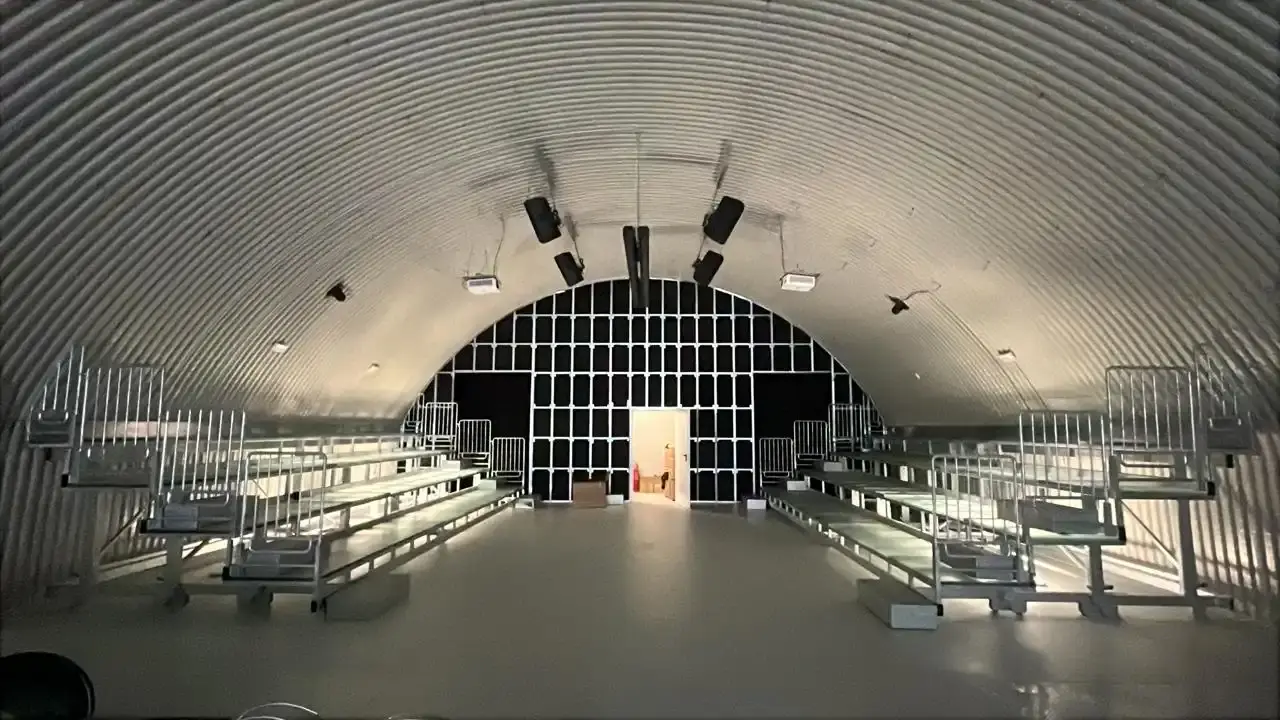
The Video Sound Art festival returns to Milan for its 15th edition, choosing the underground Magazzini Raccordati of Stazione Centrale as its venue. The festival runs from November 28 to 30, 2025, under the title Never Ground, named after the opening video work by Natália Trejbalová. The title invites audiences to consider the ground beneath their feet as archive, fracture, living organism, and political territory.
Director Laura Lamonea founded the festival in 2011. Since then, Video Sound Art has built its identity through consistent engagement with Milan's urban fabric. The festival's approach has evolved from spontaneous experiments to structured curatorial methodology, yet maintains its distinctive relationship with the city.
The festival deliberately selects unconventional venues. Past editions took place in schools, swimming pools, planetariums, and abandoned theaters. These spaces become laboratories for production and community interaction. Lamonea explains that finding each venue involves collaboration with institutions and neighborhood communities. The process reflects the festival's commitment to participatory art-making.
The underground location of this year's edition adds literal and symbolic dimensions to the festival's urban exploration. The Magazzini Raccordati storage facilities at Stazione Centrale provide a setting that reinforces the Never Ground concept. The space connects to themes of infrastructure, hidden urban layers, and forgotten territories.
Video Sound Art has developed an educational department over the years. This component influences the curatorial direction of the festival. The educational programming creates connections between art, city, and learning. This integration distinguishes the festival from events that treat education as supplementary programming.
Lamonea acknowledges current challenges in maintaining the festival's participatory values. The balance between artistic vision and community engagement requires ongoing attention. Finding suitable venues has become more complex as Milan's urban landscape shifts. The director stresses the importance of preserving the festival's core approach despite these pressures.
The festival's methodology combines video art, sound art, and site-specific installations. Artists respond to each location's history and physical characteristics. The programming includes screenings, performances, and installations designed for the specific qualities of each venue. This approach transforms both the artworks and the spaces they occupy.
Over fifteen years, Video Sound Art has created a network of relationships across Milan's neighborhoods. The festival moves through different districts, bringing contemporary art to areas outside traditional cultural circuits. This mobility serves both artistic and social purposes. Artists gain access to diverse contexts while communities encounter experimental practices.
The Never Ground theme addresses ecological and political questions about land, territory, and belonging. Trejbalová's video work sets the conceptual framework for exploring these ideas through moving image and sound. Other artists in the program extend these inquiries through their own practices.
The festival format includes public programs, workshops, and discussions alongside exhibitions and screenings. These components create multiple entry points for different audiences. Professionals, students, and neighborhood residents find different ways to engage with the programming.
Lamonea's curatorial vision emphasizes process over spectacle. The festival values experimentation, risk-taking, and sustained inquiry. This approach has attracted artists working at the intersection of video, sound, performance, and installation. The festival provides space for work that challenges conventional exhibition formats.
Video Sound Art continues to test possibilities for art festivals in urban contexts. The model prioritizes long-term relationships over temporary interventions. By working closely with institutions and communities, the festival aims to leave traces that extend beyond each edition's dates. This approach requires resources, partnerships, and institutional support that become harder to secure.
The 15th edition marks a moment to assess the festival's impact and future direction. Lamonea suggests the core challenge lies in maintaining participatory values while meeting expectations for professional presentation. The tension between these goals shapes decisions about programming, venues, and partnerships.
Andrea Darren
Born in Manchester, from a young age, she was passionate about art and design. She studied at the University of the Arts in London, where she developed her skills in these fields. Today, Andrea works as an editor for a renowned publishing house, combining her love for art and design with her editorial expertise.
Share this article
RELATED

MADDALENA IODICE’S RESOUNDING AT REA FAIR IN MILAN


