
You don’t need to design a chair or a lamp to define how people use space. Sometimes, the starting point is a moment. A room. A shared experience.
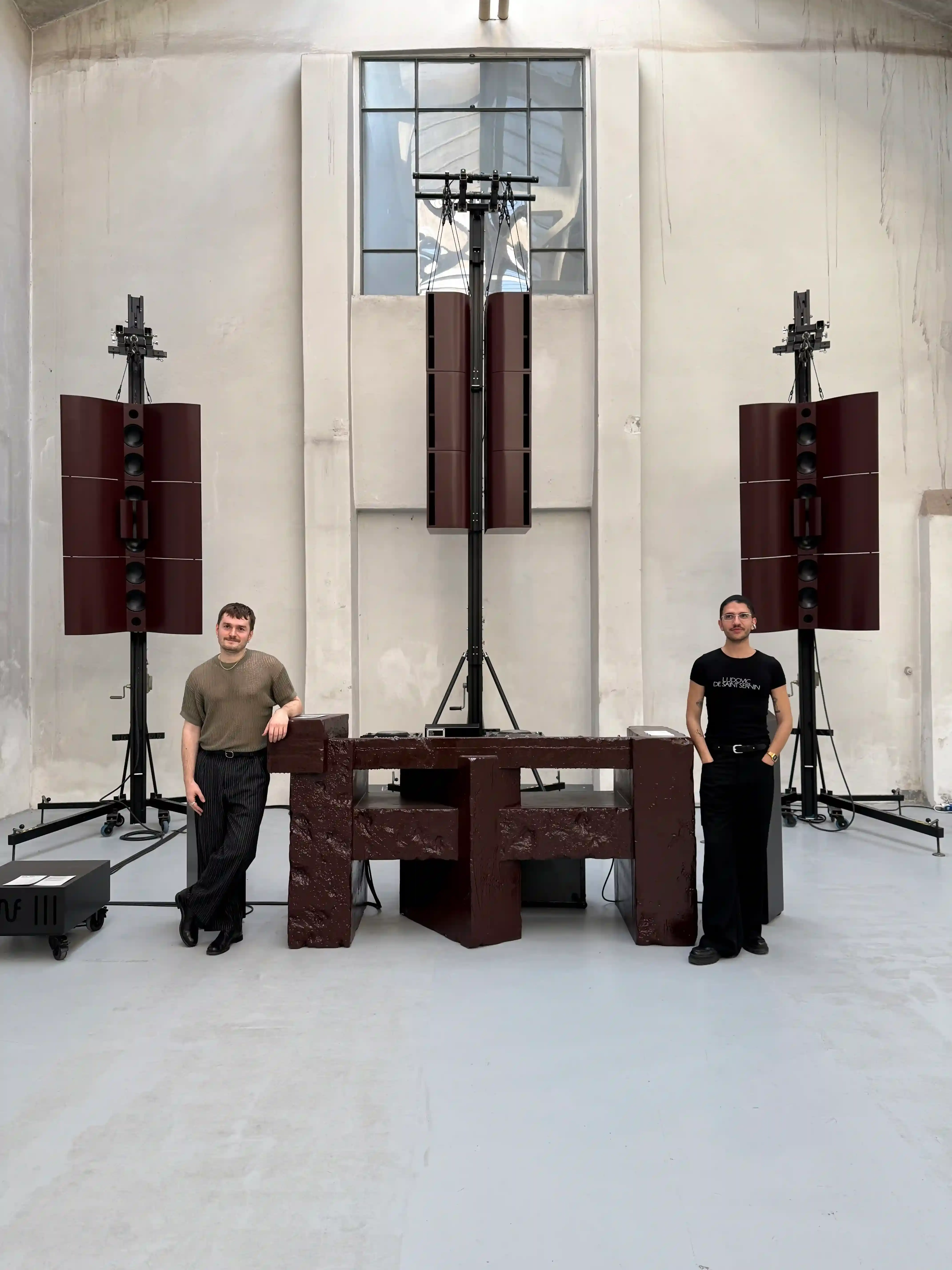
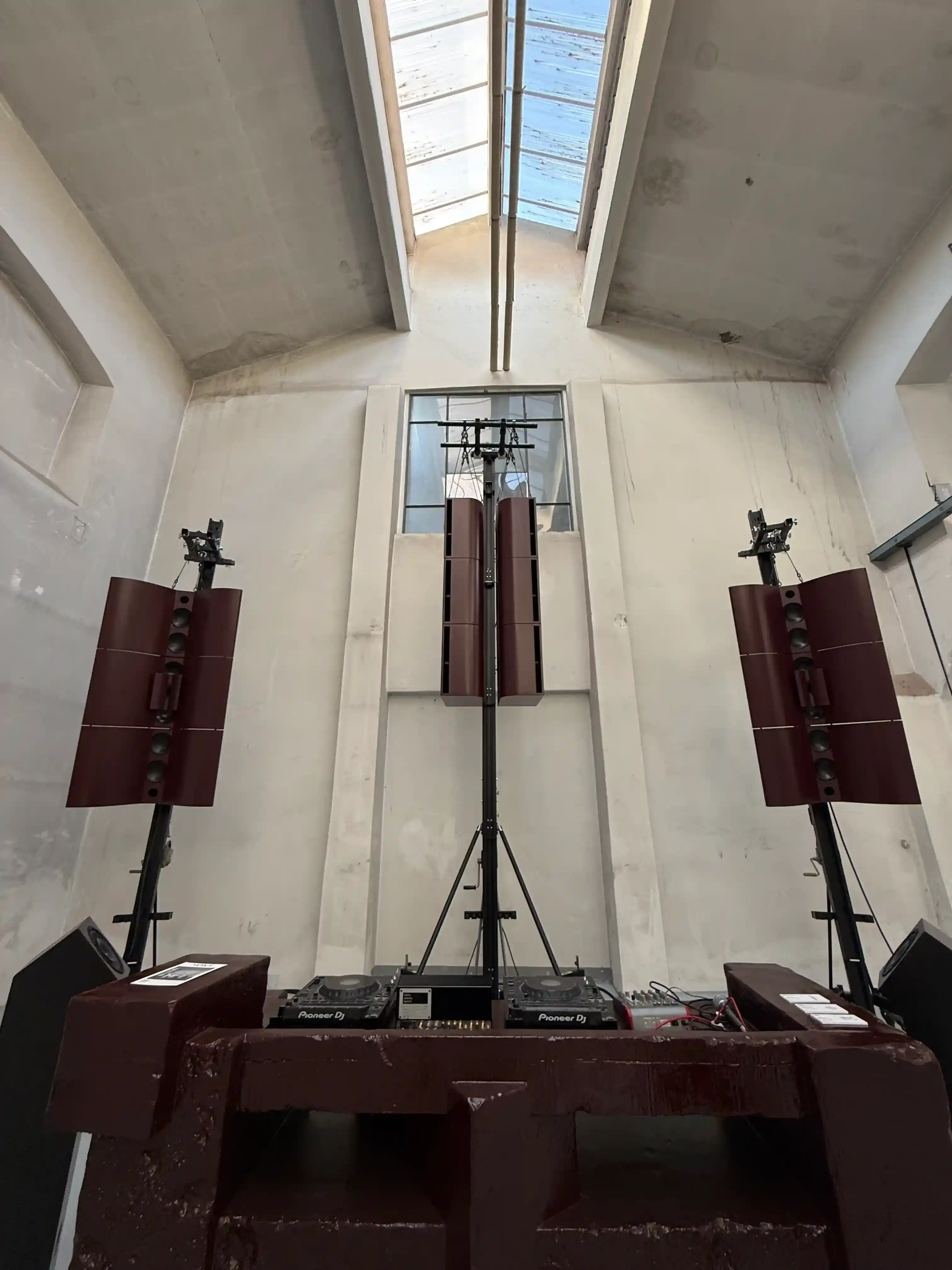
For YONT Studio, that moment comes from the dance floor. Not as a reference, but as a structure. Their installation at DEORON during Milan Design Week 2026 builds on this idea. It takes the energy of club culture and translates it into a spatial element.
The project does not present itself as a product. It operates as a point of orientation. A place where people gather, face the same direction, and move within a shared rhythm.
-
The starting point for your DJ booth comes from clubbing in Berlin. What drew you to that experience?
YONT Studio: The starting point comes from our personal experiences in Berlin. Being on a dance floor, watching a DJ in places like Berghain or Panorama Bar on a Sunday evening, stays with you.
Whether you’re alone or with friends, it works on two levels. It is personal, but also collective. You face the DJ and the soundsystem. You move in relation to it. It becomes ritualistic.
There is a form of power in that structure. The piece started from this feeling, and from the search for a strong gesture inside a raw architectural space.
The DEORON exhibition moves across different formats, from talks to performances. How did this affect your approach?
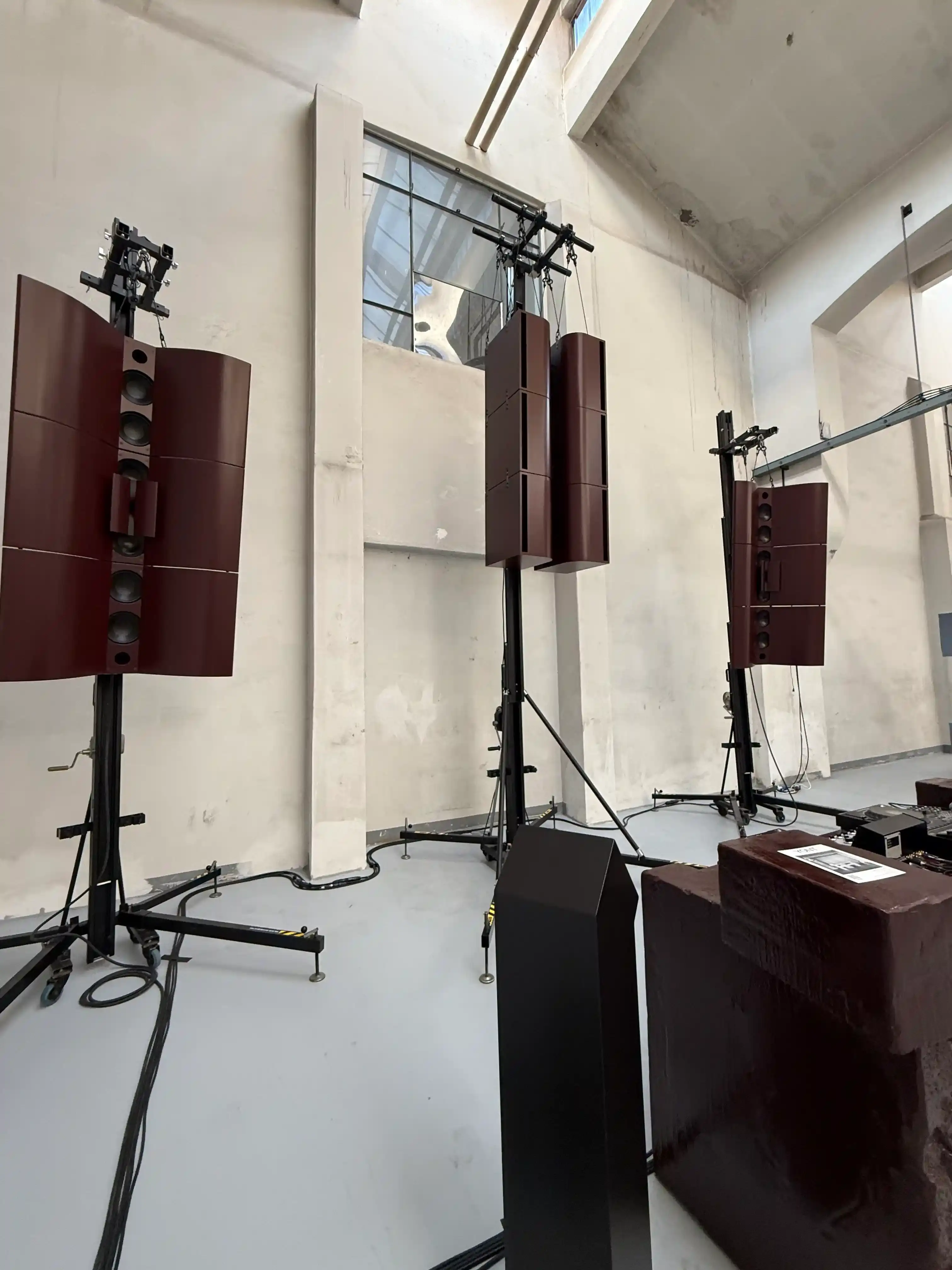
YONT Studio: The flexibility of the space matched the project. The room kept changing. It moved from exhibition to panel talks, to violin performances, to DJ sets and live acts.
We did not see the piece as fixed. It worked more as something that witnesses these shifts. It supports different moments instead of defining one. It becomes part of a living environment.
Your work often combines opposing qualities. How did this play out in this project?
YONT Studio: This tension is central to how we work. We look for contrast. Industrial and ancient. Brutalist and soft. Structured and disordered.
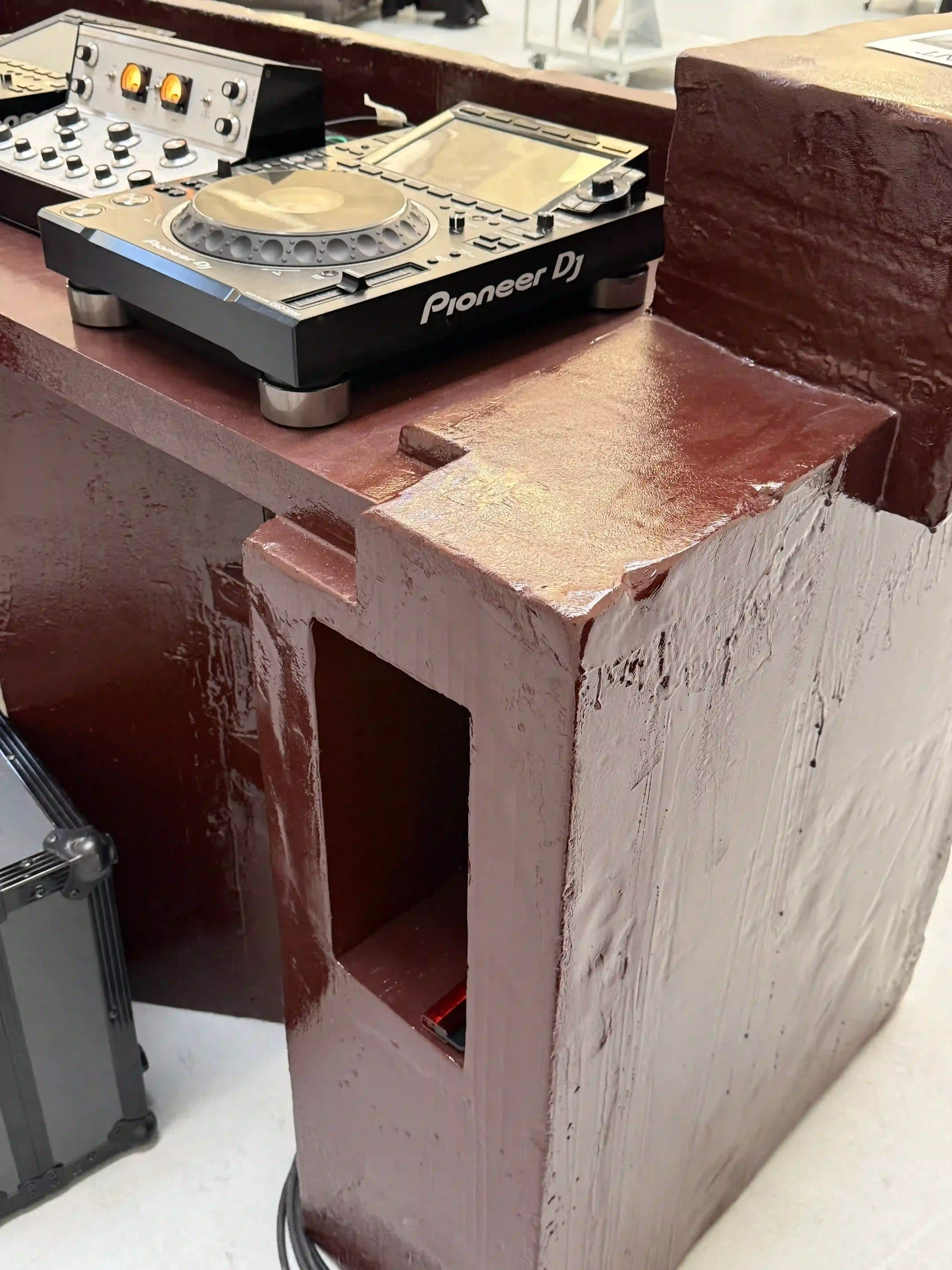
Here, material played a key role. The dark burgundy tone felt linked to Milan. The surface has a tactile quality. People want to touch it and understand what it is.
In this context, is the piece an object or part of a larger system?
YONT Studio: We see it as a spatial element, but also as part of a system. The room, the speakers, the sound, the mixers. They all work together.
At a certain point, it started to feel like a ritual space. Almost like a Gothic church.
Someone told us something we kept. “God is a DJ.”
The installation shows how design can move away from isolated objects. It focuses on behavior, movement, and shared attention. The DJ booth becomes a structure that organizes space without controlling it.
You don’t look at it for long. You move around it. You respond to it. This shift changes how design operates. It places experience before form, and interaction before image.
Aldo Mazzilli
A creative mind who loves storytelling and branding in a meaningful way combining Culture & Creativity. Passionate about fashion, sport and lifestyle.
@fackaldoShare this editorial


