Summary:
- Mamdani organizes community football events focused on affordability and local participation
- He challenges FIFA's pricing model with petition demanding discounted tickets for residents
- His approach contrasts with politicians who use football to promote division and exclusion
Politicians increasingly exploit football's cultural influence for personal gain. Nigel Farage claimed football and politics should stay separate before selling Reform FC merchandise. Rishi Sunak and Keir Starmer transformed a modified St George's cross on England's Euro 2024 kit into a debate about national identity. French politicians pushed to ban women football players from wearing hijab on the pitch.
The pattern repeats across democracies. Leaders weaponize a sport designed for universal access to advance narrow agendas and fuel hostility toward minority groups.
Zohran Mamdani takes a different path.
The newly elected New York City mayor uses football to strengthen community bonds rather than fracture them. His campaign centered on a core principle: dignity requires access. Football fits within this framework as a public good, not a political weapon.
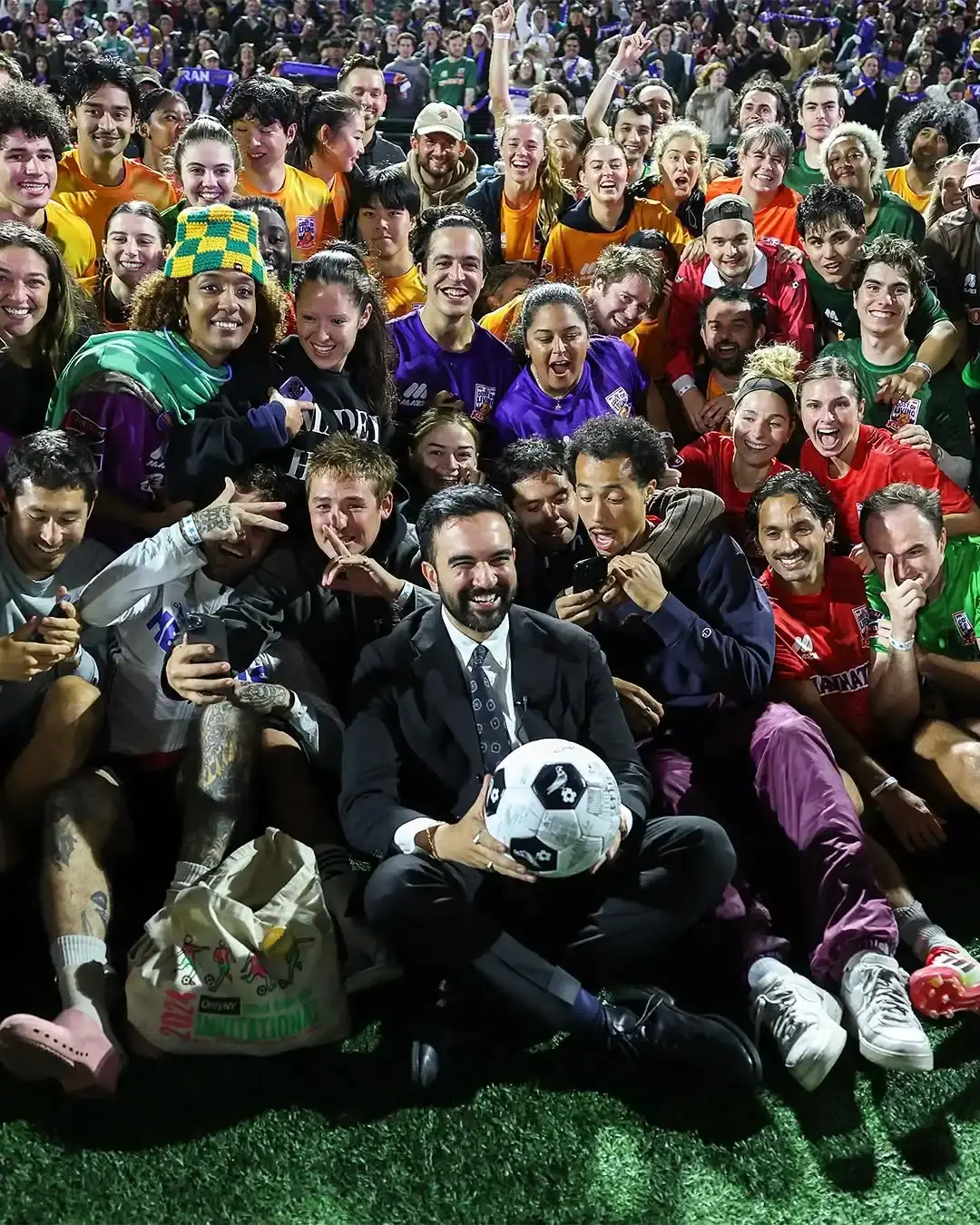
Mamdani demonstrated this philosophy through the Cost of Living Classic. He partnered with NYC Footy, a recreational league, to stage a community tournament. Local teams participated while raising awareness about housing costs and wage stagnation. The event prioritized unity over spectacle, focusing specifically on populations facing economic pressure.

His relationship with football runs deeper than political calculation. Mamdani grew up following Arsenal through years of mediocrity and frustration. His social media posts reflect the authentic experience of a supporter, complete with the emotional volatility fans know well.
This background gives him credibility as the 2026 World Cup approaches. The tournament presents both opportunity and risk for New York residents. FIFA's pricing structure has drawn criticism for excluding local fans, repeating problems seen at the 2025 Club World Cup.
Mamdani responded by launching the Game Over Greed petition. The campaign demands FIFA reserve 15% of match tickets for area residents at reduced prices. It also calls for strict limits on resale values to prevent price gouging.
The position reflects an understanding that access to major sporting events should not depend on wealth. Working class New Yorkers deserve the opportunity to witness a historic moment in their own city.
His commitment to inclusion carries added weight given his background. Mamdani identifies as a Muslim south Asian immigrant. The 34-year-old faced repeated racist attacks during his campaign, reflecting broader trends in American political discourse. He maintained focus on grassroots organizing despite these attacks.
His stance takes on particular significance given current federal policies. FIFA President Gianni Infantino maintains close ties with Donald Trump, who has deployed immigration enforcement at sporting venues. Trump suggested relocating World Cup matches away from cities he labels as politically opposed to his agenda.
These actions signal an exclusionary vision of who belongs at football events. Mamdani's response offers an alternative model.
He represents Astoria, Queens, among the most ethnically diverse neighborhoods globally. Residents trace origins to South Asia, Latin America, the Middle East, Africa and Eastern Europe. Football provides common ground across linguistic and cultural boundaries.
Growing up in such environments reveals football's connective power. The sport requires no shared language. Players need no formal pitch, regulation goals or official equipment. This accessibility makes football the most democratic athletic pursuit.
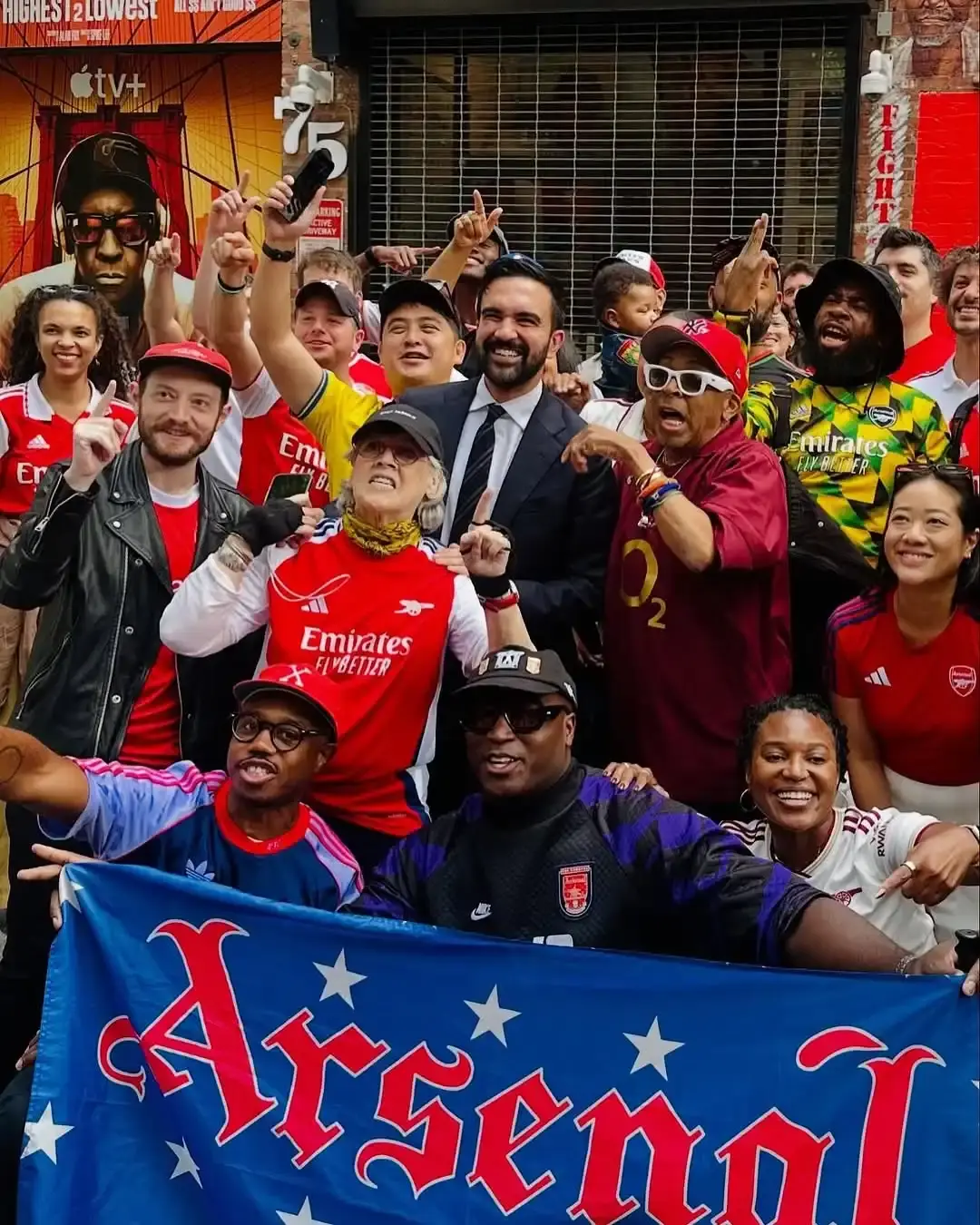
Mamdani recognizes this quality and builds policy around it. Where others see football as a tool for political messaging, he treats it as infrastructure for community cohesion.
The contrast matters. Political figures routinely perform interest in football to court voters, then abandon the sport's inclusive values once elected. Mamdani integrates football into governance as a means of serving constituents facing economic pressure and social marginalization.
His approach acknowledges that sporting access intersects with housing affordability, wage policy and immigrant rights. These issues form a coherent framework rather than disconnected talking points.
The 2026 World Cup will test whether this vision translates beyond local organizing. FIFA controls ticketing and venue operations. Federal authorities hold jurisdiction over security and immigration enforcement. Municipal leaders have limited leverage.
Mamdani's petition and public advocacy aim to shift these power dynamics. The effort faces long odds but establishes a clear alternative to extraction and exclusion.
Football belongs to communities, not corporate interests or political operators. Mamdani's work in New York demonstrates what happens when elected officials treat that principle as governing philosophy rather than empty rhetoric.
The question now is whether other cities hosting World Cup matches will follow this model or default to the familiar pattern of exploitation dressed up as celebration.
Soufiene El Boub
was born and raised in France, where he also pursued his education. With a lifelong passion for sports and storytelling, Soufiene has become a sports editor, known for his insightful analysis writing. His unique perspective, shaped by his French upbringing, adds a distinctive flair to his work in the world of sports journalism.
Share this article
RELATED

NEW BALANCE ATALANTA BC 2026/27 THIRD KIT

MBAPPÉ DEBUTS PROTOTYPE ON BOOTS AT REAL MADRID


COMO 1907 RELEASES STICKER COLLECTION

ANTONELLI WINS MONZA GRAND PRIX FROM 19TH PLACE
