Summary
- Maison Margiela launches a four-city exhibition tour in China following the Fall/Winter 2026 runway show in Shanghai
- Each city focuses on a different house signature: Artisanal couture, anonymity, Tabi footwear, and Bianchetto finishing
- The brand opens its internal Dropbox archive to the public with project files, images, and working documents
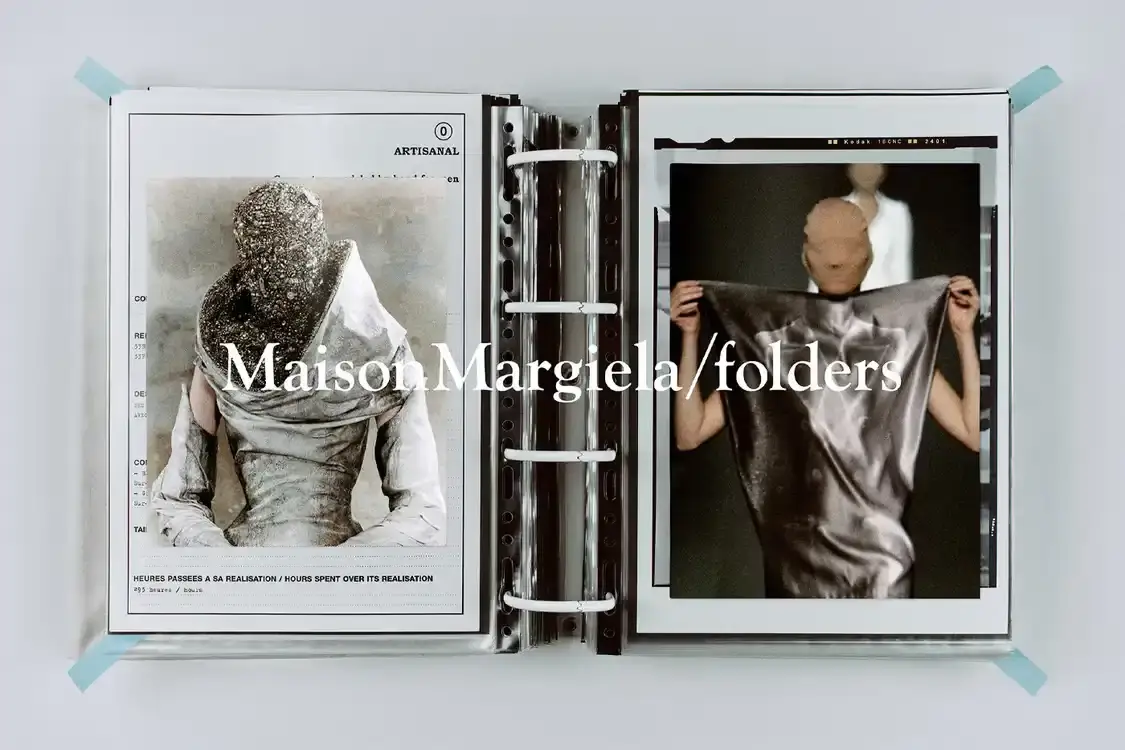
Maison Margiela has confirmed plans for a series of exhibitions across China this April. The tour, titled Maison Margiela/folders, will visit Shanghai, Beijing, Chengdu, and Shenzhen over a two-week period.
The project begins after the Fall/Winter 2026 show in Shanghai. From April 2 to April 6, the city hosts "Artisanal: Creative Laboratory", an exhibition dedicated to the house's couture line. The presentation will show how the Artisanal collection develops from initial concept to finished garment.
Beijing follows from April 7 to April 12 with "Anonymity: Our History of Masks." This installation looks at how the brand has used masks and covered faces throughout its history. The practice dates back to early runway shows where models' faces were obscured or hidden entirely.
The tour moves to Chengdu from April 9 to April 13 for "Tabi: Collectors." This exhibition centers on the split-toe boot the house adapted from traditional Japanese footwear. The Tabi has appeared in nearly every collection since the brand's founding in 1988.
Shenzhen closes the tour from April 11 to April 12 with "Bianchetto: Atelier Experience." The exhibition demonstrates the white overpaint technique the house uses to finish certain pieces. Bianchetto involves applying white paint to garments and accessories, often obscuring logos or previous finishes.
The exhibitions run on overlapping dates across the four cities. You will need to check specific locations and opening hours for each city through the brand's official channels.
Alongside the physical events, Maison Margiela is releasing its internal archive online. The brand has made several Dropbox folders public. These folders contain working documents, development images, press materials, and project timelines that the team uses internally.
The digital archive is already available through the brand's website. More files will be added as the exhibitions progress. The documents show the preparation process behind each exhibition, from early planning stages to final installation.
This marks the first time the house has opened its working files to outside viewers. Previous archives have been limited to finished campaigns and lookbooks. The Dropbox structure organizes materials by project and date, letting you see how ideas develop over weeks or months.
The folders initiative reflects how the brand approaches its own history and process. Maison Margiela has long emphasized the work behind the final product. Early collections included exposed seams, inside-out construction, and garments that showed their own making.
Making internal documents public extends this principle to the brand's operational structure. You can now see the same reference images, notes, and schedules that the design and production teams use.
Each exhibition in the China tour addresses a different aspect of the brand's identity. The Artisanal line represents the house's commitment to handwork and unique construction. Anonymity ties to the brand's refusal to put a single designer's face forward after founder Martin Margiela stepped back from public appearances in the late 1990s.
The Tabi shoe has become one of the most recognizable elements of the brand's output. Its distinctive shape separates the big toe from the other four, creating a silhouette that reads immediately as Margiela even without visible branding.
Bianchetto serves as both a finishing technique and a statement about erasing or transforming existing objects. The house frequently paints over vintage or found items, removing their original context while preserving their form.
Physical exhibitions will include archival pieces, production samples, and documentation from past collections. Some installations may feature interactive elements or workshops, though specific details for each city have not been fully disclosed.
The tour takes place during a period when luxury brands are increasing their presence in Chinese markets. However, the format here differs from standard retail activations or trunk shows. The focus stays on the conceptual and technical aspects of the work rather than immediate product sales.
If you plan to attend, keep in mind that some exhibitions run for only a few days. The Shenzhen event lasts just two days, while Beijing offers the longest window at six days.
The Dropbox archive will remain accessible beyond April. Files related to future projects may be added over time, turning the folder system into an ongoing record of the brand's activities.
You can visit the digital archive now through maisonmargiela.com. Physical exhibition details, including exact addresses and ticket information, are expected to be released as each city's dates approach.
Kristin Kaye
Insatiably curious about human expression, she immerses herself in literature, theater, art, and dance. Her academic journey led to degrees in Modern Literature, where she delved into The Furioso, and Historical Sciences with a focus on Contemporary History. Her studies took her to the prestigious Erasmus University Rotterdam, broadening her international perspective.
Her passion for culture isn't confined to personal enjoyment—it spills onto the pages of various publications. There, she explores not only artistic endeavors but also civil rights issues and the myriad ways human culture manifests itself. For her, writing about these topics isn't just a profession; it's an irresistible calling that stems from her deep-seated fascination with the human experience.
Share this article
RELATED

JD SPORTS AND SAUCONY HOST EVENT IN MARSEILLE: LA GUINGUETTE

PALACE SKATEBOARDS WINTER 2026 COLLECTION


