Summary
- Palazzo Strozzi hosts a retrospective of Mark Rothko's work opening March 14, 2026
- The exhibition includes over 70 paintings from major museums worldwide
- The show examines Rothko's artistic dialogue with Renaissance painters and Florence
Fondazione Palazzo Strozzi will present a retrospective dedicated to Mark Rothko beginning in March 2026. The exhibition, titled Rothko in Florence, runs through August 23 and brings together more than 70 works borrowed from major museums across the world.
Christopher Rothko, the artist's son, serves as co-curator alongside Elena Geuna. The project centers on the relationship between Rothko and Florence, a city that shaped his artistic vision after his first visit in 1950.
The retrospective traces Rothko's development from early figurative work in the 1930s through his abstract compositions of the 1950s and 1960s. Works arrive from MoMA, the Metropolitan Museum of Art, Tate, and Centre Pompidou, among other institutions.
Rothko's encounter with Renaissance art influenced his approach to color and space. The exhibition addresses this connection through strategic partnerships with Florentine sites. Museo di San Marco will display Rothko's paintings near frescoes by Fra Angelico. The Biblioteca Medicea Laurenziana vestibule, designed by Michelangelo, will host works related to the Seagram Murals series.
These parallel presentations demonstrate how Rothko absorbed Renaissance principles while developing his own visual language. His paintings respond to what he identified as the balance between structure and expression in Italian art.
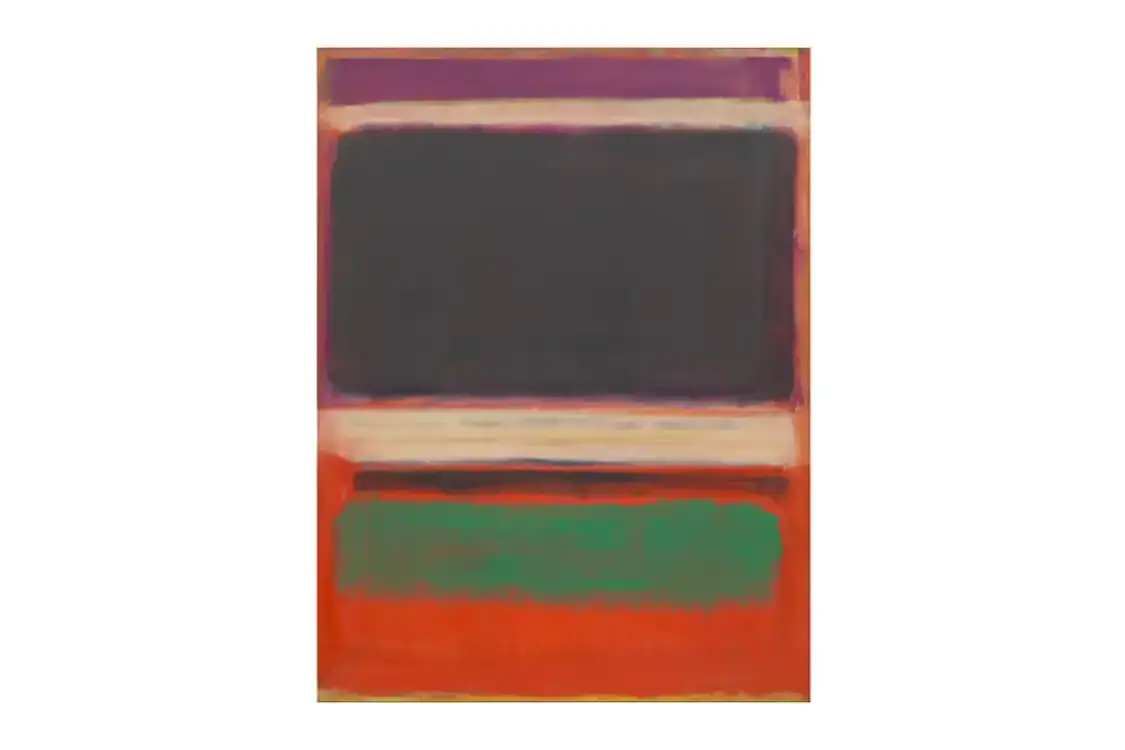
The exhibition features "No. 3/No. 13" from 1949, a work from MoMA's collection that marks a turning point in Rothko's career. This painting shows his transition to the large rectangular forms that define his mature style.
"Interior" from 1936 offers a contrast, representing his earlier figurative period. This work rarely appears in Italian exhibitions. The retrospective includes numerous large format paintings that fill the viewer's field of vision, creating the immersive experience Rothko sought.
Rothko made multiple trips to Italy during his lifetime. Florence held particular significance for him. He studied how Renaissance artists used color to create spiritual atmosphere in religious spaces. This observation informed his own ambitions for his abstract work.
The exhibition occupies the main galleries at Palazzo Strozzi. The building's Renaissance architecture provides context for understanding Rothko's relationship with Italian art history. The satellite locations at San Marco and the Laurenziana extend the conversation beyond the central venue.
Fra Angelico's frescoes at San Marco share qualities with Rothko's approach to color and contemplation. Both artists created works meant for sustained viewing. The pairing allows visitors to see connections across five centuries.
Michelangelo's vestibule at the Laurenziana influenced Rothko's conception of architectural space. He referenced this specific location when discussing the Seagram Murals, a series originally commissioned for a New York restaurant but never installed there. The works now reside at Tate Modern in London.
Palazzo Strozzi's exhibition design emphasizes the scale and presence of Rothko's paintings. Many works measure over two meters in height. The artist wanted viewers to stand close to the surface, allowing the color fields to dominate their perception.
The retrospective includes paintings from all major phases of Rothko's career. Early works show his exploration of surrealism and mythology. Middle period pieces document his gradual simplification of form. Late paintings reveal his darkening palette and increasingly somber themes.
Rothko in Florence opens to the public on March 14, 2026. The exhibition remains on view through August 23, 2026. Palazzo Strozzi is located at Piazza Strozzi in central Florence.
Andrea Darren
Born in Manchester, from a young age, she was passionate about art and design. She studied at the University of the Arts in London, where she developed her skills in these fields. Today, Andrea works as an editor for a renowned publishing house, combining her love for art and design with her editorial expertise.
Share this article
RELATED

6:AM LAUNCHES BATCH GLASS MODULES


MOTO GUZZI OPENS GREG LYNN MUSEUM IN MANDELLO

