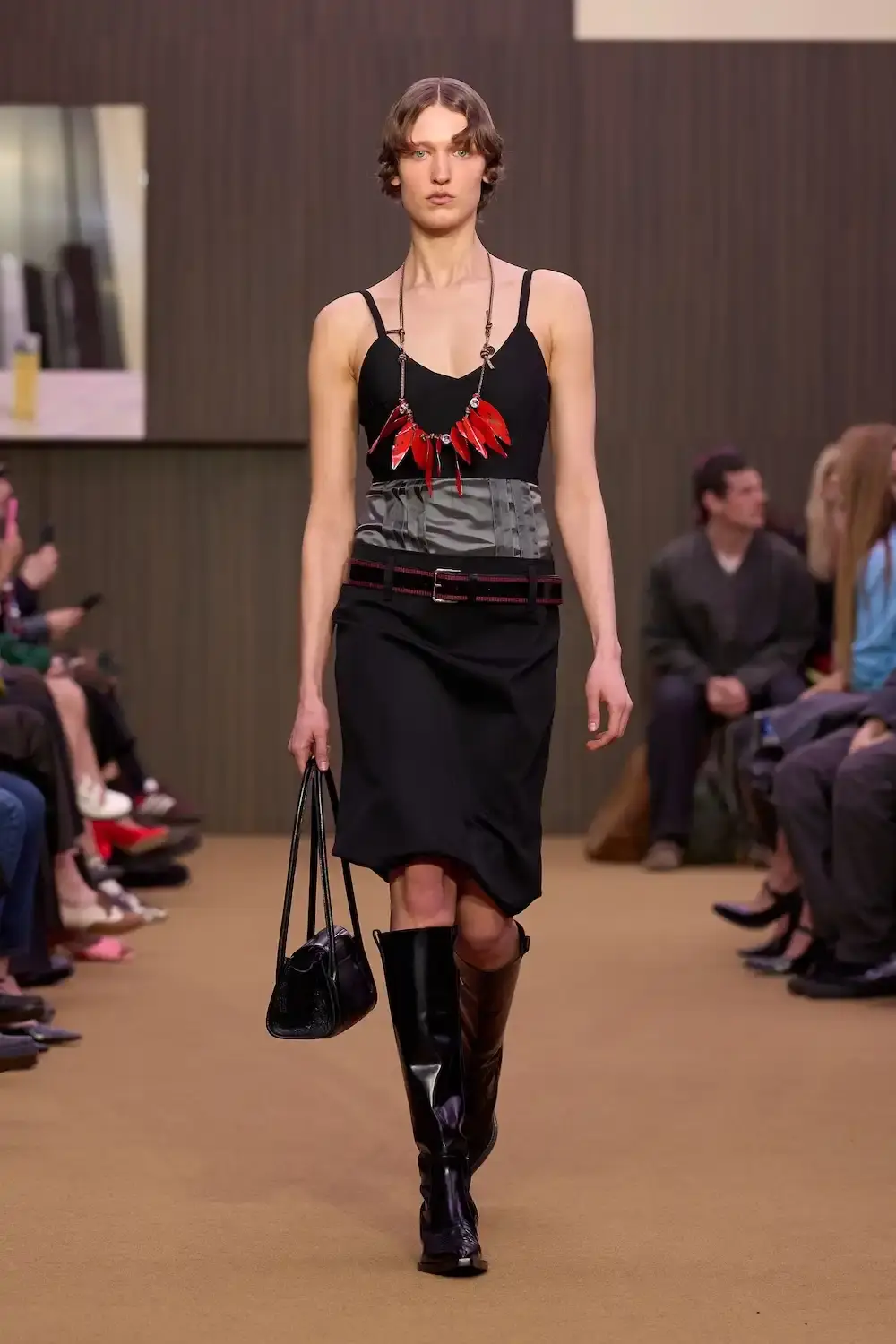
Summary:
- Meryll Rogge's debut at Marni reintroduces the brand's core identity without repeating it, drawing on its archive to build something new.
- The collection pairs opposing materials and aesthetics, from couture-inflected sportswear to technical fabrics alongside organza and silk.
- The show's setting was designed by Formafantasma, framing clothes built around the direct act of dressing the body.
Marni has a new creative director. Meryll Rogge took on the role and presented her debut collection for the Italian house, and what you see is a shift in direction that feels considered rather than reactive. Where Francesco Risso pushed the brand into experimental territory, Rogge pulls it back toward something more grounded. That said, this is not a reset. It reads more like a recalibration.
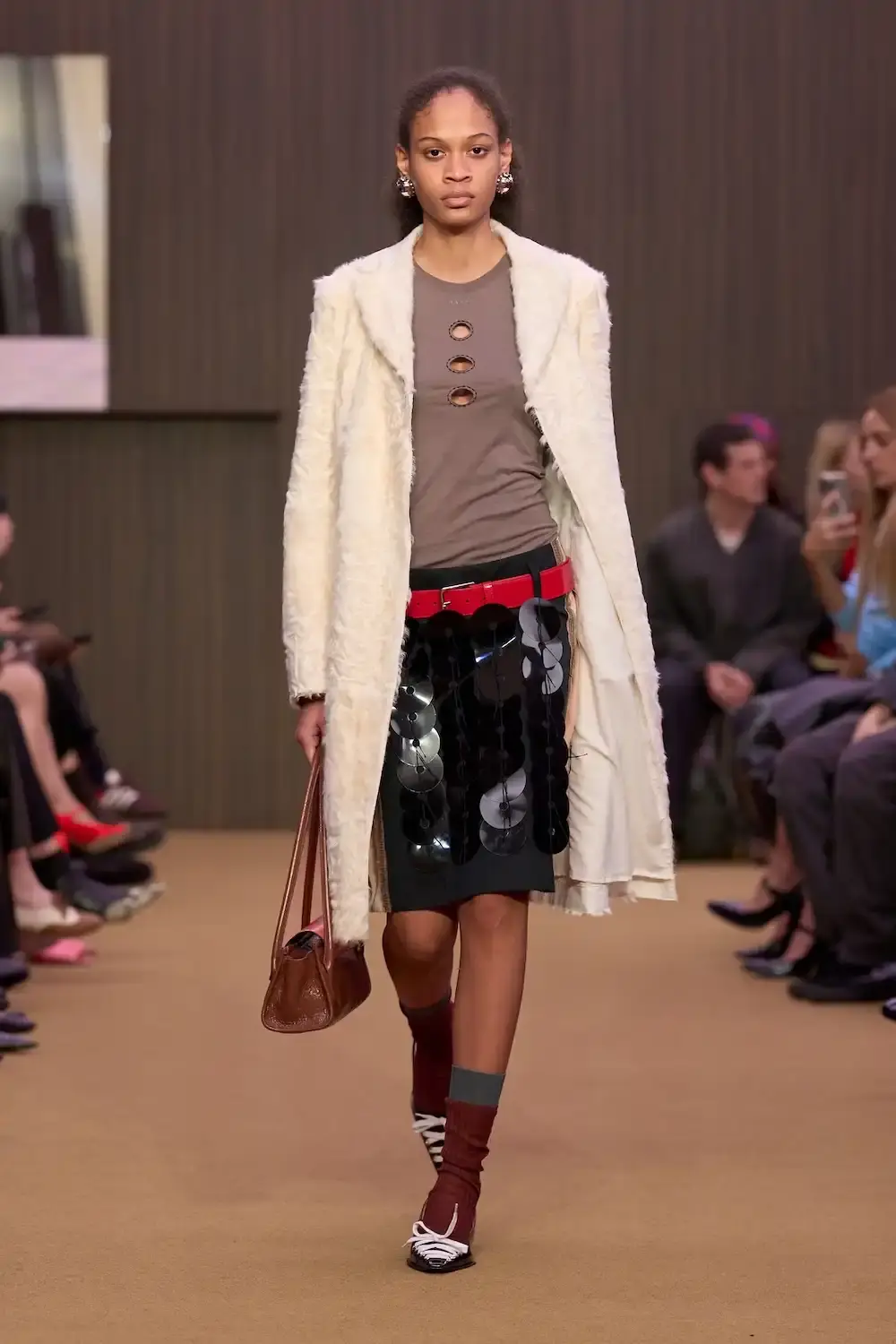
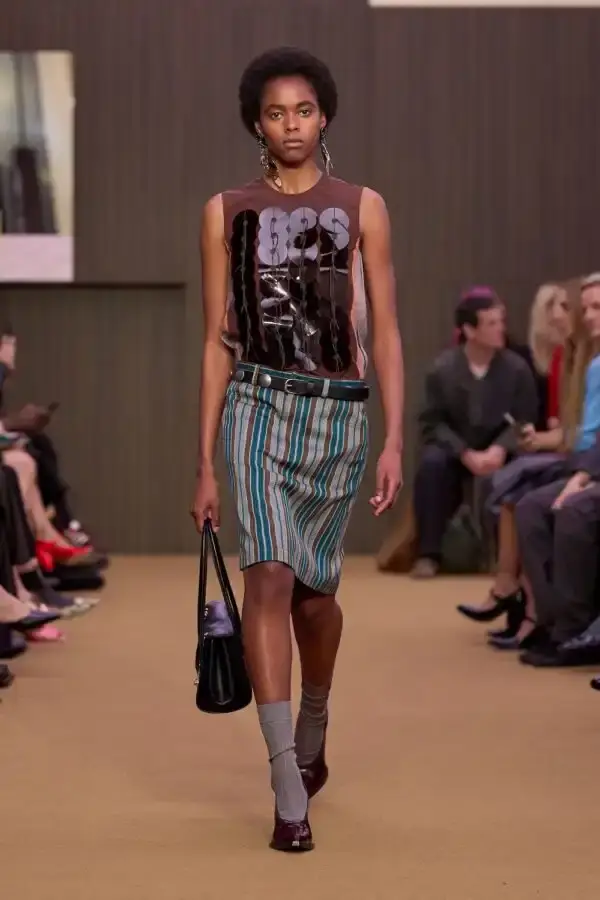
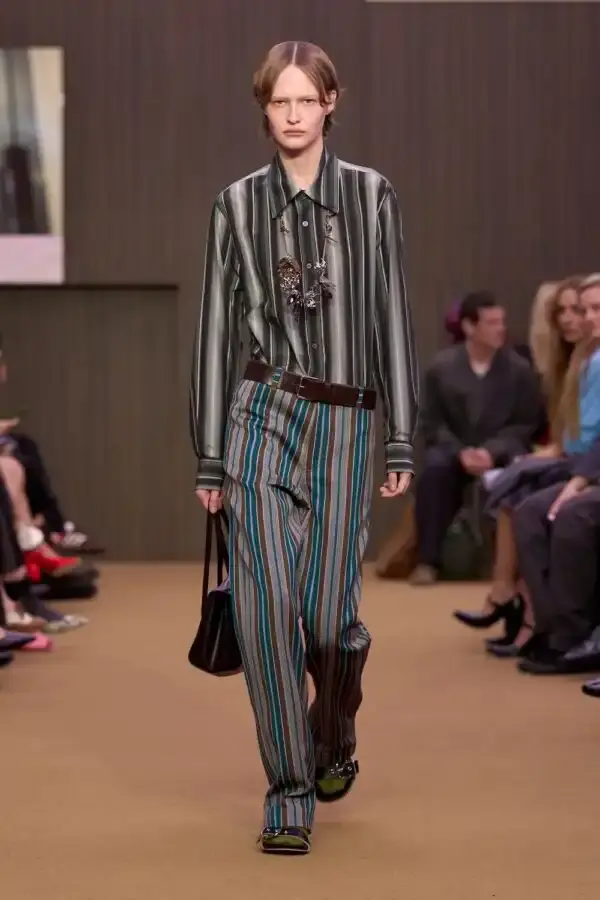
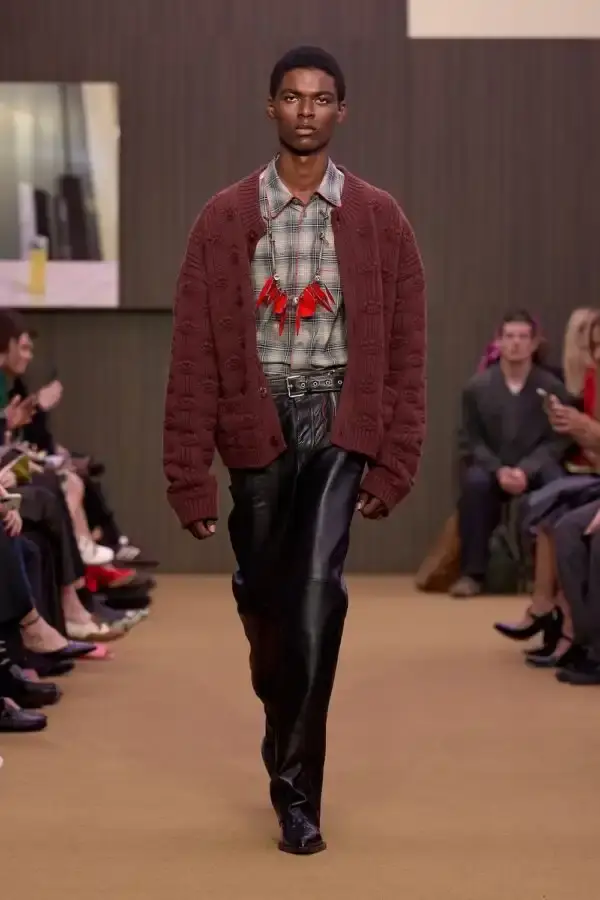
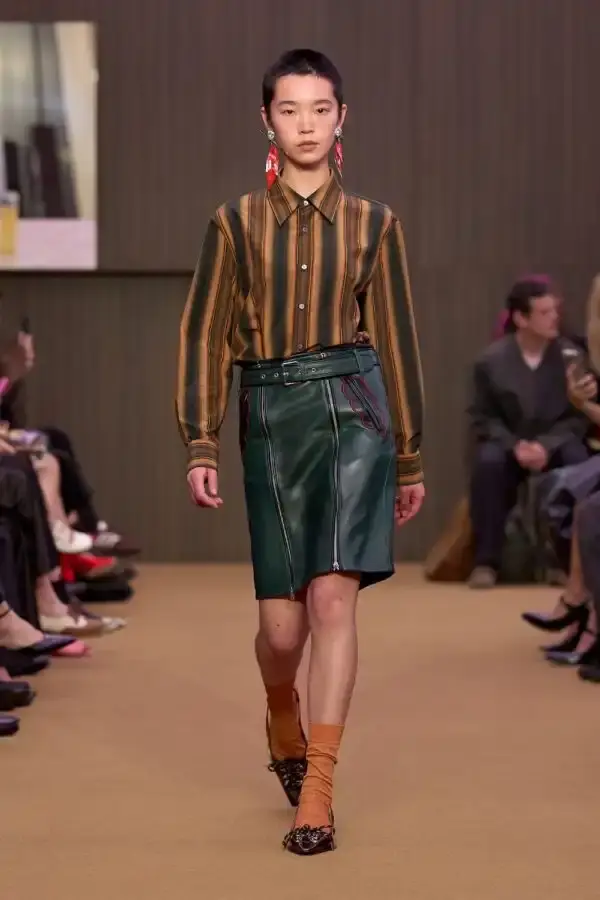
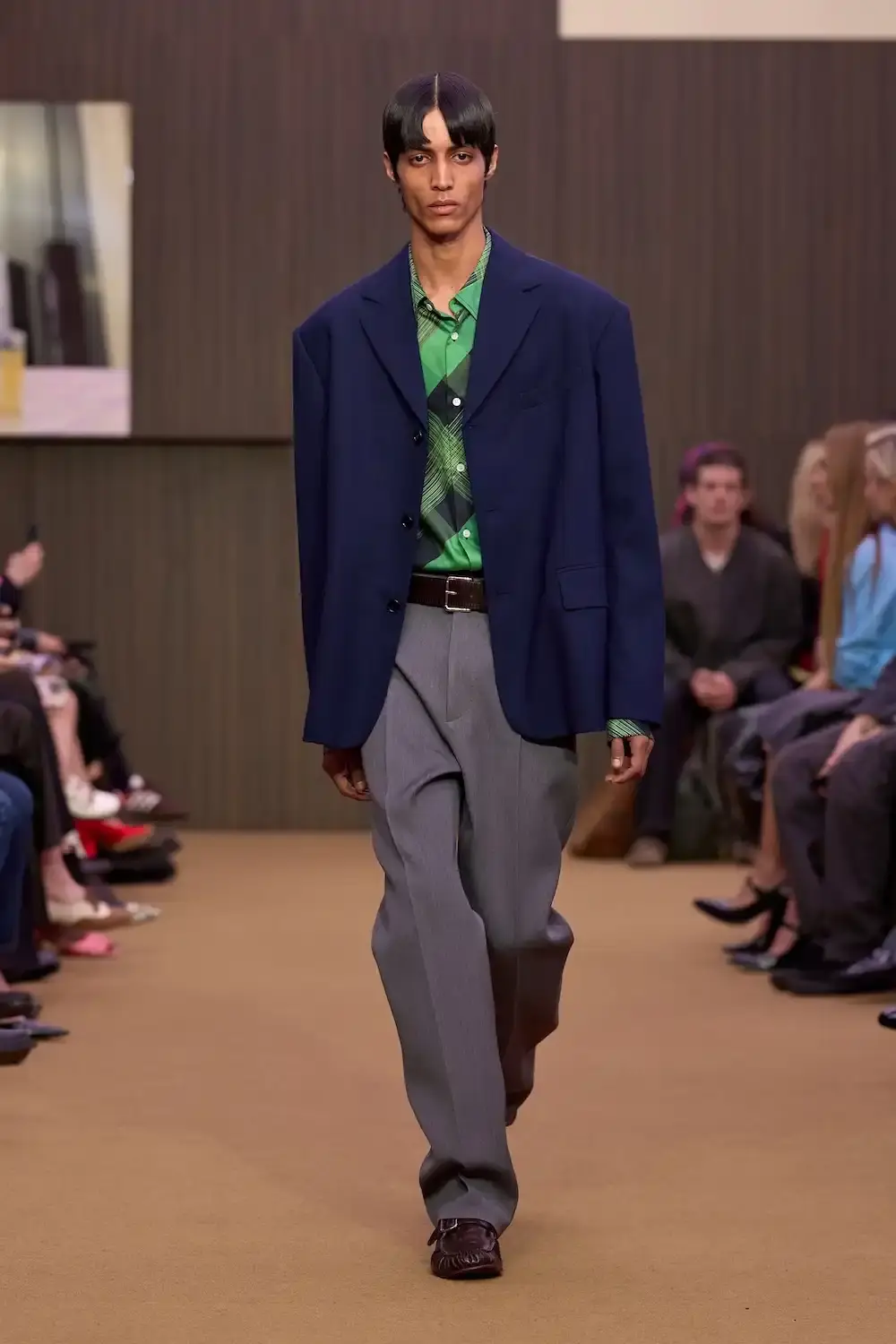
The collection draws from Marni's existing design language. Dichotomies, pattern studies, altered proportions, and structural elements treated as decoration all appear across the looks. These are codes the brand has worked with before, but Rogge approaches them without leaning on nostalgia. She references the archive the way you reference a memory: selectively and with your own interpretation applied.
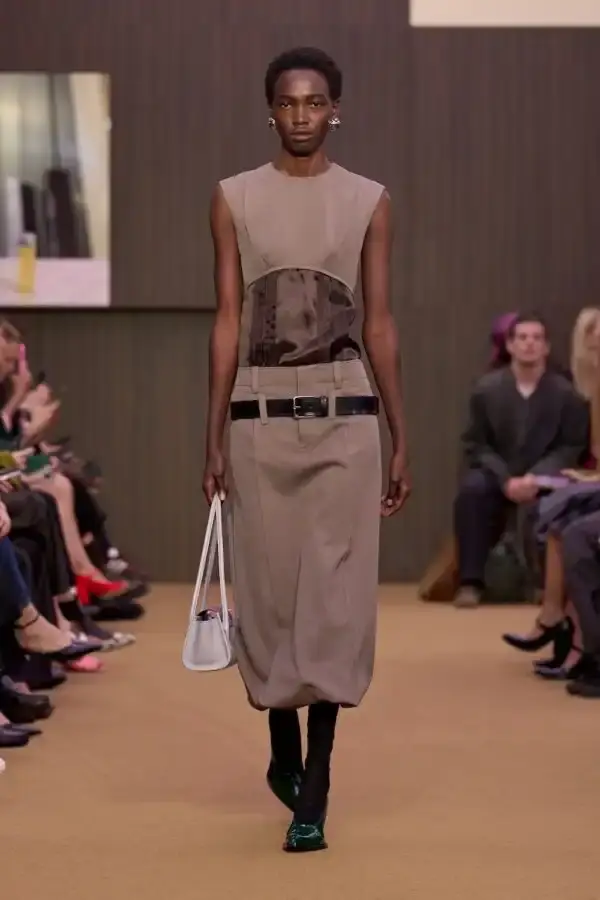
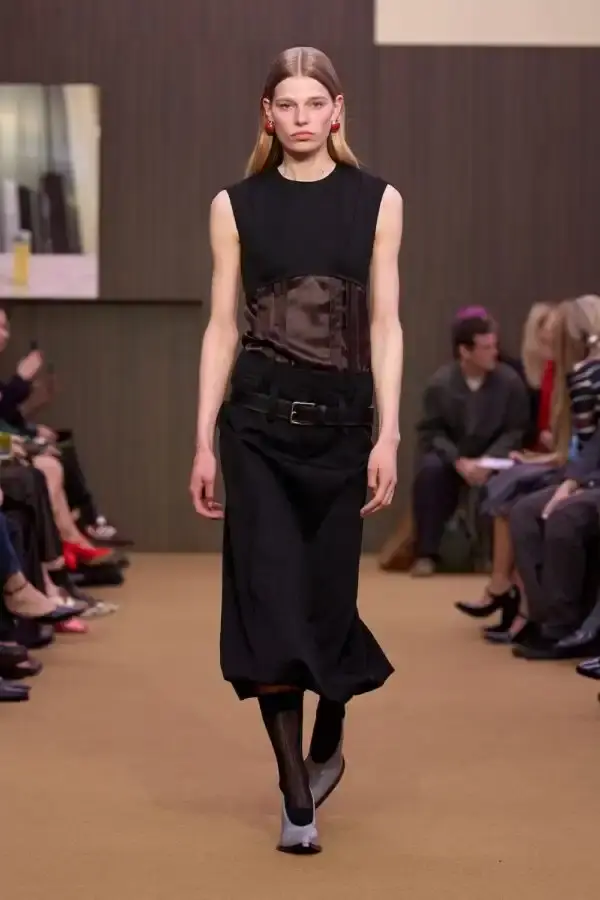
That dual logic runs through the materials too. Biker leather sits next to industrial ciré. Organza and silk appear alongside technical fabrics. Sportswear details get treated with a couture sensibility. The combinations are deliberate. Nothing cancels the other out; the pieces work through contrast rather than contradiction.
The surface decoration adds another layer. Broderie anglaise and small polka dots bring a naïf quality to some pieces. Irregular stripes, bias-cut checks, and patchwork appear elsewhere. Exposed seams show the construction beneath. Oversized sequins are embroidered onto cotton. Mother-of-pearl is applied directly to garments. The effect is detailed without being fussy.
Rogge's approach frames dressing as something direct. The clothes address the body without ceremony, and the elegance in the collection comes from that absence of reverence rather than from any added ornamentation. You are not meant to feel like the clothes are precious objects. You are meant to wear them.
The show took place around an installation designed by Formafantasma, the Milan and Rotterdam-based design studio known for research-led projects. Their presence added a specific atmosphere to the presentation without overpowering it.
What Rogge presents with this first collection is a version of Marni that remembers where it came from without being defined by it. The experimentation of the previous era leaves a mark, but the direction here prioritizes clarity and intention over provocation. Whether that holds across future seasons is the open question, but as openings go, this one establishes a clear point of view.
Kristin Kaye
Insatiably curious about human expression, she immerses herself in literature, theater, art, and dance. Her academic journey led to degrees in Modern Literature, where she delved into The Furioso, and Historical Sciences with a focus on Contemporary History. Her studies took her to the prestigious Erasmus University Rotterdam, broadening her international perspective.
Her passion for culture isn't confined to personal enjoyment—it spills onto the pages of various publications. There, she explores not only artistic endeavors but also civil rights issues and the myriad ways human culture manifests itself. For her, writing about these topics isn't just a profession; it's an irresistible calling that stems from her deep-seated fascination with the human experience.
Share this article


