Summary:
- Milan and Inter presented the Generali Stadium on October 29, 2026 at the Castello Sforzesco, designed by Norman Foster and David Manica.
- The stadium will hold 71,500 seats. Works are planned for 2028 and the first match for the 2031/32 season.
- Reports put the owners’ investment at more than €2 billion.
AC Milan and Inter presented the Generali Stadium on the evening of Thursday, October 29, 2026. The press event took place in the Sala Viscontea of the Castello Sforzesco in Milan, with Milan chairman Paolo Scaroni and Inter chairman and chief executive Beppe Marotta in attendance. The stadium will replace San Siro. Lord Norman Foster and David Manica are the architects behind the project.
Foster promised a venue aiming to become “iconic”. Scaroni made a terse remark: “A dream coming true, on which I have worked since 2017”. If all goes well, works start in 2028 and the first match takes place in the 2031/32 season. Mayor Giuseppe Sala also hopes the stadium will be ready for UEFA Euro 2032, which Italy and Türkiye will host together. If you follow either club, note these dates: 2028 for the start of works and 2031/32 for the first match.
Design and structure of the Generali Stadium
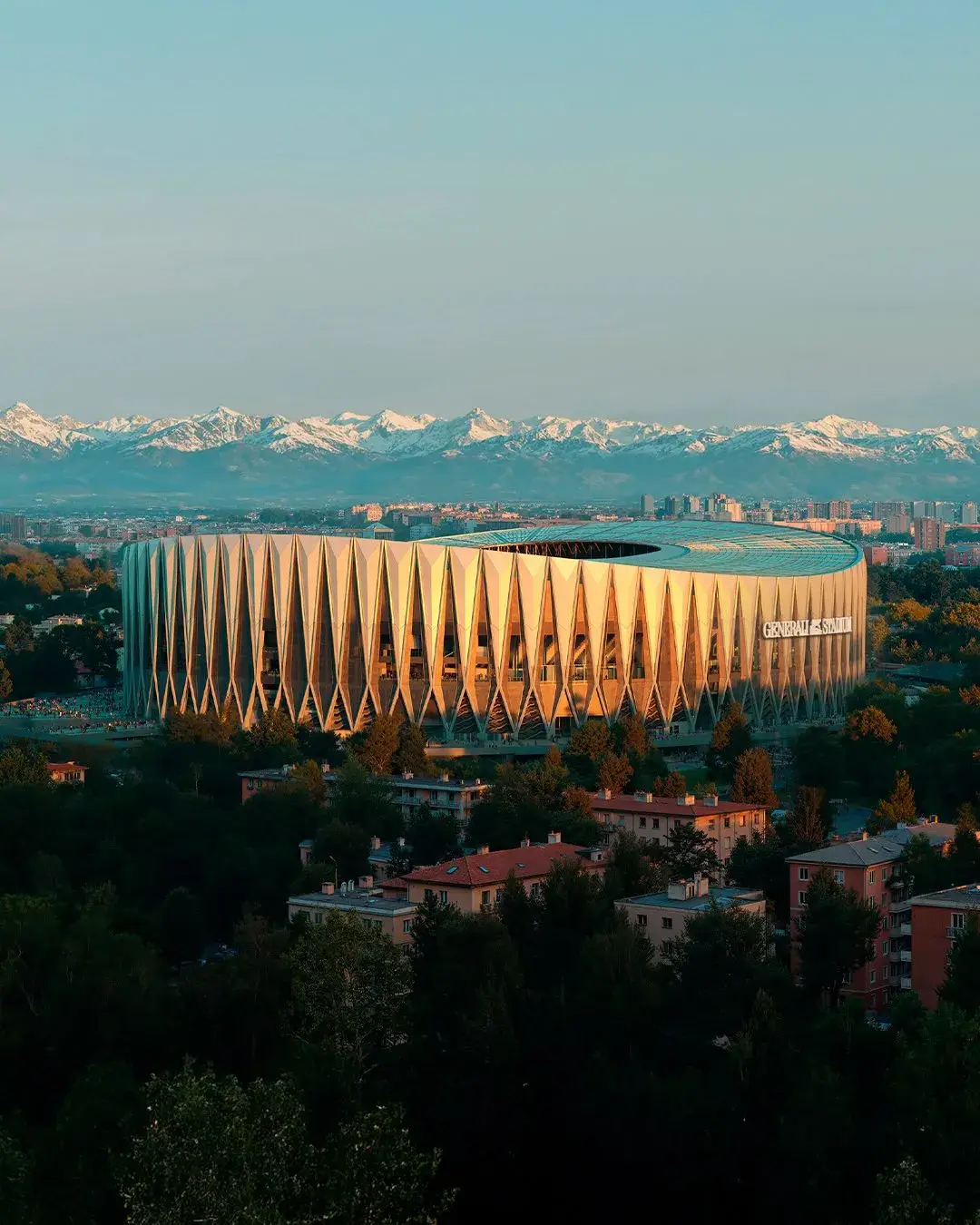
In the design, pointed shapes stand out on the facade. They recall arrows and the spires of the Duomo, and the design is described as a tribute to “refined mastery”. A concrete X-shaped structure grows out of naturally ventilated colonnades and crosses the facade. The entrances have a diamond shape. They give visitors glimpses of the stadium on arrival, then open onto panoramic walkways with wide views over the city.
A roof with double curvature crowns the building and frames the two curves, the end stands behind the goals. The plans include photovoltaic technology, acoustic optimisation and other sustainability measures, treated as essential for a stadium in line with current trends.
Seats, sound and sightlines
The stadium will hold 71,500 seats, a figure already known. Manica said atmosphere guided the design, rather than capacity. Two large tiers wrap around the pitch through 360 degrees and give clear sightlines and a close link between fans and the field. At both ends, the end stands rise as steep walls toward the pitch, inclined up to 37 degrees to amplify atmosphere and visual impact. Foster described them as “A wall of 11,000 people, inclined at 37 degrees”.
The design shows a covered bowl raised on a podium. The acoustic system is meant to hold and amplify sound inside the bowl, also to protect residents. Fluid lines and light projections on the facade show the identity of both clubs, from colours to players’ faces.
The plans list 13,500 hospitality seats for premium experiences and guarantee “seats in the popular sections”. Accessibility improves, and seats sit further apart with more comfort. The stated goal is to “intensify the experience” and “the feeling of San Siro”. Manica joked the Generali Stadium “is better” than other stadiums in the world.
What Foster and Manica said about San Siro
Foster asked: “How do you build on a legend? The essence is the fans and their curves, and if we look at the new stadium we see this is lower in the central part and then rises”. He placed the rise at the point where the curves stand and added “and this is a response to the fans”. He closed with “We did everything San Siro already has, but trying to take a step forward”. Manica added: “our goal is for this to be more San Siro than before, and this is why we worked hard”.
Investment and open questions
Reports put the investment by the owner funds, RedBird Capital Partners and Oaktree, at more than €2 billion. Generali holds the naming rights and acts as official insurance partner of both clubs. The clubs place the stadium within an urban regeneration plan covering 281,000 square metres. The chapter on regenerating the San Siro neighbourhood is still unwritten. This also falls to local politics, and the schedule stays subject to approvals.
Soufiene El Boub
was born and raised in France, where he also pursued his education. With a lifelong passion for sports and storytelling, Soufiene has become a sports editor, known for his insightful analysis writing. His unique perspective, shaped by his French upbringing, adds a distinctive flair to his work in the world of sports journalism.
Share this article


