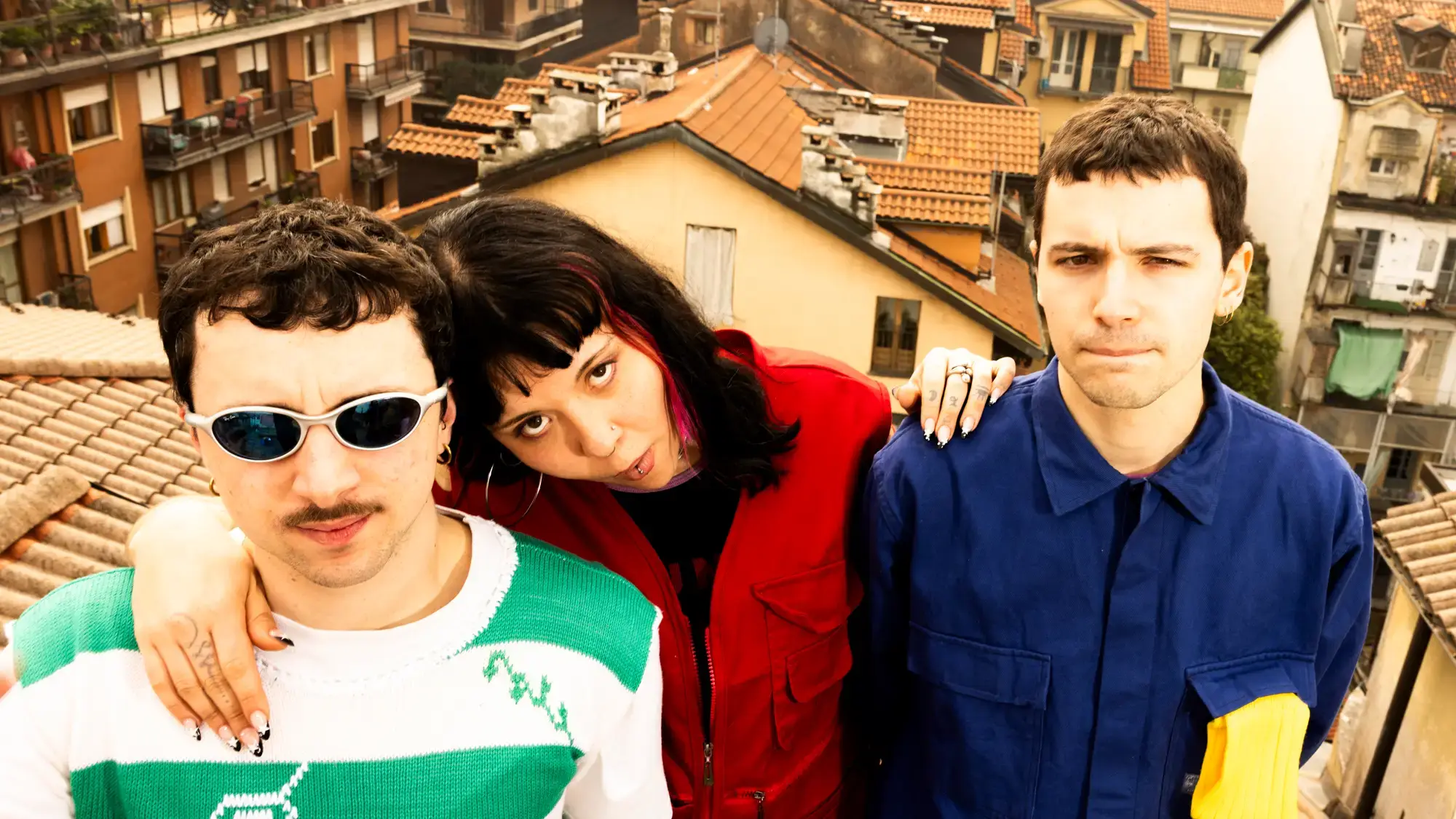
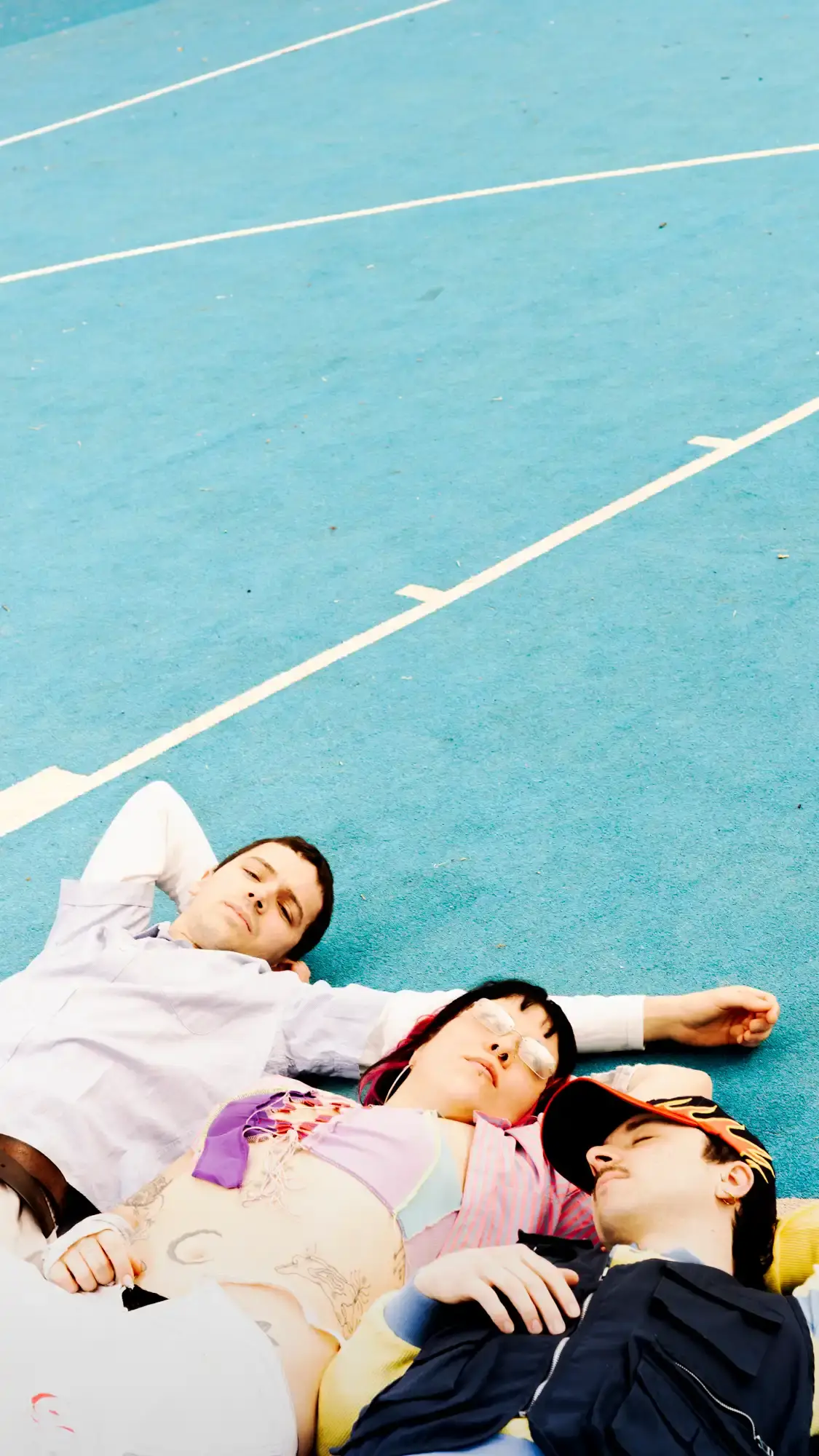
Turin electronic group Tresca y Tigre formed in late 2023. The project includes Colombian-Italian rapper Sicala and Italian producer duo Trampa. Sicala writes lyrics in Spanish and English. Trampa handles sound design. The trio released their debut EP Cascara in May 2025 through Funclab Records. On May 22 2026 the band released their second EP titled CASI CAUSTICA CASI NADA via Universal Music Italia. Their music combines dembow cumbia batida and UK bass. This interview explores their artistic evolution and visual choices.
-
Your new EP was released on May 22. For those discovering Tresca y Tigre today, who are you and how did the project begin?
The project was born from the collaboration between the producer duo TRAMPA and Colombian-Italian rapper and singer SICALA. What started as an experiment among friends gradually evolved into an ambitious artistic project. The three of us came from very different musical backgrounds, which converged through a shared desire to explore new sonic territories and creative possibilities. We initially worked on reinterpreting demos of varying levels of development, some of which eventually became tracks on our first EP, Càscara. Over time, we began approaching songwriting and production in a more organic and collective way.
Listening to this new release, there’s a strong sense of detailed sonic research. What aspects of your production approach have changed since the previous EP?
When we made Càscara, we were experiencing many things for the first time: not only sharing creative processes, but also positioning the project within the music industry and its market dynamics. We were used to creating from spontaneity, instinct, and inspiration—valuable resources in any creative process, but not always readily available, and sometimes leading to uncertainty when decisions are driven purely by intuition.
For CASI CÁUSTICA CASI NADA, we approached every track as collectively as possible. Instead of exchanging demos, we started by building the framework of each song together from the outset, then gave ourselves the space and time to work individually before coming back together. This process extended across production, lyric writing, and mixing, allowing us to pay closer attention to the balance of each song—both individually and in relation to one another, as well as to our previous work.
How has your creative process evolved over the years? Are there any tools, methods, or rituals that have become central to your work today?
Secret 😛
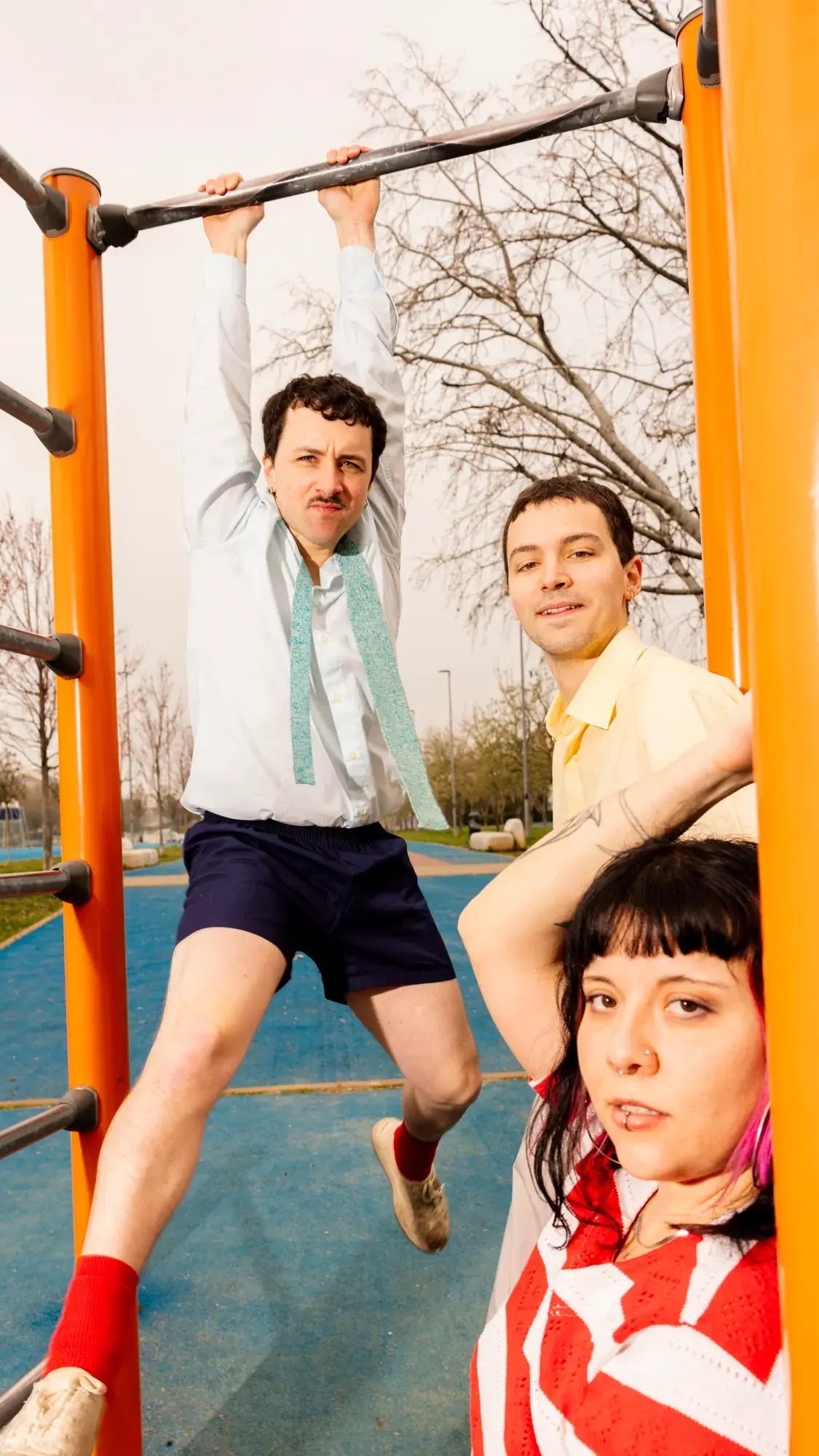
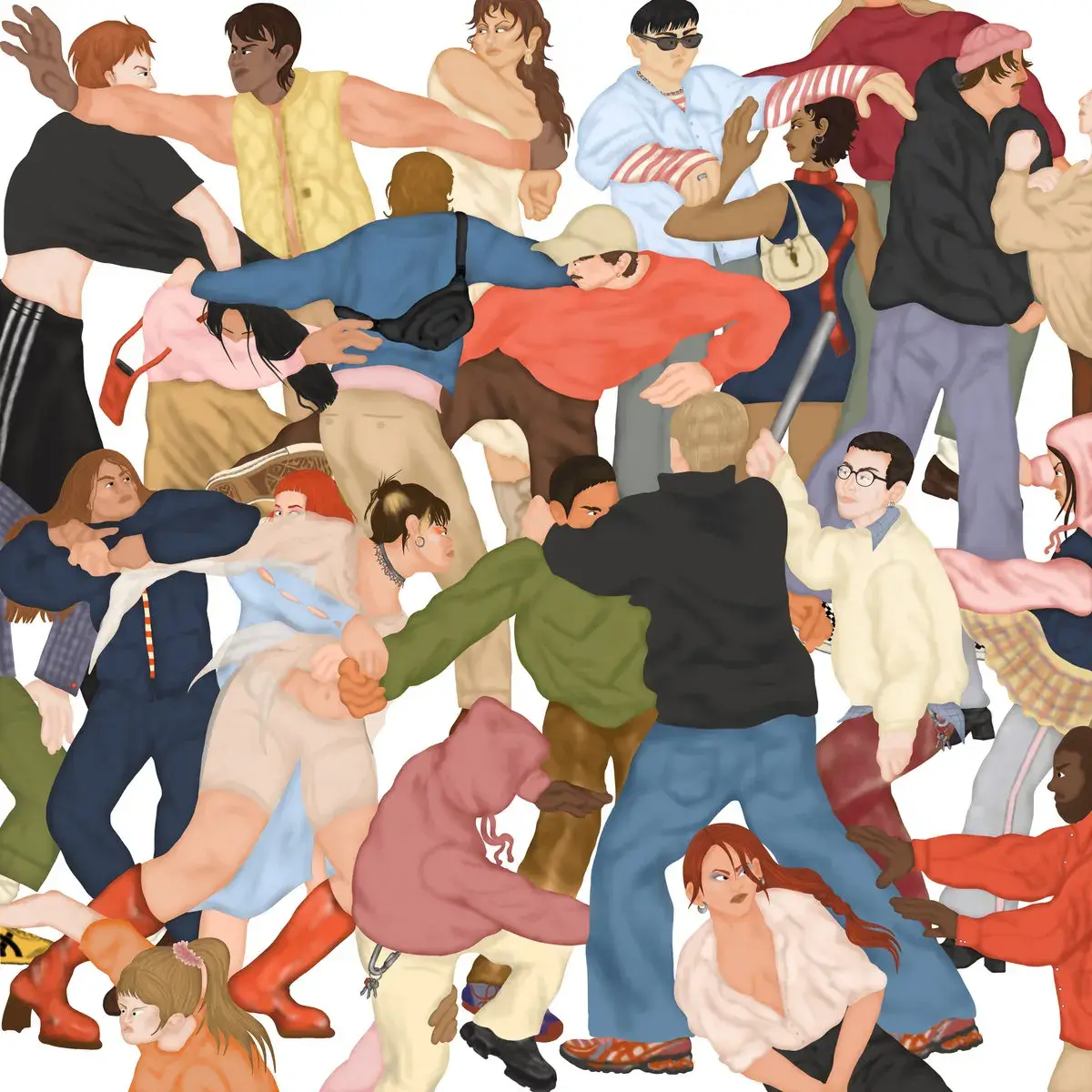
The title and artwork feel like an integral part of the project. How did they come about, and what role do they play in the EP’s narrative?
We’re fortunate to be surrounded by many friends who work across different artistic disciplines. We enjoy collaborating with people we admire first and foremost on a human level, and then creatively and professionally.
For CÀSCARA, we worked with PRIMULA CONTI, aiming to create a contrast between a clean, minimalist aesthetic and a varied, chaotic sound palette. For CASI CÁUSTICA CASI NADA, we collaborated with MARTA GIUNIPERO. We were drawn to her illustrative style and proposed the idea of a fight or brawl as the central concept for the cover artwork.
Your music seems to move between experimentation, club culture, and influences coming from very different contexts. What inspirations are currently shaping your research, both inside and outside of music?
In general, we’re surrounded by artists and creative people, and we live within a vibrant and stimulating cultural environment. Because we’re naturally curious, we draw a lot of inspiration from what’s happening around us.
Looking beyond our immediate surroundings, our influences are quite diverse. We’re strongly oriented toward international scenes: we listen to a lot of Latin music and music from the African diaspora, but we’re also interested in various European contexts, including UK bass, hyperpop, dubstep, and experimental electronic music, including releases from Italian labels such as Phobo Records and Artetetra.
Recently, we’ve been listening a lot to Nicolini, Olly XL, Smerz, Pa Salieu, Judeline, Natoxie, Duppy Gun, and Ryan Castro.
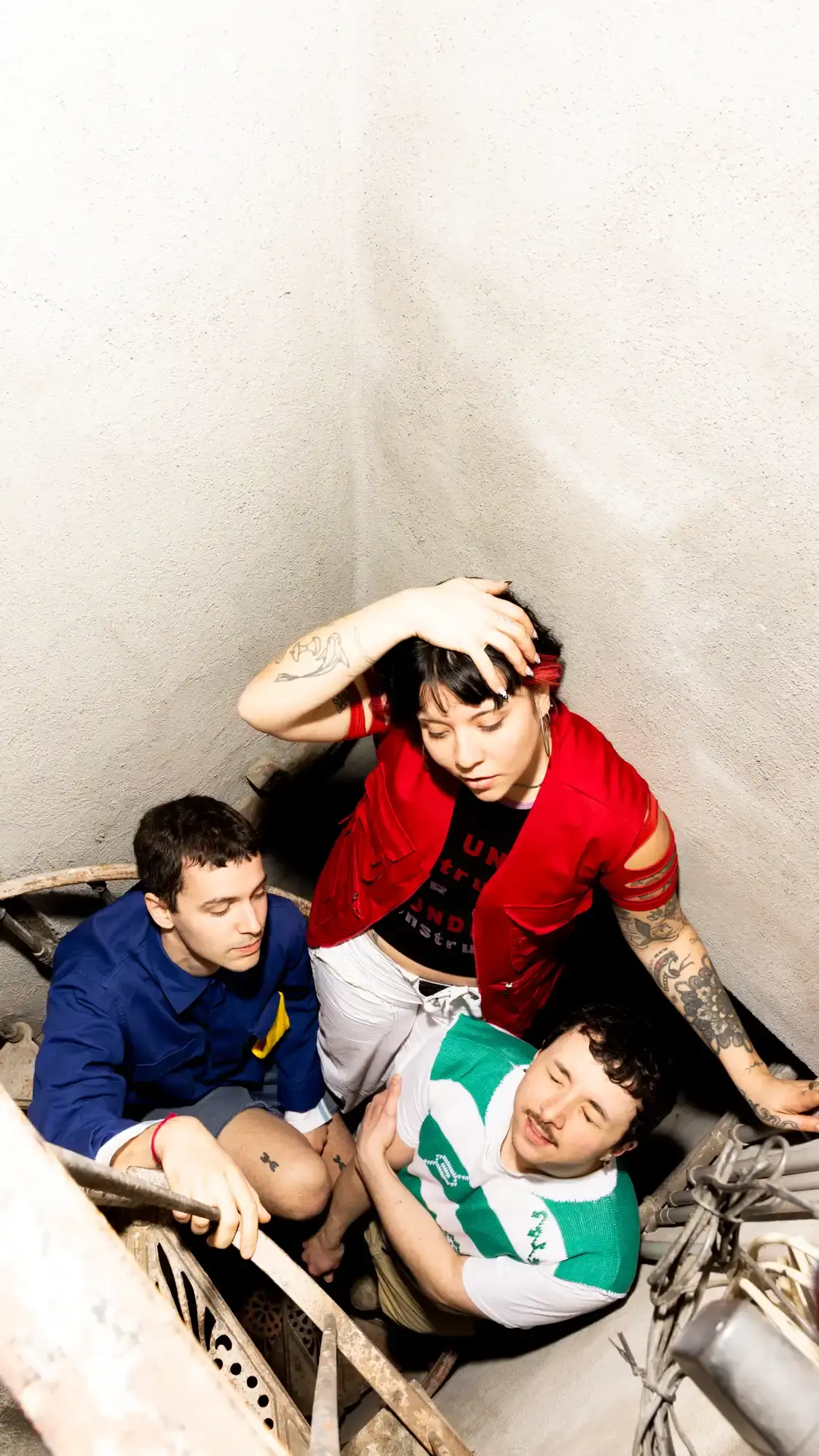
How important is the visual aspect of a musical project for you? Is there a dialogue between your sonic imagination and the worlds of fashion, design, or contemporary art?
The visual dimension is certainly useful because it allows us to communicate through a language that differs from sound. It’s something we value greatly and pay close attention to when engaging with musical projects. Thinking through form, texture, and color is creatively stimulating for us.
At the same time, especially today when everything passes through Instagram, we’re aware that visual communication is not driven solely by artistic sensitivity, aesthetic research, or a desire to collaborate. It is also shaped by marketing strategies that often occupy more space than is healthy or creatively stimulating.
Each of us has different tastes and sensibilities, but when it comes to Tresca y Tigre, we try to evaluate visual choices according to two main criteria: whether we genuinely have something to express through that language, and whether it allows us to collaborate with people, collectives, and projects we believe in or share meaningful values with.
If you had to describe this EP through a place, an object, or an item of clothing, what would you choose and why?
SICALA: For me, it would be a pendant. Not only because of the almost superstitious value that certain pieces of jewelry can carry, but also because one of the things I love most about this record is its attention to detail. There are so many carefully embedded elements within the production. To me, this record sparkles.
We live in a time when artists are increasingly expected to build a strong visual and narrative identity. How do you experience the relationship between music and image?
This ties back to what we were saying about the visual aspect of a project. Having a visual identity is great if you genuinely have something to communicate. Showing off for the sake of showing off has never interested us, nor do we feel particularly comfortable in that role.
It can be frustrating that developing a visual identity often means confronting the expectations of a music industry that evaluates not only your music, but also your marketability as an individual across other industries. This affects not only authenticity and originality—we can clearly see how certain trends dominate specific genres and scenes, where credibility often seems to come more from representing luxury brands than from sharing a culture.
There’s also the issue of how aesthetic and gender-based expectations differ. There are certainly standards for male bodies as well, but outside underground circuits, female visual identity still tends to depend on a very Westernized and highly artificial ideal.
As artists, it’s important for us to question whether our choices come from a genuine desire to experiment with our bodies and image, or from a sense of obligation toward those standards and the male gaze. And as audiences and consumers, we have a responsibility to challenge the aesthetic dictatorships that reinforce beauty standards which are not only unattainable, but also ultimately quite boring.
What was the biggest challenge you faced while making this record?
There wasn’t a particularly critical or difficult moment. Each of us experienced periods of greater or lesser creativity, inspiration, and self-confidence—as we believe happens to everyone—but we always supported one another.
We care deeply about enjoying the process and reminding ourselves that we make music first and foremost because it makes us feel good. Because of that, one way or another, we always managed to overcome challenging moments together.
Looking ahead, which directions excite you the most? Are there any goals, collaborations, or creative territories you’d like to explore in the coming months?
We’d love to start performing outside Italy as well. :-)
bopintrouble
Bopintrouble is a deejay and producer based in Milan, constantly searching for rare tracks on the internet to bring to life on the dancefloor. Currently, he performs as a resident deejay at Akeem in Milan and as a guest in various locations throughout Italy. He is also a co- founder of Buono.eu, a project aimed at promoting cooking and DJ sets in a typically Italian social home environment, and creative director of Maremoto Festival, a small independent festival set in the hills between Piacenza and Parma that aims to identify and anticipate trends in electronic music.
@bopintroubleShare this article
RELATED


AUDIO OBSCURA ADE 2026 AT G-STAR RAWFACTORY

