
Babymorocco trades the strobe lights for a brain-melting kaleidoscope in new EP Summer Fables
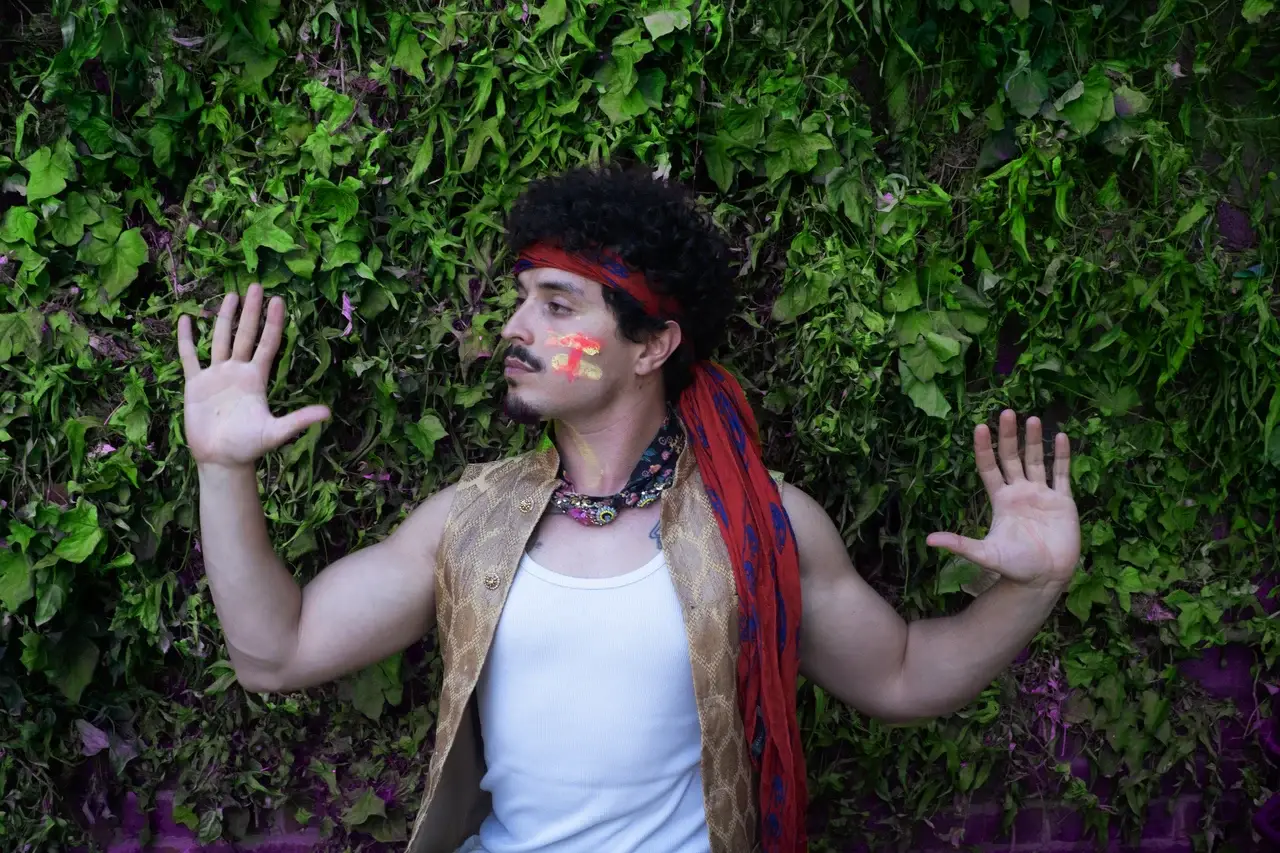
London's Babymorocco dropped his debut album Amour in 2024, introducing the world to a sound built from blown-out club sonics soaked in noughties nostalgia and unapologetic queer excess. The record and its shapeshifting companion, Amour: The Jean Paul Deluxe, led him on sold-out shows across the UK, US and Australia, sharing stages with Shygirl and Frost Children along the way, before playing at Primavera Sound and finally heading back to the studio to record this year's "Annoying", recorded in the very studio where Andy Warhol was shot. Recently, Babymorocco shed Jean Paul for a new alter ego entirely, Tropico Rocco, to join us for a quick chat ahead of The Summer Fables, his new mixtape out on 14th August..
M: "Annoying" was recorded in the studio where Andy Warhol was shot. That's a heavy piece of history to have in the room. How did it all come together?
B: That's where Jack Laboz's studio is now. I think it influenced the song because I felt like it was meant to happen. Coming up in the lift that Andy Warhol would've taken into the Factory, I thought I needed to make the track really jazzy, really poppy. I reckon the song sounds a little bit like one of his paintings. I wanted it to sound like the dollar sign paintings, or those really bold, graphic works, which wasn't intentional at first but then I realised it all blended together really nicely.
M: You've said the song came from a desperate place that made you feel sick, and that producer Jack Laboz instinctively started capturing every sad thing you'd do for someone you were obsessed with. What's it like handing that over to a collaborator and having someone document your worst impulses in real time?
B: For me, it's not really that different from my actual life. I talk so much — to people, in the studio, wherever. I was just there saying everything. I think it started with my ex. I got into this habit of making jokes about myself to keep him happy and putting myself down at my own expense. That's probably where the people-pleasing comes from. So self-deprecation comes really naturally to me now. Saying "I'm desperate, I'm pathetic" in front of people almost feels like a kind of self-elation… but in a sexy way.
M: I think it's also a self-defence mechanism. You say it before other people can say it about you.
B: Yeah. Exactly. It actually brings me back to Andy Warhol. He used to say you should point out everything you'd be insecure about to a love interest first, tell them about the spot on your face or whatever it is, because then you've already accounted for it. But I also think being pathetic is kind of sexy. People love patheticness. Some people love sad eyes, or someone who's a bit of a wimp. I liked feeling pathetic for once, it felt cool.
M: Your earlier work lived in electroclash and blog-house territory, like noughties rave, big room energy. "Annoying" strips a lot of that away for something quieter and more emotionally exposed. Was that a deliberate genre departure?
B: It's interesting, because some of my very first songs were actually much more personal. People assume my earlier work was all club music, but if you go back to songs like "My sad blue tears in Los Angeles" or " I wish (California)", they're about being assaulted when I was younger. I was writing whatever I could at the time — it was all really raw and sensitive. Then I wrote "I Wish You'd Make It Easy," this Pet Shop Boys-type track. I actually wrote it in 2020 but didn't release it until 2023. So I started from a really personal place. Then I wanted to focus more on the spotlight, which became the era of the aesthetic boy with "Sun Sex Party," "Everyone Wants to Look Like Me." I just wanted to have fun with it. I was tired of being so emotional after those first songs. I wanted to become this larger-than-life thing I'd grown up idolizing: club boys going crazy to Calvin Harris, French electro, that whole bisexual dancer world. Now, with this project, I'm coming back to those emotional themes. I'm unpacking things that have actually happened in my life, but filtering them through a psychedelic world.
M: The song is framed around a question that's followed you for years — is Babymorocco annoying. Is "Annoying" answering that question, deflecting it, or performing it back at the people who keep asking?
B: It's funny because the song isn't actually about that at all. It's not really about me being annoying to the general public. I just liked using the phrase because I hear it all the time. Now, if people search "Babymorocco annoying", hopefully my song comes up instead of loads of tweets.
M: The track has this saccharine, almost theatrical sweetness sitting right on top of something quite sad and exposed underneath. Is that contrast of sugar on the outside, ego death underneath, something you're chasing deliberately, or is it just how you process things emotionally?
B: I love the idea of processing things this way: you sing about something painful over a sweet, upbeat melody, and by the end of the song, two or three minutes later, you're healed. That's the utopian version. In the last chorus, the song shifts, like you've moved past it. Real life doesn't work that way, though. Healing takes much longer than a song. So this isn't really how I process things, but I like it as an idea. It's almost like a mantra: you let yourself feel pathetic for a while, and by the end, you're through it.
M: I should have asked you earlier but, how did you get into making music?
B: I always knew I wanted to make music. When I first went to art school, I didn't even realise you could apply to Fine Art as a performance artist or a photographer. I just didn't know those paths existed. Music felt similar. I wanted to do it, but I didn't know how to produce, so I assumed I just couldn't. Then COVID happened, and I realized nothing was really stopping me, all it took was downloading a beat and singing over it. I'd seen people like Lil Peep and those SoundCloud artists just finding beats online and making songs. Not that I make music like them, but it gave me permission to believe I could actually do it. First and foremost, though, I think I'm a writer. I was writing before I made music – even in my artworks, I was writing. Music just became the fastest way of getting that writing out.
M: And the visuals have always felt just as important as the music, and I am thinking especially about your latest video for “Annoying”, winking to Lichtenstein’s pop aesthetic. How does that side come together?
B: Pretty much every video I've ever done, apart from maybe one, I've come up with the concept myself. I don't necessarily direct every shot, but every idea starts with me. I always know what I want visually. Sometimes I'll have the title of a song and already know what the video is going to be before I've even written the song.
M: Lichtenstein's whole practice was built on taking the most private, melodramatic moment in a romance comic (a woman crying, waiting by the phone) and rendering it in dots, so the emotion gets flattened into something industrial and reproducible. That's the exact tension I see in this video: your most humiliating, private feeling dropped into a mass-produced, cartoon aesthetic. Are you the one crying, or are you the dots?
B: I think I'm the woman crying. Even though there's actually a woman crying in my video, she's the reasonable one. I'm the pathetic one. I love those Lichtenstein captions, they're so good. What's funny is that before I'd even thought about the romance comic references, I'd already decided I wanted the video to exist in this green-screen world. Then, out of nowhere, I thought, “What if it was Lichtenstein?”. Only afterwards did all those motifs click into place. The lyrics themselves could almost be speech bubbles in one of those paintings. They're so desperate. Everything just started feeding into everything else, which is how my ideas work, weaving into one another. The music leads to the visuals, then the meaning appears alongside them.
M: Are there any other pop art influences in the visuals?
B: Not really. I love pop art but I'm actually much more interested in performance art. For this one it was basically Andy Warhol for the making of the song, and Lichtenstein for the visual language.
M: One thing that seems to run through your work is the way you create and inhabit different alter egos. You've said Jean Paul was a dissociative fantasy, an escape and a spotlight. Tropico Rocco feels like it's doing something else. What's the actual difference between the two, in practice, when you're in the studio?
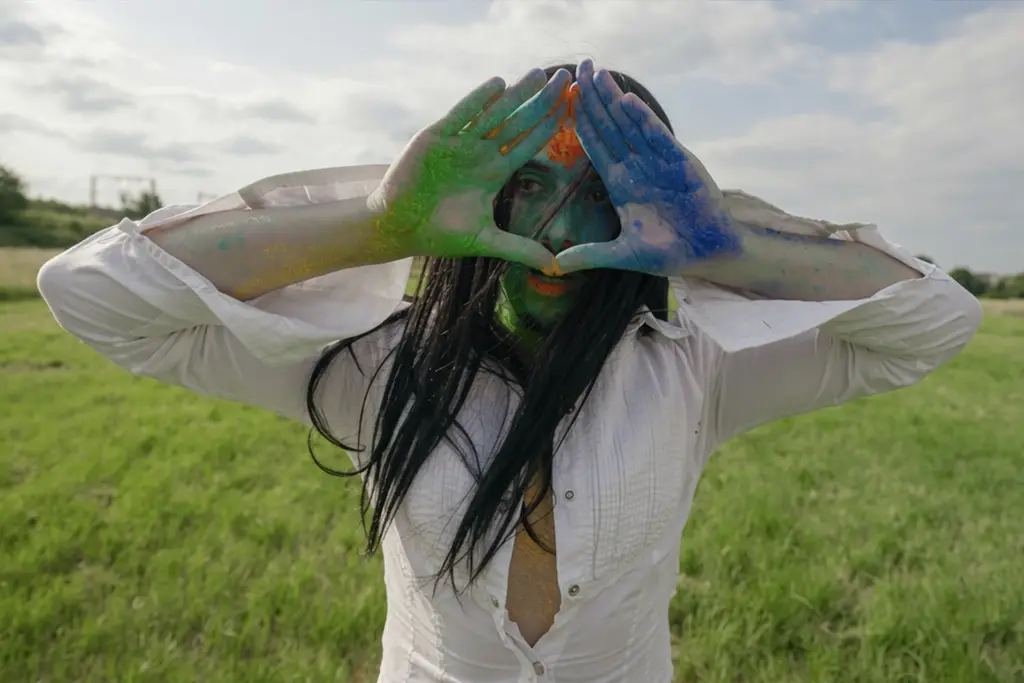
B: There's also another character called Muchacha, who's part of album two. When I was making the Muchacha material, there were masks everywhere in the studio and I was constantly wearing one. With this current one, Tropico Rocco, I'm always wearing a long-hair wig instead. Even my voice is higher across the songs, most of the mixtape is sung in this really high register, where my voice is almost cracking. The way I write is different too as there's more allegory, more symbolism. Tropico Rocco doesn't always have to make complete sense. I like the idea that he has disappeared into a cult for six months, has become the cult leader, completely lost his mind, and then come back with an album. Sometimes that's how I feel with my fans, as if we're all in this strange cult together. Jean Paul was much more audacious. This is still audacious, but I also want people to engage with the lyrics more. Jean Paul was almost broken English, saying the dirtiest thing I could over the dirtiest beat. With this, I want people to use their minds with me.
M: You're about to play Freddie in It Gets Worse for Channel 4 and A24. Does stepping into someone else's character change how you think about your own alter egos?
B: It was honestly the most fun experience ever. When I was younger, I actually thought acting was what I was going to do. I went to the National Youth Theatre from when I was about thirteen until I was twenty-one, so I think that's where the performance side of me comes from, alongside art school. I loved it and I felt really comfortable.I also love the way television and film look after you. I think what I miss most is being part of a group making something together. Being a solo artist can be really lonely because you are the product. Everything is measured against how well you're doing. If your album doesn't work, people think it's because of you. With film or television, everyone has a role. You're all building towards the same thing together, and I really miss that feeling.
M: Does collaborating with other musicians help with that sense of loneliness?
B: Not really. Collaborations are fun, but unless it's with an actual artist I have something to say with, they tend to feel transactional. With Frost Children, for example, it's different since we've done so many songs together now that it feels like family. They care about the music as much as I do. But I don't really do many features, because I'm quite wary of them. A lot of the time I'm approached by artists I just don't feel connected to. I think people constantly try to group artists together just because they share one characteristic, even when they're making completely different music and that's frustrating. If I do a collaboration, I want it to be intentional, and I want it to genuinely make artistic sense.
M: What's next?
B: The mixtape comes out in August. The TV show comes out in October. The album is finished and it's just about finding the right home for it because it's a strong visual project, and I want to be able to tour it properly. After the mixtape, though, I want to take a month off. I haven't actually been on holiday in five years. I've travelled everywhere for work, but I've never just stayed somewhere and relaxed and I want to enjoy the life I've built for a minute. Then I want to do more television, more film, and I'd really love to get into theatre. I still want to push myself. But I also want to find some peace. Instead of rushing into another sound immediately, I want to sit with one for longer. I've been reconnecting with my visual art recently, and that's made me feel much more connected to myself again. I want more of that.
Marco Galvan
Curator
Marco Galvan is a curator and writer based in London. He has curated exhibition projects with international artists at institutions and galleries across Europe, and his writing has been published in established art and cultural publications including The Travel Almanac, MUSE, FigureFigure, and EPOCH Review.
@garcomalvanMore from Marco Galvan
Share this editorial
RELATED

OASIS ANNOUNCE TWO ROME CONCERTS FOR 2027

VOODOO VILLAGE: ARTISTS ON WELLNESS

SELVA OPENS IN A HISTORIC MASSERIA IN SICILY

WET LEG'S RHIAN TEASDALE SILENCES ONLINE NOISE IN BERLIN

FUNK TRIBU RELEASES REMIX OF BOYS NOIZE SHUT IT DOWN
