Summary:
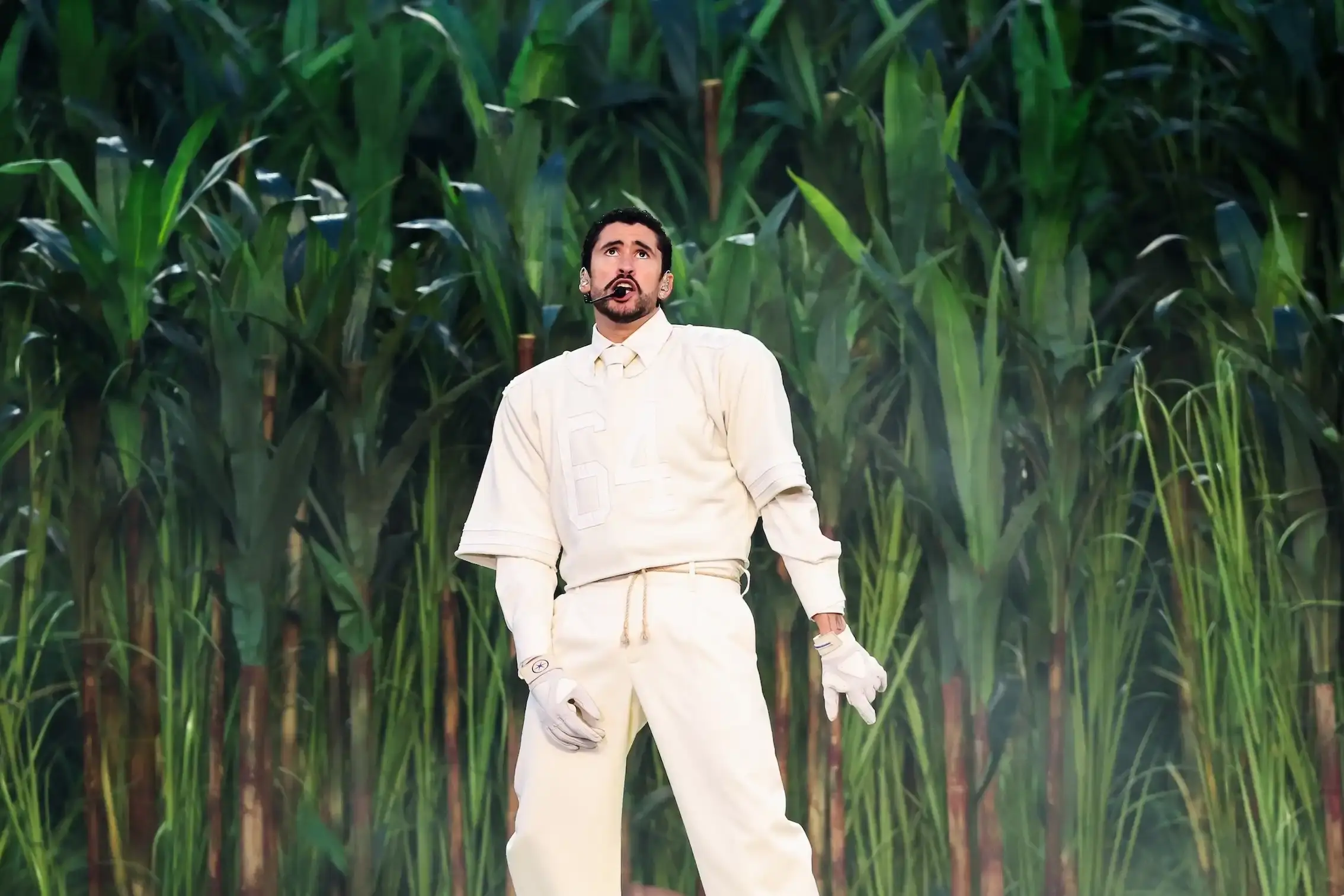
- Bad Bunny wore a custom Zara outfit for his Super Bowl 2026 halftime show performance at Levi's Stadium
- The football-style uniform featured the number 64 and his mother's surname Ocasio as personal tributes
- The outfit choice sparked debate between critics of fast fashion and those who appreciated the accessible brand selection
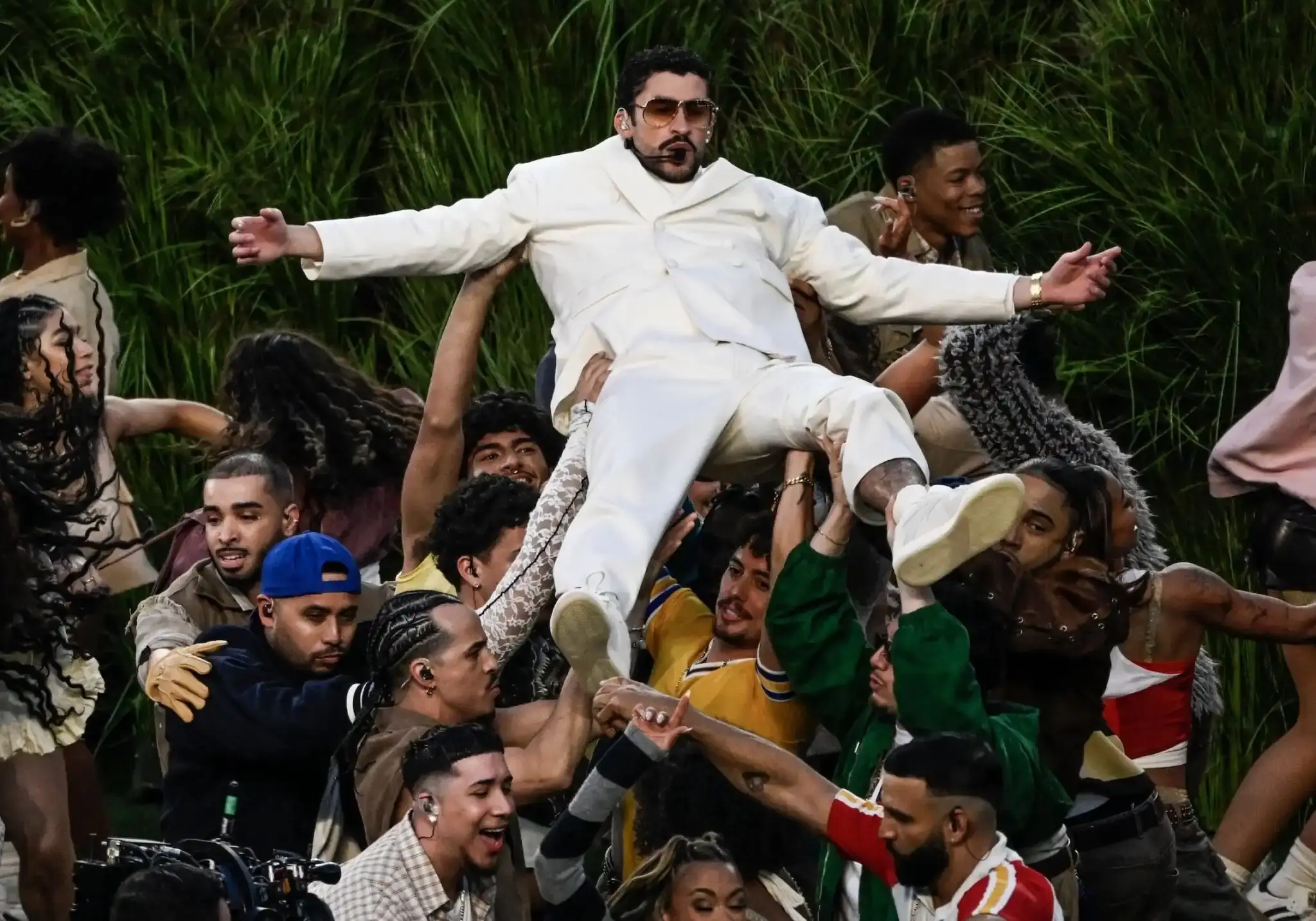
Bad Bunny took the stage at Super Bowl 2026 in Santa Clara wearing Zara. The performer chose the Spanish fast fashion retailer for his halftime show appearance instead of the luxury labels many expected to see.
His stylist team Storm Pablo and Marvin Douglas Linares worked with Zara to create the look. The outfit took the form of a football uniform that matched the aesthetic of the game itself. Details on the chest and back paid tribute to his mother. The number 64 references her birth year. The name Ocasio, his mother's surname, appeared on the garment.
The Puerto Rican artist completed the look with adidas Badbo 1.0 sneakers. These shoes come from his collaboration with adidas Originals and represent his latest footwear project with the brand.
Before the show, speculation pointed toward designers like Bottega Veneta, Willy Chavarria, or Jacquemus. These names circulated in fashion circles as likely candidates for the performance outfit. Bad Bunny went a different route.
The choice of Zara stands out in the context of Super Bowl halftime shows. Previous performers typically select high-end designers or custom pieces from luxury houses. This selection breaks from that pattern.
Zara operates as one of the largest fast fashion retailers worldwide. The brand makes clothing accessible to a broad consumer base through its pricing structure and widespread store locations. This accessibility comes with ongoing discussions about production practices and environmental impact.
Reactions to the outfit split along predictable lines. Some viewers criticized the choice to support a fast fashion brand on such a visible platform. Others praised the decision to wear something attainable rather than exclusive designer pieces. The debate played out across social media throughout the night and into the following days.
The football uniform design created a visual connection between the performer and the sport surrounding the show. This styling choice differs from the elaborate costumes or streetwear looks other halftime show performers have chosen in recent years.
Details about the collaboration between the styling team and Zara remain limited. The brand has not released information about whether the pieces will become available for purchase or if they existed solely for this performance.
Bad Bunny's full name, Benito Antonio Martínez Ocasio, rarely appears in his public persona. The inclusion of his mother's surname on the uniform brought a personal element to the performance outfit. This choice added meaning beyond the visual impact of the clothing itself.
The adidas partnership continues to produce new designs. The Badbo 1.0 model represents the latest in this ongoing relationship between the artist and the athletic brand. Previous releases have sold out quickly upon launch.
Response to the performance itself focused on the music and staging. The outfit discussion developed separately but with equal intensity among fashion observers and fans. These parallel conversations demonstrate how style choices at major events function independently from the primary content.
The Super Bowl halftime show reaches over 100 million viewers annually. This audience size makes clothing choices at the event particularly notable for brands and designers. A Zara appearance in this context generates different conversations than a luxury label would create.
Whether the outfit represents a statement about accessibility, a practical styling choice, or simply personal preference remains open to interpretation. Bad Bunny has not made public comments explaining the decision to work with Zara for this specific performance.
The uniform now joins the archive of memorable Super Bowl halftime show looks. Its place in that history will likely continue to generate discussion about fashion, accessibility, and the messages performers send through their clothing choices.
Kristin Kaye
Insatiably curious about human expression, she immerses herself in literature, theater, art, and dance. Her academic journey led to degrees in Modern Literature, where she delved into The Furioso, and Historical Sciences with a focus on Contemporary History. Her studies took her to the prestigious Erasmus University Rotterdam, broadening her international perspective.
Her passion for culture isn't confined to personal enjoyment—it spills onto the pages of various publications. There, she explores not only artistic endeavors but also civil rights issues and the myriad ways human culture manifests itself. For her, writing about these topics isn't just a profession; it's an irresistible calling that stems from her deep-seated fascination with the human experience.
Share this article
RELATED

FILIPPO VARLESE: NAPLES' MASTER JEWELLER

GOLF WANG FALL WINTER 2026 LINEUP TEASED


