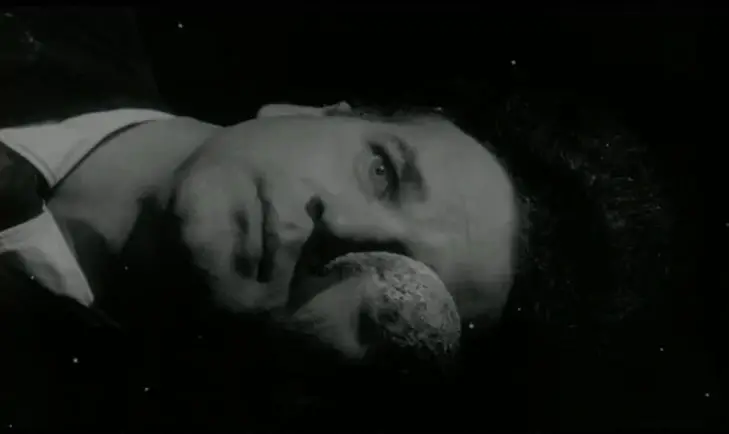
Eraserhead, the algorithm, and the things we'd rather not know about ourselves
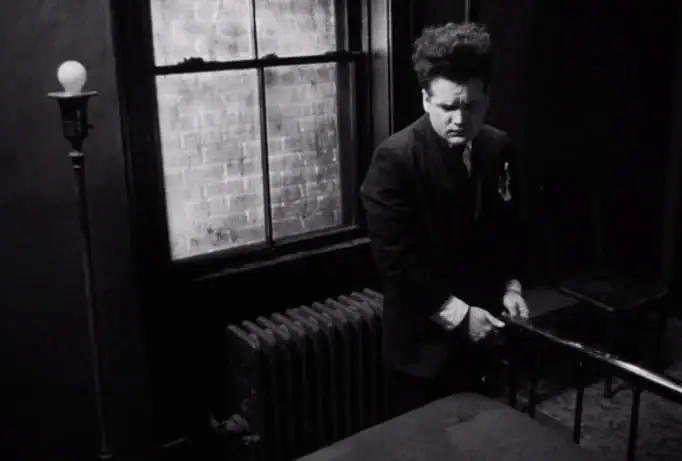
In Eraserhead, Henry Spencer has a woman living inside his radiator.
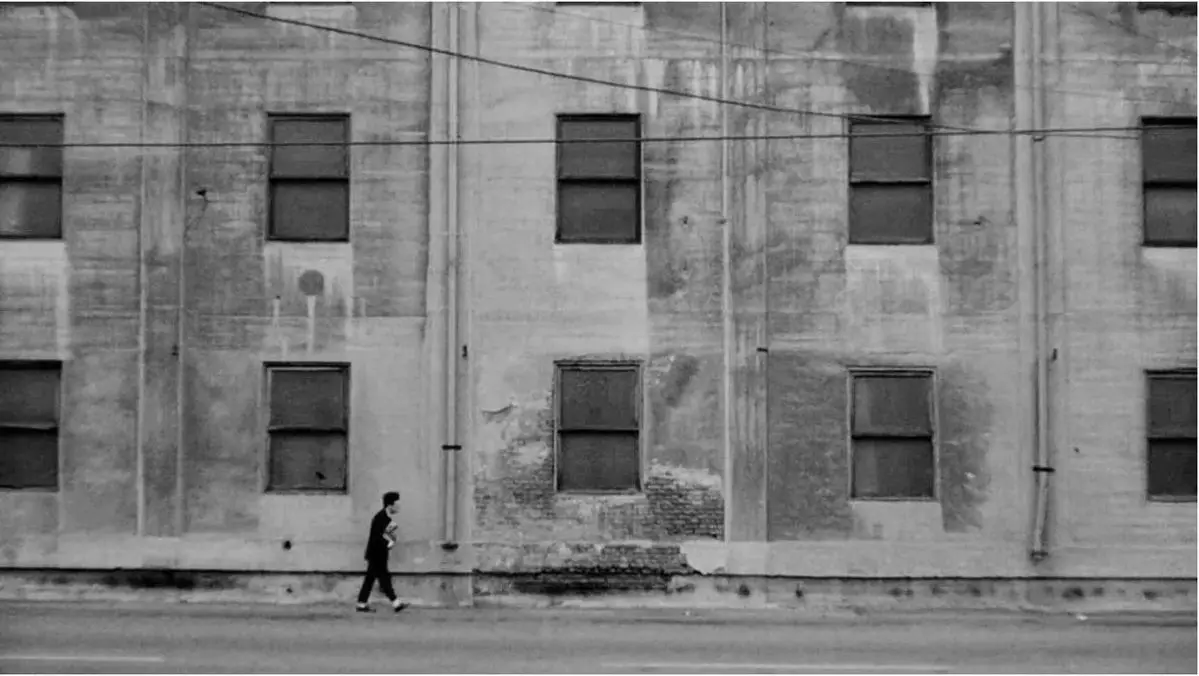
David Lynch's 1977 film is difficult to describe without making it sound even more absurd than it already is. Henry lives in an industrial wasteland that looks like it was built sometime after the end of the world. He discovers that he has fathered a creature that doesn't exactly look like a baby, brings it back to his tiny apartment and tries, without much success, to become an adult.
Outside, there are factories, smoke and metallic noise. Inside, there's a screaming baby, an imploding relationship and a profound sense of anxiety.
And then there's the radiator.
Behind its grille, Henry sees a tiny stage. On it stands a woman in a white dress, her cheeks disturbingly swollen. She sings a very simple song: In Heaven, everything is fine. As she sings, strange sperm-like creatures fall from the ceiling. She crushes them beneath her shoes and smiles.
We don't really know what she represents. With Lynch, looking for a definitive answer is usually a bad idea. But we do know what happens when Henry watches her: for a few minutes, the nightmare outside disappears.
Almost fifty years later, the scene feels strangely familiar.

WE INDUSTRIALIZED THE RADIATOR
The radiator is one of the few places in Eraserhead where Henry can escape his reality. Except he doesn't actually go anywhere. He doesn't leave his apartment, meet someone or change his life. He stays in the same space and looks behind the radiator grille.
What he finds there is a fantasy.
It's difficult to watch that scene today without thinking about the way we disappear into our feeds.
We too open a small window whenever the world outside becomes boring, anxious or simply a little too quiet. Except our radiator has become much more sophisticated. It watches what we watch, how long we watch it, what we ignore, what we search for and what makes us go back.
Then the show starts again.
The difference is that the Lady in the Radiator seems to have been created by Henry's mind.
Ours is trained by us.
THE MONSTER ISN'T INSIDE THE MACHINE
There is something profoundly physical about Eraserhead. Sex produces monsters. Motherhood is terrifying. Food moves on the plate. Human beings and objects seem to constantly contaminate one another. Even the title comes from one of the film's most bizarre transformations, when Henry's head is literally used to manufacture pencil erasers.
Lynch takes things that are supposed to be normal, sex, family, home, work, and gives them back to us slightly deformed.
And this might be the most interesting connection to the algorithmic feed.
Instagram doesn't need to invent your insecurity about your body. TikTok doesn't need to invent your jealousy, your voyeurism, your fear of getting older or the sudden conviction that your summer is somehow incomplete without a €200 sunbed at a beach club you first saw on someone else's feed.
It just needs to notice.
You stop on something for a few seconds. It shows you another version. You stop again. The next one is a little more precise. A few weeks later, that tiny curiosity may have become an entire reality.
At some point, it becomes difficult to tell whether the algorithm has learned what you desire, or taught you to desire it.
WHO IS DREAMING WHOM?
René Girard called our way of desiring mimetic: we learn what to want by watching other people want it.
We didn't need TikTok to invent this mechanism. We've had religions, aristocracies, advertising, Hollywood and the entire fashion industry.
TikTok simply automated the process.
And this is where the Lady in the Radiator becomes more interesting than a simple metaphor for the algorithm. Because we don't know whether she is an escape for Henry or just another manifestation of his nightmare. The heaven she promises contains the same deformed creatures that inhabit the rest of the film. The refuge and the horror come from the same mind.
Our feeds work in an eerily similar way. We retreat into something built from pieces of ourselves, then act surprised when we don't like what we find there.
Maybe that's why saying that the algorithm manipulates us is too easy.
It's a comforting explanation. It turns the machine into the villain and us into its victims.
Eraserhead offers a much less comforting possibility.
Maybe the monster doesn't live inside the radiator.
Maybe the radiator just gave it a stage.
IN HEAVEN, EVERYTHING IS FINE
In the end, the most disturbing thing about the Lady isn't her face. It's the fact that Henry keeps watching her.
In a film filled with things he desperately wants to escape, she gives him a place where everything is finally simple. She smiles. She sings. She promises him that in heaven, everything is fine.
Today, that promise has become personalized.
Henry, trapped in a poor, frantic and painfully ordinary life, looks into the radiator and finds something he doesn't have: peace. We open our feeds and find someone who always seems to have whatever we're missing. Someone is richer, more beautiful, freer, more successful. Someone works less, travels more, has a better apartment and, most importantly, somehow seems happier.
Ambition has always needed comparison. The algorithm simply made sure the comparison never ends.
We no longer share the same heaven. Everyone gets their own. Mine knows what makes me laugh, what makes me angry, which unnatural bodies I look at for a little too long and which other people's lives make me question my own.
Maybe the algorithm doesn't know us better than we know ourselves.
Maybe it only knows a much more interesting part of us.
The part that comes out when we think no one is watching.
Silvia Andrenelli
Editor
Writing about films, but rarely just about films. Cinema, culture, politics, fashion, memory, bad decisions and everything in between. Mostly interested in the things films accidentally make us think about.
@andsissiMore from Silvia Andrenelli
Share this article
RELATED

JAMES FRANCO’S DESERT FILMS AT TEATRO MENOTTI, MILAN


