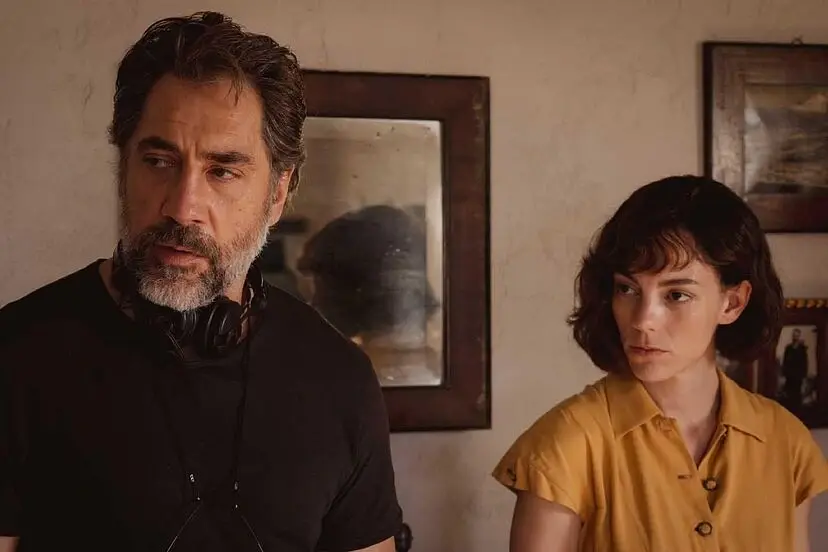
SOME MEN WILL MAKE A MOVIE INSTEAD OF GOING TO THERAPY
Some men would rather make an entire movie than have an uncomfortable conversation with their daughters. There is something almost impressive about turning your inability to communicate into another professional achievement.
In Rodrigo Sorogoyen's The Beloved, Javier Bardem plays Esteban, a celebrated filmmaker who offers his estranged daughter, an actress, a role in his latest production. What could have been an opportunity to reconnect becomes something considerably messier, as years of resentment, affection and unfinished business find their way onto the set.
Bardem is magnificent. He gives Esteban the confidence of a man who has spent decades being listened to and the emotional intelligence of someone who has never considered returning the favour. He's arrogant, charming, occasionally vulnerable and spectacularly self absorbed. A combination that should probably come with a warning label.
I loved The Beloved. Really loved it. Esteban is exactly the kind of character whose flaws should make him difficult to tolerate, yet Bardem makes every one of them fascinating. Daddy issues, but he's Javier Bardem. Apparently, that's all it takes for my critical judgment to become a little flexible.
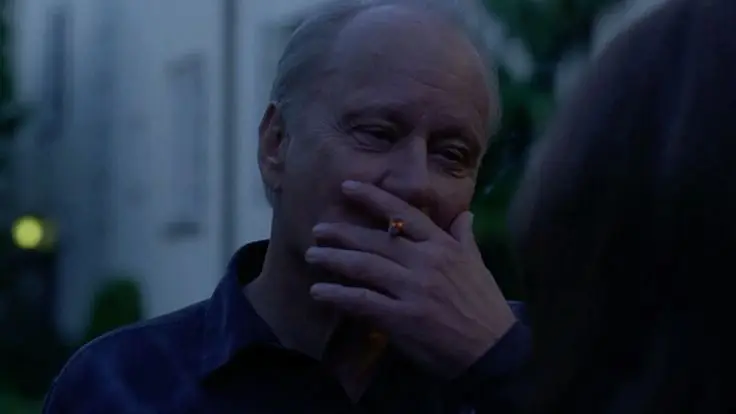
In Joachim Trier's Sentimental Value, Stellan Skarsgård plays Gustav, another acclaimed filmmaker attempting to reconnect with his daughters through his work. He offers his daughter Nora a role in a film, apparently finding it easier to communicate through a screenplay than across a table.
Two celebrated directors, two complicated family histories and enough unresolved feelings to keep a therapist employed for the next decade.
Apparently, the easiest way to avoid talking about your emotions is to turn them into a screenplay.
EMOTIONALLY UNAVAILABLE, CINEMATICALLY IRRESISTIBLE
There is something almost romantic about the way cinema constructs the relationship between an emotionally unavailable father and his daughter.
The distance. The resentment. The occasional moment of tenderness that makes everyone briefly forget the previous twenty years. The promise that this time things might be different.
It's the structure of a love story, minus the romance.
The father becomes the ultimate unavailable man. Every small gesture of affection carries disproportionate weight. A phone call, a compliment, an unexpected moment of honesty. Things that would barely register in a functional relationship suddenly become major narrative events.
And we keep watching.
In The Beloved, the tension between Esteban and his daughter doesn't come from a simple absence of affection. It's considerably messier than that. There is tenderness, resentment, familiarity and the peculiar intimacy of two people who know exactly where to hurt each other.
Sorogoyen allows these contradictions to coexist without rushing towards reconciliation. The possibility of closeness remains, even when the characters seem determined to sabotage it.
The slow burn works because the relationship is never entirely hopeless. There is always another scene, another opportunity, another chance for the father to finally say the right thing.
Or, perhaps more entertainingly, to say something spectacularly wrong.
In real life, this kind of emotional inconsistency can be exhausting. On screen, it's excellent material. We get to experience the anticipation without having to live through the years of disappointment. We can enjoy the tension, appreciate the occasional tenderness and secretly look forward to the next disaster.
Two hours of daddy issues, beautifully photographed, with excellent performances and absolutely no personal consequences.
A pretty good deal.
FIVE STARS FOR EMOTIONAL DAMAGE
Cinema has a remarkable ability to turn emotional incompetence into something aesthetically pleasing.
A painful conversation becomes a beautifully composed shot. An uncomfortable silence becomes an opportunity for a close up. Years of emotional distance can be condensed into a single exchange of glances, preferably accompanied by a carefully chosen soundtrack.
And when the father happens to be a brilliant artist, the whole thing becomes even more seductive.
Both Esteban and Gustav belong to that particularly cinematic species of men whose professional accomplishments coexist with a remarkable inability to manage their personal relationships. They can direct actors, command entire productions and convince strangers to believe in their artistic vision. Their own daughters remain a considerably tougher audience.
The mythology of the tortured artist has always been useful here. Give a difficult man enough talent and his inability to function in ordinary relationships starts looking less like a personality flaw and more like an unfortunate side effect of genius.
But the interesting part isn't that these men are forgiven. Neither The Beloved nor Sentimental Value needs to excuse its fathers to make them compelling.
It's that their failures become part of the attraction.
Bardem's performance is particularly effective because Esteban's charm and unpleasantness are almost impossible to separate. The same confidence that makes him a successful filmmaker makes him unbearable when confronted with his daughter's feelings. His need to control the narrative doesn't conveniently disappear when the cameras stop rolling.
And perhaps there's another, less flattering reason these stories work so well.
We don't necessarily want the father to become a better person.
A sincere apology, followed by consistent emotional availability and several years of improved behaviour, would probably be wonderful for his daughter. It might also make for a considerably less interesting screenplay.
Closure is great for your mental health. Terrible for a movie.
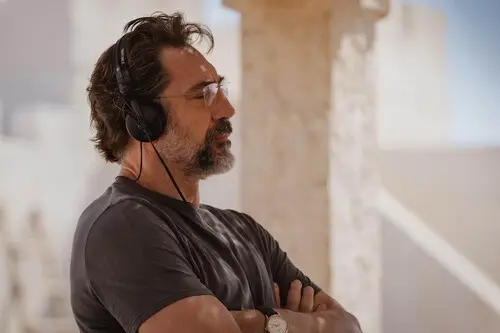
WE HAVE A SOFT SPOT FOR BAD FATHERS
There is a peculiar contradiction at the heart of films like The Beloved and Sentimental Value.
The daughters spend much of their lives trying to escape the emotional gravitational pull of their fathers. Meanwhile, the audience spends two hours willingly entering it.
We become invested in men whose greatest talent might be making their own emotional limitations everyone else's problem. We admire the performances, the writing, the precision with which their contradictions are exposed. Their inability to communicate becomes one of the most compelling things about them.
The very quality that makes them difficult to love becomes the reason we can't stop watching.
There's something almost luxurious about the artistic father. His failures become material. His emotional distance becomes an aesthetic. Even his inability to apologise can be transformed into an extraordinary piece of cinema.
And the more beautifully these failures are presented, the more enthusiastically we consume them.
His daughter gets a lifetime of unresolved feelings.
He gets a standing ovation, and we're the ones applauding.
Silvia Andrenelli
Editor
Writing about films, but rarely just about films. Cinema, culture, politics, fashion, memory, bad decisions and everything in between. Mostly interested in the things films accidentally make us think about.
@andsissiMore from Silvia Andrenelli
Share this article


