
Hands Full of Scars: Inside the World of the Jeweller Filippo Varlese
I met Filippo Varlese one August afternoon – the sort where the stifling heat seems to slow down even the hands of the clock. His voice alone, over the telephone, is enough to chart a creative journey, unlike any other. As he recounts his life and the people he loves, the weight of certain choices and the lessons he has learnt from them, his story paints a picture that you can almost hear and visualise.
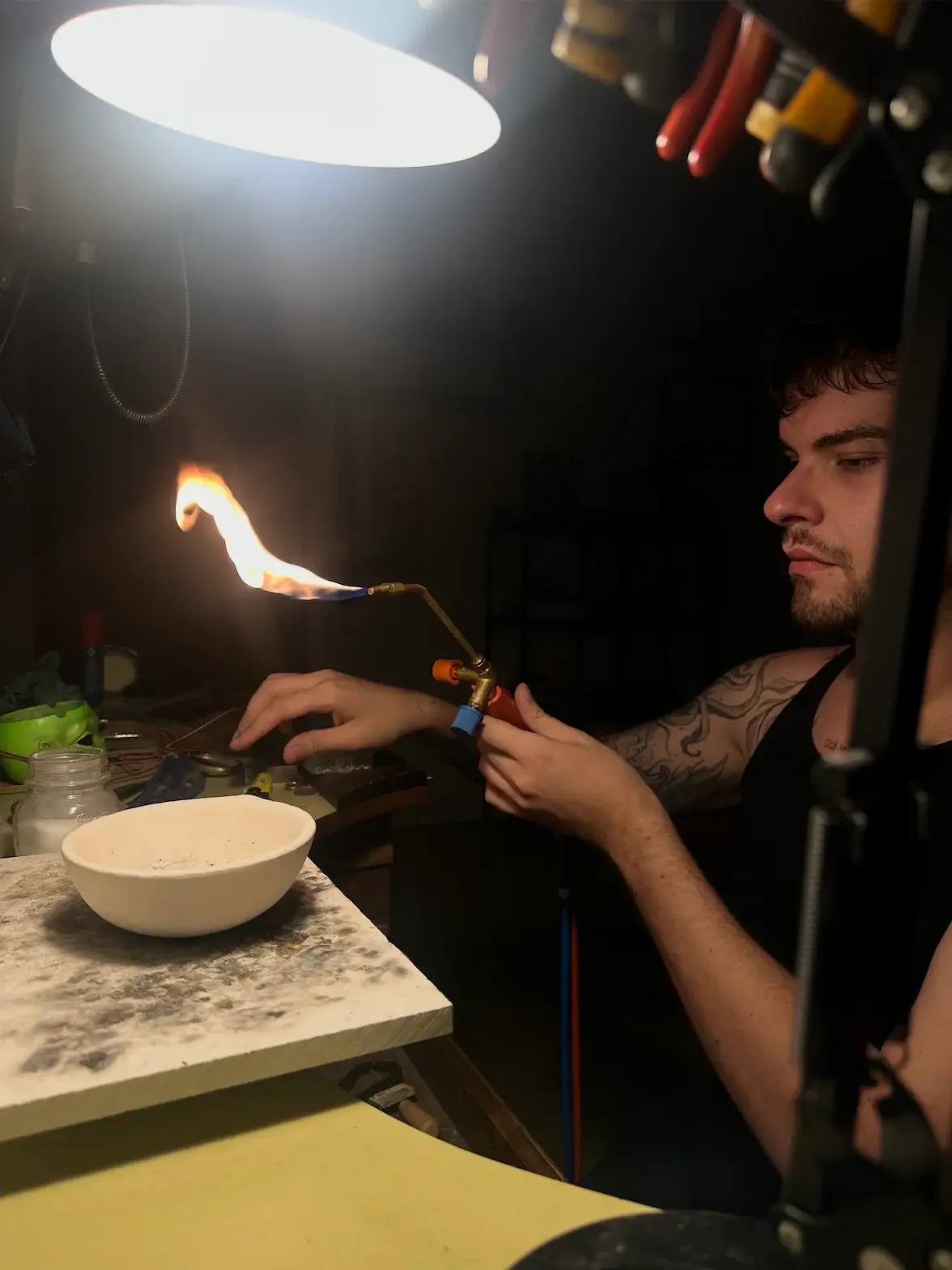
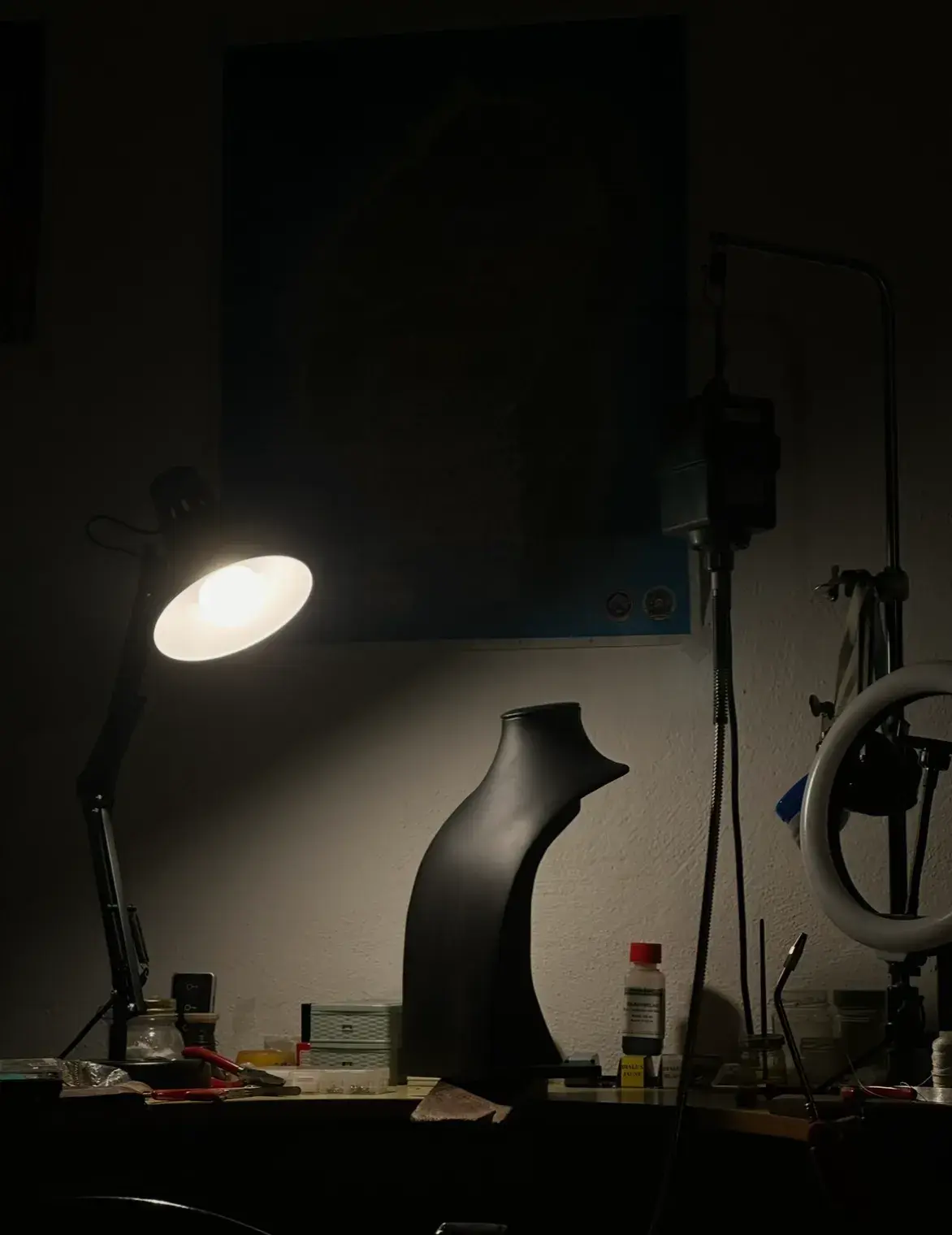
Through his words alone, Filippo allows me to evoke vivid images, although from a distance: a room flooded with light, a workbench illuminated by a lamp, an impalpable dust that dances suspended against the light and settles on his tools of the trade. With my hand on the page, I try to faithfully recreate that vision – Filippo is at his workbench with his hands bathed in light, the sketches, the drawings, the delightful chaos of a creator.
To delve into the world of jewellery through Filippo’s account is to discover how materials, in the hands of a young master craftsman, can be transformed into emotion and memory.
It is an unexpected phone call, a conversation that turns out to be different – and more intimate – than I had imagined: the young jeweller possesses a rare clarity and sensitivity, enabling him to grasp the nuances of his craft and render them as transparent, almost tangible scenes. It prompts me to reflect on the figure of the jeweller as a craftsman of emotions, the guardian of a value that goes beyond the technical skill itself: it is the wearer who casts their gaze upon the piece of jewellery and determines its meaning.
For Filippo, a piece of jewellery carries a message, a silent signature, a value that transcends the raw material from which it is born.
“For me, a piece of jewellery can be a piece of iron; what makes it so is what it signifies to the wearer and to those who see it. A piece of jewellery is a signal, a message one wishes to convey – or to conceal from others. It can also be a quirk”, reveals Filippo, “but for me it is more than mere adornment.”
What distinguishes the value of things from things of value? It is around this question that my conversation with Filippo Varlese, the Neapolitan jeweller and craftsman, a multifaceted and captivating artist, begins.
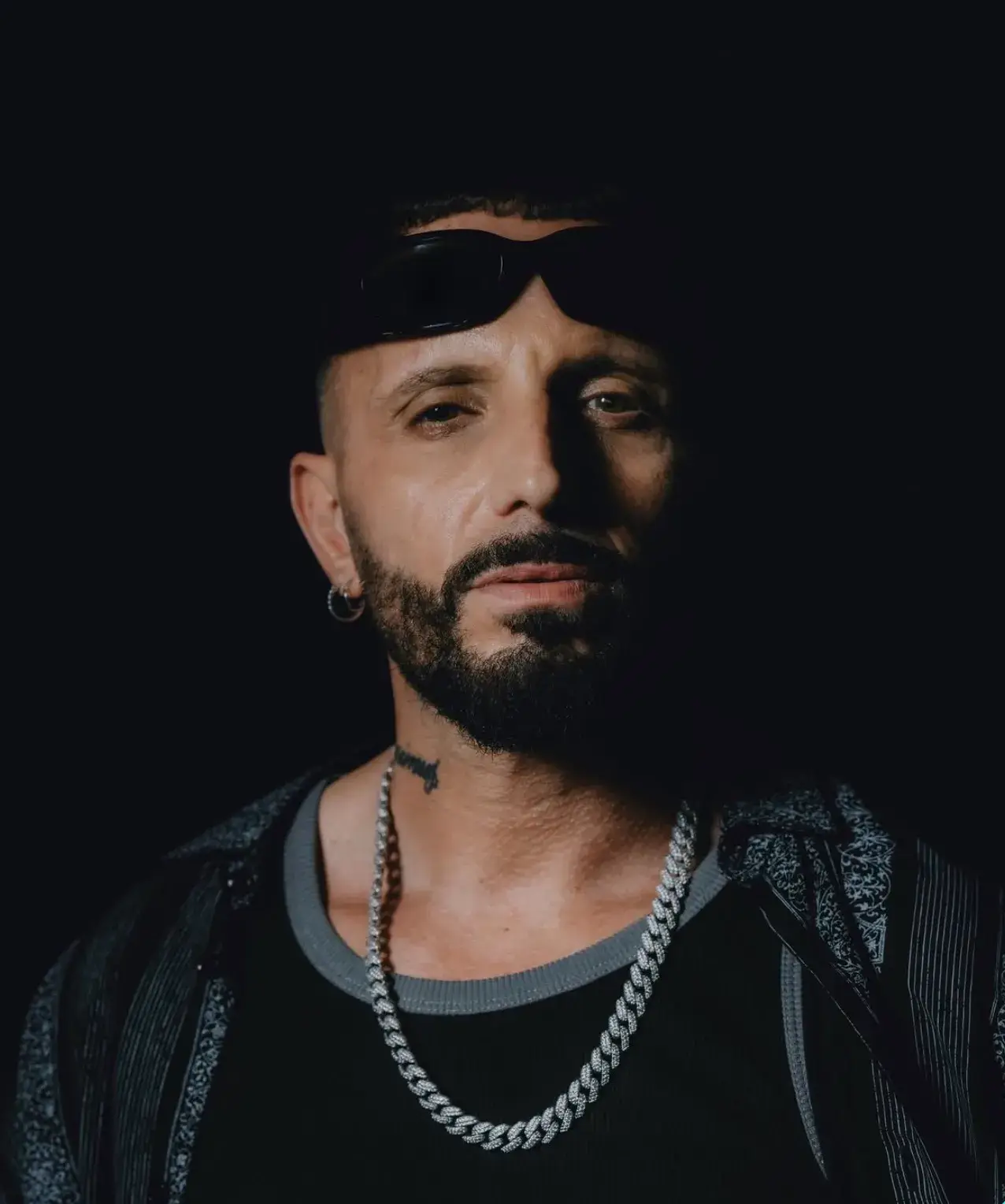
Filippo is a Neapolitan craftsman and jewellery designer; he has gained his expertise through a deep variety of educational experiences: a degree from the Department of Design and Communication at Vanvitelli University, a master’s degree from the Tarì Design School, and, finally, a hands-on apprenticeship in the shops of the Borgo Orefici, the historic heart of Neapolitan goldsmithing.
It is amongst the streets of this city and its outskirts that Filippo’s perspective has developed; for him, being born and living in Naples has meant the constant manifestation of the dichotomy between a cross to bear and a delight – even if, in recent times, the latter seems to have prevailed. The city has allowed him to grow and enhance an eye capable of capturing details which, elsewhere, he might not have had the sensitivity to perceive or the need to notice. This capacity for observation is inevitably reflected in his unique art. Naples, after all, can be extremely cold towards its children, just as it can transform itself into the warmest of mothers.
Let’s go back in time, back to that initial spark: where do you find the roots of your creativity? Is there a memory – from your childhood or teenage years – that you consider to be the real starting point of your creative journey?
From a very young age – as early as five – my dream was to become an inventor – a word that today refers to a rather vague profession, but which at the time meant taking light bulbs apart and putting them back together, scribbling designs for pseudo-spacecraft everywhere, and even imagining that I could invent new materials.
The first memory that springs to mind – perhaps a rather playful one – concerns an incident that isn’t directly related to jewellery. I was eight years old, with my sister and two friends – the daughters of friends of my parents – and I took a screwdriver from my father’s toolbox. I started taking a light bulb apart to see what it looked like inside, how it worked. I still remember very clearly the electric shock I got when I tried to put it back together and plug it back in it was a – wrong – way of discovering something I absolutely shouldn’t have done. Yet I look back on that episode fondly, as one of my earliest experiences linked to creativity.
Objects are generally regarded as mere tools; was there a specific moment when you realised that your view of objects was profoundly different from that of others – and that you didn’t stop at simply what they were, but wanted to discover what stories they had to tell?
This realisation probably came during the very early stages of my adolescence, and I remember the exact moment with great clarity: it began whilst I was staring at a shark-shaped brooch that my grandfather always carried with him, along with a green diary and his handkerchiefs. They were everyday objects, the sort you find in everyone’s homes – yet his were different. Whether it was because of the countless stories linked to them, or simply because they were his, I began to realise just how much uniqueness could be hidden in such simple, familiar, everyday objects.
That shark-shaped brooch of your grandfather’s is a keepsake you treasure in your jewellery box: today, when you look at it, how do you feel? Do you feel the weight of missing your grandfather and of everything you experienced with him through that object?
I don’t think I’ll ever be able to associate anything to do with my grandfather with the idea of heaviness – in fact, the opposite is true. I still treasure that brooch so dearly that I’ve only worn it once in the last ten years, to mark an event that was incredibly important to me. When I look at it, I think back on all the everyday moments I shared with him: some were very ordinary, yet they’re a source of pride to me simply because I experienced them with him.
Do you think that the fear of losing that object at that precise moment sparked in you the need to create things destined to endure, to be passed down through the generations, to leave an indelible mark – almost as a way of always being able to find that symbolic piece of jewellery to which you were so attached? Why jewellery, of all the objects you could have chosen to create? What does it represent to you, and where does its true value lie?
I believe that the realisation of a connection between the desire to create something that would last and the fear of losing what was, for me, a talisman, came with time. My initial approach to the world of jewellery stemmed more from a desire to create designer pieces that could be carried with you at all times; the realisation that the true value of a piece of jewellery lies more in the story it tells than in the materials it is made of only came later.
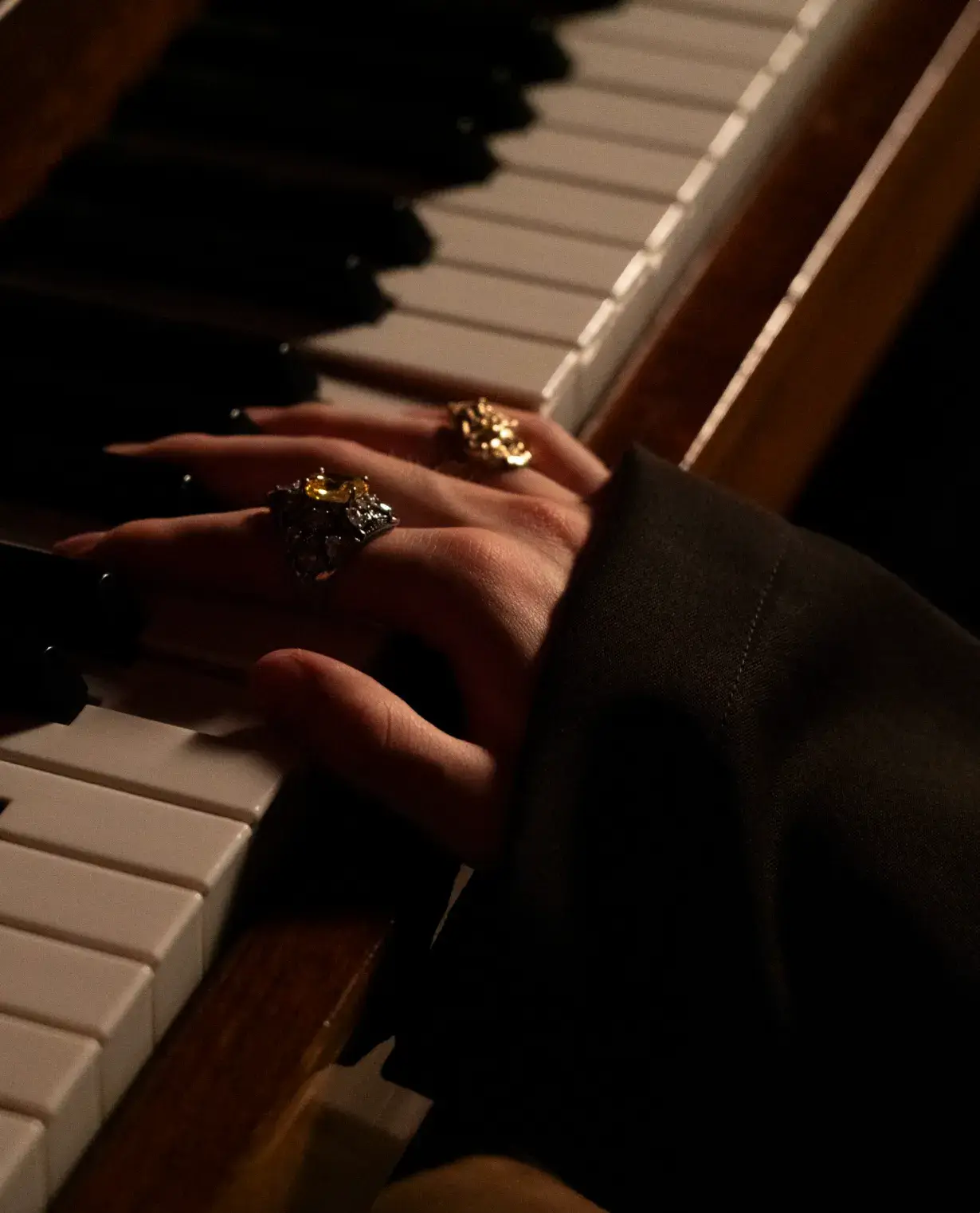
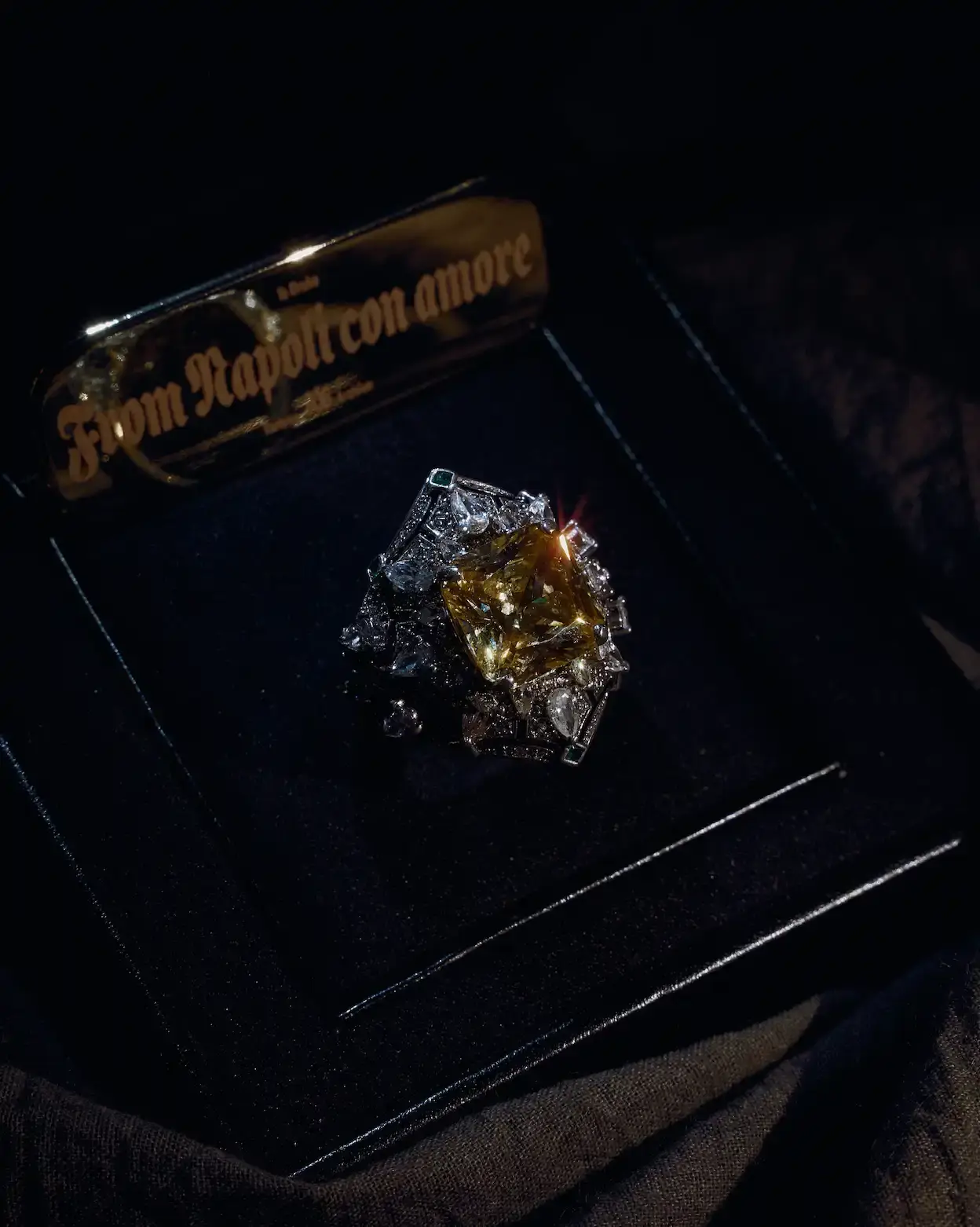
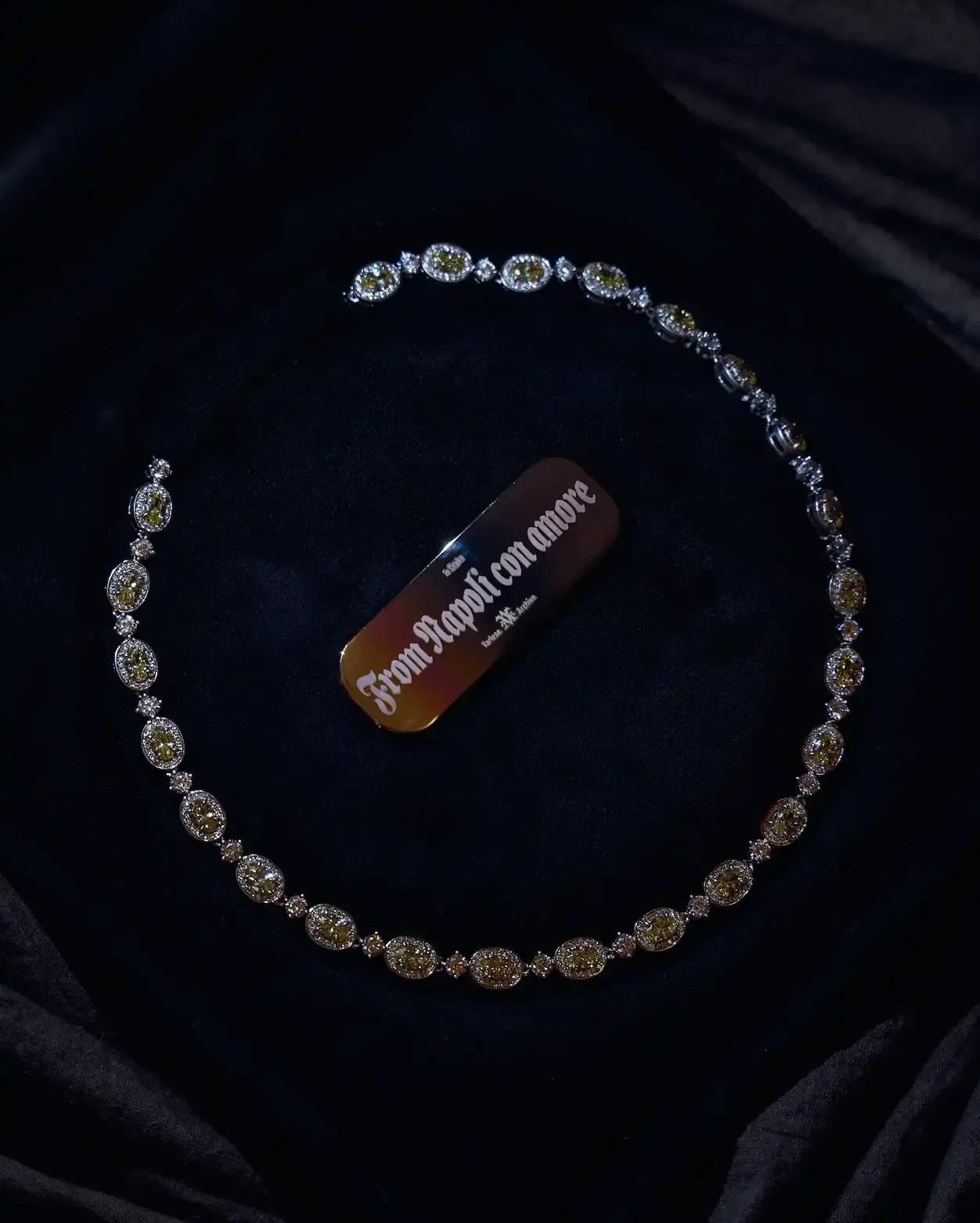
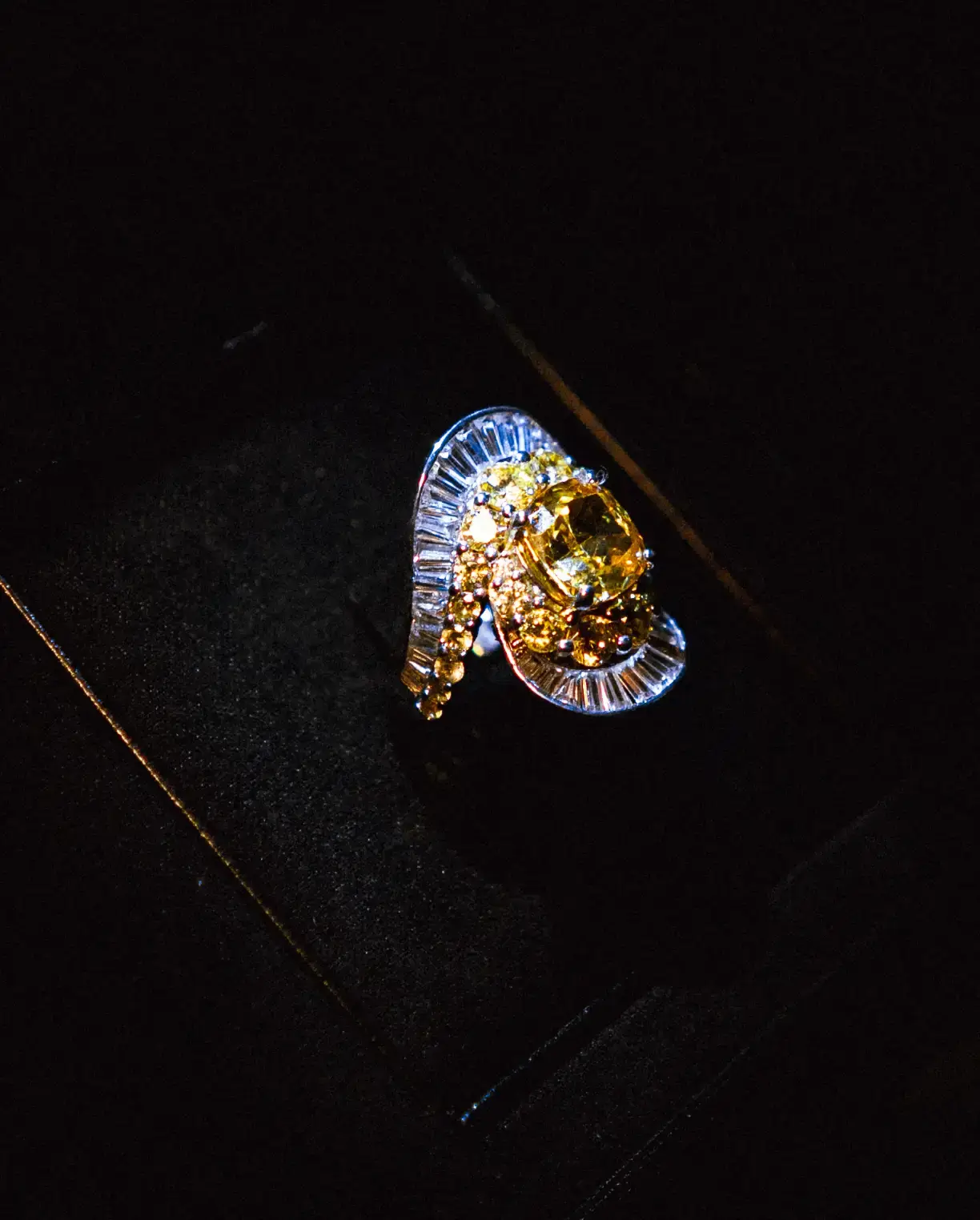
Do you remember the first thing you ever made with your own hands? What became of it? Did you keep it, or give it away? When you finally held your first real piece of jewellery in your hands – the one you already felt was your own creation in every sense – what did you feel at that moment?
I’ve always been fiddling about with clay, modelling clay and whatever else I could get my hands on ever since I was very young, but I made my first proper – and functional – pieces during my university years. Even my final-year project was a ring, although it had very little in common with jewellery: I’d describe it more as ring-shaped hardware, containing various sensors. It was called ‘Fitsound’, and you can still find traces of it online.
My first piece of jewellery, in the most traditional sense of the word, was a snake-shaped ring, made from a metal called nickel silver. It was very simple – and it took quite a bit of imagination to recognise it as a snake – but it was mine. I remember the cuts and burns on my hands, the result of inexperience, just as I remember the joy and pride of having made something entirely with my own hands, on which I could see all the marks of that work.
When a piece of jewellery takes shape in your mind, where does the inspiration really come from? From an emotion, a face, a memory, a word and the meaning it carries? Is there a moment, in the creative process, when you feel the piece come to life – when it ceases to be mere material and becomes something new and original, capable of belonging to the client whilst remaining true to you and your vision?
Whether commissioned or not, the common thread running through the jewellery I create is always a story. I always try to find a point of connection with the client, to get to know them, to have them tell me – for example – the love story that led to the marriage proposal for which the ring we’re going to create together will be used. I believe that the material the piece is made of is decidedly secondary to the story it tells.
How much of your soul literally goes into every piece of jewellery you create? Once you’ve finished it, do you ever feel drained, or rather fulfilled?
I’ve never felt drained after creating a piece of jewellery – quite the opposite, in fact. The idea that something of mine can be shared with anyone who takes the time to appreciate it fills me with pride and a sense of fulfilment.
Do you work more on impulse or on reflection? And how much room do you leave for error, the unexpected and imperfection in your creative process?
More on reflection – perhaps even too much! Error is an integral part of the creative process. It has very often happened that, because of misunderstandings, designs have emerged that are even more appealing than the client’s original idea.
What were the tools – real or symbolic – that guided you through that transition? I’m thinking of a workbench, a book, a mentor, but also a place, a daily ritual.
As I’m the sort of person who overthinks things, I could list all the places where I’ve worked and all the tools that have seen my blood, but it would be far too long a list.
If I had to thank one person more than anyone else, however, it would be Alfredo – a dear friend who passed away three years ago, at the age of 33. It is to him that I owe the realisation that jewellery – and design, more generally – could be the path to follow for the rest of my life. I can never be grateful enough to him. Alfredo is still, to this day, the reason I realised I could stand on my own two feet: he introduced me to my first truly important clients, invited me as an artist to my first events, and offered me my first exhibition stands. He helped me realise, step by step, that all of this could genuinely become a career.
If one of your pieces of jewellery could speak, without you saying anything to the wearer, what would you want it to say? Do you believe your jewellery resembles you, bearing your own distinctive mark, or do you think that each piece has a soul of its own, independent of you and your craftsmanship? What difference is there, for you, between creating a ‘beautiful’ piece of jewellery and simply creating a piece of jewellery?
I believe that jewellery must first and foremost reflect the story it aims to tell, whilst maintaining a stylistic signature that is at least recognisable, but which must never overshadow the soul of the piece itself. I also believe that ‘beauty’ – the intrinsic beauty of an object, or anything else we might refer to – is extremely subjective.
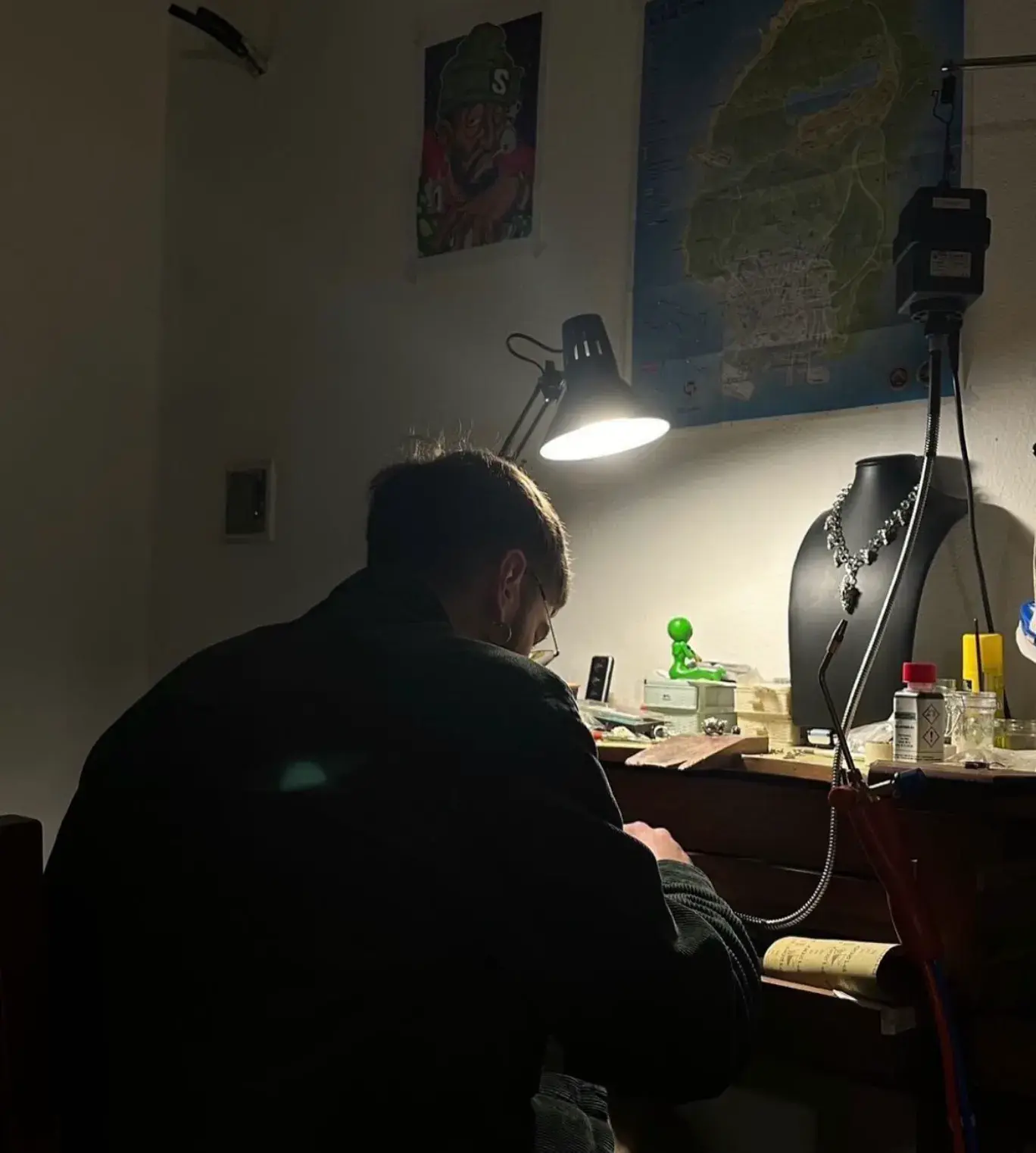
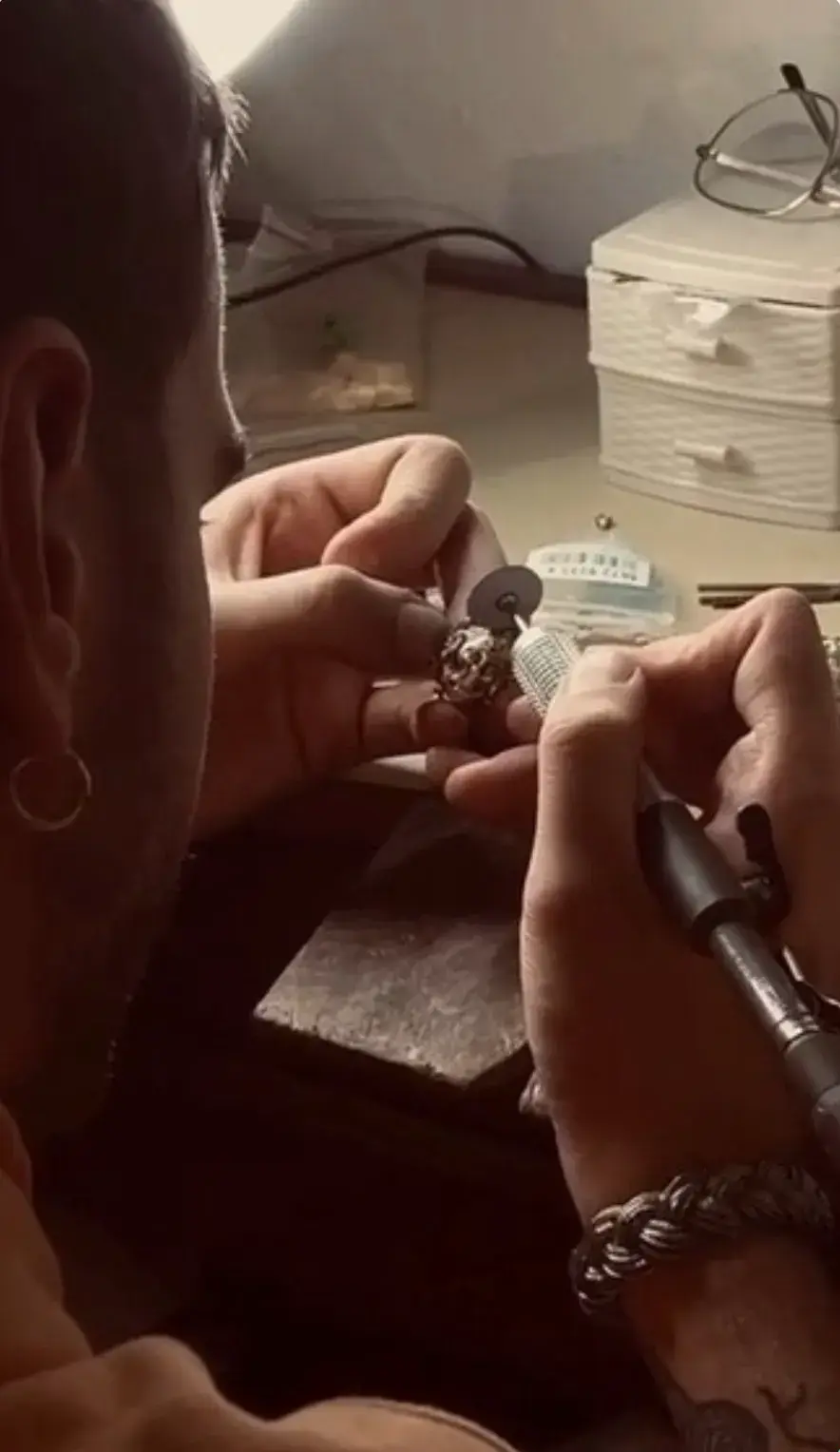
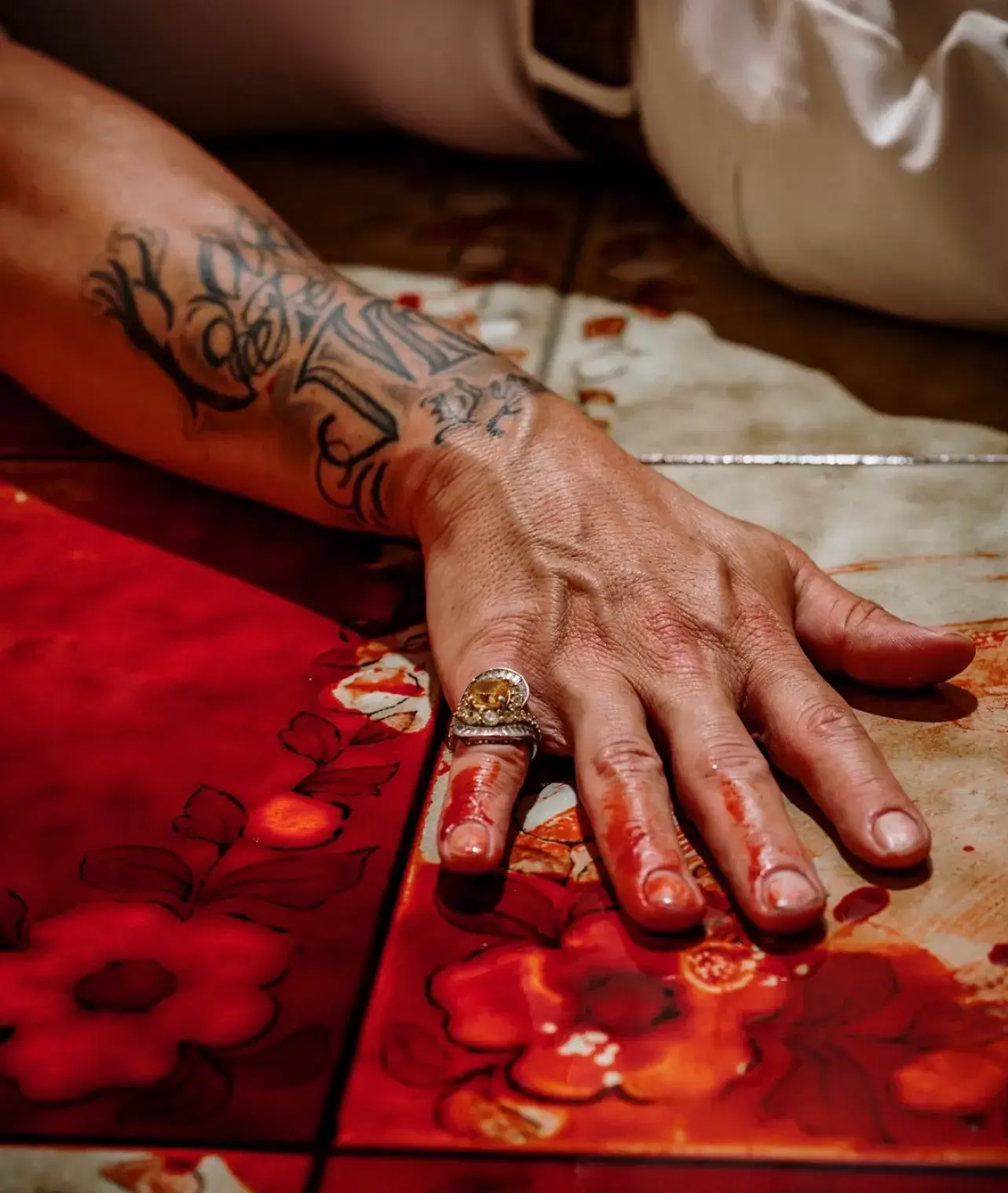
Hands have their own unique memory, distinct from that of the mind: what do working with metal, stone and fire teach you that words and books could never teach you?
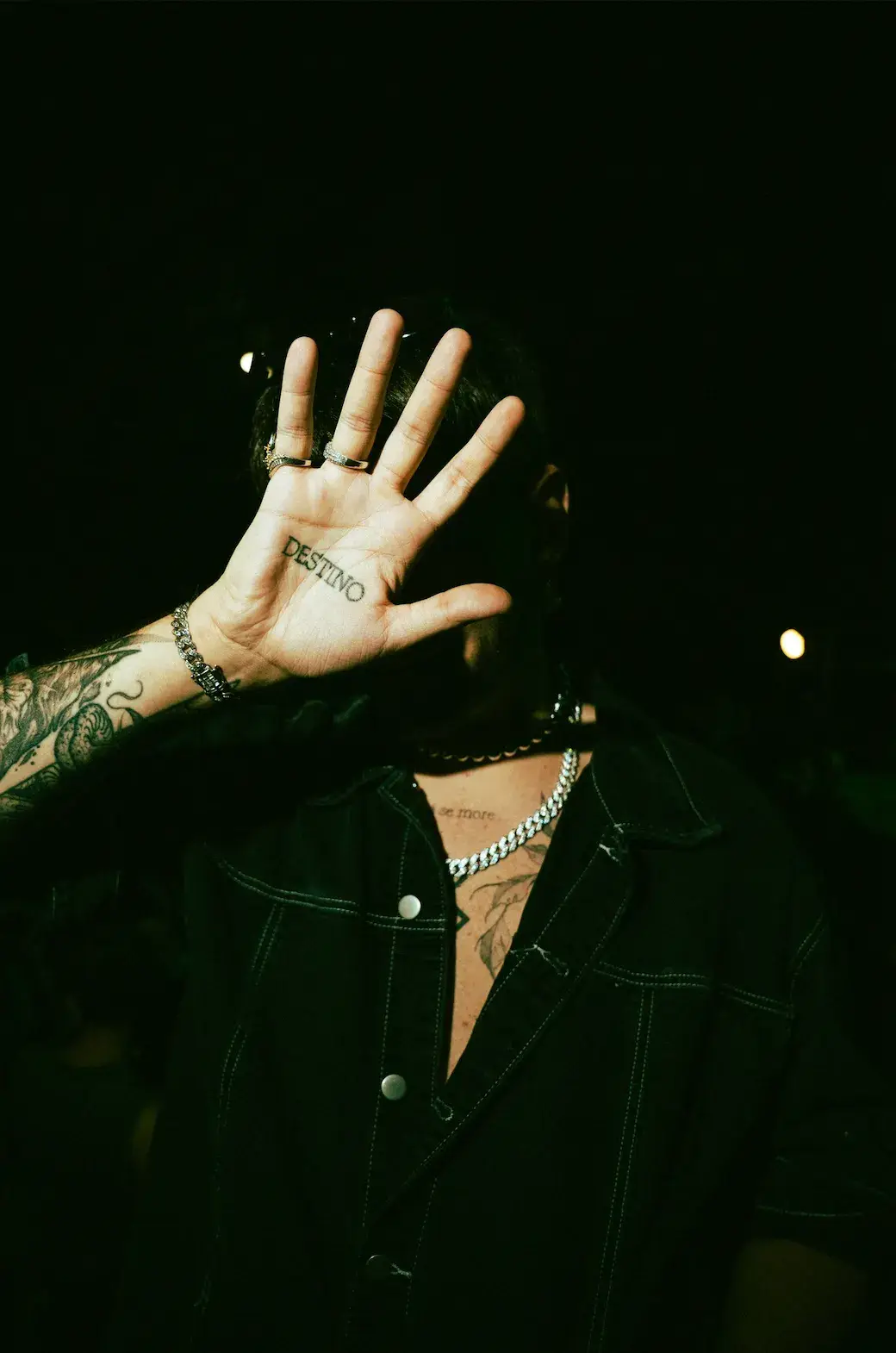
I like to think of my hands as a diary, ever since I was very young. My hands are covered in scars, burns and other marks, and I could link each one back to the creation from which it originated – something that fills me with pride.
Creating is often a solitary act – and it is the same for me, to the extent that, at present, it seems almost impossible to find the time and space I need for my creative process: how do you experience those moments of silence in the studio? Do they frighten you, or are they the place where you truly find inspiration?
I’ve never had any trouble with solitude, but I’ve always wanted to create a space where artists of all kinds could create together, even across completely different fields. I’m a firm believer in cross-pollination within the arts, as a huge source of inspiration and collective growth.
Was there ever a time when you doubted yourself? What – or who – helped you keep going? And what is your relationship with your creativity when it comes to viewing it with a critical eye?
Of course, there have been such moments, and there will certainly be many more. I believe that the moment someone stops doubting themselves is the moment they stop growing. I’ve always found strength in the love of the people around me, from my family right through to certain friends, whom I consider to be the cornerstones of my life.
You say you prefer creating beautiful jewellery to being well-known, to fame for its own sake: what does it mean to you to be truly recognised – by others, and by yourself? Have you ever been afraid of losing your personality, the distinctive traits of your art, in pursuit of someone else’s ideals?
I like to think that someone might immediately recognise a certain stylistic signature when looking at one of my pieces, without this, however, depriving me of the chance to keep experimenting, without becoming set in my ways. Fortunately, I’ve never been afraid of losing my personality; I’ve always tried to convey a little of my vision to all my clients.
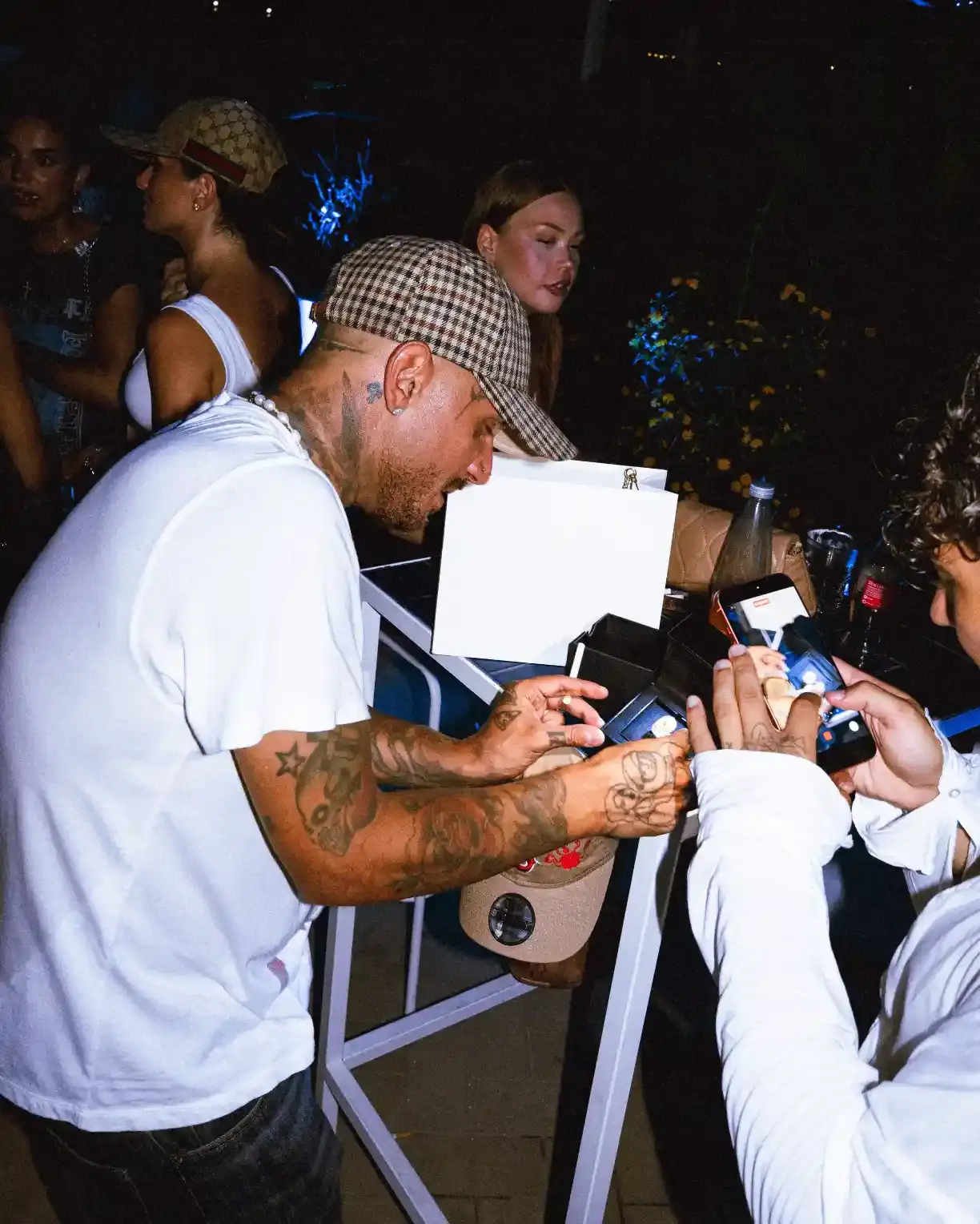
There’s also been a lot of talk about the jewellery you’ve created for various artists – including the credit you deserve for having reached certain limits and overcome them through your determination: could you tell me about some of these creations?
There are so many artists I could mention: from Geolier to Drake, from Sayf to Kid Yugi.
The piece I enjoyed making the most, and which allowed me to give free rein to my creativity, was the one for Kid Yugi: a pendant depicting ‘The Genius of Evil’, the famous 19th-century sculpture by the Belgian sculptor Guillaume Geefs – now housed in St. Paul’s Cathedral in Liège. I liked the idea of adding another name to ‘I Nomi del Diavolo’, his second album, which followed the success of ‘The Globe’. I also made the jewellery box myself: the outer part is made of wood, whilst the inner part is made of red PLA with bas-relief hieroglyphs and a 1:1 scale silver reproduction of the ‘Black Magician’, the iconic card featuring the protagonist of ‘Yu-Gi-Oh!’. The box was divided into several compartments, so that it could be reused as a jewellery box.
Is there a piece of jewellery you haven’t yet had the courage to create, because it’s too closely linked to something deeply personal, something you haven’t yet come to terms with?
Yes, a cross I promised Alfredo.
If you had to sum up in a single word what you’re looking for every time you create, which word would you choose?
Myself.
What would you like to leave behind – not your name, but your soul – in the jewellery that someone will be wearing fifty years from now?
Probably the way I read the story that led to the creation of the piece itself.
If you could go back and speak to your younger self, when you were still a student, what would you say to him today?
I’d probably apologise to him and tell him that he was right.
Teresa Borriello
Journalist
writer and independent journalist, covering people’s interests and issues - or anything worth caring about
@teresaborrielloShare this editorial
RELATED

GOLF WANG FALL WINTER 2026 LINEUP TEASED

ARC'TERYX AND BEAMS RELEASE KOYO LINE


