
PINK NOISE - Gogo Lupin on colour, identity and the freedom to keep evolving
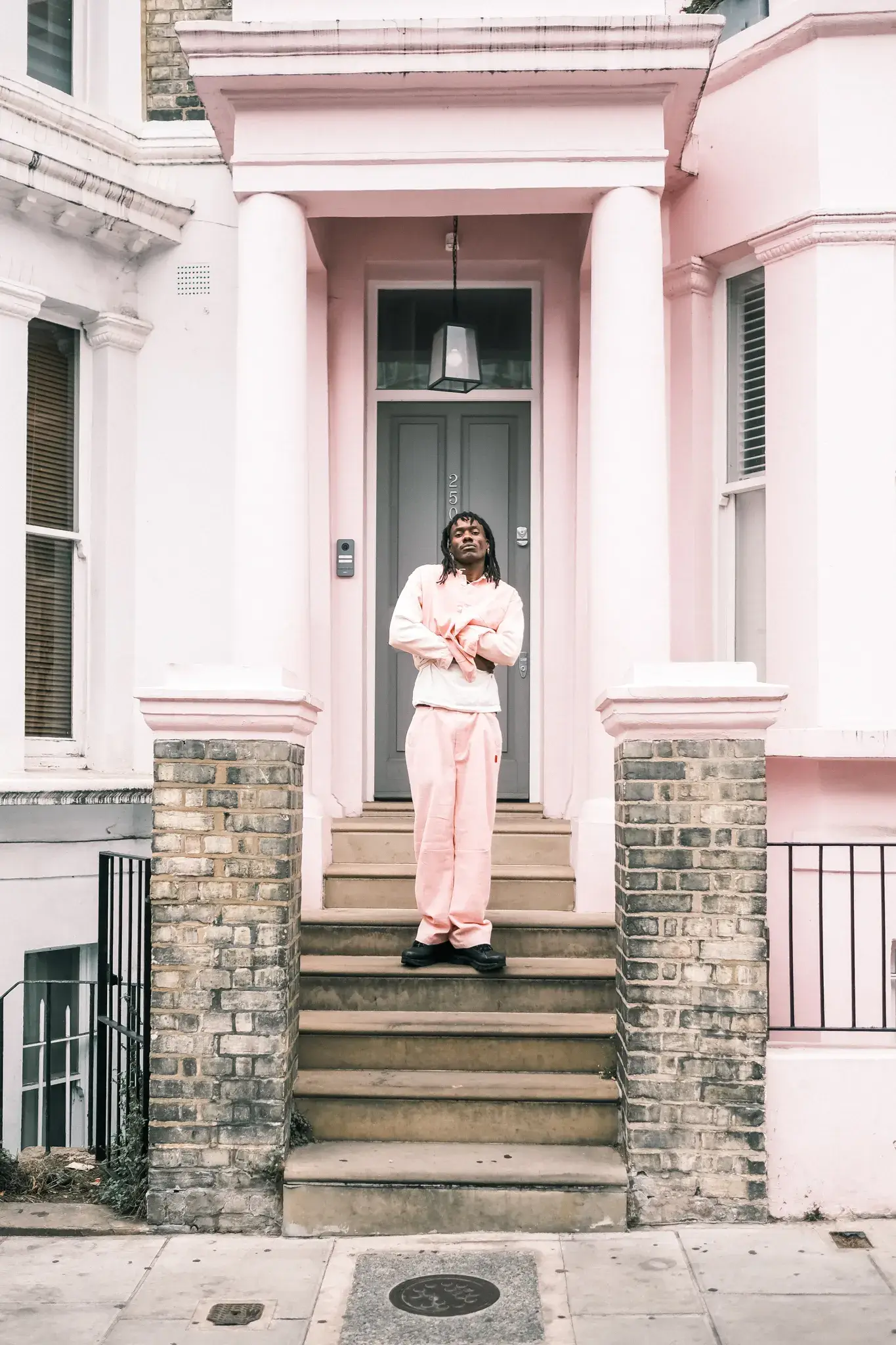
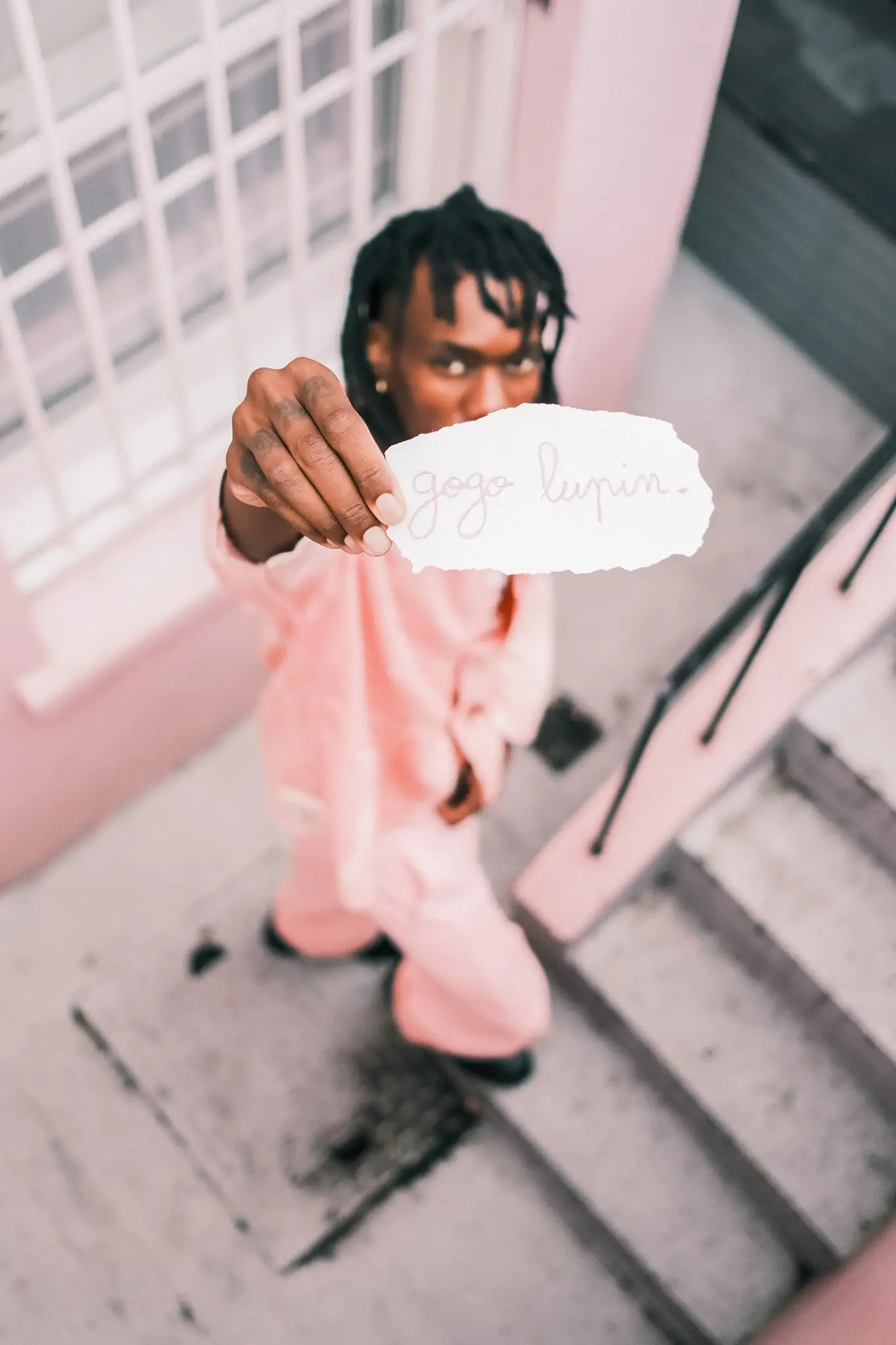
Pink follows Gogo Lupin everywhere. Through clothes, paintings, movement and image, it has become less of a signature and more of a language - one that can be soft and confrontational, intimate and bold.
Moving between dance, fashion and painting, Gogo has built a world where the boundaries between disciplines are deliberately blurred. Everything feels connected: the body becomes an image, clothing becomes part of the composition, and colour carries memory, identity and emotion.
Pink Noise finds him at a moment of transition: after establishing his creative world in Amsterdam, a new chapter in London is beginning - a shift in place, but not a separation from what came before. The codes remain, while the context changes.
In conversation with Casawi, Gogo reflects on the colour that has followed him for more than a decade, his roots in hip-hop culture, the relationship between fashion and self-expression, and the idea of reinvention as a continuous process of evolving.
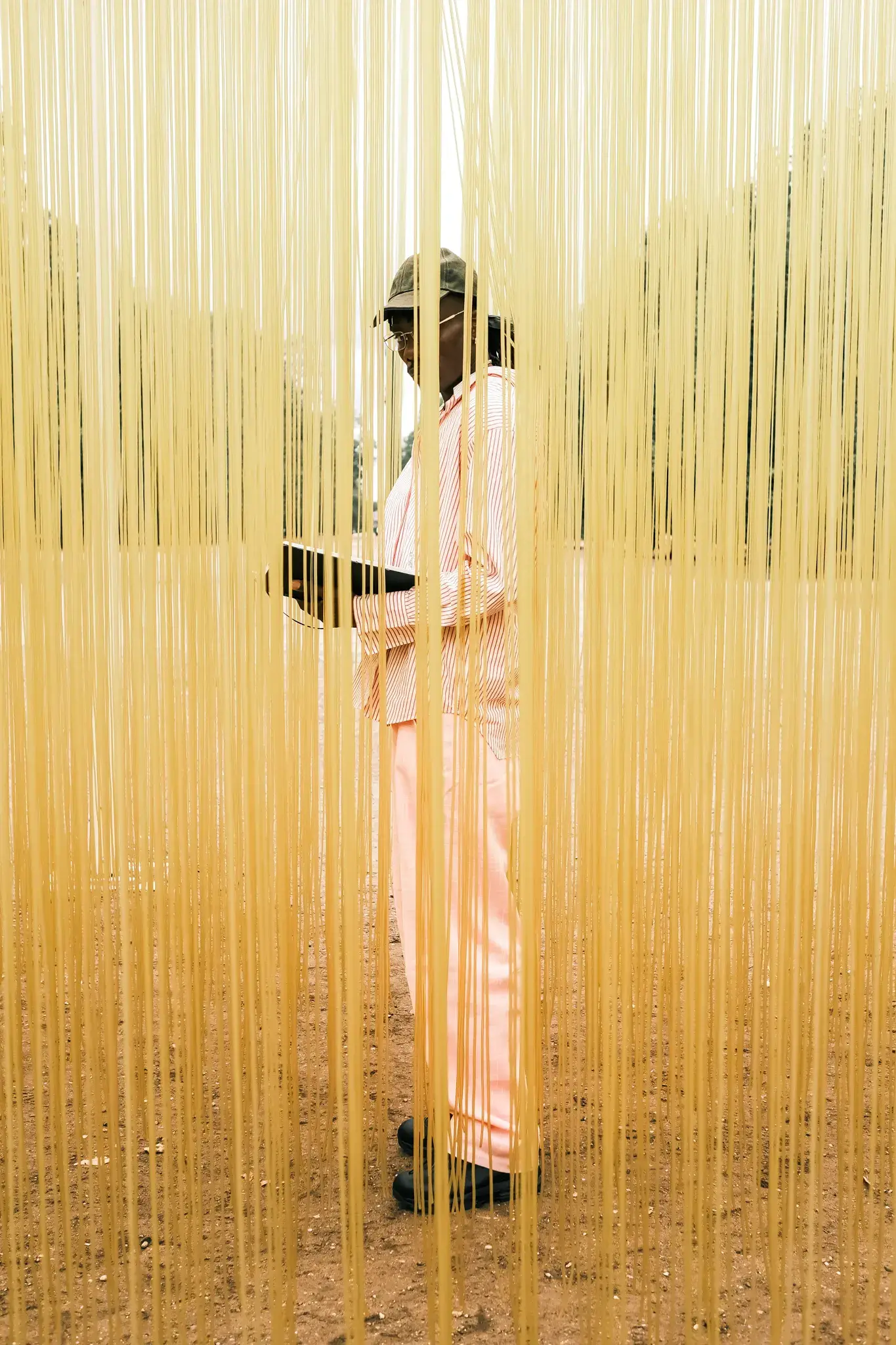
Introduce yourself to the Casawi audience, to discover more about yourself and your world.
My name is Gogo Lupin. I’m a dancer and painter based in Amsterdam disturbed by the color pink. I’ve always moved between different worlds: dance, fashion, painting, image-making. I grew up between movement and visual culture. Dance taught me how to express things without words, while painting gave me another way to put those feelings somewhere physical.
“A lot of my work comes from very personal experiences: pain, love, identity, survival. I’m interested in the tension between those things. I like things that can be dirty and beautiful at the same time, soft and brutal.”
You’ve built a distinctive visual language around pink. As your work and life evolve, what does Pink represent to you today?
Pink started as something very instinctive for me. I began wearing it in menswear around 2013, and it slowly became part of my painting and my visual world. Today, pink feels like a second skin. It's armor, but also protection.There’s a lot of darkness and pain in my life and in my work, and pink became a way of facing that darkness without hiding from it. Pink is not about being cute, pretty or creating a "pink aesthetic". It holds a contradiction. It can be soft, violent, sexual, innocent, comforting, uncomfortable. It can carry pain and still be beautiful.
When I was around eight, I was obsessed with the Pink Panther. I think something stayed with me from that time, the idea of creating your own world and being free inside of it. Today, pink is no longer simply a color I choose; it feels like a place I come from.
Your personal style feels as much a part of your creative language as photography, arts or performance. How has the way you dress evolved alongside you as an artist? Are there any designers you feel more connected to?
The way I dress has never really been separate from my work. It started very naturally. I was already wearing pink before I was thinking about it as part of my artistic identity.Over time, I became more conscious of the relationship between body, clothing and image. As a dancer, I’m very aware of how clothes move, how they change the silhouette and how they affect the way you occupy space.
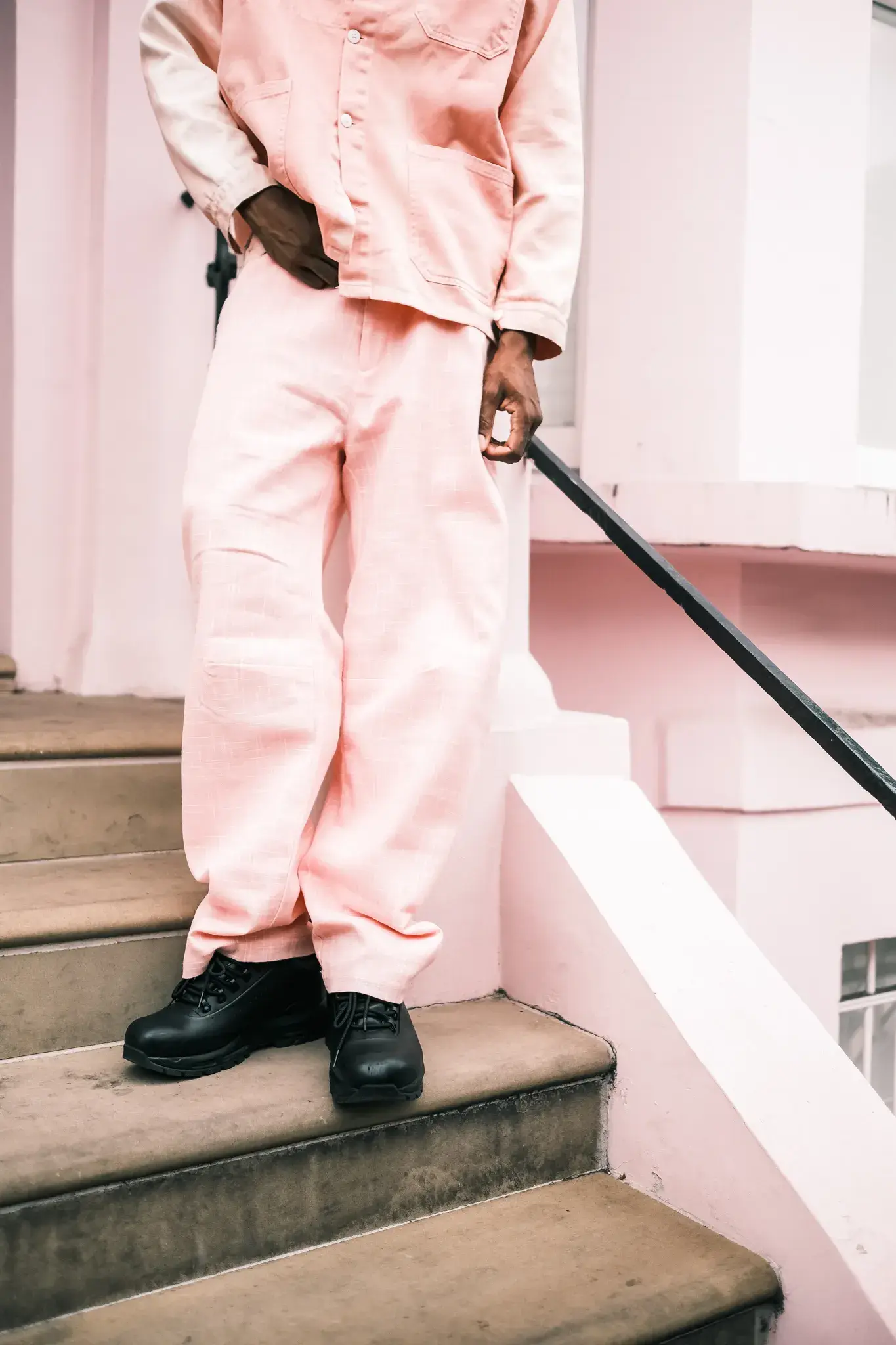
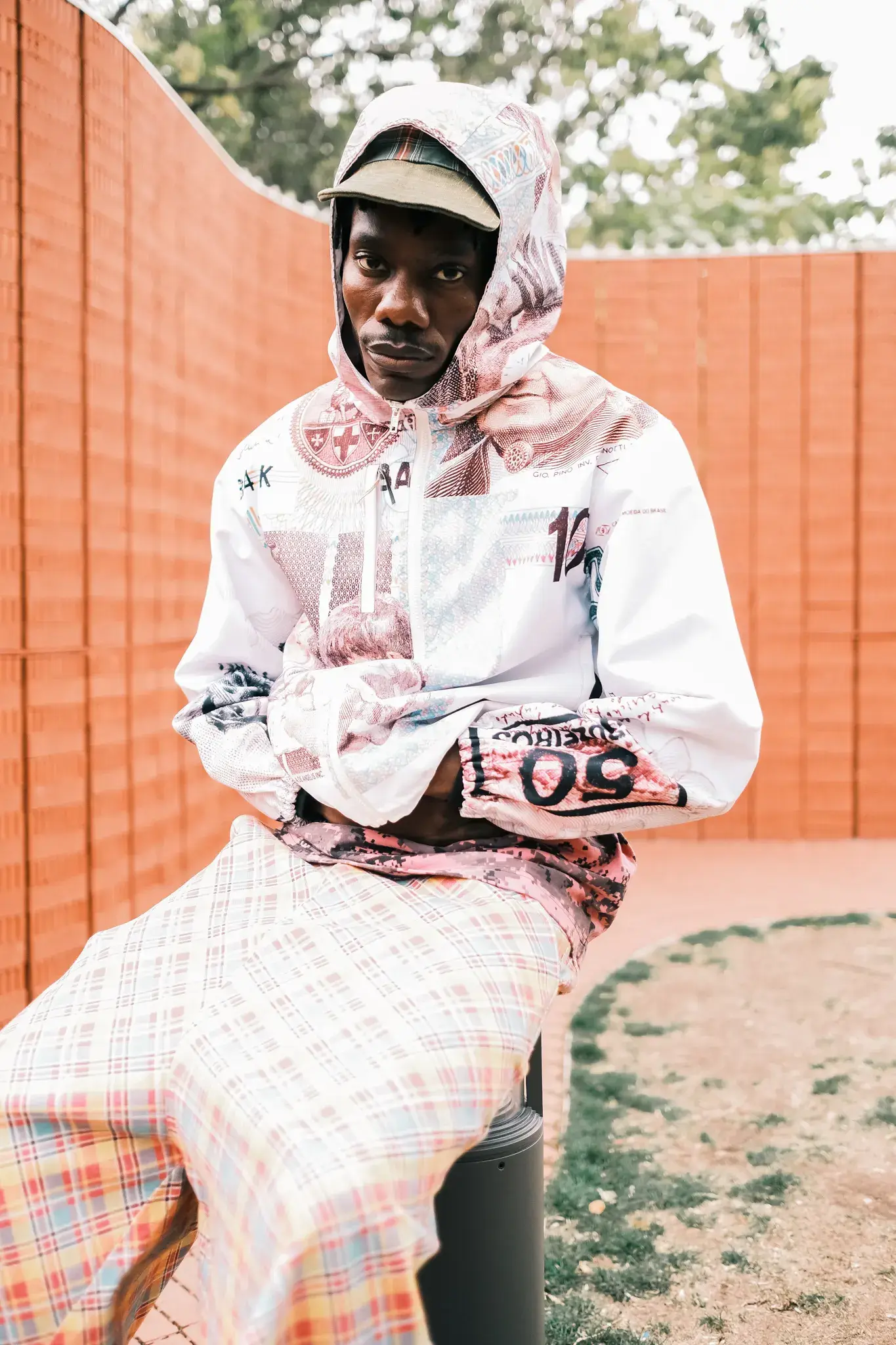
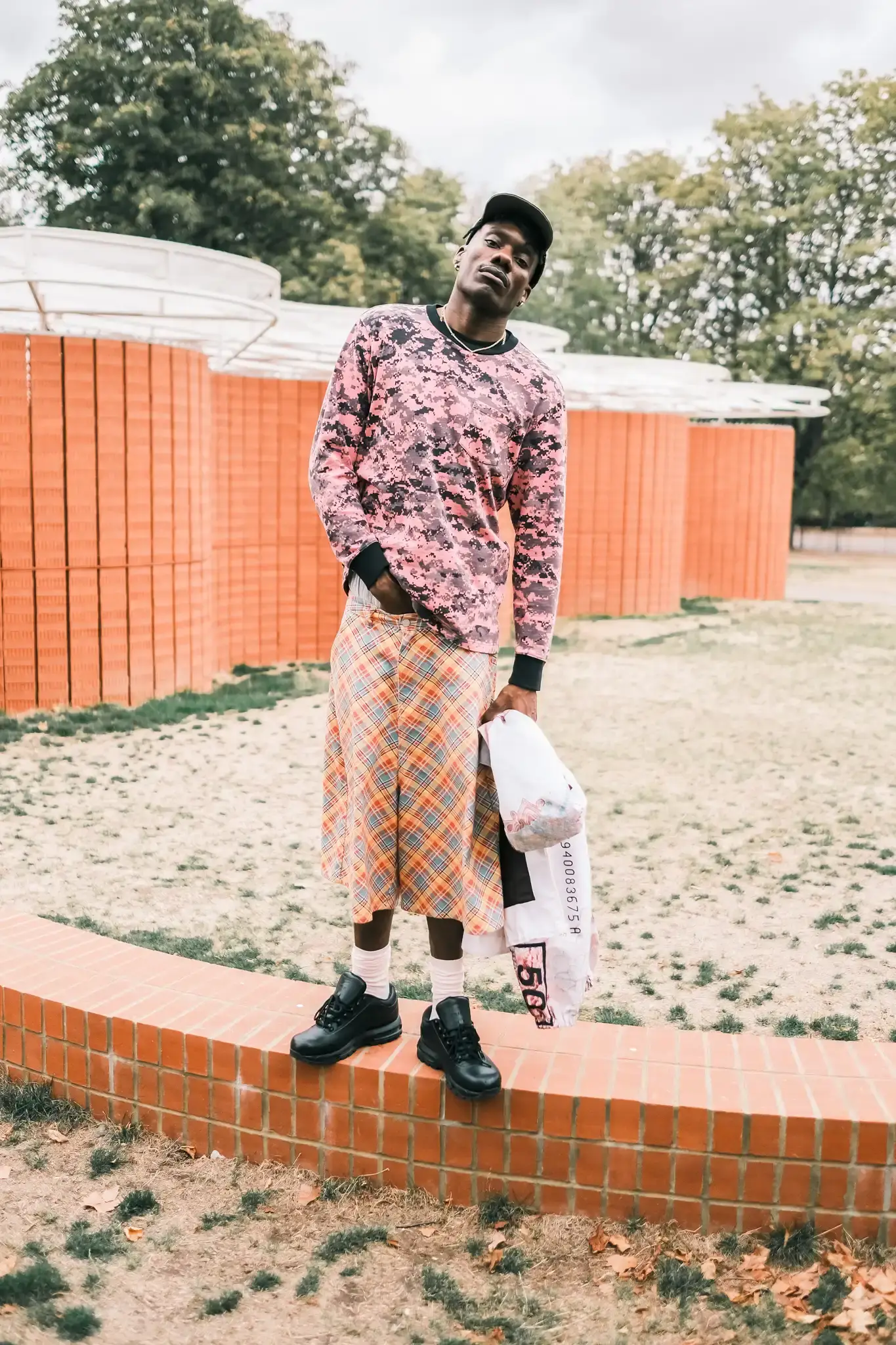
“Dressing is also a form of painting for me. It’s the same way I choose colors for a painting: thinking about balance, dosage, contrast and how different colors can exist together. I approach getting dressed almost like composing an image. ”
I don’t necessarily wear pink from head to toe everyday anymore, but there is almost always a touch of pink. I love colors, and today I really enjoy mixing pink with other colors and discovering new combinations. My style has evolved because I’ve evolved. I’m less interested in just looking "good" now. I’m more interested in feeling like Gogo.. cute and dirty. I like the tension between elegance and rawness.
Pigalle (Stéphane Ashpool) has been a very important part of my story. They strongly influenced my taste and taught me a lot about how to mix, match and assemble colors. Pigalle has had a real influence on the way I see fashion and color. I’m also drawn to brands with a strong cultural identity and a real story behind them. Stüssy is probably my biggest example of that. It’s probably my number one brand today, one of my guilty pleasures. There’s something about the culture, the attitude and the way Stüssy has built its own world that really speaks to me. Skate culture is, honestly, one of the most important subcultures in fashion in my opinion. ALYX by Matthew Williams, is also a very important part of my relationship with fashion. I was a model for the first ALYX menswear lookbook. I was attracted to the way Matthew built something that felt very personal. Even the name ALYX came from his daughter, and I really connected with that sense of family and personal history behind the brand. There was a real attention to detail and quality that I had a lot of respect for. Denim Tears is another brand I find very powerful. The work carries a strong sense of history and identity, and the storytelling is deeply connected to culture, memory and heritage. I appreciate when clothing can communicate something beyond the garment itself.
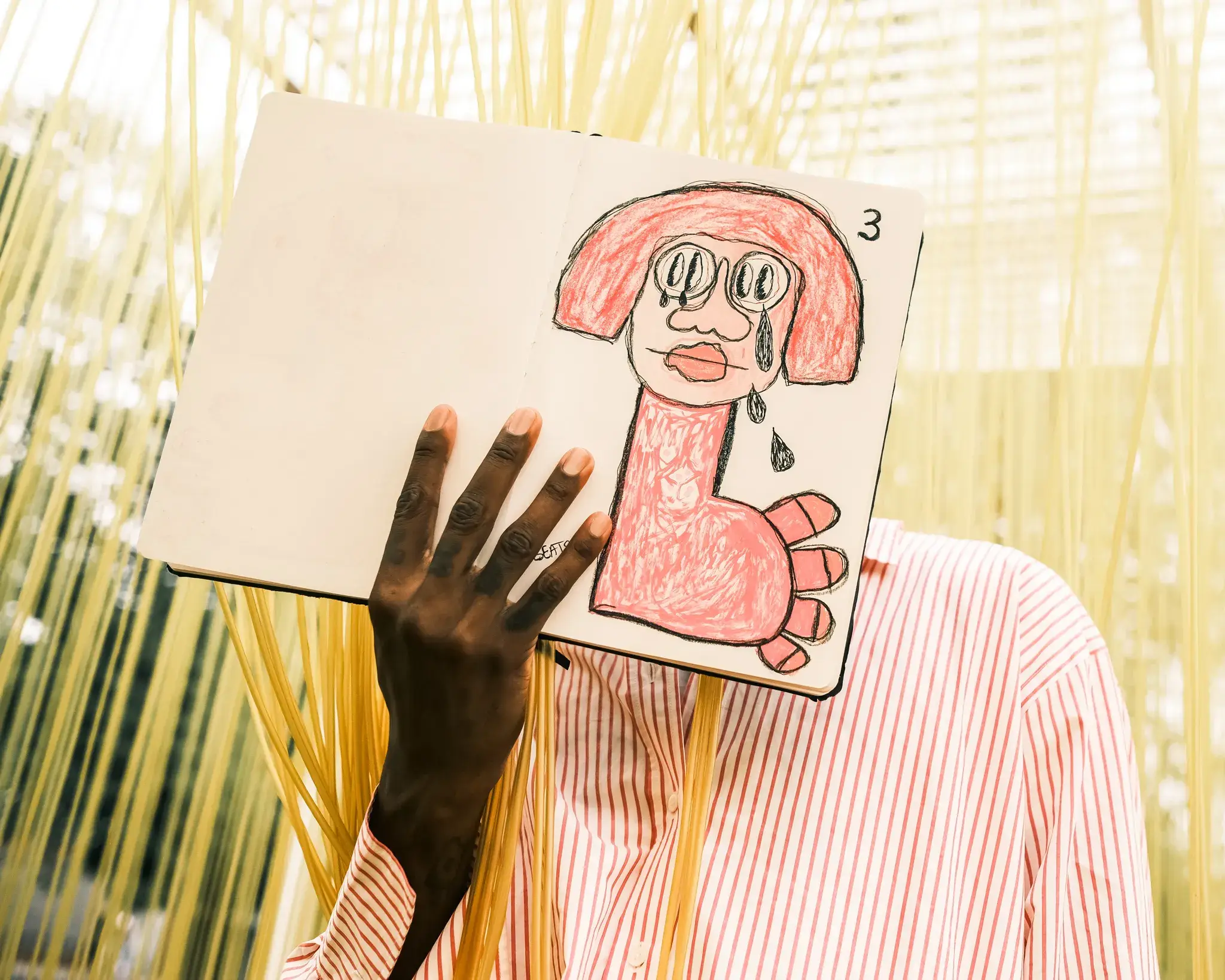
I love stories. The thing I do best is probably telling stories about myself, my life and how I feel, through painting, clothing and dance. For me, fashion is another material. I wear it, move in it, perform in it, and sometimes it becomes part of the artwork itself.
You move between fashion, dance, image-making and performance. How does your creative process start and what are your sources of inspiration?
My creative process really started with dance. I come from underground hip-hop culture, so in a way, everything starts with movement for me. But I don’t really see a separation between dance, painting, fashion, image-making or performance. I don’t think of them as different practices that I’m trying to combine. They are all a continuation of the same thing. They all come from the same place: me.
Honestly, I don’t really look outside of myself for inspiration. I look at my own life. The thing I’m most interested in is being as honest and transparent as possible about who I am. Sometimes it feels like I’m looking back at myself and watching the life I’ve already lived. My past becomes my future. Everything I’ve experienced becomes material for what I create next.
Of course, hip-hop culture inspires me enormously. Pink inspires me. Women inspire me. There are so many things that are part of who I am and therefore become part of what inspires me. But ultimately, my biggest source of inspiration is myself: not in an ego way, but because I’m constantly discovering who I am through what I’ve lived. I create from that place.
You’ve established yourself creatively in Amsterdam and are now starting a new chapter in London. What are you carrying with you from one city to the next?
I’m bringing the pink with me obviously. I’m bringing my codes, my style, my language, the way I see things, everything that makes me recognizable as an artist. I guess I'll bring Gogo Lupin! Amsterdam gave me the space to explore, to grow and to open new doors creatively, especially through painting. I’m taking all of that experience with me, but I’m also taking the freedom to keep exploring. London is a new environment, and that’s what excites me. New people, new energy, new possibilities. I want to see what happens when I bring my world into that environment.
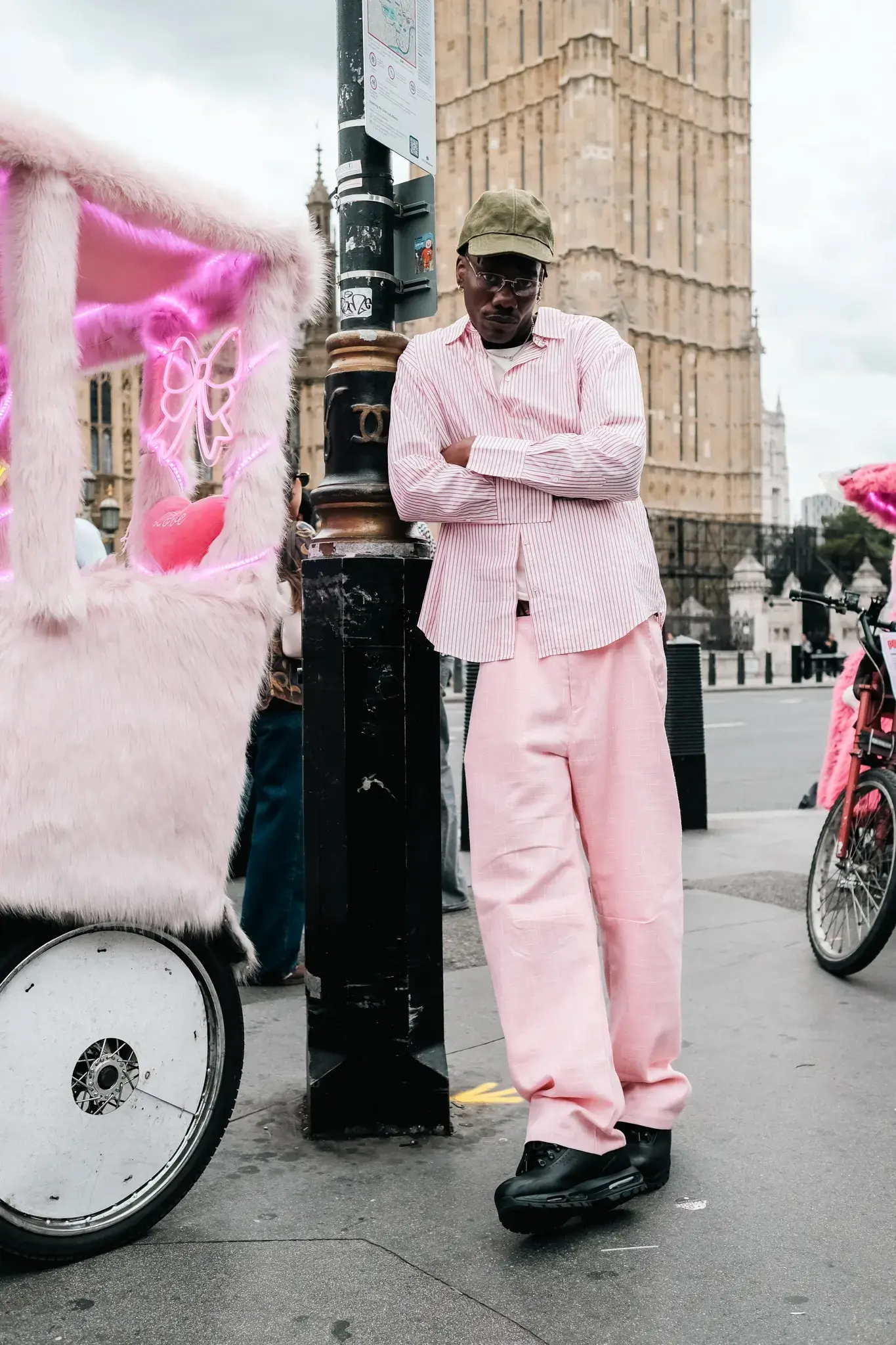
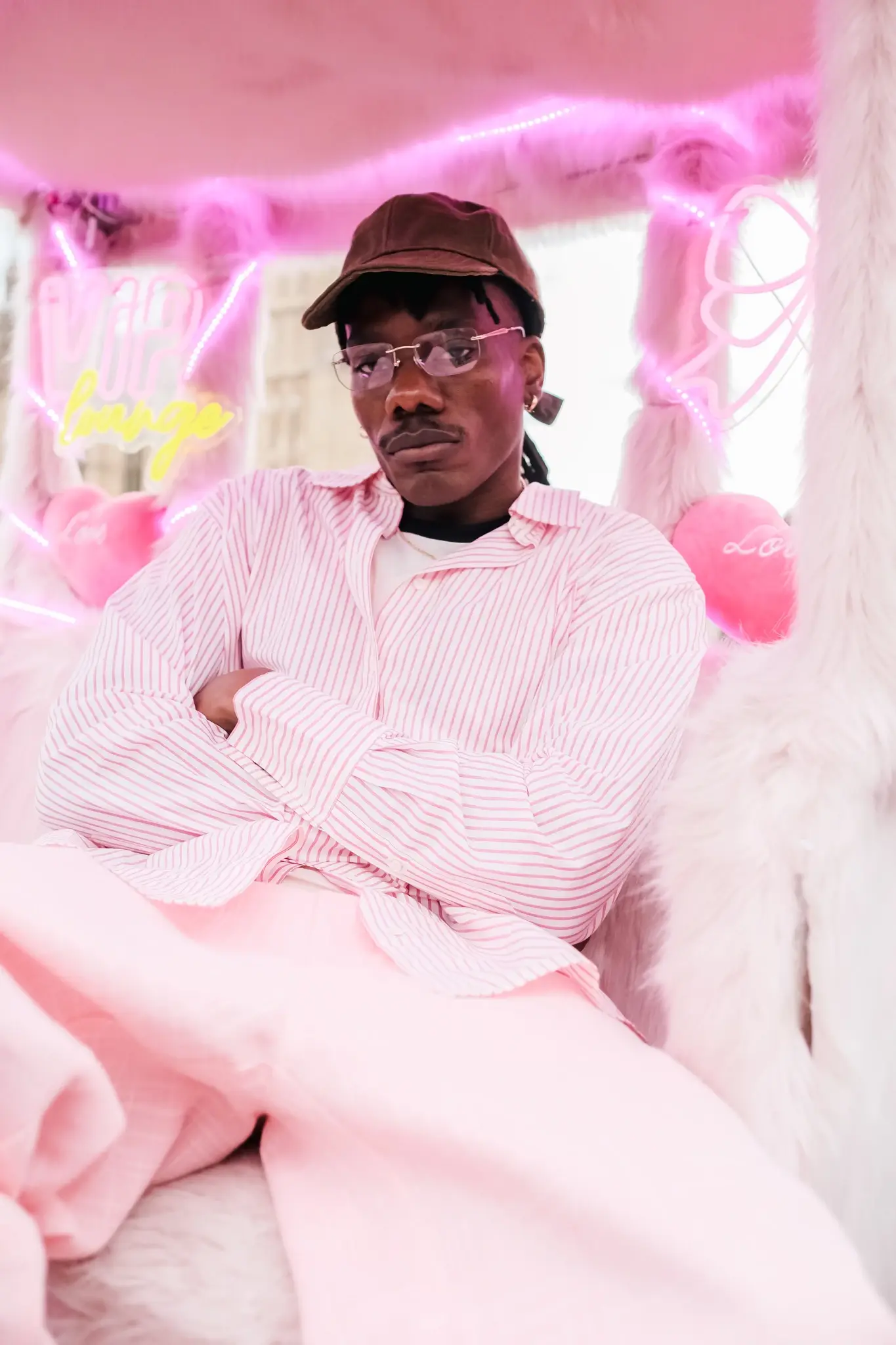
Your style has a strong sense of individuality. When you put a look together, what usually comes first: a feeling, a silhouette, a colour, or something else?
It usually starts with colour - mainly pink. I’ll pick one colour that I really want to wear, and then I start composing around it. I play with the colours I want to mix together, different patterns, different textures, different combinations. I like trying combinations that I haven’t tried before and seeing what happens. Sometimes it feels like making a sandwich or a cocktail, just mixing different things until the balance feels right.
Sometimes it starts with one specific piece that I really want to wear. It can be a jacket, a pair of shoes, or one particular garment, and then I build the rest of the look around it. Other times, it starts with a silhouette or a vibe. Maybe I want something that feels more hip-hop, more rock, more seventies. It really depends on the day and on what I’m feeling. But colour is probably what comes first most of the time. I see getting dressed a bit like composing a painting. I’m looking at the palette, the proportions, the patterns, the contrast, and trying to make everything speak to each other. And I usually prepare my outfit the night before, because if I leave it in the morning, it takes way too long.
Pink Noise is a story about change, visibility and making a new place your own. What does reinvention mean to you as an artist and a person?
I would say reinvention means allowing yourself to change without losing who you are. As an artist and as a person, I’m constantly evolving. The way I see myself changes, the way I create changes, the way I move through the world changes. I don’t want to stay attached to an old version of myself just because people know me that way. At the same time, everything I’ve been is still part of me. My past, my experiences, my pain, my love, my culture: none of that disappears just because I’m moving forward. Reinvention is more about taking everything you’ve lived and finding a new way to express it. That’s also what pink means to me. It has evolved with me. It started as something instinctive, then became part of my visual identity, and now it means something much deeper. I’m building on everything that came before. So yeah, reinvention is continuing to become myself.
CREDITS
Creative Director & Production: James Loach @jamesloachco
Editor in Chief: Youssef Chauqi / CASAWI
Words: Clara Ferrati / CASAWI
Photographer & Retouch: Sam Davies @samdaviies
Set Assistant: Faris Carni @faris.carni
Talent: Gogo Lupin @gogolupin
Clara Ferrati
Fashion editor and archivist based in Milan currently working as SMM/copywriter; enthusiast about fashion history & trends, music, cinema, social media.
@clarafrtShare this editorial
RELATED

PUMA AND DANIËLLE CATHARI RELEASE NEW FOOTWEAR COLLECTION


GOLF WANG FALL WINTER 2026 LINEUP TEASED

