
Performance footwear has changed dramatically over the past decade. Few brands have influenced that shift as visibly as HOKA.
Oversized midsoles, exaggerated rocker geometry and unapologetically technical silhouettes have become defining elements of the brand's design language. What began as a performance-first approach now sits comfortably at the intersection of sport, fashion and everyday life.
Performance brought HOKA into the conversation. Curiosity continues to move the brand forward.
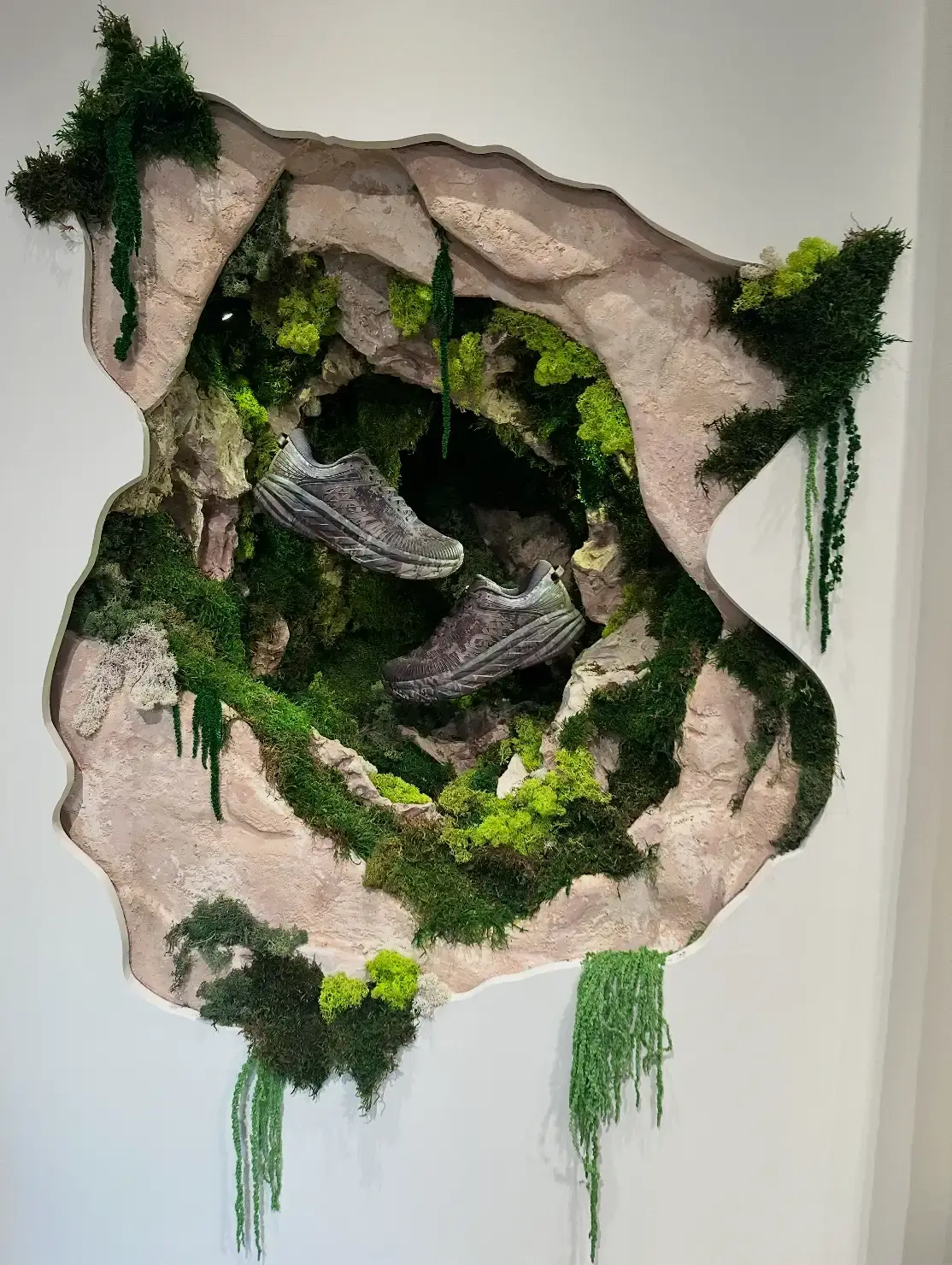
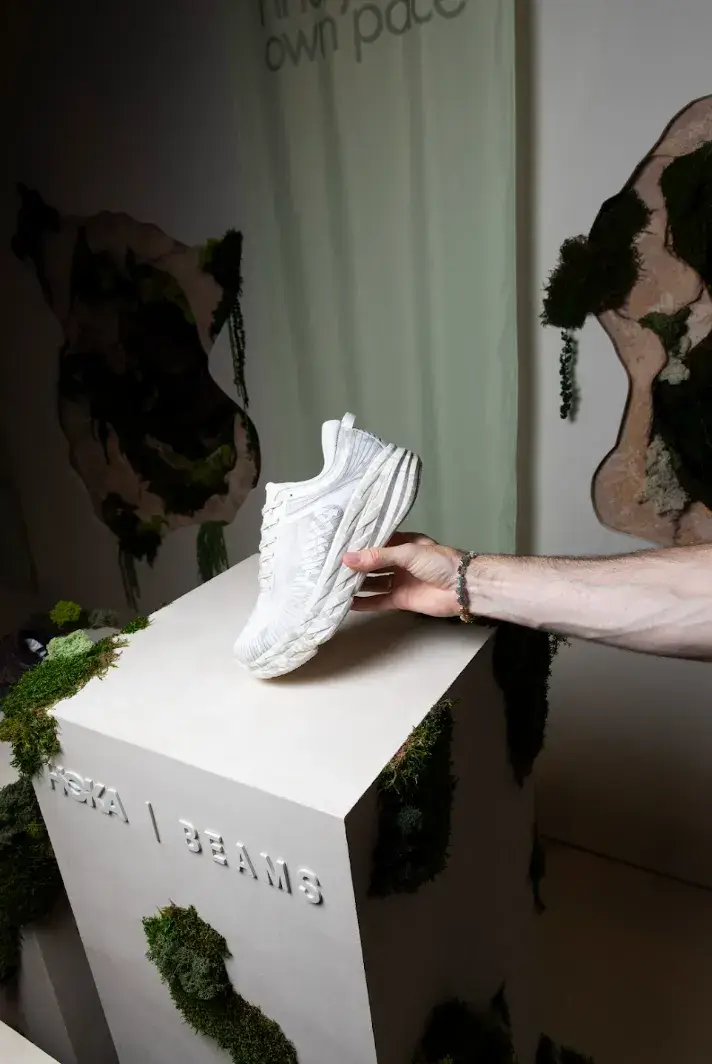
That philosophy runs through the brand's latest collaboration with BEAMS. Rather than treating the partnership as a simple colour update, both teams approached it as an exchange of perspectives, balancing HOKA's expressive design language with the quiet confidence that has defined the Japanese retailer for decades.
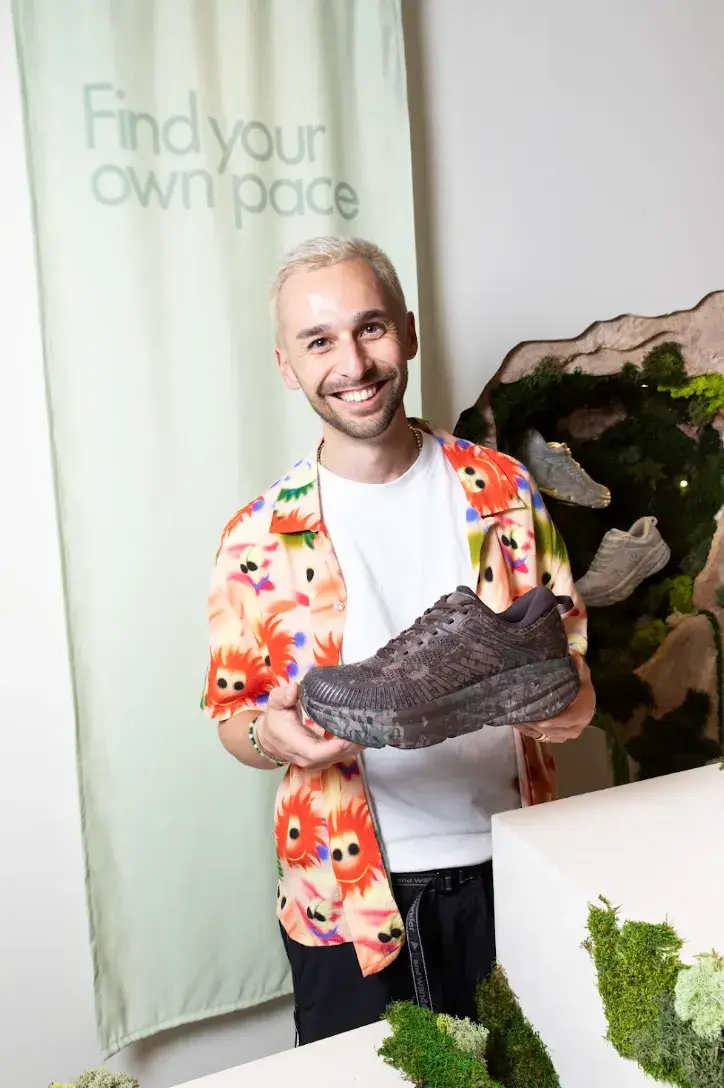
During Paris Fashion Week, we sat down with Chris Hui, HOKA's Design Director of Lifestyle Footwear to discuss the collaboration, the future of performance footwear, and how the brand continues to design for the way people move through the world.
The collaboration with BEAMS feels very different from what people usually expect from HOKA. What made this partnership interesting?
I think BEAMS has always been one of the cultural pillars of sneakers, streetwear and Japanese fashion. Growing up, it was an aspirational brand for me, so having the opportunity to collaborate with them through HOKA has been incredibly rewarding.
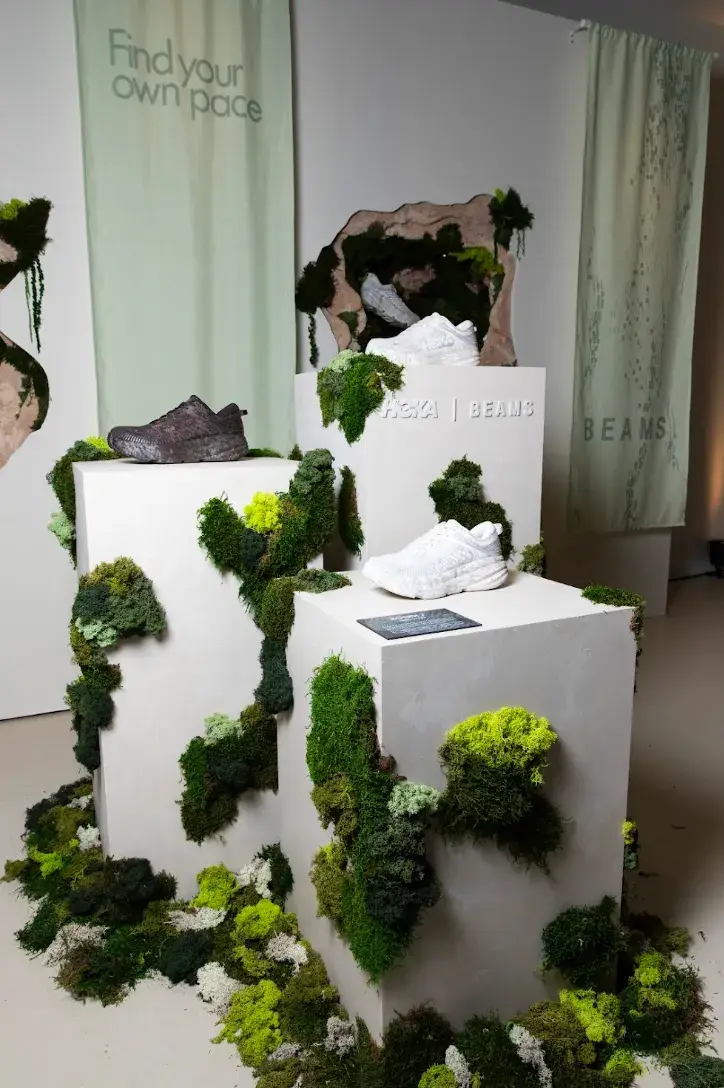
What makes the project special is the contrast between both brands. HOKA has always embraced bold colours and expressive performance design, while BEAMS approaches products with a quieter sensibility, drawing from heritage, military references and Japanese craftsmanship.
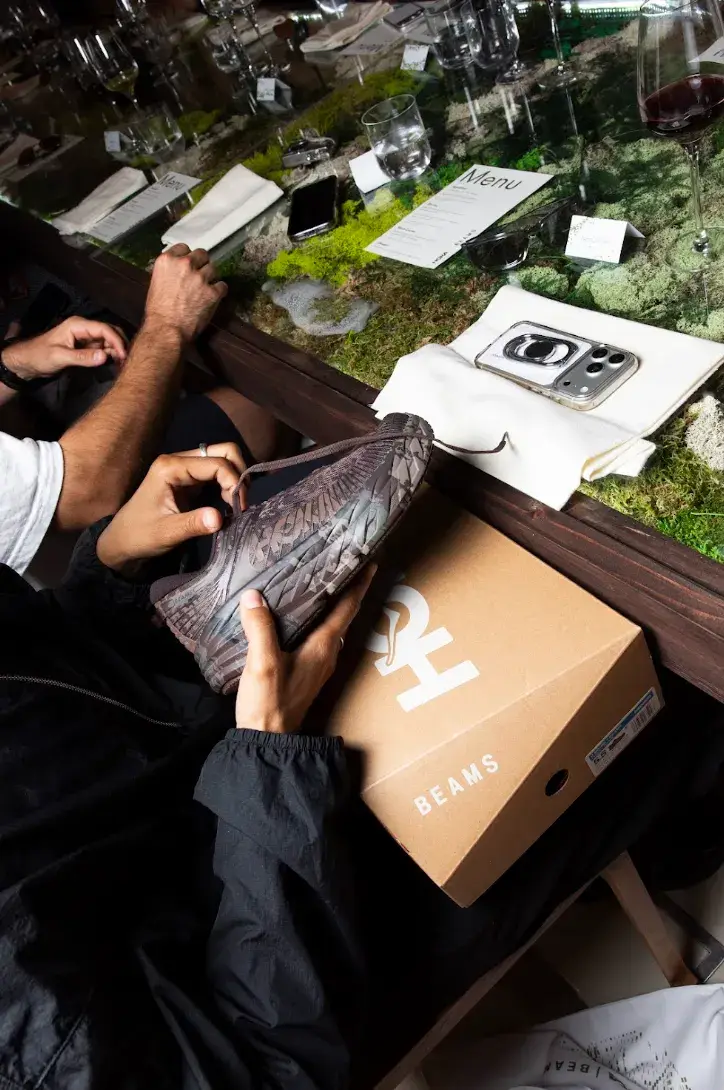
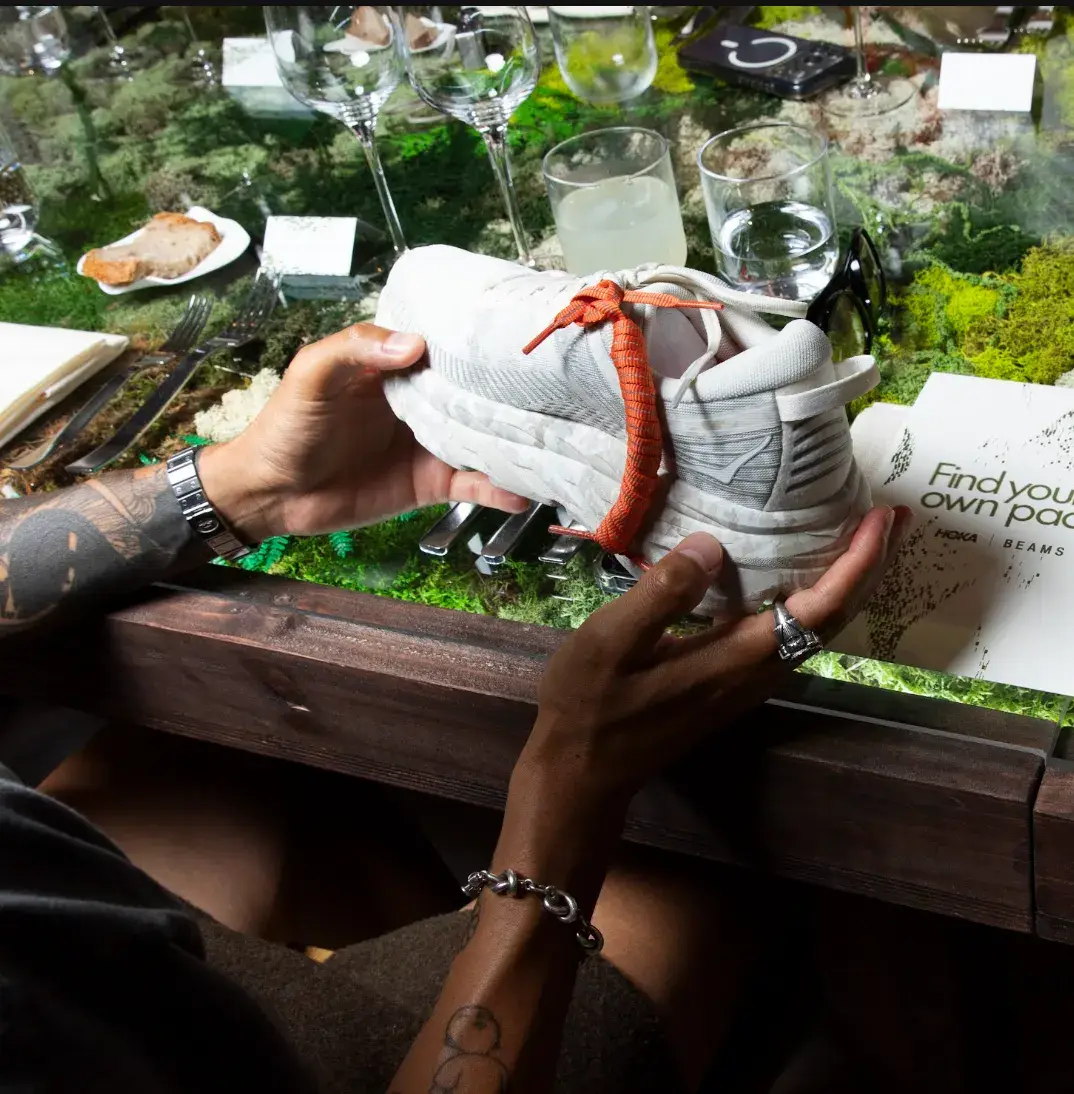
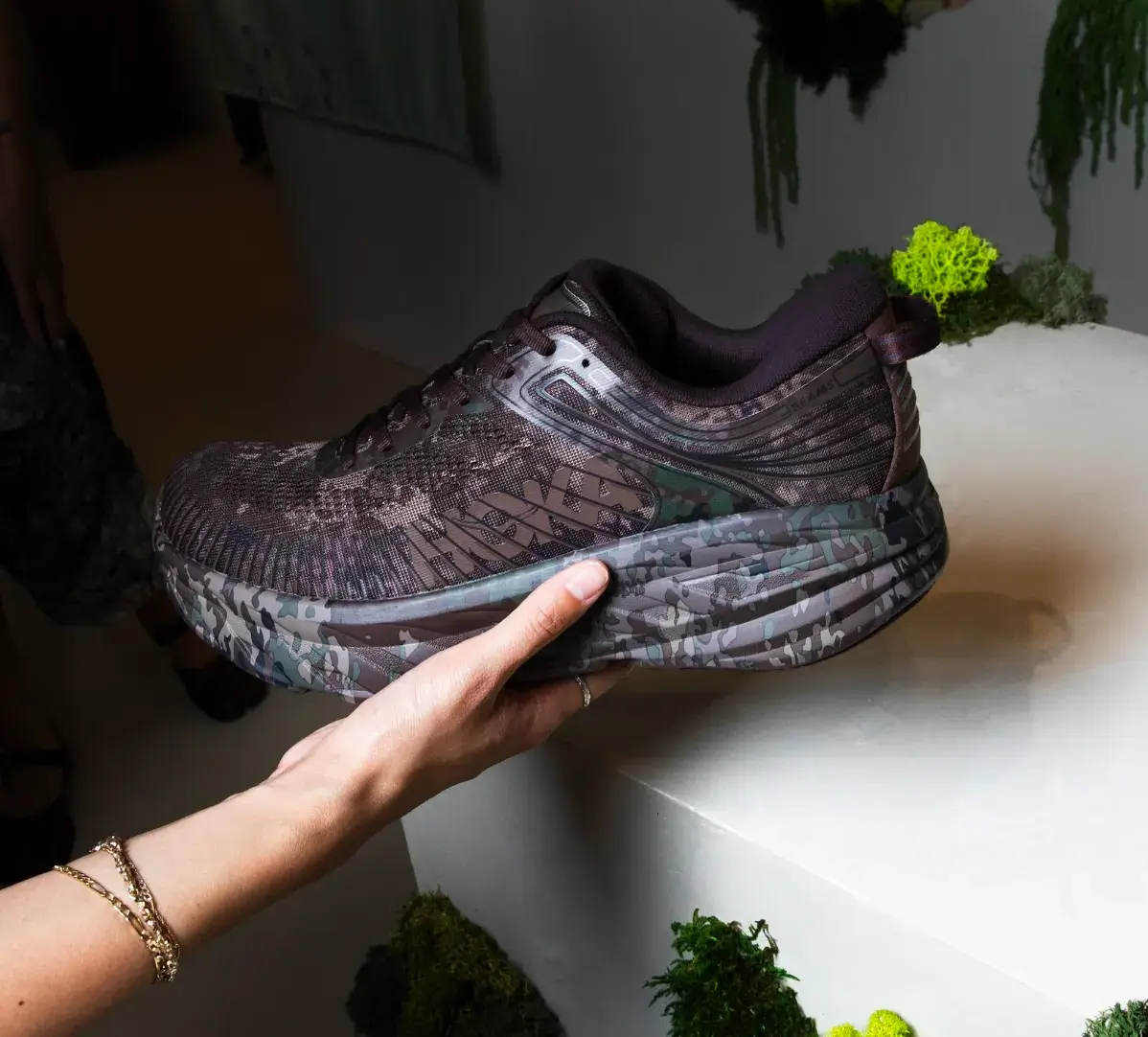
The Bondi became the perfect meeting point. It still carries HOKA's unmistakable proportions, but filtered through the BEAMS perspective. Earth tones replace brighter colours, while subtle details reveal themselves over time. Hidden HOKA and BEAMS logos sit inside the camouflage pattern, the lining introduces BEAMS' signature orange, and even the packaging reflects that same philosophy with a natural exterior and bright orange interior.
Everything feels intentional without losing the playful energy that defines HOKA.
HOKA built its identity around oversized midsoles and performance running. With fashion moving towards slimmer silhouettes, how do you continue evolving without losing what makes HOKA recognisable?
It's something we talk about quite often.
For us, the important thing is remembering how HOKA started. The brand was built around curiosity, solving problems and creating better experiences for people in motion. The design simply follows that process.
When you think that way, you stop being limited by a specific silhouette. Thick midsoles, rocker geometry or technical mesh don't define the brand, they're outcomes of a way of thinking.
Those elements will always remain part of HOKA's identity, but they shouldn't become limitations. Curiosity has to stay bigger than any single design language.
Performance is only one part of people's lives today. How do you design products that fit naturally into everyday culture?
We think about the lives our consumers actually live.
Running may be what people know us for, but it's only one part of someone's day. Living in Milan is different from living in Paris, New York or London. Every city creates different needs and different ways of moving.
Instead of trying to build one product for everyone, we prefer creating a world around a specific consumer. Once that world exists, the colours, materials and design details begin to come naturally.
Our goal is simply to understand how people move through everyday life and build products that become part of that experience.
The collaboration feels surprisingly understated. Was that intentional?
Absolutely.
That really came from BEAMS. Some of our early ideas were louder and included more orange on the exterior, which feels very natural for HOKA.
BEAMS challenged us to simplify. They encouraged us to find details that rewarded closer inspection without interrupting the overall harmony of the design.
In the end, that balance made the collaboration feel more special, particularly for a project celebrating their 50th anniversary.
Outside of running, what cultural worlds are currently inspiring you?
Personally, I'm really inspired by how motorsport has started influencing youth culture, especially in America.
Not only race cars, but mini bikes, BMX, ATVs—the graphics, the colours and the freedom those worlds represent.
As a brand built around movement, those references feel surprisingly natural. They carry the same sense of speed and exploration, while introducing a completely different visual language.
What do you think the footwear industry should be chasing over the next decade?
I can't speak for the entire industry, but I know what we want to create.
We want people to put on a pair of HOKAs and immediately feel something they've never experienced before.
Internally, we think about three stages.
The first is attraction. Does the product immediately spark curiosity?
The second is engagement. Once you hold it, do the materials, textures and construction reinforce that first impression?
Finally comes experience. When you actually wear the shoe, does everything come together exactly as you imagined or even better?
That's what we're always trying to achieve.
It's the feeling that reminds you why great product design still matters.

Staff
Casawi Magazine: based in Milan, we celebrate youth culture, creativity, and community across fashion, sports, music, art, design & more.
@casawi.magazineShare this editorial
RELATED

AWAKE NY COLD WORLD FW26 COLLECTION DETAILS


