
Trick or treat? In Paris, it's trick or protest
Halloween usually means fake blood, scary costumes and a few too many sweets. But this year, in the streets of Paris, the horror came with a political message.
On Saturday, October 31, thousands of protesters gathered for another day of demonstrations against the rising cost of living, inequality and deteriorating public services. Only this time, the protest coincided with Halloween, turning parts of the mobilisation into an unexpected political costume parade.
Behind the masks, a generation demanding change
What looked like an unusual Halloween parade was part of a much larger movement that has been shaking France for weeks.
The protests began in September, with high school students mobilising against worsening conditions in the French education system. Overcrowded classrooms, missing teachers, deteriorating school buildings and unequal access to education quickly became the centre of their demands. The movement spread from schools in the Paris suburbs to cities across the country, bringing together students from different backgrounds, followed by university students, teachers and parents.
But the anger goes beyond education.
For many young protesters, the issue is also about their place in society. Rising living costs, social inequality and the feeling that their voices are not being heard have turned a school-based movement into something much bigger. Through social media, demonstrations and school blockades, a new generation has found its own way of organising.
And on Halloween, that language became visual.
Marie Antoinette was no longer just a historical character. She became a reminder of France's revolutionary past. Fake blood was no longer just part of a costume. It became a statement about police violence.
Even childhood cartoon characters were transformed into political symbols.
Humour, pop culture and protest, all moving through the same streets.
When the horror stops being fictional
But behind the Halloween masks, another reality has been unfolding across France.
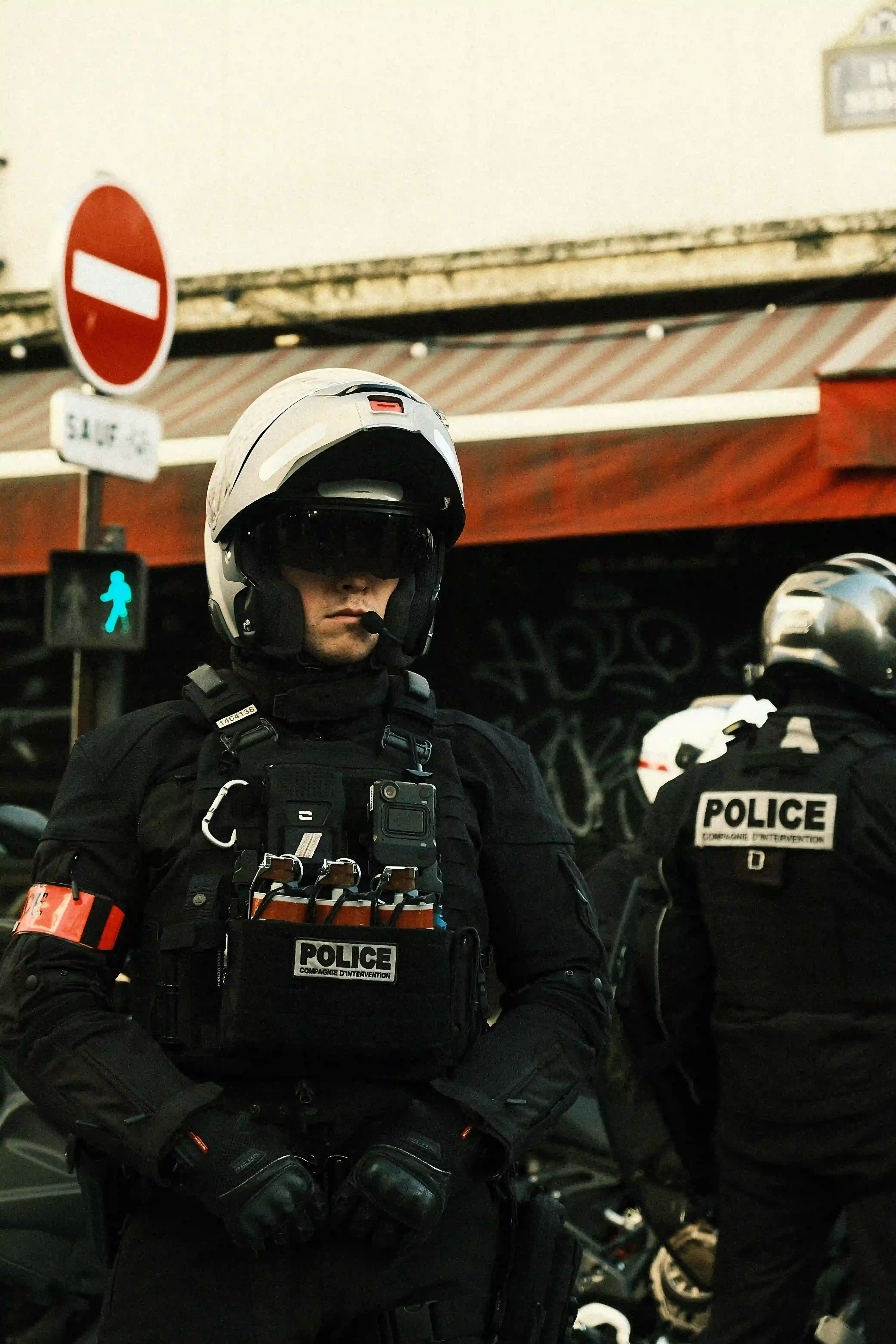
Since the beginning of the movement, confrontations between protesters and police have raised serious concerns about the use of force, particularly against minors.
Several teenagers have suffered severe injuries during police interventions. In Lens, a 15-year-old lost a hand during an incident involving a police grenade. In Argenteuil, a 16-year-old suffered a serious eye injury, suspected to have been caused by a police projectile. Investigations have been opened into several incidents, while human rights concerns and accusations of excessive force have become increasingly central to the movement.
Police officers have also been injured during clashes, and some demonstrations have been marked by vandalism and violence. Authorities argue that reinforced security measures are necessary to protect the public and prevent further unrest.
For protesters, however, the question remains: how can young people make their voices heard without fearing for their safety?
More than a Halloween parade
The timing may have been accidental, but the costumes gave the movement a new way to communicate. A protest sign can be read. A costume can be photographed, shared, turned into a meme and understood almost instantly.
And for a generation used to expressing itself through images, references and internet culture, that matters. The Halloween demonstrations brought together two seemingly opposite worlds: the playful absurdity of dressing up and the seriousness of political anger.
Meanwhile, the movement continues. Following government announcements on education, many students and unions consider the proposed measures insufficient. Further demonstrations and strikes are already planned, including a nationwide mobilisation on November 5.
The costumes will disappear. The demands will remain.
And perhaps that was the real message of this Halloween protest.

Kenza Boumahdi
Kenza Boumahdi is a journalist and visual storyteller working at the intersection of culture, media, and the audiovisual field. Currently enrolled in a Master’s in Cultural Journalism at Sorbonne Nouvelle, she combines writing, photography, and graphic design in her practice. She has coordinated major student film festivals, co-led a student media, and founded Asmar Media, a cultural platform centered on artistic creation and cultural events.
@boumahdi.kenzaShare this editorial


