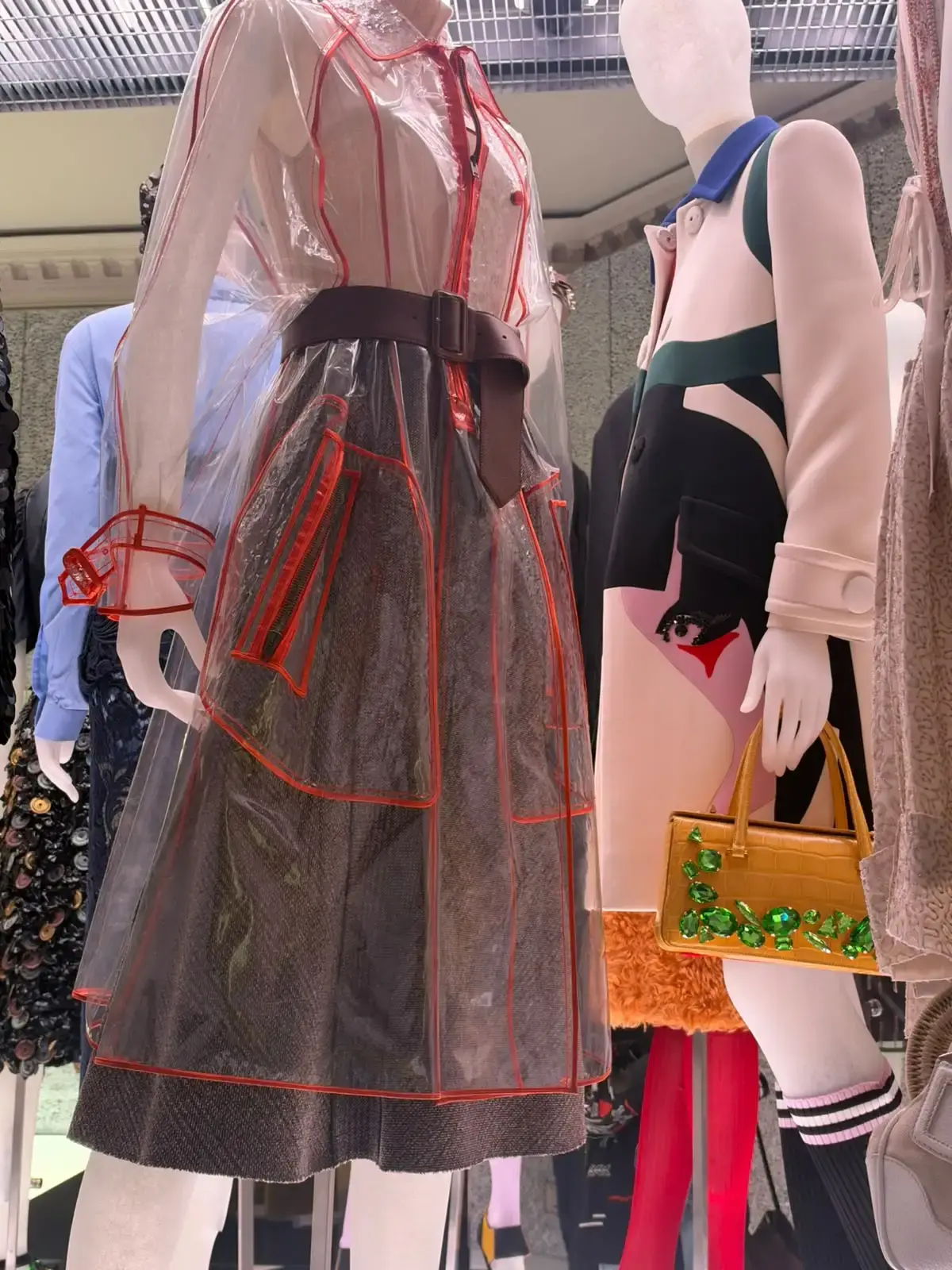
We tend to think of fashion as something that should make us look more beautiful, flatter the body, create harmony and inspire desire.
But what if a garment did not necessarily have to make us look beautiful? What if beauty could also emerge from something that disrupts that harmony, from an unexpected combination, from something that might even seem wrong at first glance?
Miuccia Prada has built a fundamental part of her creative language around these questions, turning contradiction into a means of aesthetic exploration.
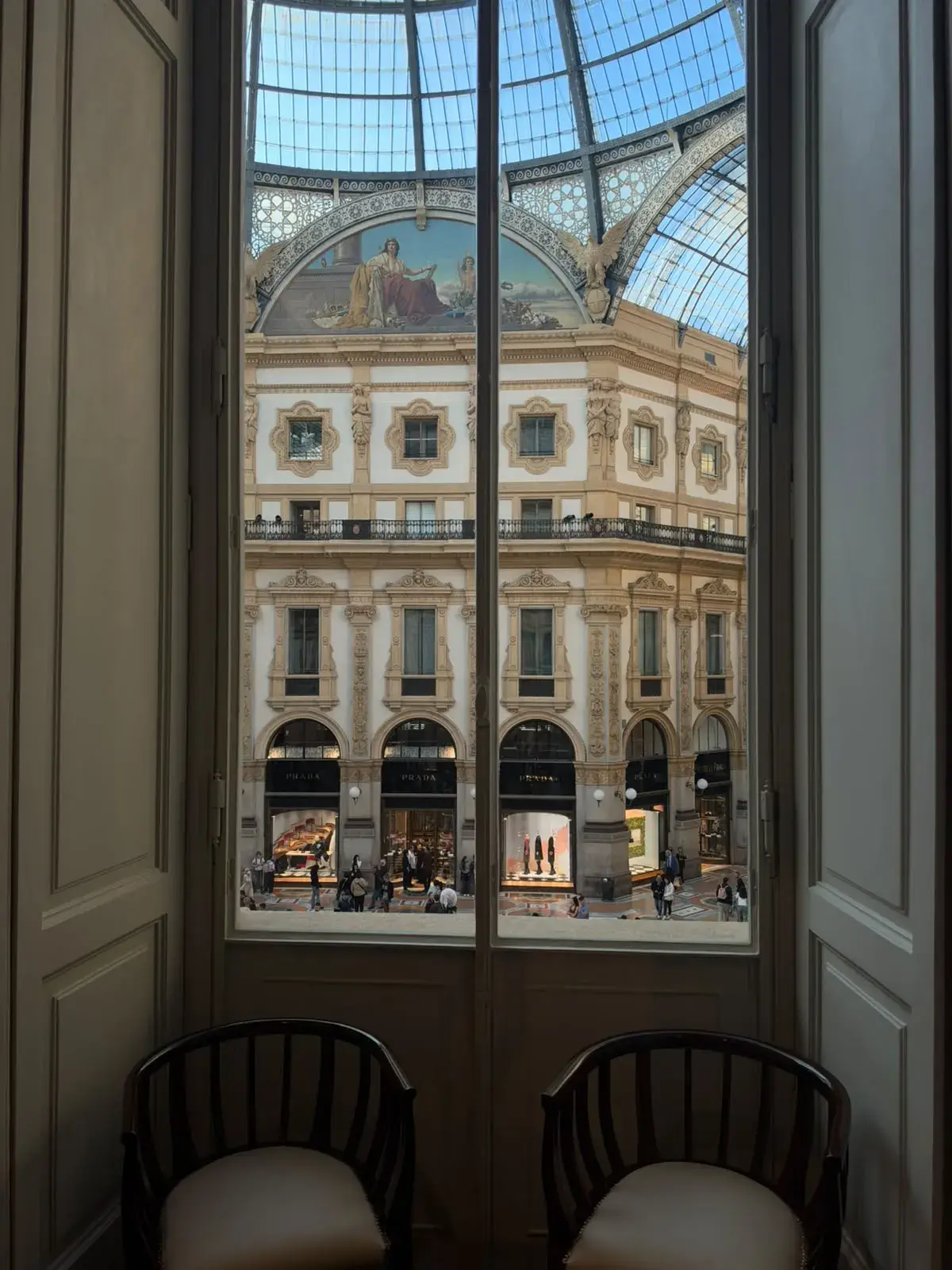
This vision unfolds at Pradasphere, the permanent exhibition inaugurated in September 2026 in Milan's historic Galleria Vittorio Emanuele II, in the designer's hometown and the place where the fashion house opened its first store in 1913.
The exhibition is part of the wider Prada Galleria project, spanning eight levels dedicated to fashion, art and culture. On the piano nobile, above Marchesi 1824, Pradasphere traces more than a century of the house's history, while an underground passage connects the Prada womenswear and menswear boutiques, revealing further pieces from its archives.
Through garments, accessories, photographs and artistic collaborations, the exhibition does more than celebrate the past. Above all, it offers an opportunity to explore how Prada has continually challenged the meaning of seemingly simple concepts: beauty, elegance and femininity.
A Revolution That Began with Nylon
When Miuccia Prada gradually took over the family business in the 1970s, she brought with her a background seemingly far removed from the world of fashion. With a degree in Political Science and a history of involvement in the feminist movement, she approached fashion with mixed feelings. She recognised its frivolous nature, yet could not resist the allure of clothes and their potential for self-expression.
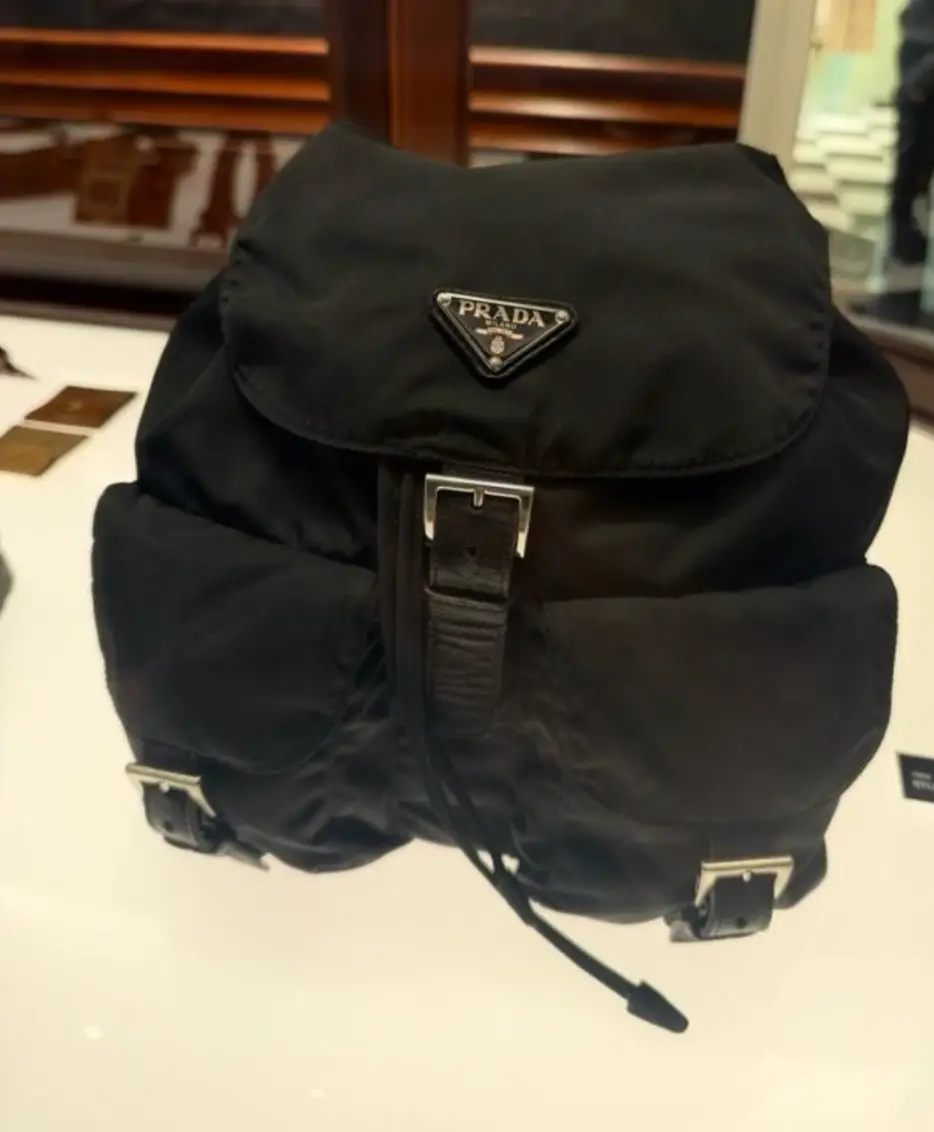
In the 1980s, together with Patrizio Bertelli, she introduced a backpack made from nylon, a synthetic material associated primarily with practicality rather than luxury. Black, lightweight and minimalist, the Pocono nylon backpack rejected ostentation in favour of a new idea of desirability.
Seeing it today at Pradasphere, alongside the house's historic trunks and archival objects, reveals the significance of that decision: what once defined luxury is no longer necessarily what makes it desirable.
Miuccia did not abandon tradition. Instead, she challenged it by introducing something unexpected.
The Beauty of Ugliness
The same approach runs through her ready-to-wear collections, beginning with her debut in 1988.
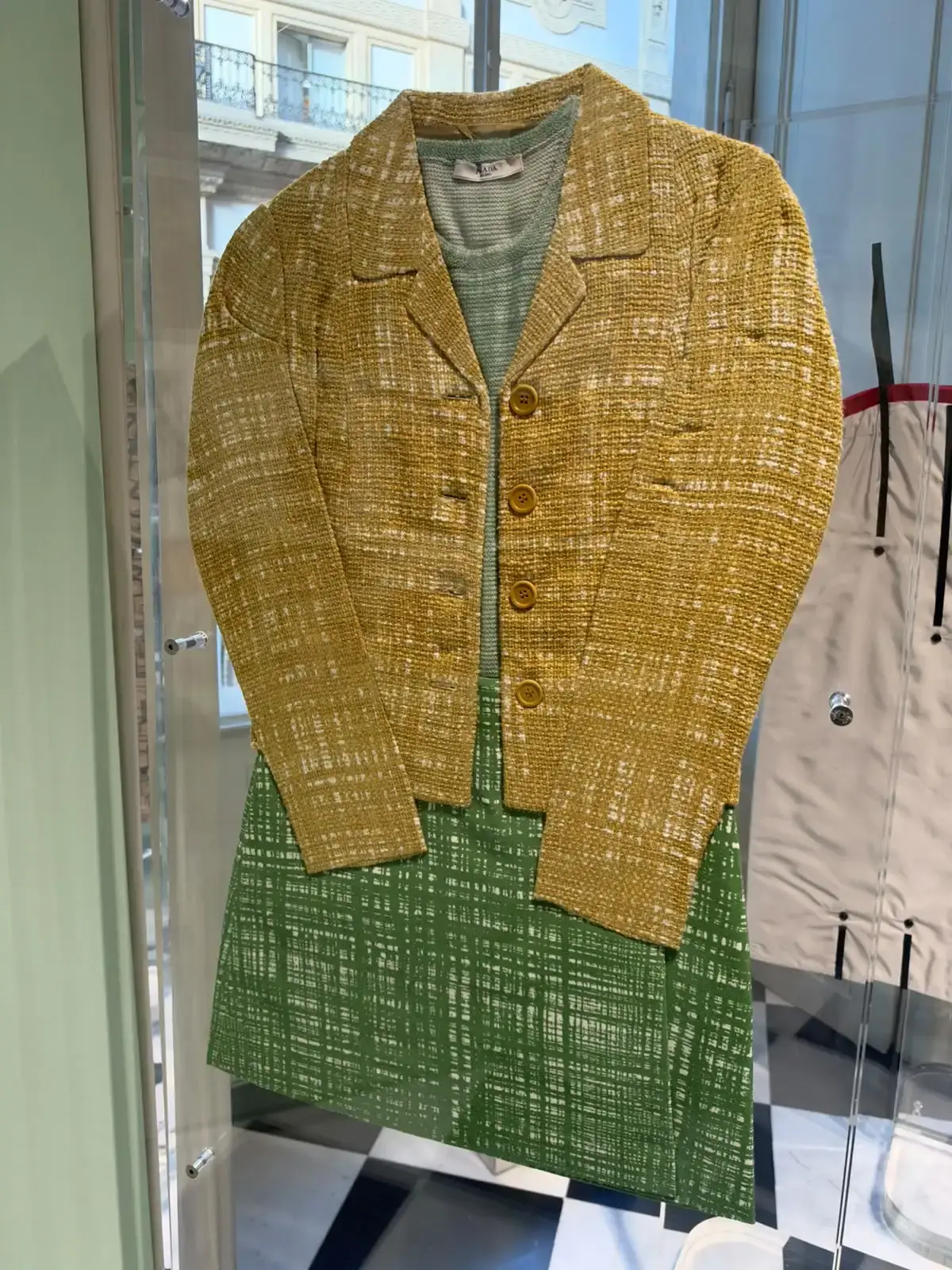
In the 1990s, while much of the fashion industry continued to celebrate established ideals of beauty, Prada introduced unusual colour combinations, austere silhouettes, knee-length skirts, retro prints and accessories that seemed to contradict the elegance of the clothes themselves.
The Spring/Summer 1996 collection, Banal Eccentricity represents one of the defining moments of this aesthetic vision. Muddy colours, geometric patterns and references to a seemingly outdated bourgeois wardrobe helped give rise to what would become known as ugly chic.
Yet reducing Miuccia Prada's vision to a celebration of ugliness would be an oversimplification.
Her interest seems to lie not in replacing beauty with its opposite, but rather in questioning the boundary between the two. As the history of art and literature demonstrates, this boundary is far from fixed: what is considered unpleasant, imperfect or even monstrous can become a source of fascination.
In Fosca by Iginio Ugo Tarchetti, published in 1869, the protagonist painfully expresses the weight of expectations surrounding female beauty: “You do not know what it means for a woman not to be beautiful.”
A statement that, beyond its nineteenth-century context, raises a question that remains relevant today: how much of a woman's worth is determined by her ability to conform to an ideal of beauty?
In an entirely different context, Miuccia Prada's creations seem to challenge those same aesthetic conventions, proposing a vision of femininity that does not have to conform to traditional ideals of beauty.
This idea is also reflected in the combinations of garments and accessories: sophisticated shoes paired with thick socks, embroidered skirts worn with simple tops, and luxurious materials juxtaposed with industrial surfaces.
These are not random combinations. They are deliberate choices that disrupt the notion of predictable elegance and invite us to reconsider what we have come to regard as desirable.
The value of these creations, then, lies not only in their ability to please, but also in the questions they provoke.
Beyond the Clothes: A Dialogue with Culture
The world of Prada extends far beyond its collections. To understand Miuccia's vision, we must also consider her relationship with culture, which shaped her intellectual development long before she joined the family business.
Surrounded by literature, cinema and political engagement, Miuccia developed a sensibility that extended beyond the boundaries of fashion. Before becoming a designer, she spent several years studying mime at Milan's Piccolo Teatro, exploring a form of expression in which the body and movement become powerful means of communication.
It is hardly surprising, then, that her collections continually engage with other disciplines. Fashion becomes a space where artistic, cinematic and cultural references intersect, creating a world of imagery and ideas that reaches beyond the garments themselves.
In the underground passage connecting the Prada womenswear and menswear boutiques, a selection of archival objects reveals the fashion house's relationship with cinema.
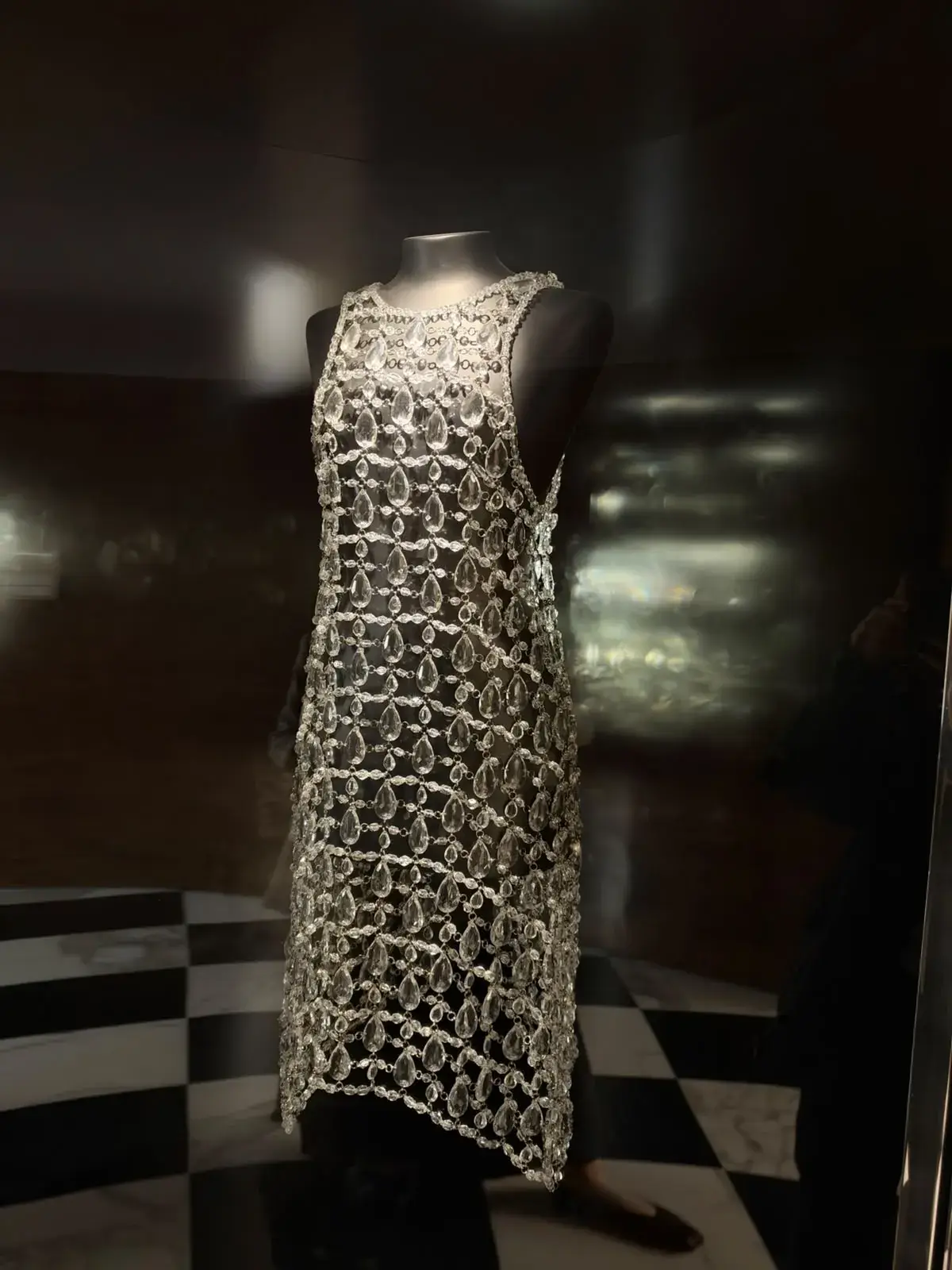
Among them is the Chandelier Dress from 2010, composed of crystals, beads and metal rings, a version of which was worn by Carey Mulligan in Baz Luhrmann's The Great Gatsby (2013).
The same space also features trunks made for the films Australia and The Grand Budapest Hotel, recalling the house's longstanding tradition of luxury travel accessories.
The exhibition also features a black Prada bag in brushed leather, the same model carried by Miranda Priestly in a light grey version in The Devil Wears Prada (2006). It offers another example of how an accessory can become part of cinematic imagery and help shape a character's identity.
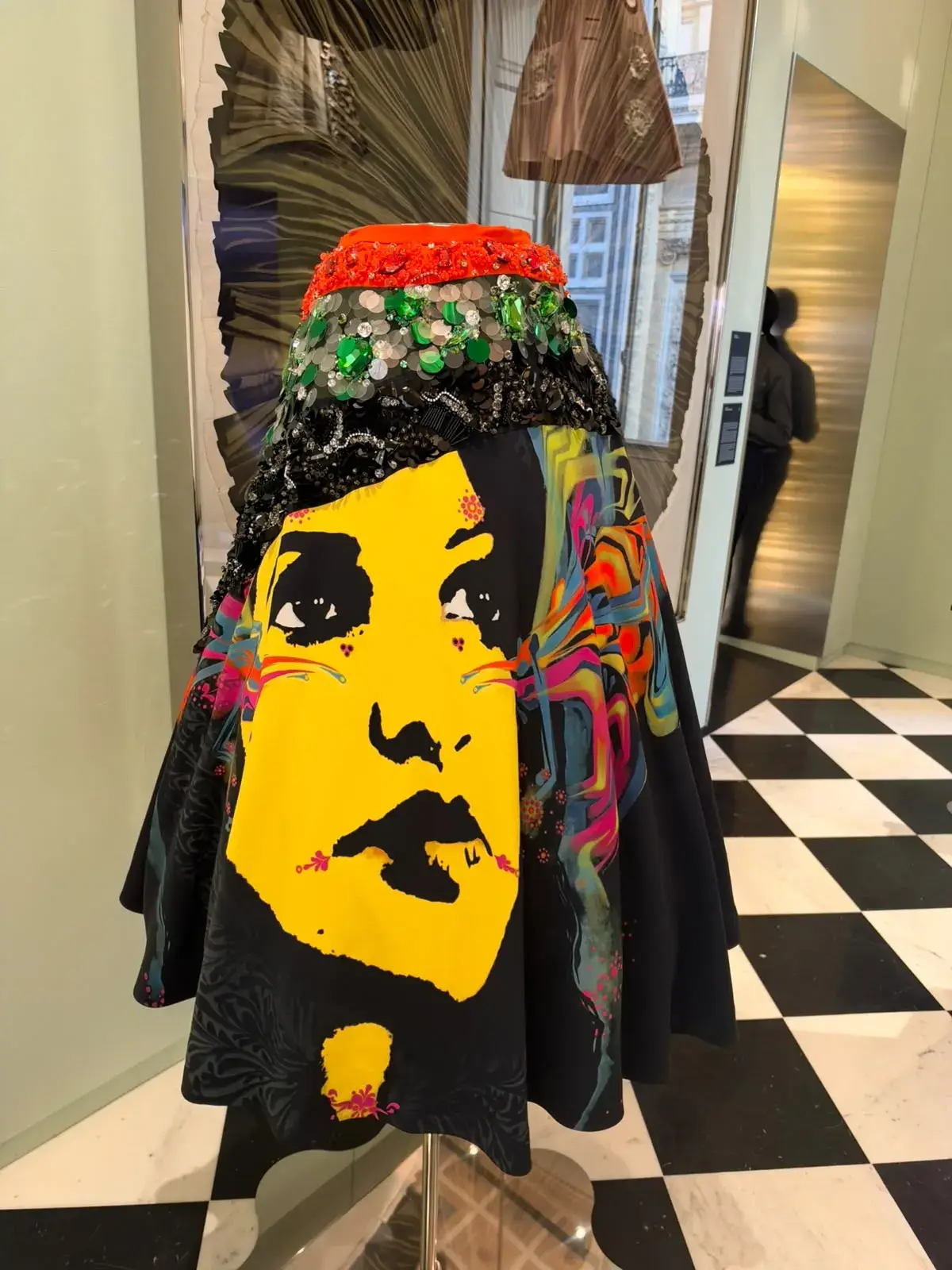
The dialogue with art is particularly evident in the Spring/Summer 2014 collection, through the project In the Heart of the Multitude. Portraits of women created by muralists and illustrators for the fashion show's setting were also incorporated into garments and accessories, transforming the designs into expressive surfaces. In this case, art is not merely an aesthetic reference but becomes an integral part of fashion itself.
This openness to other forms of knowledge finds one of its most significant expressions in Fondazione Prada, established in 1993 by Miuccia Prada and Patrizio Bertelli as an institution dedicated to contemporary art and culture.
Through projects such as these, Miuccia emerges as a creative figure for whom fashion is not an isolated discipline, but a means of observing, interpreting and questioning the world.
When Fashion Becomes a Way of Thinking
Since 2020, the collaboration with Raf Simons has introduced a new creative dialogue into the house's design language, continuing an exploration that refuses to regard Prada's identity as something fixed or unchanging.
And perhaps this is precisely the most interesting aspect to emerge from Pradasphere.
Exploring more than a century of Prada's history through garments, objects and images, we encounter not simply the history of a fashion house, but the evolution of a vision that has learnt to transform itself without abandoning its contradictions.
Miuccia Prada has demonstrated that elegance does not necessarily have to mean harmony, that luxury is not defined solely by the preciousness of materials, and that femininity need not be confined to a single image.
The Prada woman does not necessarily conform to conventional ideals of seduction. She can be romantic and austere, sophisticated and ironic, reserved and provocative. None of these identities excludes the others.
Perhaps her most compelling insight is that a garment can go beyond beauty and the expectations of those who look at it. It can raise questions, encourage reflection and offer new perspectives.
Because fashion is not merely about appearances; it can also be a way of thinking.
Magda Paladini
Journalist
Milan-based fashion journalist. I meet people, observe, ask questions and tell stories.
@magda_paladiniMore from Magda Paladini
Share this article
RELATED

YOHJI YAMAMOTO TO RECEIVE FASHION AWARDS 2026 HONOR

FREITAG AND PUBLIC POSSESSION RELEASE UPCYCLED BAGS


