
How do we remain authentic in a world where images, desires and identities increasingly feel constructed? That question lies at the heart of Verità, Yezael’s latest collection by Angelo Cruciani, presented during Fashion Week 2026.
For the Marche-born designer, truth is not something to be handed to the audience. Rather, the collection is an invitation to search for one’s own - to look inward without expecting a definitive answer.
At a time shaped by relentless consumption and prepackaged ideals, simply being oneself can feel increasingly difficult. The risk is absorbing ideas that have already been formed for us, until the line between what we genuinely want and what we are being encouraged to want begins to blur.
How do you think we can remain authentic in contemporary society?
“I think even understanding who we are is difficult at a time like this, when everyone is trying to sell us their ideas. We live in an age of rampant consumerism. We think we consume things, but in reality, things consume us.”
It is precisely in opposition to this increasingly mediated, standardised and digital reality that nature finds its place within the collection - not merely as decoration, but as memory and as a possibility for reconnection.
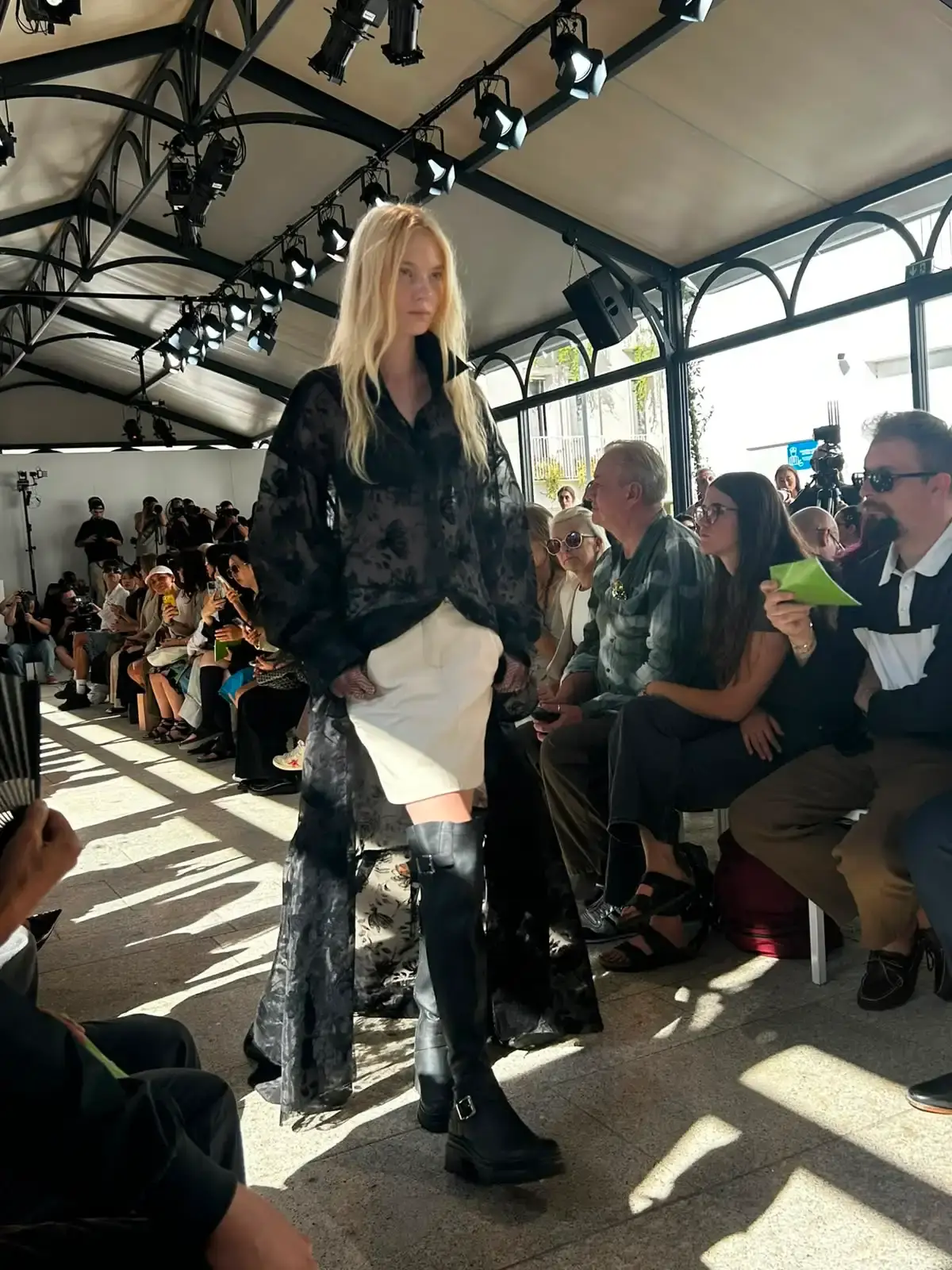
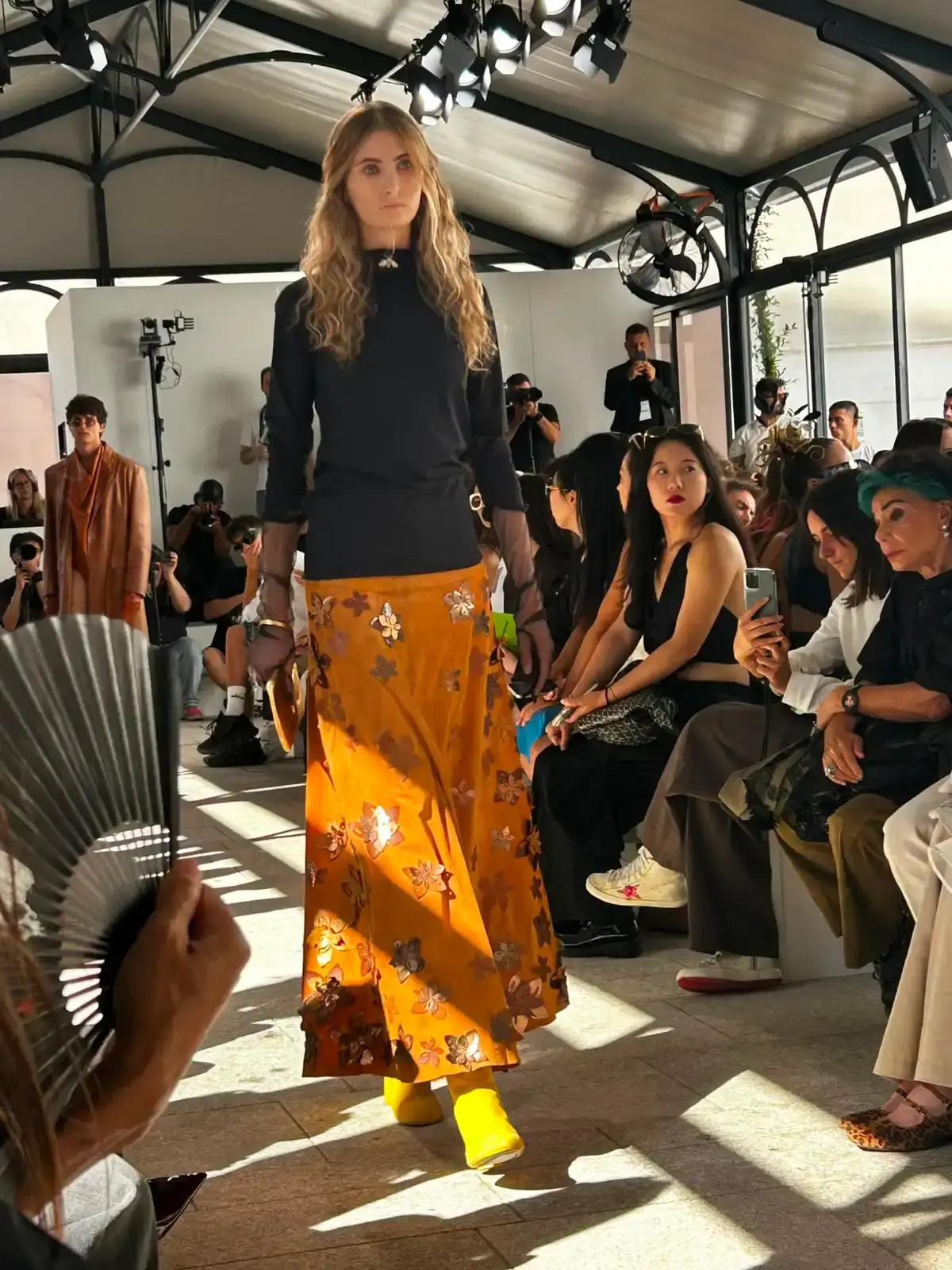
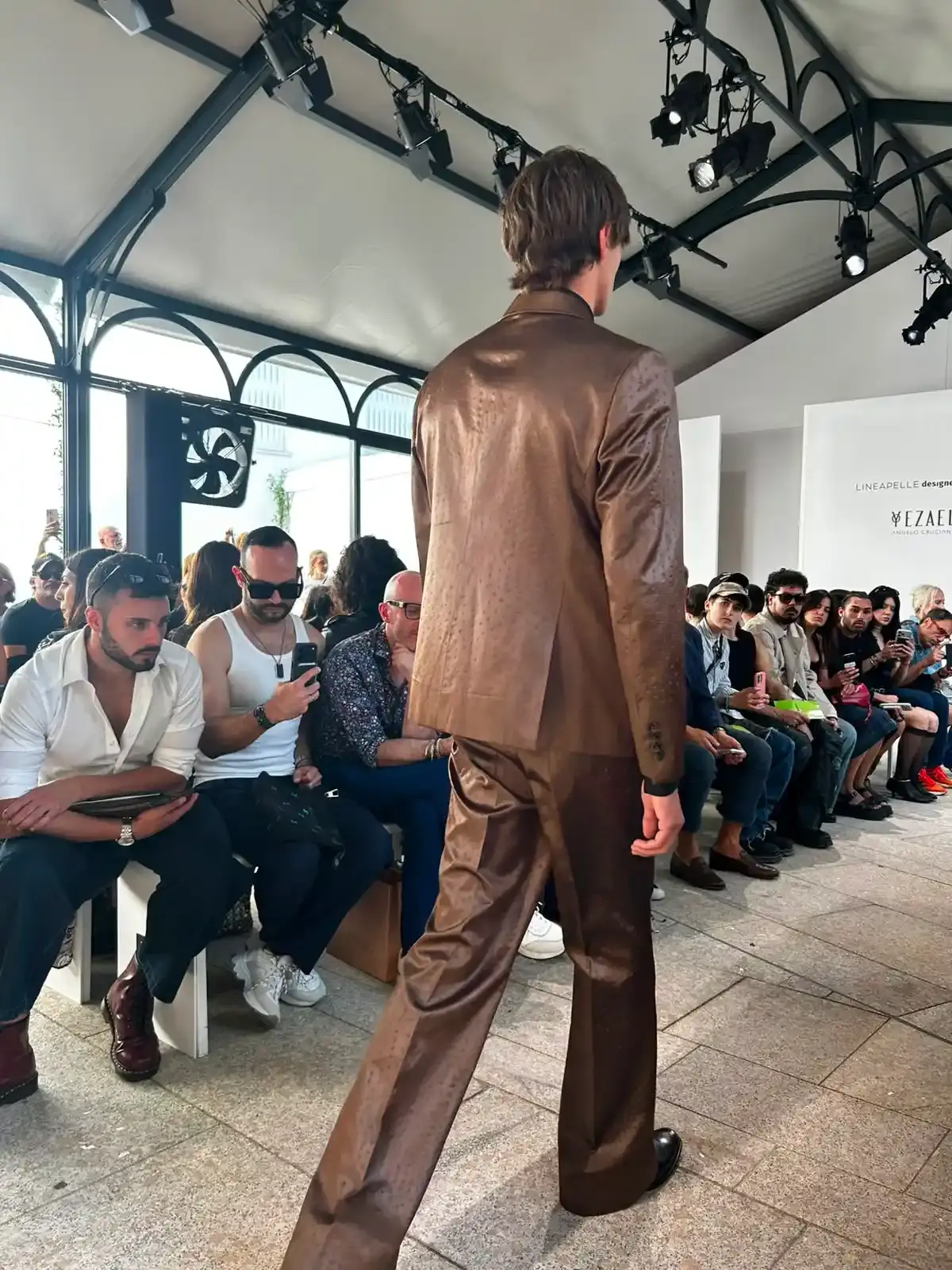
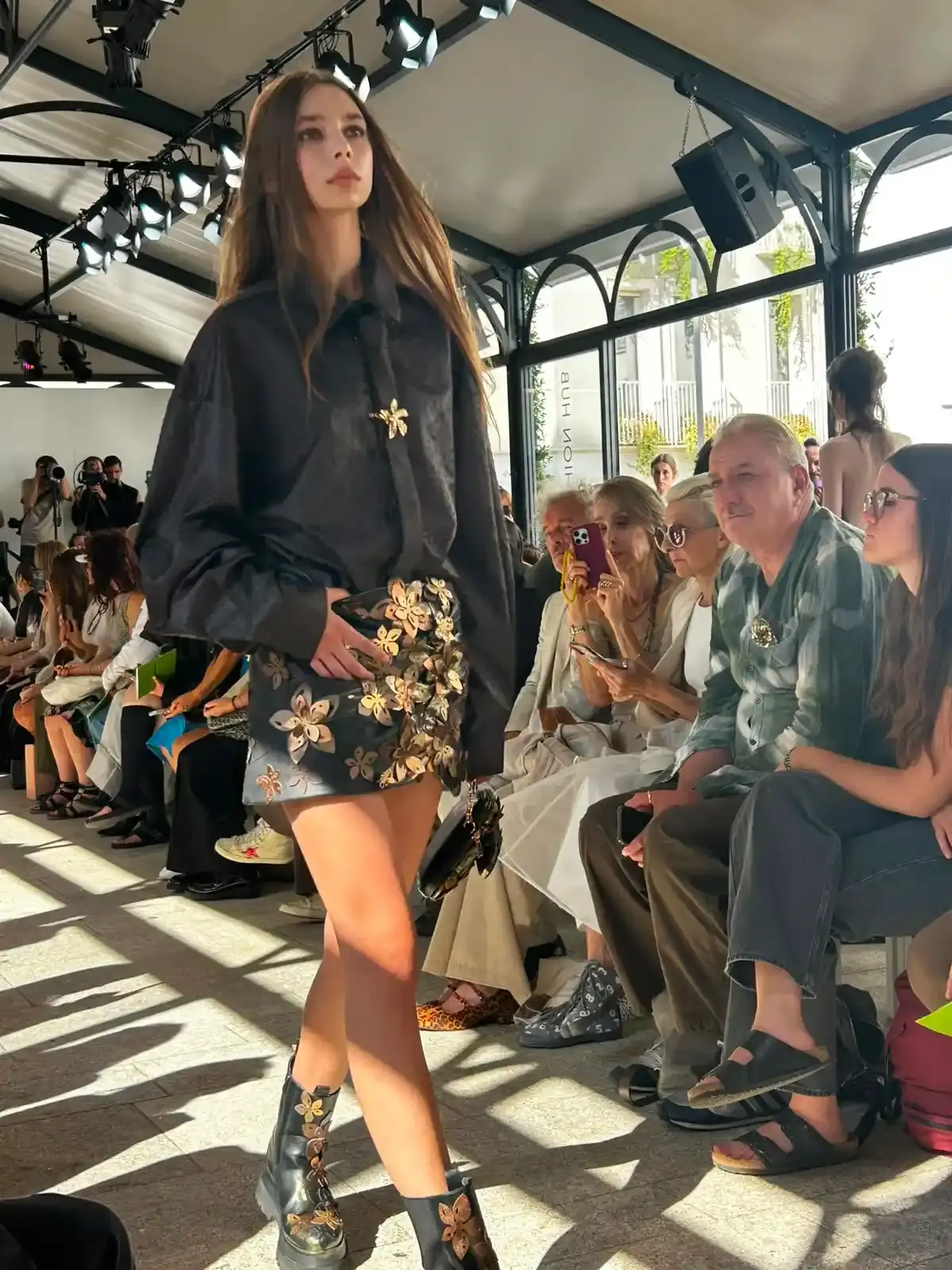
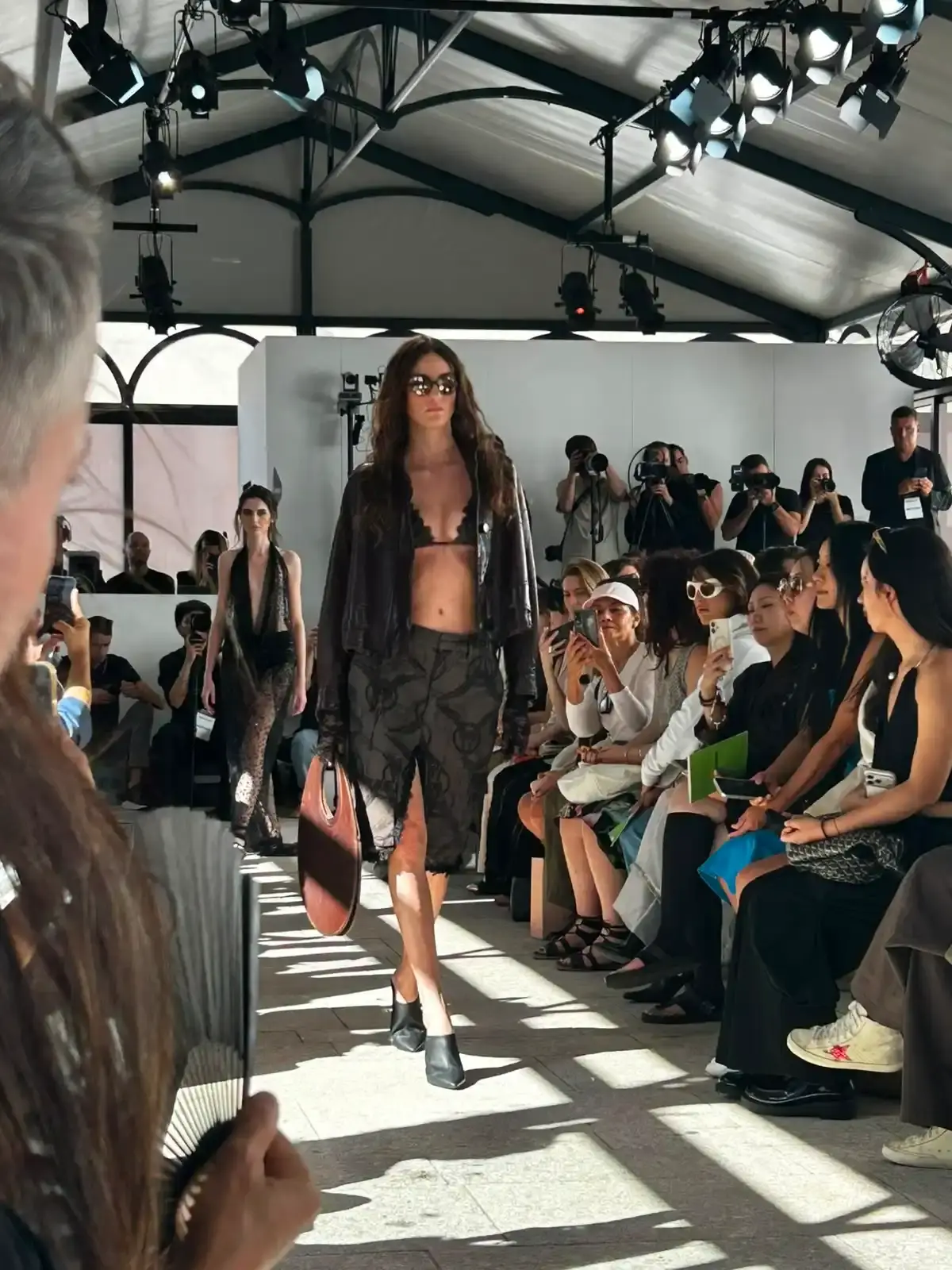
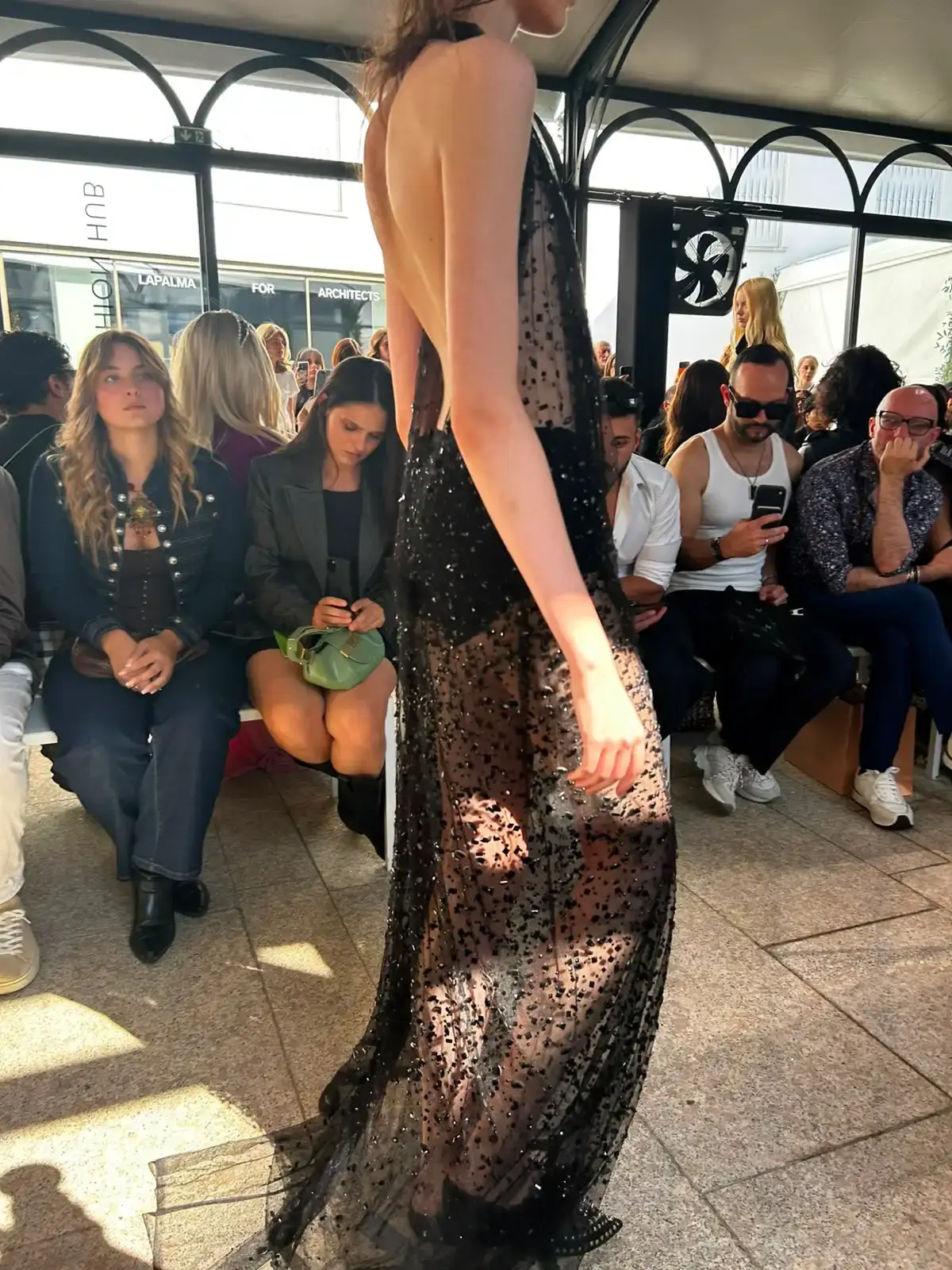
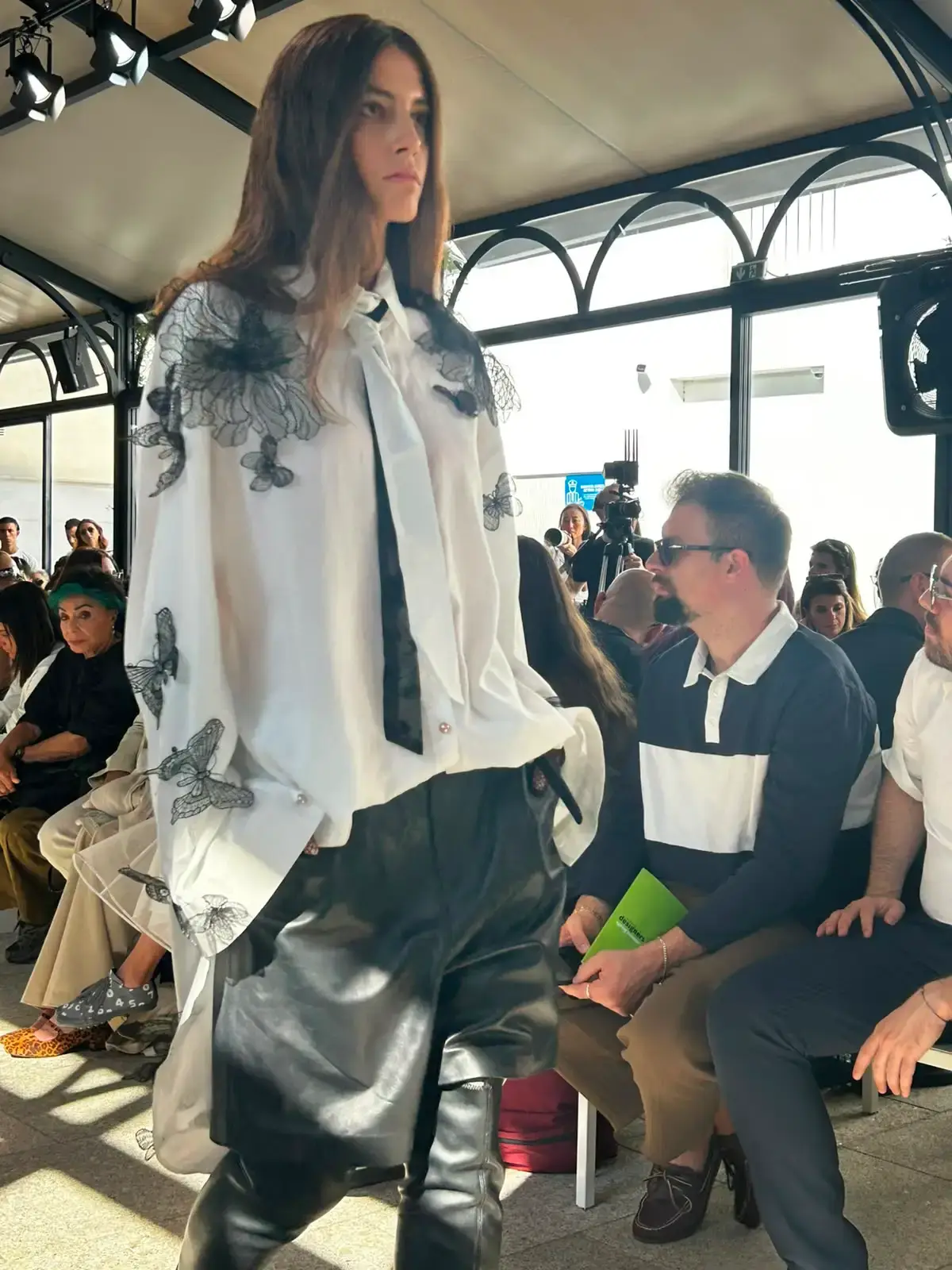
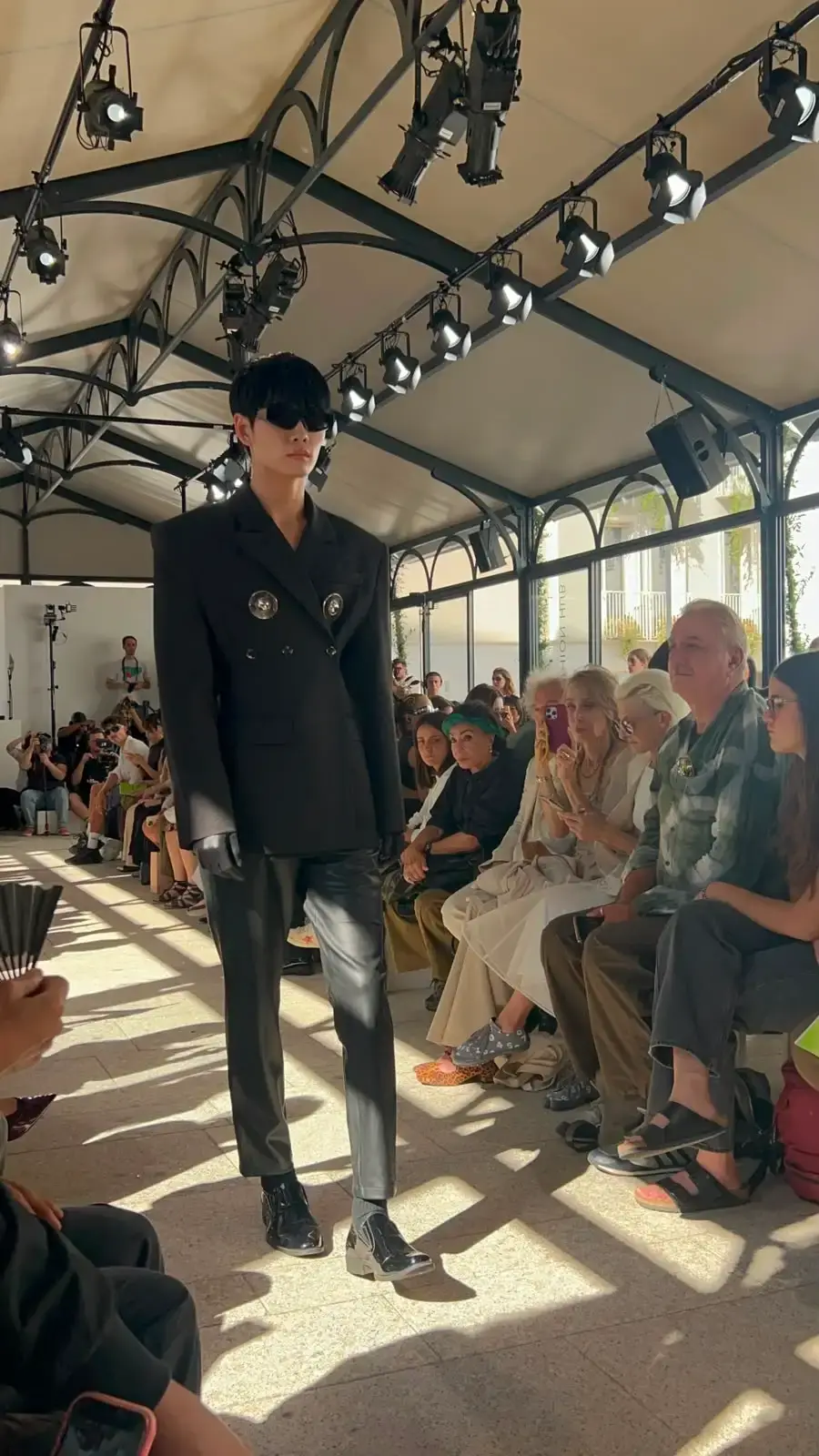
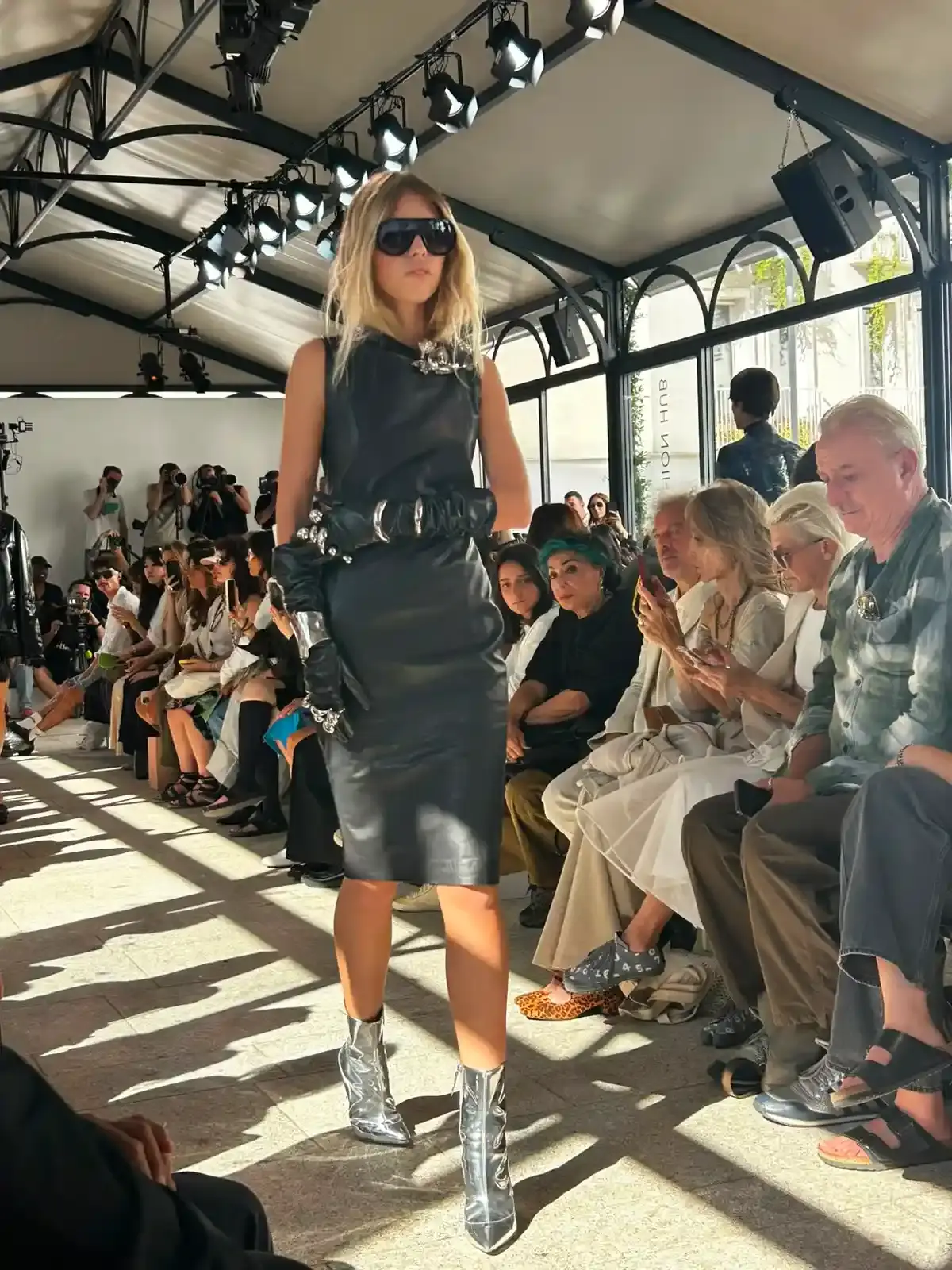
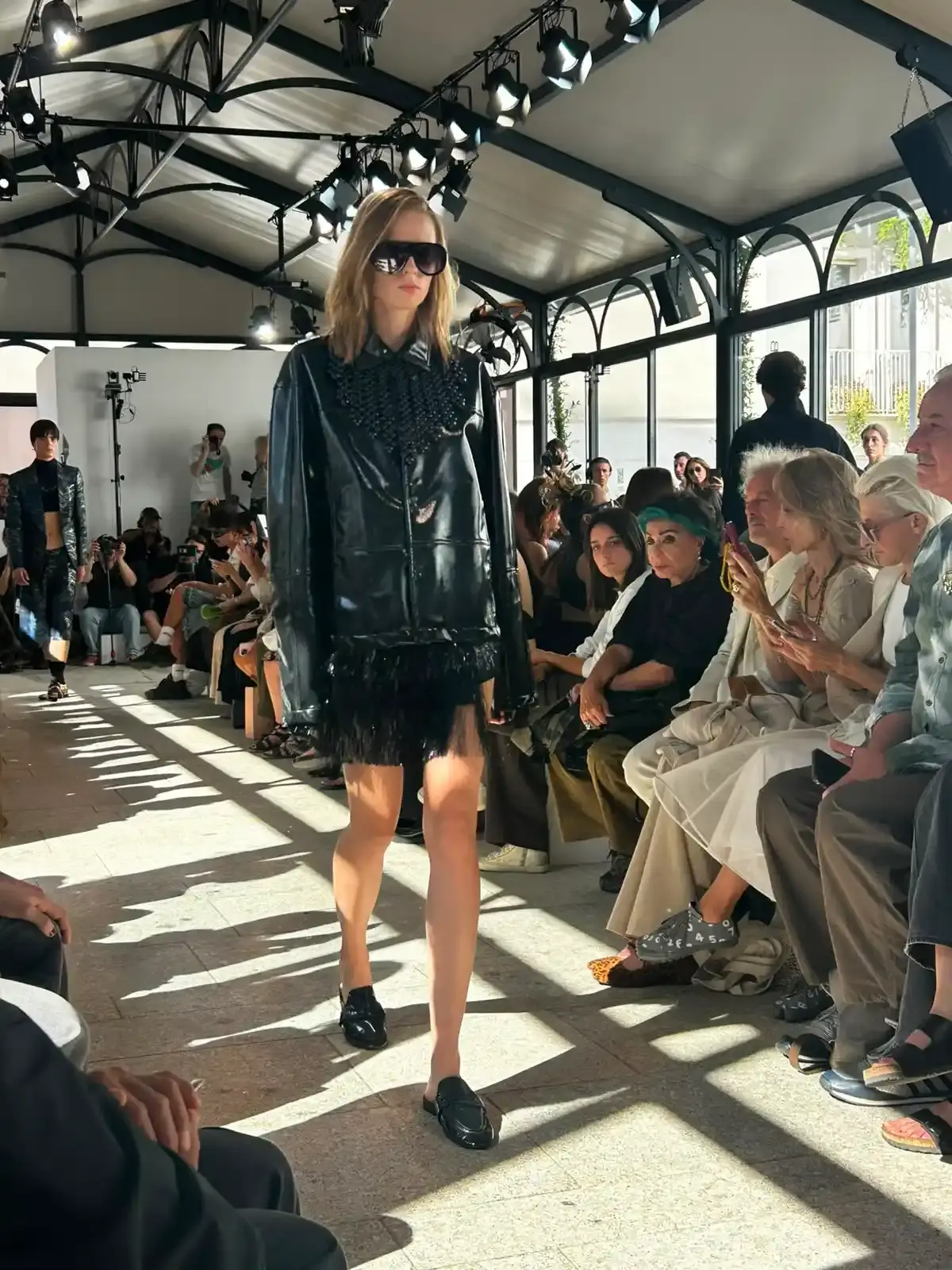
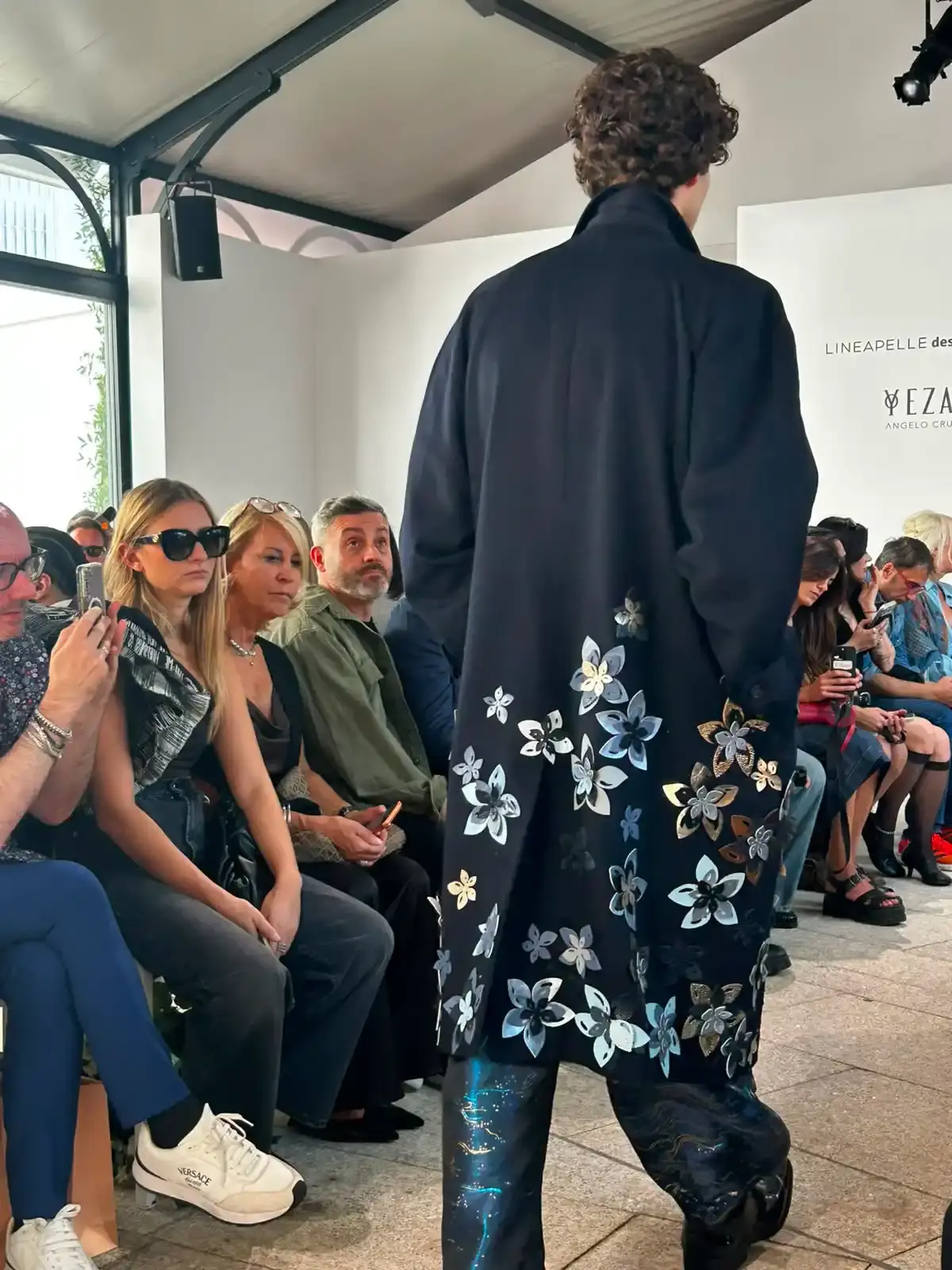
The collection moves between structured tailoring and fluid fabrics, glossy surfaces and transparency, leather, embroidery and three-dimensional embellishment. Formal suits are softened through wide-leg trousers, exposed torsos and iridescent materials, while butterflies and flowers emerge from the garments through raised, sculptural techniques that bring movement to their surfaces.
Black constantly shifts in texture, while the palette moves from blue to petrol green, bronze and copper before opening into lighter tones.
In some fabrics, light seems to disperse across the surface with an almost aquatic effect, making colour feel less solid and more elusive. Truth, too, begins to appear less fixed - something shifting, mutable, almost impossible to observe from a single point of view.
A pastel-blue suit with a floral motif carries a faint Rococo echo, recalling the decorative refinement of the eighteenth century while reworking it through a contemporary tailoring language.
Elsewhere, pearls move away from their traditional romance and meet leather, while black and white share the same look as seemingly opposing languages.
Yet it is precisely from this tension that Verità takes shape: between what protects and what exposes, between surface and interiority.
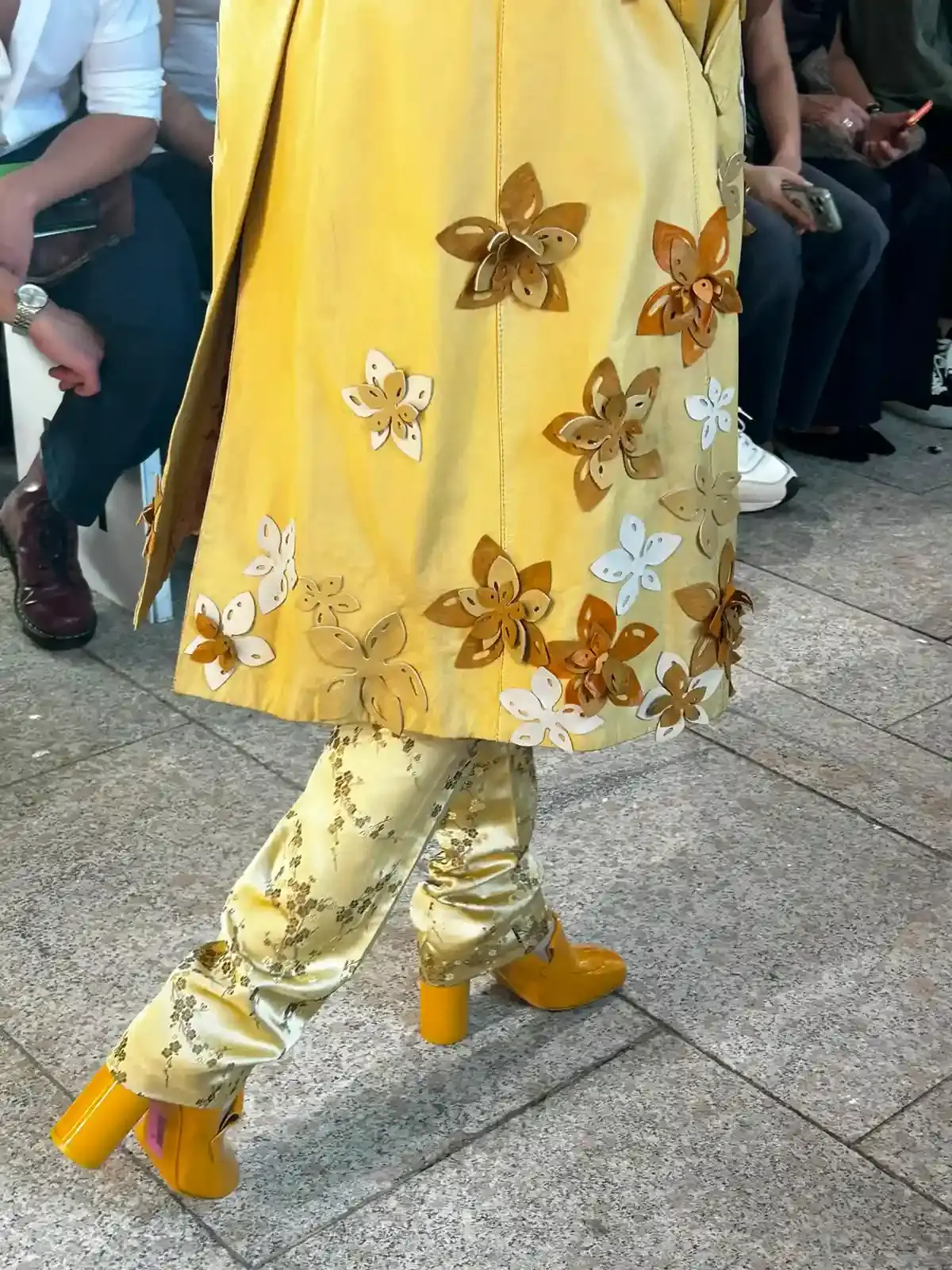
In some looks, ornament almost overtakes construction. An ochre-yellow coat is covered in 3D floral appliqués that seem to grow straight out of the fabric, and the trousers amplify its richness.
The result is a collection built with precision but never rigidity, constantly moving between structure and lightness.
Instead of describing reality, Cruciani makes its inner dimension visible. His relationship with nature is, after all, deeply personal. He tells us he grew up in the countryside, surrounded by animals and fields, learning from an early age a direct and physical language that feels increasingly difficult to access in a world mediated by screens.
In Verità, that memory becomes sign and symbol.
The meaning of the collection is perhaps best summed up by Cruciani himself:
“It is not important that you choose my clothes. What matters is that you choose yourself, because otherwise we all end up becoming copies of one another.”
It is a statement that almost overturns the very meaning of dressing. In Cruciani’s world, fashion is not simply about covering the body in beauty or constructing an image. It can become a tool for questioning oneself, for searching for what lies beneath the surface.
This is where his work begins to take on an almost spiritual dimension: clothing not as mere appearance, but as a way of revealing something deeper, more intimate and symbolic.
Beauty, too, carries a meaning that extends beyond aesthetics. As Cruciani puts it: “I believe in the power of beauty. Beauty is deeply underestimated […] it has an extraordinary ability to make us feel better, if we have the eyes to recognise it.”
For the designer, then, beauty is not about external approval, nor is it an ideal to be attained. It is closer to a form of recognition — something capable of healing, guiding and restoring meaning. At this point, fashion stops being only image and becomes language.
Cruciani describes this process as a rediscovery of feeling, giving priority to “everything invisible that becomes visible, the unspoken that becomes spoken, the silence that becomes noise.”
Perhaps this is where the most spiritual core of his work can be found: in the desire to transform the unspoken into image, and interiority into matter.
Magda Paladini
Journalist
Milan-based fashion journalist. I meet people, observe, ask questions and tell stories.
@magda_paladiniShare this editorial
RELATED


FERRAGAMO SPRING SUMMER 2027 COLLECTION


