Summary:
- Tesla showed the second-generation Roadster on October 15 at a SpaceX test site in McGregor, Texas.
- The car hung upside down on a curved ramp, rolled in the air, landed on its wheels and jumped over parked Tesla models.
- Tesla claims a 0 to 97 km/h time of 0.81 seconds, targets production for 2028 and announced no price.
The Tesla Roadster reached its public demonstration on October 15 at a SpaceX test site in McGregor, Texas, near Waco. Tesla livestreamed the event on X, starting at 7:55 p.m. local time. Tesla had planned October 1 and moved the date because of weather. Musk attended with Franz von Holzhausen, Tesla’s design chief, and Lars Moravy, vice president of vehicle engineering. Tesla first showed the Roadster as a prototype in November 2017 and promised production for 2020.
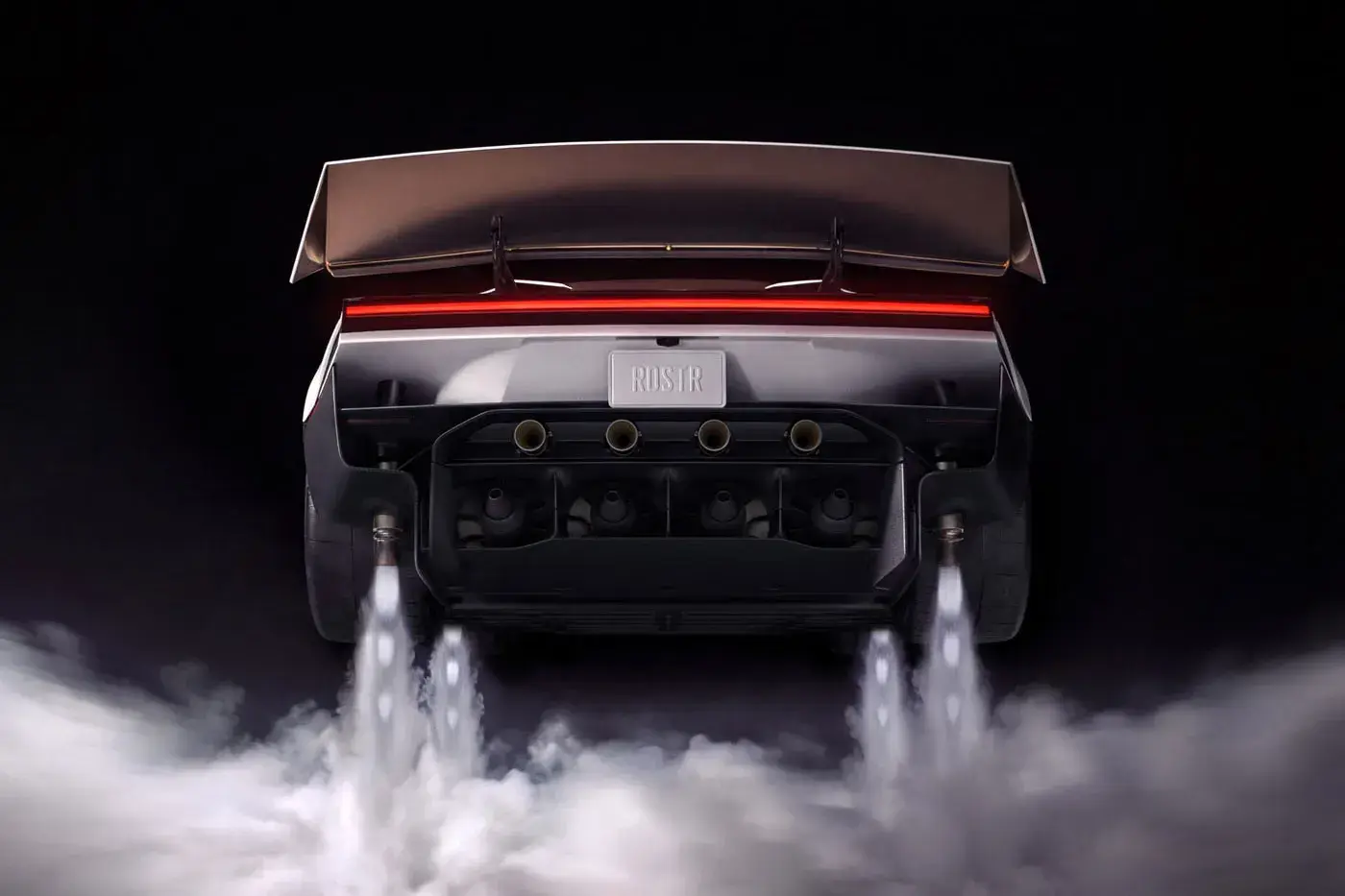
The demonstration car carried no driver. Musk described the missing driver as a safety measure and said success was not guaranteed. The car drove up a curved ramp and stayed attached through a fan-based suction system until the car hung upside down. Cold-gas thrusters developed with SpaceX then launched the car off the ramp. The Roadster rolled 180 degrees in the air and landed on its wheels. Later, the car jumped over a row of parked Tesla models.
Tesla claims a 0 to 97 km/h time of 0.81 seconds, reached with the rear thrusters. Musk said certain versions exceed 370 km/h and called the Roadster a flying car. CNN reported open questions about whether the car will fly or only hop.
The thrusters release compressed gas and burn no fuel. Musk has discussed the SpaceX package since 2018. Von Holzhausen designed the exterior with an “aerospace aesthetic.” The two-seat coupe uses a steer-by-wire system and a steering yoke. Steer-by-wire replaces the mechanical link between the steering input and the wheels with electronic control. Tesla built the prototype to be as light as possible.
Tesla did not announce a price and targets production for 2028. If you want the flying version for the road, Tesla’s website lists the model as not approved for public road use.
Alessio Forghieri
Editor with a degree in Mechanical Engineering from the "Enzo Ferrari" University of Modena. Writing about cars allows me to combine my technical knowledge with my lifelong passion for automobiles. I love exploring and sharing stories about design, performance, and innovation that make every car unique.
Share this article
RELATED


ITALIAN STATE POLICE RECEIVE 907-HP LAMBORGHINI

LEWIS HAMILTON DRIVES FERRARI F40 TO MONZA

