Summary:
- Aston Martin launched the Valen with an 838 horsepower twin-turbo V12 engine.
- Engineers reduced vehicle weight by 110 kilograms and replaced the rear window with a digital camera system.
- Global production features 150 units starting at approximately €1.84 million each.
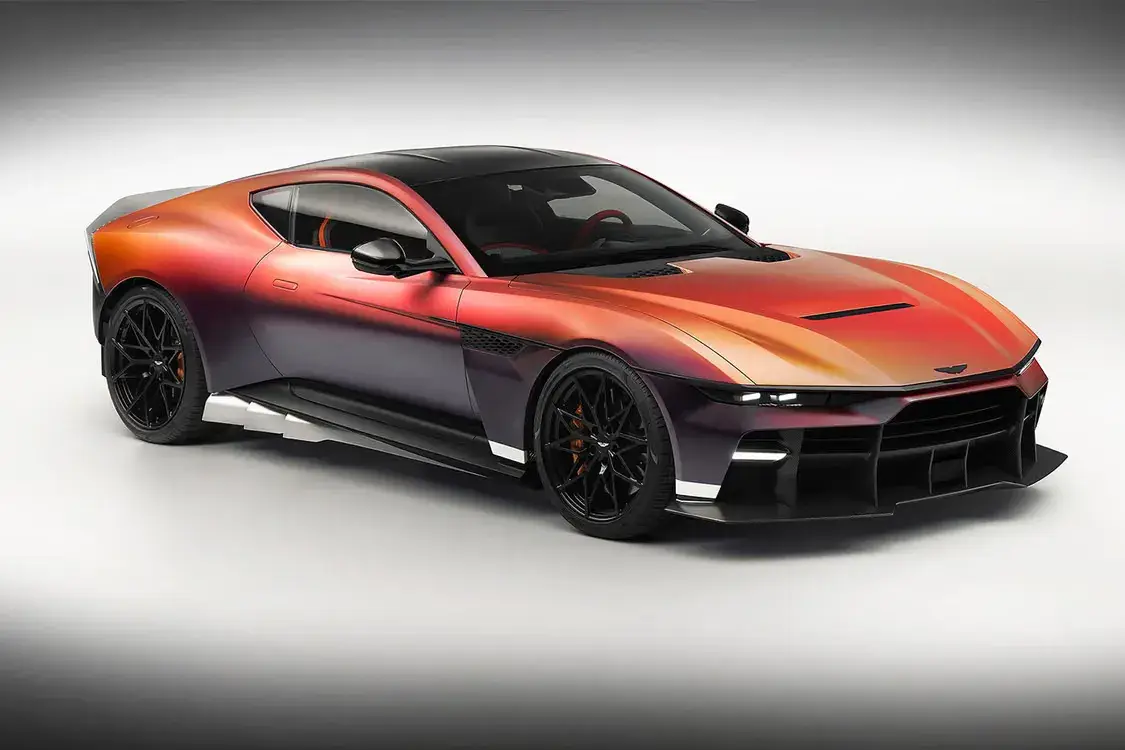
When you look at modern automotive design, raw mechanical aggression often takes second place to silent electric motors. Aston Martin breaks this trend with the Valen, a front-engine coupe built around a pure combustion engine. Unveiled during Monterey Car Week, this machine pushes 838 horsepower and 1,000 Newton-meters of torque directly through its 5.2-liter twin-turbocharged V12 powerplant. You feel the priority shift immediately. Instead of subtle luxury flourishes, the design team prioritized track speed, aerodynamic downforce, and structural weight loss.
Engineers from the Q division stripped 110 kilograms from the original Vanquish platform to maximize agility. You notice this stripped-down ethos across every panel of the full carbon-fiber bodywork. Standard 21-inch forged magnesium wheels shave off unsprung weight, while bespoke Pirelli P Zero R tires keep the vehicle grounded. Micro-sensors inside the Pirelli Cyber Tyre system feed live friction data straight to onboard control units, adjusting traction control and anti-lock braking in real time based on rubber temperature.
Underneath the body, structural modifications sharpen driver feedback. Solid rear subframe mounts replace soft bushings, aligning with retuned Bilstein DTX semi-active dampers. Power reaches the rear wheels through an eight-speed ZF automatic transaxle programmed with Vantage GT4 race car software. This setup propels you from zero to 100 kilometers per hour in 3.1 seconds, reaching a maximum speed capped at 344 kilometers per hour.
Visually, the vehicle abandons traditional grand tourer styling for functional aerodynamic elements. Front-end cooling comes from a deep splitter and sharp bonnet vents. Side sills feature stepped vortex generators designed to pull air from under the floor, reducing lift. At the rear, designers eliminated the rear window glass completely. A solid carbon-fiber tailgate takes its place, channeling air toward a full-width LED light bar and integrated diffuser. You rely entirely on a high-definition interior camera monitor for rearward vision.
A titanium quad-exit exhaust system dominates the rear view, running 50 percent louder than previous V12 models. High-mounted pipes vent heat directly out through perforated rear mesh. Because these tailpipes generate intense heat near the 170-liter boot, Aston Martin supplies customized luggage and a protective heat cloth for loading your gear. The initial show car displays Satin Andromeda Red paint, shifting between dark copper and blue under changing sunlight. Inside, you sit in either leather-trimmed Sports Plus seats or rigid carbon-fiber buckets, surrounded by 3D-printed console controls sourced from the mid-engine Valhalla project.
Aston Martin limits global production to 150 units, with entry pricing set at approximately €1.84 million before personal customizations. Every allocation is already spoken for, marking a definitive end-of-era statement for non-hybrid V12 hypercars.
Alessio Forghieri
Editor with a degree in Mechanical Engineering from the "Enzo Ferrari" University of Modena. Writing about cars allows me to combine my technical knowledge with my lifelong passion for automobiles. I love exploring and sharing stories about design, performance, and innovation that make every car unique.
Share this article
RELATED


LEWIS HAMILTON DRIVES FERRARI F40 TO MONZA

GORDON MURRAY S1 REVIVES PURE V12 MANUAL DRIVING

KOENIGSEGG CCGT1 DEBUTS WITH 1,600 HP V8 ENGINE

ECCENTRICA SHOWS 208 MPH DIABLO V12 ROADSTER
