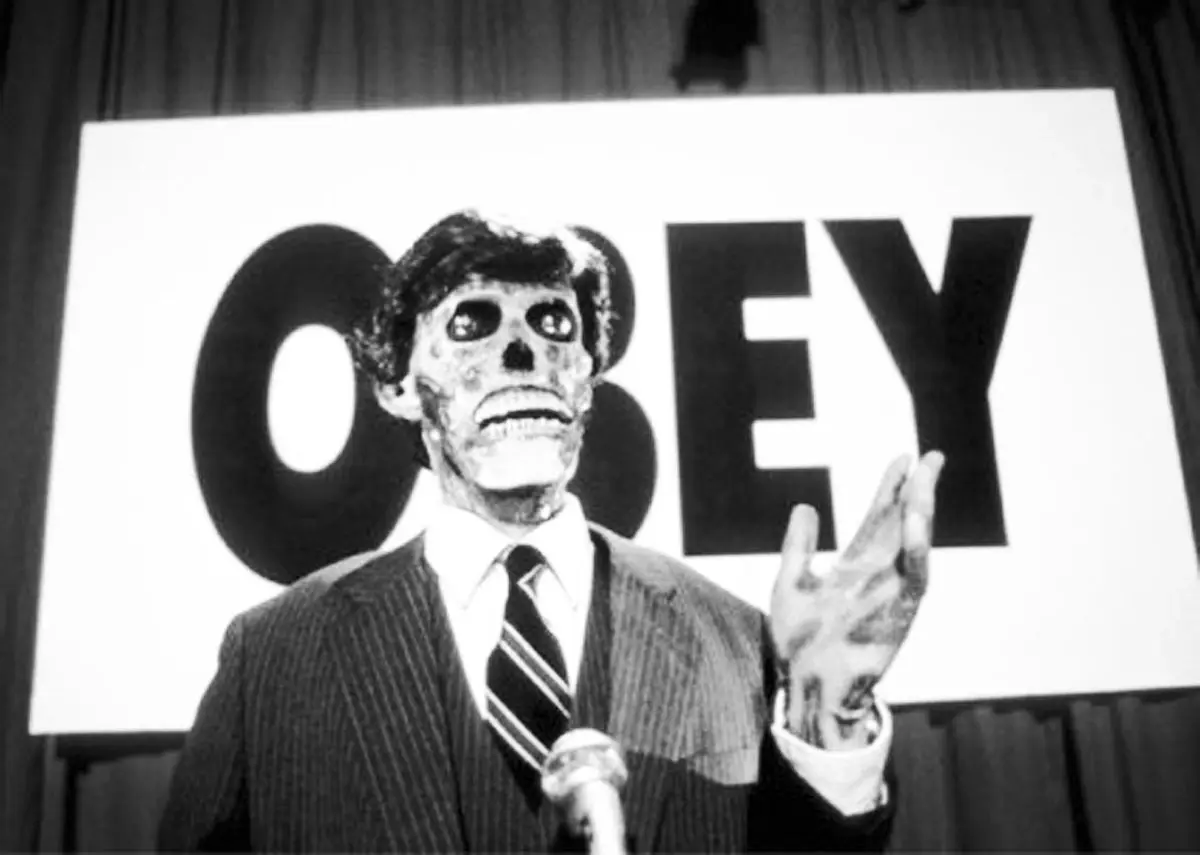
THE HIDDEN MESSAGE IS ON YOUR HOODIE
Some films make you want to buy the characters’ clothes. They Live pulled off something stranger: we ended up wearing the enemy’s instructions.
John Carpenter’s They Live (1988), back in cinemas in 2026 with a 4K remaster, follows John Nada, played by wrestler Roddy Piper, as he arrives in Los Angeles looking for work. He finds a construction job, a city split between wealth and poverty, and, shortly afterwards, a pair of sunglasses that make everything considerably worse.
Through those lenses, the world loses its colour and shows its workings. Billboards turn into commands: OBEY, CONSUME. Banknotes read THIS IS YOUR GOD. Some people reveal their actual alien faces beneath perfectly respectable appearances.
The ruling class is literally from another planet. Advertising, at least, has stopped pretending.
Carpenter takes on Reagan’s America with science fiction, humour and a generous amount of violence, stripping advertising of its sales pitch to expose the orders underneath. Buy. Obey. Carry on.
For Nada, seeing means losing the option of looking away. An advert never looks quite so innocent once it has screamed CONSUME at you.
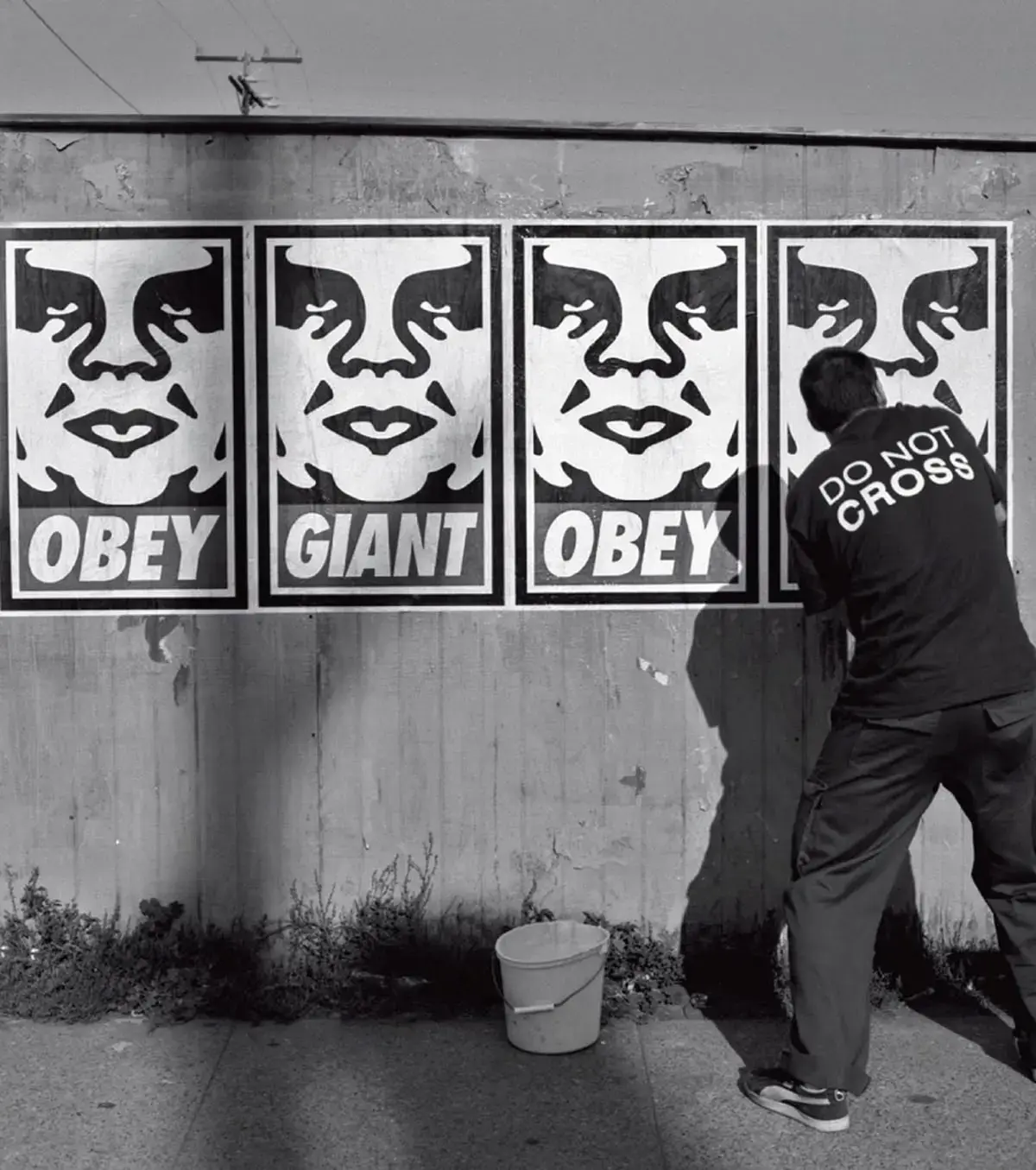
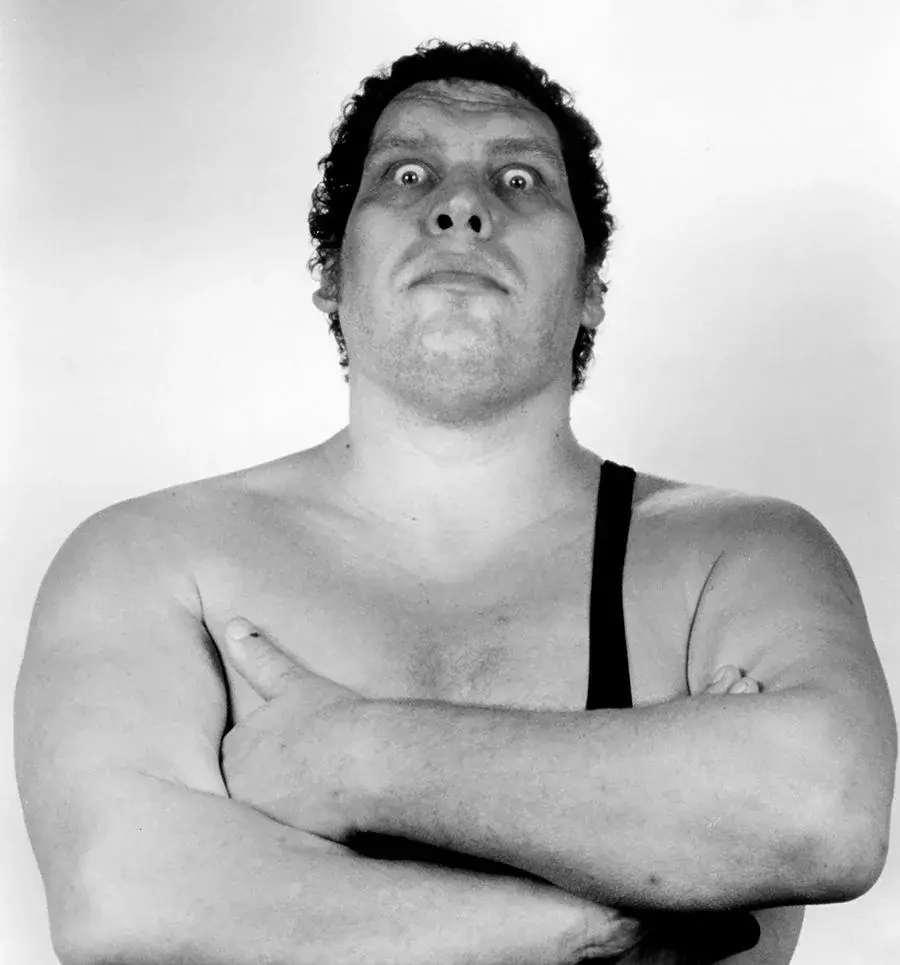
A year after the film’s release, Shepard Fairey, then a student at the Rhode Island School of Design and later a major figure in street art, makes a sticker featuring another wrestler: André the Giant. The text reads André the Giant Has a Posse. What starts as a demonstration of stencil-making for a friend becomes a sticker and poster campaign that travels far beyond their original circle.
Two stories need untangling here. OBEY’s face comes from André the Giant. The word OBEY, introduced as the project develops, comes directly from They Live. Fairey brings the wrestler and Carpenter into the same visual universe.
The original campaign sells no product and offers no explanation. A face appears on walls, turns up elsewhere, seems to belong to something everyone knows about except you. The more you see it, the more important it seems.
Fairey would explain the mechanism through phenomenology: the sticker is meant to interrupt our habitual reading of a space, making us question what we see. Why is that image there? Who put it up? Why wouldn’t an advert have made me ask the same questions?
With OBEY Giant, the stylised face and the command become a recognisable pairing. The graphics borrow propaganda’s authority, while the absurdity of an unexplained order invites us to question it. Like Carpenter’s sunglasses, they are supposed to make looking less automatic.
Then, in 2001, OBEY Clothing launches.
The visual language developed through stickers, posters and interventions in public space moves into clothing. Skateboarding, music and street art find common ground in the brand. A message that asked people to question images becomes an image to choose and buy.
A remarkably effective move. It lets you express a certain dislike of being told what to do by wearing an instruction.
EVEN DISOBEDIENCE HAS A FALL/WINTER COLLECTION
Calling a clothing brand OBEY is a slap in the face. The word that exposes advertising’s hidden conditioning in They Live gets printed on clothes, displayed in shop windows and put to work inside the commercial language the film asks us to question.
The hidden message is now the product’s name.
They Live criticises consumerism, and reaching an audience requires it to be produced, distributed, advertised and sold through a cinema ticket. Released by Universal, it opens at number one at the North American box office in November 1988. Carpenter uses the machinery of the film industry to question the world that industry belongs to. Being a commercial product hardly takes the teeth out of the film.
With Fairey, the question takes another form. The André the Giant campaign gains its power through repetition: the same face, again and again, until it becomes familiar. The interference works because it speaks the language it is disrupting.
When OBEY Clothing launches, though, the relationship with the viewer changes. A poster in the street forces itself into your day; a T-shirt lets you choose it. The image becomes something you can own and wear. Desire, taste and the value attached to a name enter the picture. The provocation starts participating in the very mechanisms it helped make visible.
A brand needs continuity. Its visual language has to stay recognisable, people have to come back for more, and one collection has to lead into the next. Nonconformity enters a structure that depends on regularity. Even an insubordinate graphic has to ship on time for the season.
This is where conformity within nonconformity gets more interesting than another argument about who counts as alternative. Through its success, a gesture designed to interrupt a habit can create a new one. What initially surprises becomes a style. Then an expectation. Eventually, we ask the brand to keep provoking us in exactly the way we have grown used to.
A fairly obedient demand.
In his manifesto, Fairey wanted people to take a second look at things they had stopped noticing. OBEY’s success raises a curious possibility: its own message might become one of those things we know too well to actually look at.
In They Live, OBEY hides behind advertising images. Special sunglasses strip away the seductive surface and reveal the command. Today, on a hoodie, the same word is perfectly visible. Yet we can look at it without reading it: we immediately recognise the brand, the graphics, the world it belongs to. We already know what it is, so we stop asking what it says.
It is a strange reversal of Carpenter’s idea. In the film, the image conceals the word; in the brand, the word has become an image. OBEY is recognised before it is interpreted. “Obey” becomes “that brand”.
Fairey’s provocation is still there, still available, but familiarity can turn the volume down. The very success that carried the message so far can make us stop hearing it. Getting it back takes a second look at something we think we already know.
This time, we have the glasses. We’ve just got used to the view.

Silvia Andrenelli
Editor
Share this article