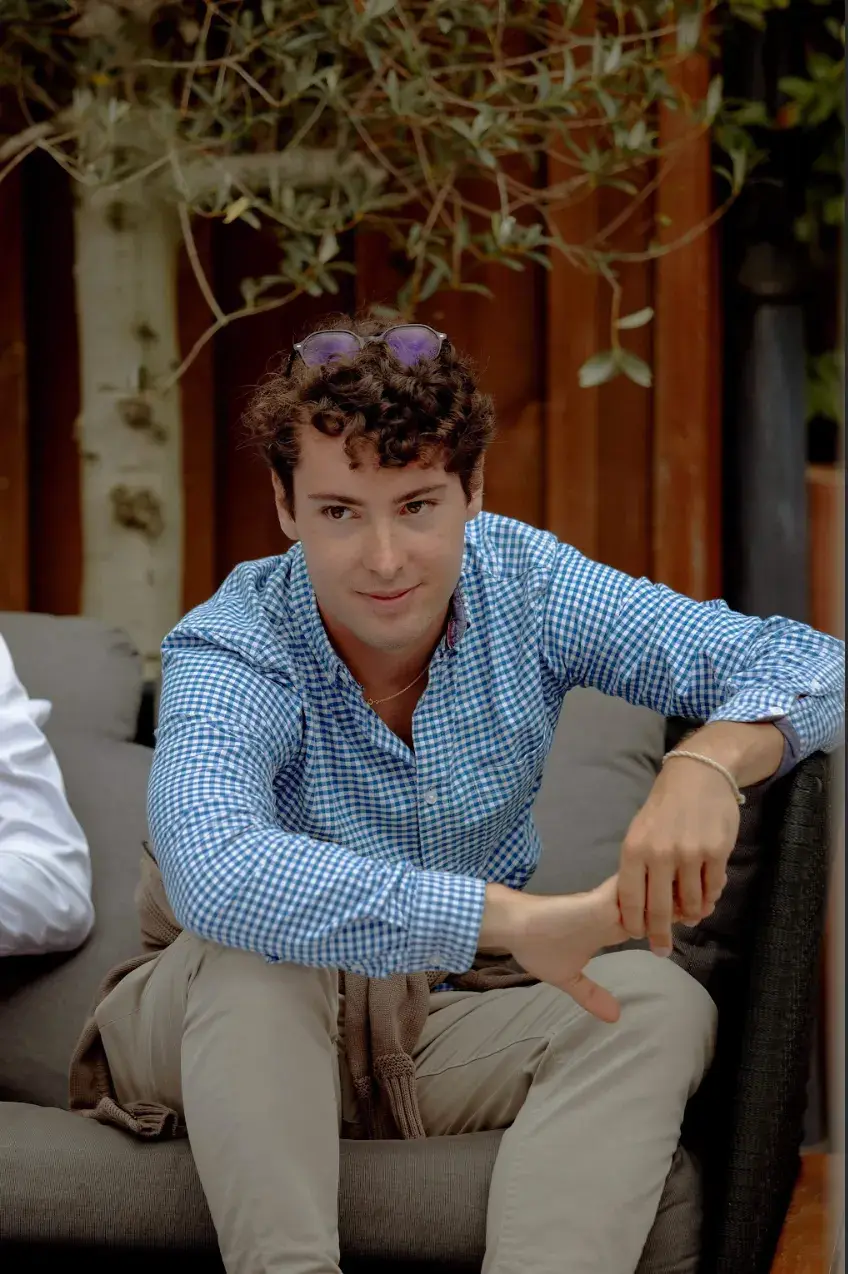
In this interview, we delve into the world of Edgar LE GOVIC, who share his inspirations and unique perspectives.
-
1. Introduce Yourself to the Casawi Community: What drives you? What's your artistic vision, and what sets you apart from the crowd?
I’m a visual artist living and working between Paris and Brittany. My practice mainly revolves around Jacquard tapestry and collage. The two practices share some tools, such as photography, digital drawing and image-making, but their approaches are quite different.
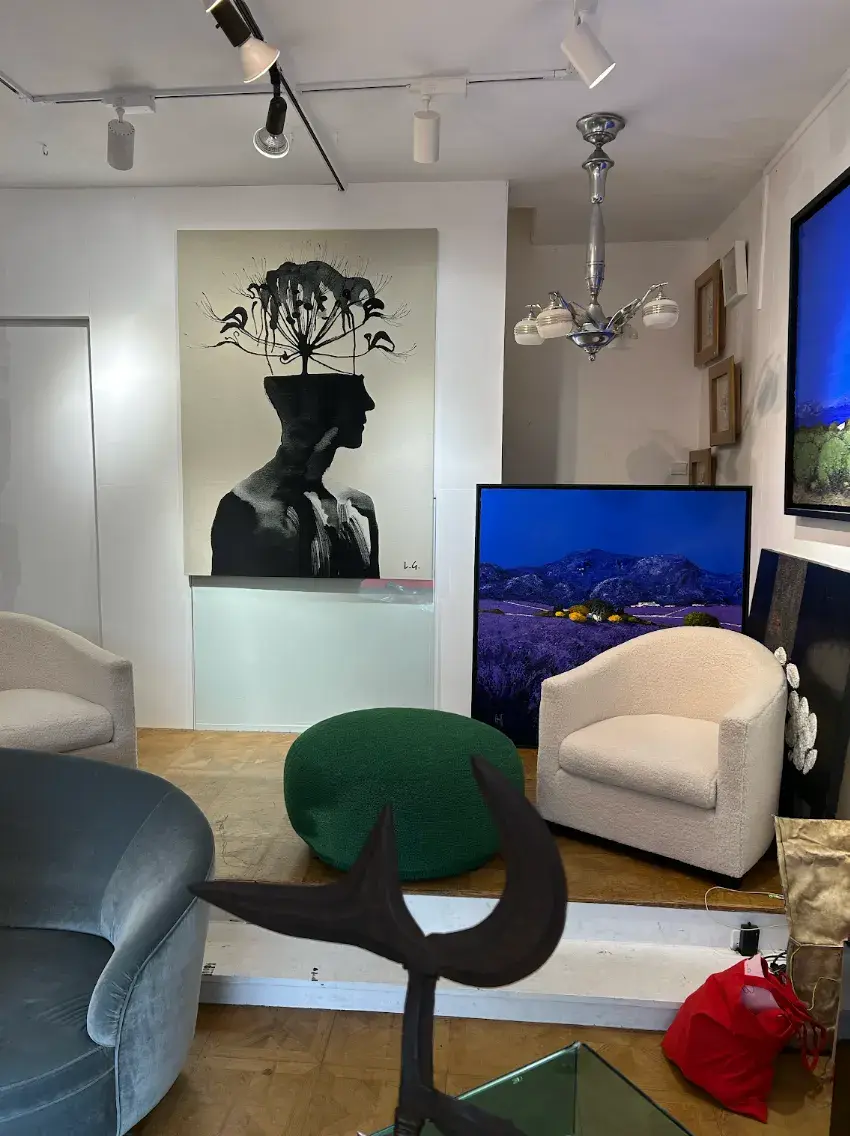
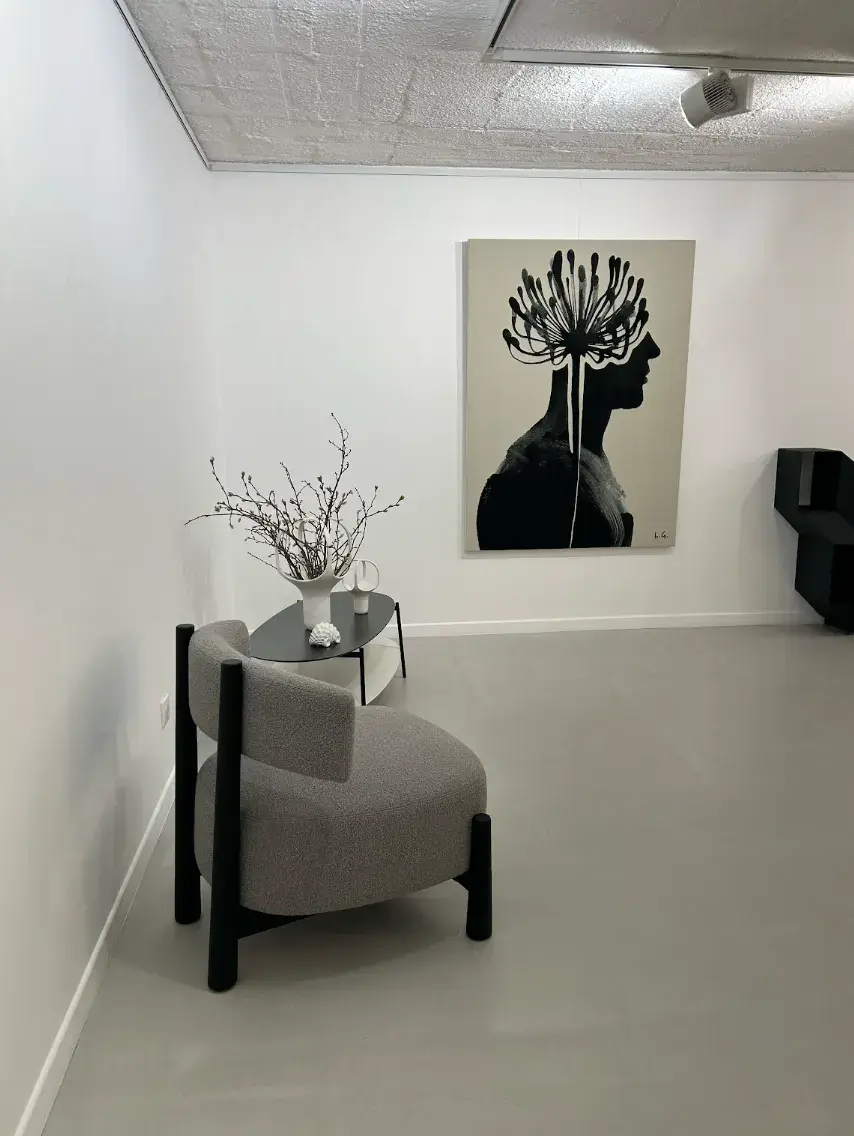
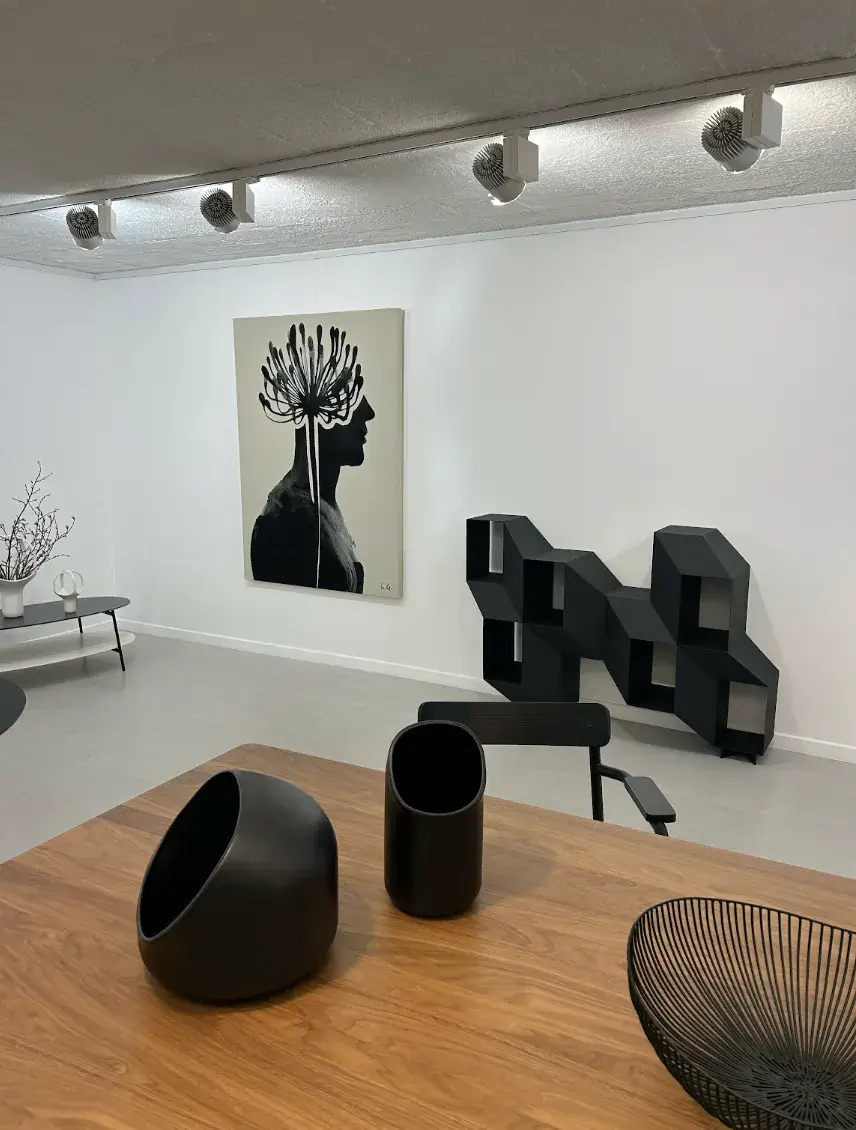
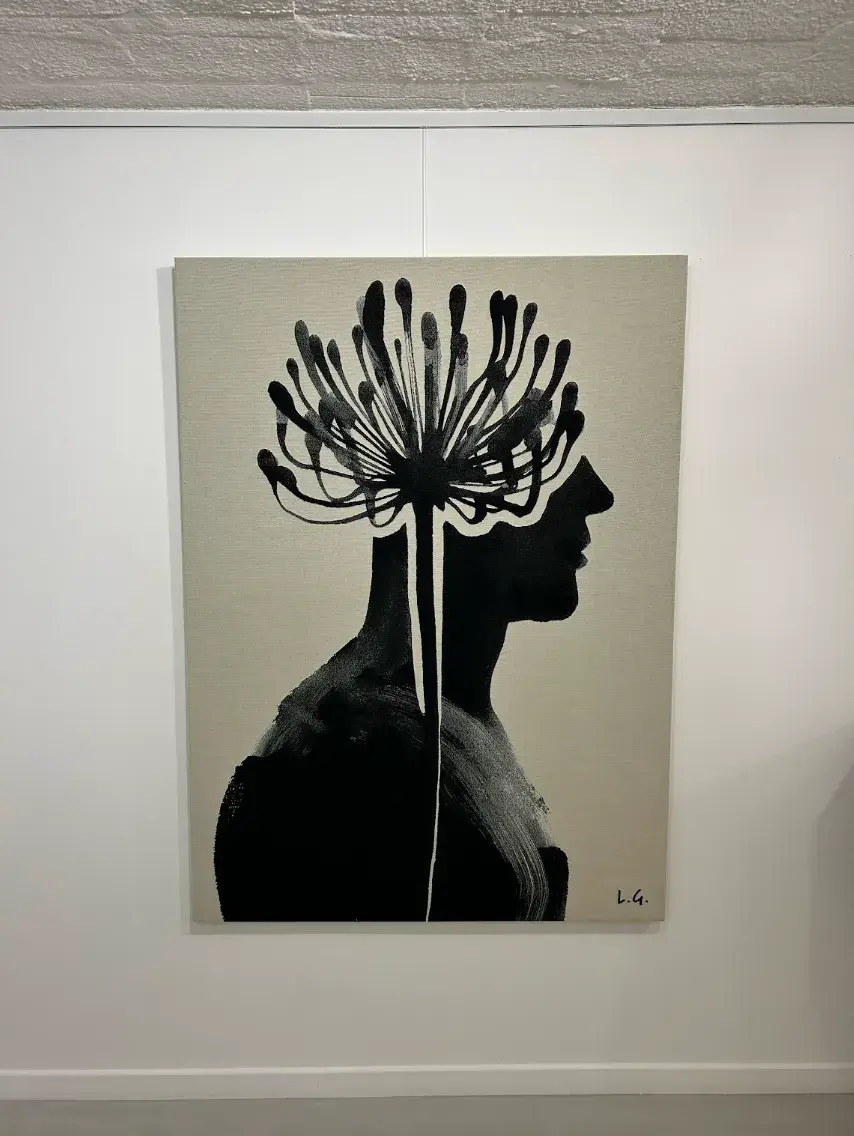
In my tapestries, I’m primarily interested in representing human thought. I work with simplified human silhouettes from which botanical forms emerge. I often use umbel flowers such as garlic, fennel and carrot, vegetable flowers that are not often represented in art.
For my collages, I work with old postcards and archival photographs that I scan, enlarge and transform through repetition, fragmentation and layering. I aim to preserve their historical and cultural dimension while giving them a new, more universal and contemporary reading.
I have a very experimental approach to my practice. I approach each work with an engineer’s mindset, where experimentation guides both the thinking and the making.
I often learn best on my own, by exploring, testing and carrying out many experiments. For example, I mount my tapestries on frames, borrowing certain codes from contemporary painting. This is quite an unusual approach in the tapestry field, where this type of presentation is rarely used. From a distance, the work can be perceived as a painting, and then, as the viewer gets closer, they discover that it is actually a tapestry. I deliberately play with this shift in perception and this element of surprise.
2. City Inspirations: How has your city influenced your artistic path? Share how its streets, culture, and energy have molded your work.
My path is deeply shaped by a duality between Paris and Brittany. Paris brings movement, encounters and a strong cultural energy, while Brittany offers more space, quiet and time to develop my ideas.
In Paris, I’m particularly connected to the Saint-Ouen flea markets, where I sell my tapestries at the Marché Biron and Marché Paul Bert Serpette. These two markets, dedicated respectively to antiques and furniture and design objects, bring together a wide range of professionals, architects, collectors and enthusiasts. This environment also naturally connects with my collage practice, as I sometimes find the old postcards and archival photographs I use in my work there. I also go to the Passage des Panoramas for the same kind of research.
There is therefore a real connection between my life in Paris and my artistic practice: I meet people there, sell my work there and find some of the images that nourish my practice. Brittany, on the other hand, gives me a different rhythm, one that is more conducive to observation and creation.
3. Creative Process: What fuels your creativity? Whether it's a ritual, a muse, or a moment of clarity, we're keen to learn.
What fuels my creativity most is novelty, and especially the discovery of new images. I have a strong capacity for visualization, and I’m constantly stimulated by what I see: an image, a shape, a composition or a detail can quickly spark a new idea. If I stay in the same environment for too long, surrounded by the same images, I feel my creativity gradually decreasing. That is also why living between Paris and Brittany is important to me: these two environments offer very different images and atmospheres.
Music is also extremely important in my artistic practice. It accompanies me at every stage of the creative process, from the very first idea to the final details of the work. It is truly part of the way I work.
I then like to work within a framework that I define myself. My artistic language has its own rules, its own constraints and its own vocabulary.
For example, in my textile tapestries, I like to work with very strong contrasts in color. In my collages, it is important for me to always pay tribute to the person represented in the portrait. At the same time, I often try to slightly soften their identity and reinforce their anonymity. This makes it easier for the viewer to appropriate the scene and project their own interpretation onto it.
Paradoxically, that is precisely where I find the greatest freedom. Having clear rules allows me to explore my ideas more deeply and continually discover new possibilities within them. That is what continues to excite me today. Every new work is an opportunity to push this visual language a little further while remaining true to it.
4. City Lifestyle and Art: How the places you lived influenced your career and work?
Living between Paris and Brittany is quite important to my career, particularly because these two places have very different realities. Paris remains a real hub for the art market, and it is difficult to do without it if you want to develop an artistic career.
In Paris, I’m really trying to establish myself within this ecosystem, meet the right people and gradually build my place within the art market. It is a very dense environment, where you need to know how to find your place, but it also offers many opportunities. I’m particularly happy to sell my tapestries at the Saint-Ouen flea markets, and I also have an exhibition planned for Rue de Seine in 2027.
In Brittany, I’m not necessarily trying to reproduce what I do in Paris. I already have a permanent exhibition in a gallery there, but I also try to explore other possibilities and imagine collaborations that are more specific to the region. For example, some independent or privately owned hotels can be interesting places to present artworks or develop projects around art and design.
I therefore see these two territories as complementary. Paris is essential to the development of my career, while Brittany allows me to explore other forms of collaboration and other ways of bringing my work into different spaces.
5. Latest or Upcoming Projects: Give us a glimpse into your current endeavors and what lies ahead on your creative journey.
I’m currently preparing an exhibition planned for January 2027, for which I’ll be working on four to five new tapestries. I particularly want to take more time to explore materials and textures, and to experiment with new ways of creating my images.
For my work with flowers, I’d like to experiment with different techniques, including the use of electrical impulses, herbariums, cyanotypes and thermal cameras. The idea is to explore different technologies and techniques to observe nature in new ways and see how they can inform my tapestries.
I’d also like to develop more site-specific art projects in Brittany, working directly with different spaces and their environments.
I have quite a lot of ideas I’d like to develop over the coming months. Autumn is my favorite season, so I’m particularly motivated and very excited to see what I’ll be able to develop.
++
Instagram: @atelier.legovic
Staff
Casawi Magazine: based in Milan, we celebrate youth culture, creativity, and community across fashion, sports, music, art, design & more.
@casawi.magazineShare this article
RELATED


