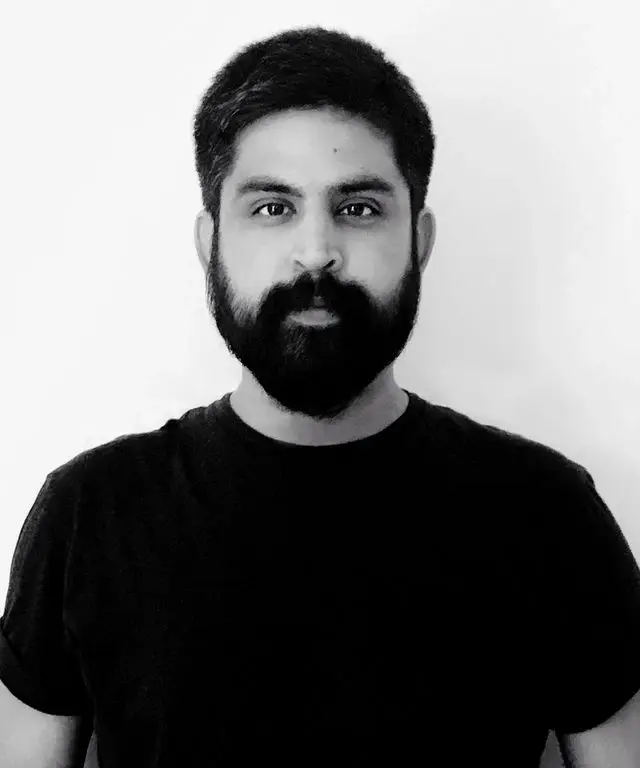
Sushant Abrol set up Countrymade in New Delhi in 2019, after several years in Indian fashion that included a long tenure with designer Rohit Bal. His Spring Summer 2027 collection, Material Memory, was first previewed in Daikanyama, Tokyo, in September and has now been presented at Lakmé Fashion Week x FDCI in India. The label has also shown in Paris, Copenhagen and Florence.
Who is Sushant Abrol
Abrol is Countrymade's founder and creative director. According to the brand, his practice comes from a close knowledge of construction, materials and Indian craftsmanship, and from the idea that clothes can carry personal history while staying relevant today. He was named among GQ India's 35 Most Influential Young Indians in 2023, and his other recognitions include the NEXA Spotlight, ELLE Graduates Designer of the Year for Menswear, the Grazia Young Fashion Award for Menswear and Blenders Pride The Showcase.
Countrymade is built around what the label calls Nostalgic Utility, a design language about memory, absence, conflict and the traces people, places and processes leave behind. The collections start from military and utilitarian clothing and soften it through natural materials, hand processes and Indian craft traditions. The work happens in the label's own studio and workshop, together with artisans across India, where hand embroidery, patchwork, textile manipulation and layered construction are used to record labour, time and the hand of the maker rather than as decoration.

What's in Countrymade's Material Memory collection
Material Memory starts from the idea that change does not erase what came before, it leaves a trace. This season the label looks at what stays in a fabric after it has been worked, altered or worn: colour fades, surfaces shift and structures soften, and these changes are left visible.
Field jackets, chore coats, trucker jackets, safari shirts and relaxed tailoring keep the shapes of workwear, but with lighter construction and changed proportions. In some pieces one material takes on the look of another: the twill structure of denim is enlarged and recreated in hand embroidery, and the outlines of familiar jackets are worked into cloth, as if only the impression of the original garment were left.
Indian handwork sits next to tailoring techniques. Bakhiya backstitching and embroidery run across shirts and jackets, while pad stitching, normally hidden inside a garment to give it structure, is brought to the surface in irregular patterns that look like camouflage. Linen, silk twill, cotton noil, handloom textiles and selvedge denim are treated with hand-applied coatings, mineral finishes and reversible constructions. Mineral coatings crack like aged leather, and reversible linens show a different colour at turned cuffs and open edges. The palette is indigo, terracotta, olive, brown and ivory, with denim softened until it falls almost like silk, and silk treated to recall the weight of workwear.
"I've always felt that memory is all we really have. So much of what we create begins with something we've felt, seen or carried with us", Abrol said. "At Countrymade, we often start with words and feelings, then keep finding ways to translate them into something tangible. One thought can become a texture, a stitch, a silhouette or an entirely different metaphor. Material Memory is about following those connections and seeing how far they can take us."
The Material Memory film and soundtrack
Countrymade made a short film for the collection, set in an empty studio where clothes move and respond to each other with no person on screen, imagining what happens to garments once the people who wore them are gone. The presentation also has an original soundtrack, What Remains (Material Memory), which opens with footsteps and the sounds of a garment factory before turning into music. Its lyrics are made only of questions, and the track is set for release on the main streaming platforms.

Eric Grischott
Born in Groningen in 1991, Eric Grischott is a linguist with a deep-rooted passion for art, music, and fashion. His academic journey led him to graduate in languages, further enriching his linguistic prowess. His thirst for knowledge and cultural immersion took him abroad, where he gained invaluable experience and insights. Eric’s linguistic expertise is not confined to just theory. He has honed his skills in French and German through specialized DELF and DELE courses, demonstrating his commitment to mastering these languages. His passions extend beyond languages, encompassing the creative realms of art, the rhythmic world of music, and the dynamic sphere of fashion.
Share this article


