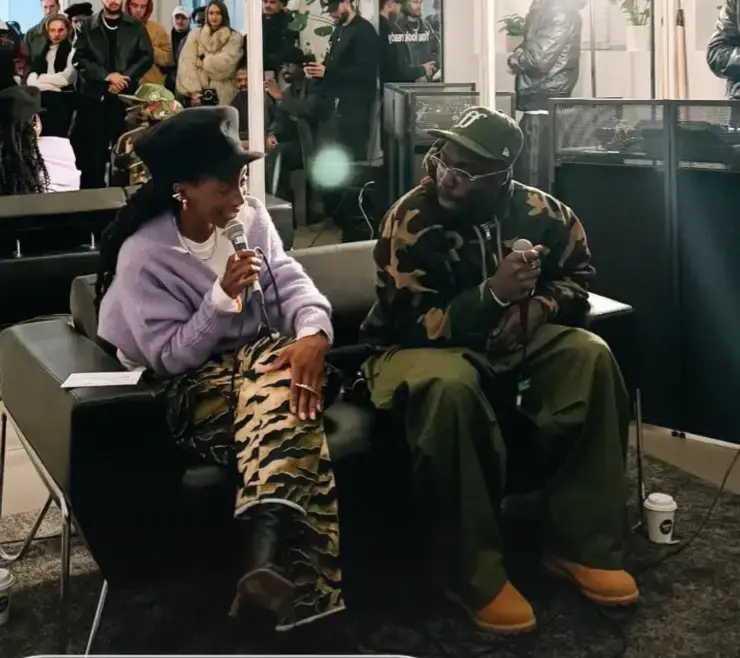
On 11 November in Berlin, Serious Klein held an exclusive pre-listening event for his new album IT’S TOO LATE, out on Friday 13 November. Beyond the music itself, two discussions stood out: the role of genuine emotion in creative expression, and the growing frustration with the mechanics of today’s music business.
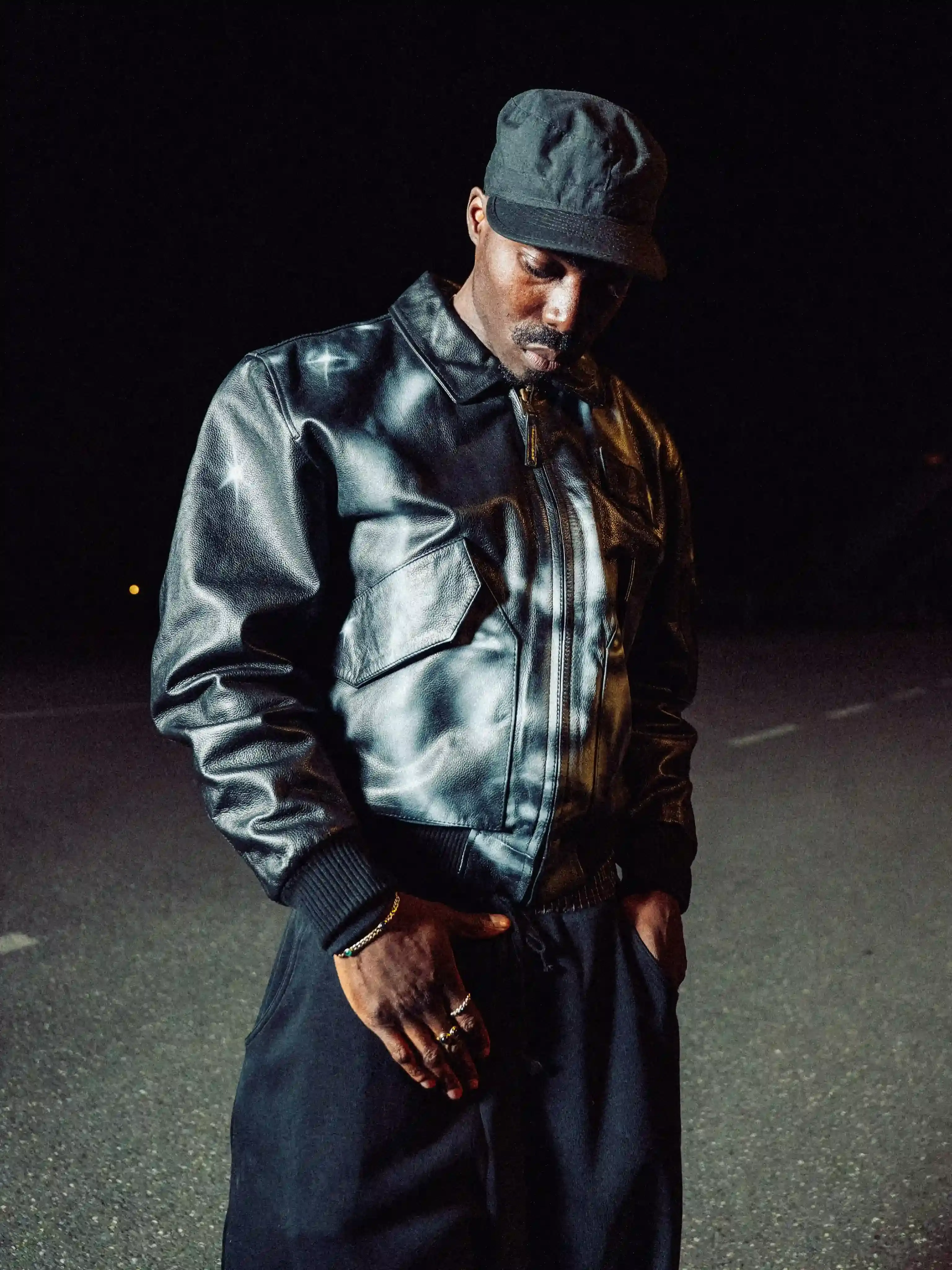
For those less familiar with him, Serious Klein is a German-Ghanaian rapper who emerged from Germany’s underground hip-hop scene. He started writing music at 12 and recorded his first song at 14, and in 2024 he signed with Nas’s label Mass Appeal. Even though he is influenced by American hip-hop, he is difficult to put into a box: his sound blends rap with soul, jazz and gospel.
IT’S TOO LATE marks his return with nine tracks, after a long break from releasing a full project. The first single, “POLITICS” featuring the Los Angeles rapper Mark Lux, came out in early November. If the pre-listening was anything to go by, the time away was well spent. Most of the album has an immediate, high-energy appeal, and its creative direction suggests a renewed sense of purpose.
Serious Klein on organized rage and real emotion
When dissecting the process behind the album, Serious Klein described “organized rage” as the authentically felt emotion that became an essential creative driver. An emotion he experienced, processed and translated into creative expression.
The discussion made me consider the privilege of being able to feel, even uncomfortable emotions like anger, grief and heartbreak. In a culture that rewards nonchalance and emotional detachment, expressing these feelings honestly feels distinctive, almost countercultural.
Anger was discussed as a truth he had to come to terms with. Not necessarily positive, polished or even particularly likeable. But after years of optimised aesthetics and algorithm-friendly sameness, audiences seem increasingly drawn to things that feel real.
We are already seeing this reflected across social media, with a growing appetite for imperfection, vulnerability and less curated representations of everyday life.
Capitalism has a tendency to take something that exists naturally and freely, package it and sell it back to us at a premium. Community, self-care and mindfulness are obvious examples. Feeling might be next.
As being human becomes a cultural distinction and a selling point, we will inevitably see more brands, creators and artists commercialising the appearance of authenticity. And there is a difference between expressing something genuinely felt and reenacting an emotion because it performs well.
Serious Klein’s approach feels impactful because the starting point is the emotion itself, rather than the expectation of how it should translate into content.
The numbers are not adding up
The second discussion centred on the pressures of today’s music business. Serious Klein spoke about the frustration of having to promote himself so heavily across social media, often at the expense of the actual creative process.
Artists are increasingly expected to operate as both musicians and full-time content creators. Releasing music is no longer enough. “Labels want the artist to come with an existing following, they want to see virality”, he said.
The numbers game extends beyond social media. It is deeply embedded in streaming, where success is measured through monthly listeners, streams and playlist placements.
An interesting perspective came from Jimmy Iovine, co-founder of Interscope Records and Beats by Dre, who helped launch Apple Music after Apple acquired Beats for $3 billion.
Speaking on David Senra’s podcast in February 2026, Iovine described streaming services as being just “minutes away from being obsolete”. His criticism centres on a business model that fails to offer artists direct relationships with their audiences.
From mass audiences to direct connections
Joel Gouveia, an artist manager who writes about the music business, explored this disconnect further in his essay The Death of Spotify. He argues that the next phase of the music business could shift away from chasing mass audiences, towards smaller and more engaged fan communities. Think direct communication channels, exclusive communities, merchandise, analogue audio and live experiences.
This is where Serious Klein’s thoughts on finding more authentic ways to connect with his audience become relevant. Despite generally keeping a lower profile, he is interested in exploring formats like a documentary, or giving fans insight into parts of his creative process: “That would feel true to my artistic expression.”
Social media can create visibility, but visibility does not automatically translate into connection.
Maybe this is where the two conversations come together. Authentic creative expression and meaningful audience relationships are ultimately built on the same thing: giving people something they can genuinely connect with, rather than something designed primarily to feed the algorithm and capture their attention.
As the music industry continues to optimise for reach and measurable performance, artists who protect their creative identity while building direct relationships with their audiences could have a real advantage.
Emma Luz Philipp
Contributor
Emma Luz Philipp is a Brand Strategist specialising in Sports & Lifestyle, with experience working with clients including adidas, Nike, The North Face, Bandit Running and Hugo Boss. Her work focuses on cultural insight and brand strategy, with a particular emphasis on how sport, lifestyle and community intersect.
She is currently a Community & Culture expert for adidas Running and is based in Berlin. Her interests include sport and lifestyle culture, music culture and travel.
@emma_luz_nefertari@a_convoLinkedInsubstack.comMore from Emma Luz Philipp
Share this article